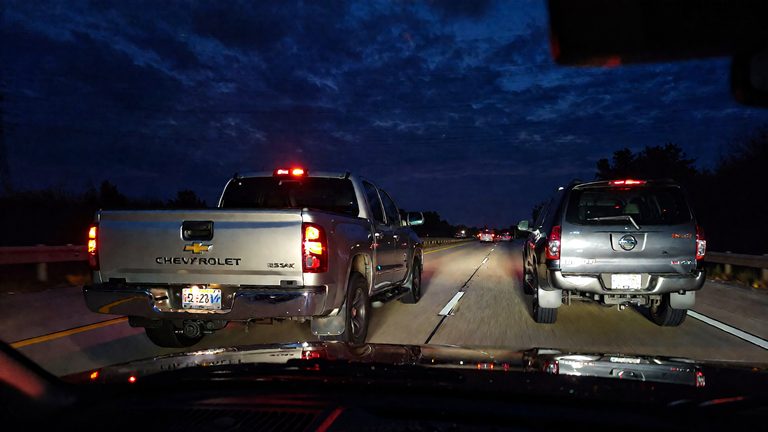
A Monday morning collision on a busy Solano County connector road left an unspecified number of people with minor injuries, according to the California Highway Patrol (CHP). The three-vehicle crash happened around 8:47 a.m. on October 26, 2026, on the westbound Interstate 80 to southbound Interstate 680 connector road in Fairfield.
CHP officers and paramedics responded to the scene and found three vehicles involved, including a Nissan Altima. Authorities have not released the make or model of the other two vehicles, the number of people hurt, or the cause of the collision. Details may become available as the investigation continues.
What We Know About the Crash
The collision occurred during the morning commute, when the I-80/I-680 interchange carries heavy traffic. This area connects Bay Area commuters to the Sacramento region and the Central Valley, and drivers merging via connector roads must often adjust their speed and lane position quickly.
Reports indicate that those hurt sustained minor injuries, which is welcome news given the number of vehicles involved. Anyone who has been in a crash, however, knows that the full picture of a person’s injuries is not always clear at the scene.
Based on the details released by the California Highway Patrol, the collision unfolded shortly before 9 a.m. on Monday, October 26, 2026, on the connector road that carries westbound Interstate 80 traffic onto southbound Interstate 680 in Fairfield.
When officers and paramedics arrived, they found a Nissan Altima and two other vehicles involved in the crash. The CHP has not shared which vehicle was struck first, how the cars came to rest, or whether any lanes were closed while crews worked the scene.
Investigators typically examine factors such as vehicle speeds, following distances, lane changes, and roadway conditions when determining how a multi-vehicle collision happened, and those findings may not be made public until the investigation is complete. Until more is known, it would be premature to draw conclusions about who may be responsible.
Why “Minor” Injuries Deserve Careful Attention
Early reports of minor injuries can understate what a crash victim is actually dealing with. Adrenaline can mask pain in the minutes and hours after a collision, and some conditions, including whiplash, soft tissue damage, concussions, and back injuries, may not fully appear for days. Symptoms such as neck stiffness, headaches, dizziness, numbness, or worsening back pain should never be dismissed.
Seeking prompt medical care protects your health first and foremost. It also creates a documented record linking your symptoms to the crash, which matters if you later need to pursue compensation. Gaps between an accident and the first medical visit are often used by insurance companies to argue that an injury was unrelated to the accident or less serious than claimed.
When a crash is described as causing minor injuries, it is natural to assume everyone walked away with little more than a few bruises. In reality, that label is usually based on a quick assessment at the scene, and it does not always reflect what a person experiences once the shock wears off.
Injuries to the spine, joints, and brain can be subtle at first, and conditions such as herniated discs, ligament tears, and mild traumatic brain injuries are often missed without a thorough medical evaluation. A person who feels sore but functional on the day of a collision may wake up the next morning with limited mobility, persistent headaches, or pain that radiates into the arms or legs.
Following up with a doctor, even if you declined transport at the scene, allows any hidden problems to be identified early and treated before they become more serious. It also ensures that your medical records accurately reflect the impact the crash had on your health, which can make a meaningful difference if you later need to seek compensation for treatment, lost income, or ongoing care.
Steps to Take After a Multi-Vehicle Collision
Crashes involving three or more vehicles can be especially confusing, since fault may be shared among several drivers. If you are able, move to a safe location, call 911, and accept medical evaluation from responding paramedics.
Exchange names, contact information, license plate numbers, and insurance details with the other drivers, and take photographs of the vehicles, the roadway, and any visible injuries. Statements from witnesses and the responding officers’ report number can also be valuable later.
California law requires drivers to report a collision to the Department of Motor Vehicles within 10 days if it caused injury or death, or property damage exceeding $1,000, regardless of who was at fault. Be cautious when speaking with insurance adjusters, and avoid giving recorded statements or accepting a quick settlement offer before you understand the full extent of your injuries.
The moments after a crash involving several vehicles can feel chaotic, but a few deliberate actions can protect both your safety and your legal rights. If you are able to do so safely, move out of active traffic lanes, turn on your hazard lights, and call 911 so that law enforcement and medical personnel can respond.
On a busy connector road or freeway, staying inside your vehicle with your seatbelt fastened may be safer than standing on the shoulder if you cannot reach a protected area. Once help is on the way, gather as much information as you can without putting yourself at risk.
Collect the names, phone numbers, license plate numbers, and insurance details of every driver involved, and note the names and contact information of any witnesses who stopped. Photographs of the vehicles, the surrounding roadway, skid marks, traffic signs, and any visible injuries can later help establish what happened, particularly in a collision involving more than two vehicles, where accounts may differ.
Ask the responding CHP officer for the report number so you can request a copy of the official crash report. Finally, avoid admitting fault or speculating about the cause when speaking with other drivers or insurance representatives, since the full sequence of events is often unclear in the first hours after a multi-vehicle crash.
How Fault Is Determined in California Collisions
Chain-reaction and multi-vehicle crashes often raise difficult questions about who caused what. California follows a pure comparative negligence rule, which means an injured person can still recover compensation even if they were partly at fault, though the amount is reduced by their percentage of responsibility. Sorting out those percentages typically requires reviewing the CHP report, vehicle damage, traffic and roadway conditions, and witness accounts.
Time limits also apply. In most California personal injury cases, the statute of limitations is 2 years from the date of the accident, and claims involving a government entity may have much shorter notice deadlines. Acting early helps preserve evidence while memories are fresh and surveillance or traffic camera footage is still available.
Determining fault in a multi-vehicle crash is rarely as simple as pointing to the last car in the chain. California follows a pure comparative negligence system, which means each driver can be assigned a percentage of responsibility, and an injured person may still recover compensation even if they were partly to blame, with the award reduced by their share of fault.
Investigators and insurance companies typically look at a combination of evidence to reach those conclusions, including the CHP crash report, statements from drivers and witnesses, photographs of vehicle damage and the roadway, and any available dash-camera or traffic-camera footage.
The positions of the vehicles after impact and the pattern of damage can also help reconstruct the order in which the collisions occurred. In a crash on a connector road like the westbound I-80 to southbound I-680 ramp, factors such as merging speeds, sudden braking, lane changes, and following distance often come into play.
Because several drivers may share responsibility, and because each insurer has an interest in minimizing its own policyholder’s share, early findings are not always the final word. Having an attorney review the evidence can help ensure that fault is evaluated fairly and that important proof, such as video footage that may be overwritten within days, is preserved before it is lost.
Personal Injury Settlement Calculators and Why They Matter in Estimating Case Value
A personal injury settlement calculator is an online tool that gives an injured person a rough estimate of what a claim might be worth based on a few key inputs, such as medical expenses, lost wages, the severity and duration of the injury, and the degree of fault assigned to each party.
Most calculators work by totaling economic damages, the documented costs of the accident, such as hospital bills, therapy, prescriptions, and lost income, and then applying a multiplier to account for non-economic damages, such as pain and suffering and loss of enjoyment of life.
That multiplier typically rises with the seriousness and permanence of the injury. In California, the figure may also be reduced to reflect comparative negligence if the injured person shares any responsibility for the crash. Used properly, a calculator helps accident victims set realistic expectations, understand which records and expenses matter most, and recognize when an insurance company’s first offer falls well short of the full picture.
It is important to remember, however, that these tools provide only a ballpark figure. They cannot account for future medical needs, the strength of the evidence, policy limits, disputed liability, or how an adjuster and a jury might view the facts.
Speaking with an experienced personal injury attorney remains the most reliable way to determine what a claim is truly worth and to pursue the compensation you deserve. Call us now at 1-855-508-9565 to speak with the experts.
Support for Those Affected
“A crash on a busy connector road is frightening, and even when the injuries are described as minor, the days that follow can be stressful and uncertain. If you were hurt in this collision, please put your health first and see a doctor, even if you feel okay right now, because symptoms like neck pain, headaches, and back stiffness often take time to appear. Be careful about giving statements to insurance adjusters before you understand the full extent of your injuries, and know that you do not have to navigate this alone. Our team is here to listen, answer your questions, and explain your options at no cost to you, so you can focus on your recovery while we focus on protecting your rights.” — Andy Gillin, Managing Partner, GJEL Accident Attorneys
Even a crash with minor injuries can mean missed work, medical bills, vehicle repairs, and a great deal of stress. Recovering from an accident is hard enough without having to navigate insurance companies and conflicting accounts of what happened. Our thoughts are with everyone involved in this collision, and we hope for a swift and full recovery for anyone who was hurt.
If you or a loved one was injured in a collision on I-80, I-680, or elsewhere in Solano County, the attorneys at GJEL Accident Attorneys are available to review your situation and explain your options. Consultations are free, and we can help you understand your rights while you focus on healing. Talk to an experienced GJEL accident attorney for a free legal consultation. Contact us at 1-855-508-9565 or visit our Walnut Creek office.
Helpful Resources for Those Affected by the Fairfield Crash
Anyone involved in this collision may need official records, safety information, or guidance on insurance and legal questions in the weeks ahead. The agencies below can help, and each website is listed in full so you can find it quickly:
Crash Reports and Law Enforcement
The California Highway Patrol handled this collision, and its live incident page at https://cad.chp.ca.gov shows current and recent traffic incident information across the state. General information about CHP services, including how to request a copy of a collision report, is available at https://www.chp.ca.gov. Have your report number, the date and time of the crash, and the names of the drivers involved ready when you request your report.
For incidents within city limits, the Fairfield Police Department’s Records Unit provides reports to involved parties. It is located in the department’s lobby at 1000 Webster Street, Fairfield, CA 94533, and can be reached at (707) 428-7307. Records are open Monday through Thursday from 7:30 a.m. to 4:30 p.m. and Friday from 8:00 a.m. to 12:00 p.m., and are closed on city holidays.
Details on requesting records are posted at https://www.fairfield.ca.gov/government/city-departments/police/support-services-bureau/police-records-reports. The department’s non-emergency line is (707) 428-7300, and the main city website is https://www.fairfield.ca.gov. Crashes on county roads in the area may fall under the Solano County Sheriff’s Office, which has information at https://www.solanocounty.com/depts/sheriff.
Traffic, Roadway, and Transportation Agencies
Caltrans maintains Interstates 80 and 680 and provides real-time road conditions, lane closures, and camera views through its QuickMap tool at https://quickmap.dot.ca.gov. Its main website is https://dot.ca.gov, and District 4, which serves the Bay Area, including Solano County, can be found at https://dot.ca.gov/caltrans-near-me/district-4.
The Solano Transportation Authority coordinates regional transportation planning, commuter programs, and traffic safety efforts in the county. Its website is https://www.sta.ca.gov. These agencies can be useful if you want to report a roadway hazard or learn about conditions at the I-80 and I-680 interchange.
Reporting Requirements, Insurance, and Legal Help
California drivers must report certain collisions to the Department of Motor Vehicles within 10 days, and the required SR-1 form and instructions are available at https://www.dmv.ca.gov. If you are having trouble with an insurance company, the California Department of Insurance offers consumer guidance and a way to file a complaint at https://www.insurance.ca.gov. To confirm that any attorney you speak with is licensed and in good standing, you can use the State Bar of California’s attorney search at https://www.calbar.ca.gov.