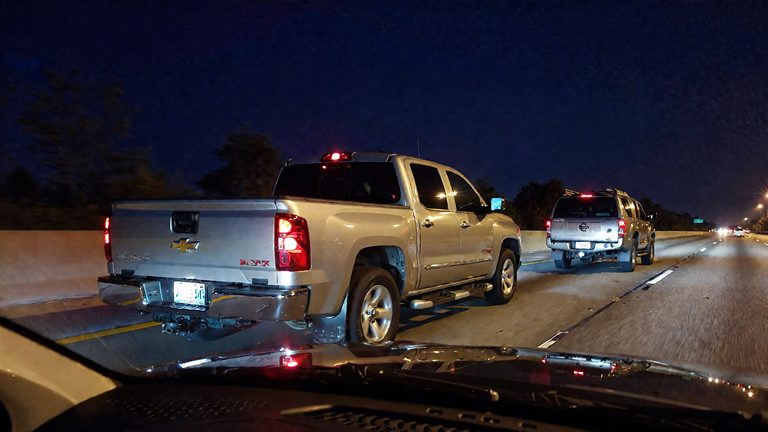
On Sunday, November 22, 2026, a car accident that led to injuries took place at a Visalia intersection. Visalia Stringer reported the choque fatal at 6:19 p.m. at the intersection of Monte Verde Avenue and Ben Maddox Way. Police confirmed that a pickup truck and a sedan collided in the area, and the cause of the crash is still under investigation.
Both vehicles sustained severe damage. One or more people were hurt and were rushed to the hospital by paramedics. Their conditions have not been released. Authorities have shared no further details, and the investigation into how the collision happened continues.

The Road Ahead After a Fatal Crash
The aftermath of a serious collision is hard to face, especially when you are injured. While you focus on physical recovery, medical bills, car repairs, and missed paychecks can pile up quickly. Many people in this position are unsure where to turn or whether they have any right to compensation.
Intersection collisions often involve disputed facts, such as who had the right of way, whether a signal was obeyed, and whether a driver was distracted or speeding. Because the cause of this crash is still under investigation, no conclusions should be drawn about who was at fault. What matters for anyone hurt in a crash like this is that evidence can disappear fast, and early steps can protect a future claim.
Steps to Protect Your Health and Your Claim
Medical care comes first. Some injuries, including concussions, internal bleeding, and soft tissue damage, do not show obvious symptoms right away, so a prompt evaluation protects both your health and your records. Keep every medical bill, discharge summary, and follow-up instruction.
If you are able, photograph the vehicles, the intersection, skid marks, traffic signals, and any visible injuries. Collect names and contact information for witnesses, and exchange insurance information with the other driver.
Under California Vehicle Code §16000, a driver must report a crash to the DMV within 10 days when it involves injury or death, or property damage over $1,000. Be careful with recorded statements to insurance adjusters, because early comments can be used to reduce a claim’s value.
Quién puede ser responsabilizado
California law, including Civil Code § 1714, generally requires people to exercise reasonable care to avoid harming others. A driver who breaches that duty and causes a collision may be liable for the resulting harm. Depending on the facts, responsibility can extend beyond a single driver. An employer may share liability if a driver was working at the time, and a vehicle owner or maintenance provider may be involved if a defect contributed.
California follows a pure comparative fault rule. Even if you are found partly responsible, you can still recover damages, reduced by your percentage of fault. This is one reason an independent investigation matters, since fault is often assigned in percentages rather than on an all-or-nothing basis.
Because the cause of this collision is still under investigation, it is too early to say who may be legally responsible, and a thorough review of the evidence often reveals more parties than first appear. Police reports, traffic signal timing records, nearby surveillance or dashcam footage, vehicle event data recorders, and witness statements can all help establish what happened at the intersection.
If either driver was working at the time, the employer may be liable under the legal doctrine of respondeat superior, which can open the door to commercial insurance coverage that is often larger than a personal auto policy. A vehicle owner who lent a car to an unfit or inexperienced driver may face a negligent entrustment claim, and California law can also hold owners responsible when someone drives their vehicle with permission.
If a mechanical failure, such as defective brakes or tires, contributed to the incident, a manufacturer or repair shop may share liability. When a malfunctioning signal, obstructed sightline, or poorly maintained roadway contributed to the incident, a government entity may be held responsible under Government Code §835, though such claims are subject to strict notice deadlines.
Identifying every potentially responsible party matters because it can affect how much insurance coverage is available to pay for your medical care, lost income, and other losses.
Damages Available in a Personal Injury Claim
With the help of an attorney, you can hold one or more parties liable for the injuries you sustained and file a personal injury claim. Economic damages cover medical and therapy-related expenses, including future care and loss of income from missed time at work.
Non-economic damages compensate for pain and suffering and loss of enjoyment of life. In cases involving especially reckless or malicious conduct, punitive damages may also be available to punish the wrongdoer and deter similar behavior.
Beyond the immediate hospital bills, a personal injury claim can account for the full financial and personal impact of a crash. Economic damages are the measurable losses, including emergency care, surgery, hospital stays, prescription costs, physical therapy, and future treatment your doctors expect you to need.
They also include lost wages for the time you cannot work and, when an injury limits your ability to earn a living going forward, the loss of future earning capacity. Property damage, such as repairs to your vehicle or the cost of replacing it if it was totaled, is also recoverable.
Non-economic damages address harm that does not come with a receipt, such as physical pain, emotional distress, anxiety, sleeplessness, scarring, and the loss of enjoyment of life when you can no longer take part in the activities and routines that mattered to you.
California does not place a cap on these damages in standard car accident cases, so the amount depends on the severity and permanence of your injuries and how they have changed your daily life. In situations involving especially reckless or malicious conduct, punitive damages may be available under Civil Code §3294, but they require clear and convincing evidence of oppression, fraud, or malice.
Their purpose is to punish the wrongdoer and discourage similar behavior, rather than to compensate you for a specific loss. Documenting your medical care, keeping records of your expenses, and tracking how your injuries affect your day-to-day life can all help support the full value of your claim.
Cómo se valoran los reclamos por lesiones
Insurers and attorneys often use two methods to estimate a claim. The multiplier method totals your economic losses and multiplies them by a number, typically between 1.5 and 5, based on the severity and permanence of the injuries and the strength of liability.
The per diem method assigns a daily dollar value to your pain and suffering and multiplies it by the number of days from the injury to the date of maximum medical improvement. Neither method guarantees an outcome, and every case turns on its own facts, but they give a framework for understanding what a fair settlement might look like.
Insurers and attorneys rarely rely on a single formula, but two methods are commonly used to assign a value to a claim. The multiplier method starts by adding up your economic losses, including medical bills and lost income, and then multiplies that total by a factor typically between 1.5 and 5 to account for pain, suffering, and other non-economic harm.
Minor injuries that heal quickly tend to sit at the lower end of that range, while fractures, surgeries, permanent impairment, or visible scarring push it higher. The per diem method assigns a reasonable dollar amount to each day you live with pain or limitation and multiplies it by the number of days from the date of the crash until you reach maximum medical improvement, which is the point when your doctors expect little further recovery.
Many attorneys run both calculations and compare them to test whether a settlement offer is reasonable. Several factors can move the final value up or down, including the strength of the evidence on liability, the consistency and completeness of your medical records, how long you were out of work, and whether you followed your doctor’s treatment plan.
Under California’s pure comparative fault rule, any percentage of fault assigned to you reduces your recovery by the same amount, and the limits on the at-fault party’s insurance policy can affect how much is realistically collectible. Insurance adjusters often use their own software and may undervalue a claim.
Particularly early on, having your damages documented and evaluated before accepting any offer helps protect you from settling for less than your losses are worth. These methods offer a framework rather than a guarantee, and every claim ultimately turns on its own facts.
Deadlines That Apply to California Injury Claims
Según el §335.1 del Código de Procedimiento Civil de California, la mayoría de las demandas por lesiones personales deben presentarse dentro de los dos años posteriores a la lesión. Un reclamo que involucre un vehículo del gobierno o una condición peligrosa en propiedad pública bajo el §835 del Código de Gobierno tiene requisitos de notificación mucho más cortos, a menudo seis meses. No cumplir con un plazo puede terminar permanentemente con un reclamo, por lo que es prudente hablar con un abogado cuanto antes.
La ley de California establece límites de tiempo estrictos para los reclamos por lesiones, y no cumplir con uno puede impedir permanentemente su derecho a recibir una compensación. Según el §335.1 del Código de Procedimiento Civil, la mayoría de las demandas por lesiones personales deben presentarse dentro de los dos años posteriores a la fecha de la lesión, y el mismo plazo de dos años generalmente se aplica a los reclamos por muerte por negligencia.
Las reclamaciones por daños a la propiedad, como las reparaciones de vehículos, por lo general tienen un plazo más amplio de tres años conforme al Código de Procedimiento Civil §338. El plazo es mucho más corto cuando una entidad gubernamental, como una ciudad, un condado o una agencia pública, es responsable. Conforme al Código de Gobierno §911.2, por lo general se debe presentar una reclamación por escrito dentro de los seis meses posteriores al incidente antes de poder iniciar una demanda, y la agencia tiene entonces 45 días para responder.
If the claim is rejected, the injured person generally has six months from the date the rejection notice is mailed to file suit. A late claim application may be possible in limited circumstances, but it must be submitted within one year of the incident, and approval is not guaranteed.
A few exceptions can pause or extend the deadline, including when the injured person is a minor, but they are narrow and fact-dependent, so they should never be assumed. Insurance policies also contain their own notice requirements, and delaying a report to your insurer can create unnecessary problems with coverage.
Because evidence fades, witnesses become harder to find, and deadlines pass quietly while you focus on recovery, speaking with an attorney soon after a crash helps ensure that every filing is made on time and your options stay open.
Calculadoras de Acuerdos por Lesiones Catastróficas y por qué Importan
A catastrophic injury settlement calculator is an online tool that gives an estimated range for a claim involving life-altering harm, such as traumatic brain injury, spinal cord damage, paralysis, severe burns, amputation, or permanent disfigurement. Unlike a minor injury claim, a catastrophic case involves losses that may continue for decades, so the numbers entered into a calculator are far larger and more complicated.
A good calculator asks for current medical expenses, projected future care, lost wages, and an estimate of lost earning capacity if the person cannot return to work. It may also factor in the severity and permanence of the injury, the need for home modifications, assistive devices, or long-term nursing support, and the percentage of fault that could be assigned under California’s pure comparative fault rule.
Most tools then apply a multiplier or per diem approach to the non-economic losses, such as pain, emotional distress, and loss of enjoyment of life, and combine those figures with the economic total to produce an estimated range.
These calculators are valuable because they help injured people and their families understand how the different parts of a claim add up, and they can reveal categories of loss that are easy to overlook, particularly the cost of lifetime care. They also give you a reference point when an insurance company makes an early offer, which may be well below what the long-term needs of a catastrophic injury actually require.
It is important to remember, however, that a calculator provides only an estimate. It cannot account for the strength of the liability evidence, the limits of available insurance coverage, or how a judge or jury may view the case. Accurate valuation usually involves medical experts, life care planners, and economists who can project future costs with greater precision.
For that reason, a calculator is best used as a starting point for understanding your claim, followed by a careful review with an experienced attorney who can build a complete and defensible valuation before any settlement is accepted. Call us now at (877) 336-1298 to speak with the experts.
Tome Acción Hoy: No Cobramos Si No Ganamos
“A collision like this can turn your life upside down in an instant, and I want anyone hurt at that intersection to know they do not have to face the aftermath alone. Get the medical care you need first, then protect your rights by keeping your records and being careful about what you say to insurance adjusters. California law sets strict deadlines, and evidence can disappear quickly, so speaking with an experienced attorney early can make a real difference. If you or someone you love was injured, we are here to listen, answer your questions, and fight for the compensation you deserve.” – Andy Gillin, Managing Partner at GJEL Accident Attorneys
GJEL Accident Attorneys has more than 40 years of experience and has recovered over $950 million for injured Californians. We handle injury cases on a contingency fee basis, which means you pay no attorney fees unless we win your case. If you or someone you love was hurt in a collision, call (877) 336-1298 or visit our oficina de Stockton para una consulta gratuita.
Recursos locales para las víctimas de accidentes en Visalia
Departamento de Policía de Visalia. The department is the primary agency for collisions inside city limits and can answer questions about the status of an investigation. Its main page is https://www.visalia.gov/201. Its Traffic Unit may be reached at (559) 713-4175, and its non-emergency line is 559-734-8116. The Visalia Police Department can only release reports it generated itself. Anyone with information about the collision at Monte Verde Avenue and Ben Maddox Way can contact the department directly.
Requesting a Traffic Collision Report. Instructions for obtaining a copy of a report are at https://www.visalia.gov/m/faq?cat=44. Reports can be requested in person at 303 S. Johnson Street, by mail, or purchased online through the LexisNexis BuyCrash vendor, which charges a $10.00 fee plus an additional convenience fee. The department asks for about 10 business days to process a request. Traffic collision reports are released only to those entitled to them under state law, such as involved parties. The department’s Public Records Act information is at https://www.visalia.gov/m/faq?cat=32.
City of Visalia Traffic Engineering. This division handles traffic signal timing, sight-distance issues, traffic control requests, and speed zones. Its page is https://www.visalia.gov/234/Traffic-Engineering. If you believe a signal malfunction, an obstructed sightline, or a roadway condition contributed to a crash, you can also call Public Works Customer Service at 559-713-4428. Keep a record of any reports you make, and ask an attorney to send a written preservation request quickly, since signal and maintenance records may not be kept indefinitely.
Patrulla de Caminos de California, Área de Visalia. The CHP investigates crashes on state routes and highways and assists local agencies. Its Visalia Area office page is https://www.chp.ca.gov/find-an-office/central-division/480-visalia. For guidance on what to do after a crash, requesting a crash report, and filing traffic complaints, visit https://www.chp.ca.gov/traffic/.
California Department of Motor Vehicles (SR-1 Report). A driver involved in a crash must file a Report of Traffic Accident Occurring in California (SR-1) with the DMV within 10 days if anyone was injured, no matter how minor, or if property damage exceeds $1,000. This is required whether or not you caused the crash, and in addition to any police or insurance report. You can file online at https://www.dmv.ca.gov/portal/vehicle-registration/accident-reporting/.
Tulare County Sheriff’s Office. If a crash occurs in an unincorporated area outside Visalia city limits, the Sheriff’s Office may be involved. Its contact page is https://tularecounty.ca.gov/sheriff/about-us/contact-us, and its non-emergency dispatch line is 559-733-6218.

Recursos legales relacionados de California: abogados de accidentes de camiones de California, Abogados de accidentes de camiones en Fresno, abogados de lesiones personales en Fresno, y las abogados de homicidio culposo de California.