A fatal rollover crash on Highway 50 in El Dorado County left at least one person dead early Friday morning, August 28, 2026, after a car left the roadway and rolled down a steep embankment. The crash occurred near Mile Marker 41 in the Strawberry area, a rural stretch of highway known for its winding grades and forested terrain. Our thoughts are with everyone affected by this tragic loss.
What Happened on Highway 50
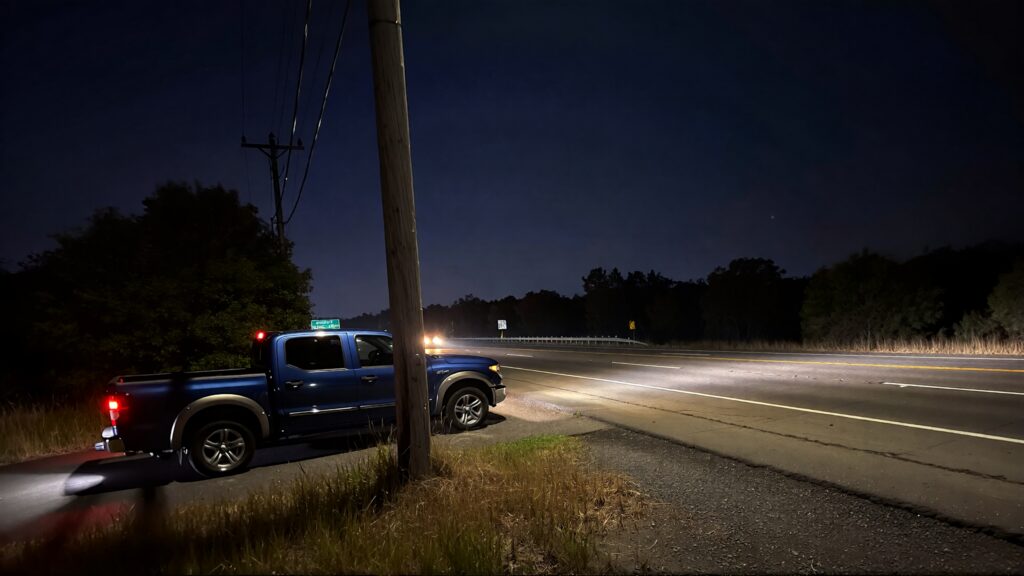
According to the California Highway Patrol and the El Dorado County Sheriff’s Office, the crash was discovered just after 5:00 a.m. on Highway 50 near Mile Marker 41 in Strawberry. Investigators believe a vehicle traveling along the highway lost control, rolled over, and traveled approximately 70 feet down an embankment adjacent to the roadway.
Emergency crews who responded to the scene confirmed at least one fatality. First responders secured the perimeter of the crash site and worked to safely recover the vehicle, which affected traffic flow along Highway 50 during the cleanup and recovery effort.
Highway 50 through the Strawberry area is a heavily traveled route connecting the Sacramento region to South Lake Tahoe, and its narrow lanes, sharp curves, and steep drop-offs make it a particularly unforgiving stretch of road when a vehicle leaves its intended path. The area lies within CHP’s South Lake Tahoe jurisdiction, which patrols this corridor and all of eastern unincorporated El Dorado County.
Because the crash was discovered in the early morning hours, before daylight and with minimal traffic on the road, investigators are also working to determine how long the vehicle may have gone unnoticed after leaving the highway. The 70-foot drop down the embankment likely limited visibility of the vehicle from the roadway, a common challenge in similar crashes throughout the Sierra foothills, where a car can come to rest well out of view of passing motorists.
Investigation Into the Crash Remains Ongoing
CHP has not yet released whether speed, mechanical failure, alcohol, or another factor contributed to the vehicle leaving the roadway. The crash remains under active investigation, and it may be some time before authorities issue further findings. In our experience representing families after single-vehicle collisions, an initial lack of information is common, and the eventual findings often reveal contributing factors that were not apparent at the scene.
Determining what actually happened in the moments before a vehicle leaves the roadway can take weeks or even months, particularly when there are no surviving witnesses to describe events leading up to the crash. Investigators will typically examine the vehicle itself for signs of mechanical failure, review any available roadway data or skid marks, and consider environmental factors such as weather, lighting, and visibility at the time of the crash.
Toxicology results, if applicable, can also take significant time to process and may not be available until well after initial reports are released. For families waiting on answers, this drawn-out timeline can be one of the most difficult parts of the process, and it is often only after a thorough independent investigation that the full picture of what caused a fatal rollover comes into focus.
Rollover Accidents Are Not Always Simple Driver Error
Solo-vehicle rollover crashes are often assumed, at first glance, to be the result of driver error alone. However, a closer look frequently reveals other contributing causes. Sudden mechanical failure, such as a tire blowout, brake malfunction, or steering system defect, can cause a driver to lose control with little to no warning.
Missing or inadequate guardrails along a steep embankment can also turn a survivable off-road excursion into a fatal one. Dangerous roadway design, poor drainage, unmarked curves, or debris left on the highway can likewise directly cause a vehicle to leave the road. When any of these factors are present, responsibility for the crash may extend well beyond the driver alone.
Vehicle defects are another factor worth close examination in single-vehicle rollover crashes. Tire tread separation, faulty electronic stability control systems, and defective suspension components have all been linked to sudden loss of control in vehicles that otherwise appeared to be driven normally.
Older vehicles or those with a history of recalls are particularly worth scrutinizing, since a manufacturer’s failure to properly address a known defect can shift liability entirely away from the driver.
An independent investigation that includes a mechanical inspection of the vehicle, a review of its maintenance and recall history, and an analysis of the roadway itself is often the only way to determine whether a defect, rather than driver behavior, set the crash in motion.
Wrongful Death Claims After a Single-Vehicle Crash
Under California’s pure comparative negligence doctrine, as interpreted by case law applying California Civil Code Section 1714, more than one party can share responsibility for an accident, and a surviving family’s right to recover is not eliminated simply because a driver contributed to the crash.
When mechanical defects, hazardous road conditions, or negligent government maintenance contribute to a rollover, surviving family members may be able to pursue a wrongful death claim against a vehicle manufacturer, a parts supplier, a private property owner, or a government entity responsible for maintaining the roadway.
Claims against public entities, such as Caltrans or El Dorado County, are governed by California Government Code Section 835, which addresses liability for dangerous conditions of public property. California Code of Civil Procedure Sections 377.60 and 377.30 establish who may bring a wrongful death or survival action and the process involved, while Code of Civil Procedure Section 335.1 sets the two-year statute of limitations that generally applies to these claims.
Building a wrongful death claim tied to a rollover crash typically requires gathering evidence well beyond the initial police report. This can include the vehicle’s black box data, which records speed and braking information in the seconds before a crash, maintenance and repair records, any prior complaints or recalls tied to the vehicle’s make and model, and Caltrans records showing whether the roadway had a history of similar incidents or known hazards at that location.
An attorney can also consult with accident reconstruction experts to determine whether the physical evidence at the scene supports or contradicts an initial assumption of driver error. Because insurance companies and government entities are rarely quick to accept responsibility, families often need an independent investigation to establish that a manufacturer, contractor, or public agency contributed to the crash.
What Compensation May Be Available
Regardless of what CHP’s investigation ultimately determines, the family of the person who died in this crash may have the right to pursue a wrongful death claim. California law allows surviving family members to seek compensation for funeral and burial expenses, the loss of financial support the deceased would have provided, loss of consortium and companionship, and other damages tied directly to the fatal accident.
These claims cannot undo the loss a family has suffered, but they can ease the financial burden that follows and hold negligent parties accountable. Beyond the categories already discussed, California law also allows surviving family members to seek damages for the loss of the deceased’s guidance, care, and moral support, particularly in cases involving a parent, spouse, or child.
In some cases involving egregious misconduct, such as a manufacturer knowingly concealing a dangerous defect, punitive damages may also be available to punish the responsible party and deter similar conduct in the future.
Every wrongful death claim is different, and the specific damages a family can pursue often depend on the relationships involved, the financial contributions of the deceased, and the nature of the negligence that caused the crash. An experienced attorney can help a family understand the full scope of what they may be entitled to recover under the circumstances of their particular loss.
How Wrongful Death Settlements Are Calculated
Attorneys and insurers typically rely on one of two methods to estimate the value of damages in a wrongful death or catastrophic injury claim. The multiplier method takes the total of measurable economic damages, such as lost income and funeral costs, and multiplies it by a factor reflecting the severity and permanence of the loss.
The per diem method instead assigns a specific dollar value to each day the family will live with the impact of the loss and multiplies that daily figure across an anticipated period of years. Both approaches are starting points for negotiation rather than fixed formulas, and the appropriate method often depends on the specific facts of the case, the strength of the evidence, and the parties involved.
Several variables can push a settlement figure higher or lower than a straightforward multiplier or per diem calculation might initially suggest. The age of the deceased, their earning capacity and career trajectory, the number of dependents relying on their income, and the strength of the liability evidence against a manufacturer or government entity can all significantly affect the final value of a claim.
Cases with clear evidence of a known defect or a documented history of roadway hazards tend to command higher settlements, as the responsible party’s negligence is easier to establish. Because insurance companies often begin negotiations with a lowball figure based on incomplete information, families are typically better served by having an attorney independently calculate the full value of their claim before entering settlement discussions.
Understanding Fatal Rollover Crash Settlement Calculators
Fatal rollover settlement calculators can be a useful starting point for families trying to understand what a wrongful death or catastrophic injury claim tied to a fatal rollover crash might be worth, though they should never be mistaken for a guaranteed outcome.
These tools typically ask for information such as the deceased’s age, annual income, remaining work-life expectancy, medical and funeral expenses already incurred, and the number of dependents affected by the loss. Using this information, the calculator applies either a multiplier or a per diem formula to generate a rough estimate of both economic damages, such as lost future earnings, and non-economic damages, such as loss of companionship and emotional suffering.
While helpful for setting general expectations early in the process, these calculators cannot account for case-specific factors that often carry significant weight in an actual settlement or verdict, including the strength of the liability evidence against a manufacturer or government entity, whether the crash involved a known roadway hazard or product defect, and how a jury might view the credibility of the parties involved.
For this reason, families are best served by treating a settlement calculator as a rough starting point rather than a final answer, and by working with an experienced wrongful death attorney who can build a complete, evidence-backed valuation of the claim based on the specific facts of the crash. Call us now at 1-855-508-9565 to speak with the experts.
Take Action Today: You Won’t Pay Unless We Win
“Our hearts go out to everyone affected by this crash, especially in a moment when so many questions remain unanswered. If you or someone you love was hurt or lost in this accident, please don’t assume the official report will tell the whole story. In our decades of handling cases just like this one, we’ve seen firsthand how a defective part, a hidden roadway hazard, or a maintenance failure can be the real reason a crash happened, even when it first looks like simple driver error. You don’t have to carry that burden alone, and you don’t have to pay anything out of pocket to find out what really happened. Reach out to us for a free consultation so we can help you understand your rights and fight for the answers and compensation your family deserves.” – Andy Gillin, GJEL Accident Attorneys
If you or a loved one has been affected by this crash, or by any serious accident in California, you do not have to face the legal process alone, and you do not have to worry about paying for help you cannot afford. GJEL Accident Attorneys represents every client on a contingency fee basis, which means there are no upfront costs and no attorney fees unless we recover compensation on your behalf.
With more than 40 years of experience and over $950 million recovered for injured clients and grieving families throughout California, our firm has the resources and knowledge to investigate what really happened, hold negligent parties accountable, and pursue the full compensation you deserve. Call us today at 1-855-508-9565 or visit the San Francisco office to schedule your free, no-obligation consultation.
Local Resources for Families
Families and community members seeking more information about this crash or looking to report roadway hazards or request assistance can turn to the following agencies:
The California Highway Patrol, South Lake Tahoe Area Office, holds primary jurisdiction over Highway 50 near Strawberry and eastern unincorporated El Dorado County. Their office is located at 2063 Hopi Avenue, South Lake Tahoe, CA 96150, and can be reached at (530) 539-9500. Their full office listing, including hours and public information contacts, can be found at https://www.chp.ca.gov/find-an-office/valley-division/offices/(246)-south-lake-tahoe.
The El Dorado County Sheriff’s Office, which assisted CHP in responding to this crash, is headquartered at 200 Industrial Drive, Placerville, CA 95667, and can be reached at (530) 621-5655 for non-emergency inquiries. Additional department information, leadership contacts, and public safety resources are available at https://www.eldoradocounty.ca.gov/Public-Safety-Justice/Safety-Justice/sheriff.
Caltrans District 3, which maintains Highway 50 through the Strawberry area and the broader Lake Tahoe Basin, provides real-time road condition updates, lane closure reports, and safety project information at https://dot.ca.gov/caltrans-near-me/district-3. Motorists and families researching prior hazards or construction history along this stretch of highway can also use the Caltrans QuickMap tool at https://quickmap.dot.ca.gov for current and historical traffic conditions.
The El Dorado County Superior Court, which handles civil and traffic matters arising in this jurisdiction, including the South Lake Tahoe area, can be reached via its official website at https://www.eldorado.courts.ca.gov for case information, filing requirements, and general court services.