Motorcycle Injury
Settlement $1.35 Million
Seven-figure recovery for a California rider who suffered multiple fractures and required surgical reconstruction.

You focus on healing.
We take on the insurance company.
Injured in a motorcycle crash in California and need an attorney? Call GJEL motorcycle lawyers at (415) 986-4777 for a free case review, available 24/7.
A lawyer will personally review your case and call you shortly.
We’ll call from a local number and tell you when to expect us.
More than 14,000 motorcyclists are injured and over 580 are killed on California roads in a typical year. Because riders lack the steel cage of a passenger car, even a low-speed left turn or freeway lane change on US-101, I-80, I-580, I-880, or SR-99 can cause orthopedic fractures, spinal trauma, or traumatic brain injury.
Since 1972, GJEL Accident Attorneys has recovered more than $980 million for injured Californians with a 99% success rate in the cases we accept. Founding partner Andy Gillin, trial partner Luke Ellis, and our legal team counter anti-rider insurance bias, apply California's lane-splitting and comparative-fault laws accurately, and advance all case costs so you pay no fee unless and until we win.
Free case review
Not sure if you have a case? Start with a conversation.
Tell us what happened. A GJEL lawyer will review it, explain your options, and tell you honestly whether the firm can help.
Recovery for surviving family members after a fatal California motorcycle crash involving disputed commercial liability. Read this case
Settlement against a commercial cement-truck operator after a severe collision with a motorcyclist. Read this case
Seven-figure recovery for a California rider who suffered multiple fractures and required surgical reconstruction.
Recovery for a motorcyclist struck on a Santa Clara County roadway after GJEL proved the driver failed to yield.
Settlement for a rider who sustained a traumatic brain injury in a San Francisco intersection crash.
Driver turned left across our rider's lane without a safe gap, causing head, shoulder, and knee injuries.
Full policy-limits recovery after a rural Northern California motorcycle crash resulting in traumatic limb loss. Read this case
Past results do not guarantee a similar outcome. Every case turns on its own facts, injuries and insurance coverage.
GJEL is ranked Tier 1 in Oakland for Personal Injury Litigation, Plaintiffs by Best Law Firms (2026), and all five GJEL partners are recognized in The Best Lawyers in America (2026). From 17 Northern and Central California offices, we represent injured motorcyclists and families across the Bay Area, Sacramento, the Central Valley, and Southern California.
| California Statute or Coverage | What California Law Provides | Impact on Your Motorcycle Injury Claim |
|---|---|---|
| Lane Splitting (CVC § 21658.1) | California explicitly defines and permits two-wheeled motorcycles to share lanes between stopped or slower traffic. | Lane splitting is legal when done prudently; drivers who open doors (CVC § 22517) or swerve without signaling (CVC § 22107) remain liable. |
| Left-Turn Right of Way (CVC § 21801) | A driver turning left or making a U-turn must yield to all approaching motorcycles close enough to pose a hazard. | Accounts for the single most common fatal and serious-injury crash pattern when drivers claim they "did not see" the bike. |
| Universal Helmet Law (CVC § 27803) | Riders and passengers must wear a DOT-compliant safety helmet strapped properly on California highways. | Riding without a helmet does not bar a lawsuit; insurers can argue comparative fault only if lack of a helmet worsened a head injury, never for leg or spine fractures. |
| Pure Comparative Fault (Civ. Code § 1714) | Injured riders recover damages minus any proven percentage of shared responsibility. | Counters insurer attempts to turn speed estimates or lane position into a complete denial. |
| UM/UIM Coverage (Ins. Code § 11580.2) | Optional Uninsured/Underinsured Motorist coverage on your motorcycle or household policy steps in when drivers carry only $30k minimums. | Often provides the decisive source of recovery after hit-and-run or minimally insured freeway crashes. |
| Filing Deadlines (CCP § 335.1 & Gov. Code § 911.2) | 2 years for private negligence claims; 6 months for public-entity roadway defect or transit claims. | Loose gravel, unmarked pavement grooves, and Caltrans construction hazards require rapid preservation and a 6-month government claim. |
Explore our San Jose crash map study and California personal injury lawsuit timeline to see how collision hotspots and litigation stages work in practice.
California was the first state in the nation to codify lane splitting under California Vehicle Code section 21658.1[1]. Unlike insurers in other states, a California adjuster cannot treat lane sharing alone as automatic negligence. Instead, investigators examine speed differential, lane width, traffic flow, and whether a motorist changed lanes abruptly without checking mirrors or signaling under CVC section 22107. Our reconstruction experts use dashcam footage, speed calculations, and crush-angle evidence on corridors like I-880, I-80, US-101, and I-405 to prove the driver cut off a lawful rider.
More than 40 percent of two-vehicle motorcycle crashes occur when a passenger vehicle turns left across an oncoming rider's path at an intersection or driveway. Under California Vehicle Code section 21801[2], the turning motorist must yield until the turn can be completed with reasonable safety. Drivers frequently tell police the motorcycle "came out of nowhere" due to inattentional blindness and poor depth perception of a narrow single-headlight profile. We obtain intersection camera video, vehicle infotainment data, and cell-phone records to establish exact sightlines and driver distraction.
California Vehicle Code section 27803 requires riders and passengers to wear a DOT-compliant helmet[3], and California Civil Code section 1714 applies pure comparative fault to injury lawsuits. Even if an insurer alleges a rider exceeded the speed limit or lacked a compliant helmet, you do not lose the right to sue. Under California comparative-fault jury instructions, helmet non-use is irrelevant to orthopedic, spinal, abdominal, or road-rash injuries, and the defense bears the burden of proving with biomechanical evidence that a different helmet would have prevented a specific head injury.
Serious motorcycle trauma routinely produces hospital trauma bills above $150,000, far exceeding California's $30,000 per-person minimum auto liability limit under SB 1107. Before you accept a driver's policy-limits tender or sign any release, GJEL audits every available layer of coverage: employer commercial policies if the driver was working, permissive-owner liability, roadway contractor policies, and your own motorcycle or household Uninsured/Underinsured Motorist (UM/UIM) coverage. Preserving written insurer consent before settling the underlying policy protects your UIM claim.
A two-inch longitudinal pavement lip, unwashed construction gravel, an unguarded steel trench plate, or a pothole that merely rattles a sedan can throw a motorcycle onto the asphalt at highway speed. When Caltrans, a city public-works department, or a private paving contractor leaves an unmarked roadway hazard, injured riders may bring a claim under California Government Code section 835[4]. Because public-entity claims must be presented within six months under Government Code section 911.2 and contractors pave over defects quickly, immediate scene photography and measurements are critical.
Insurance adjusters often stereotype motorcyclists as risk-takers to justify low offers. GJEL prepares every serious rider claim as if it will be presented to a California jury. We work with orthopedic surgeons, neurologists, plastic surgeons, vocational evaluators, and economists to document emergency trauma care, future hardware-removal or joint-replacement surgeries, skin-graft and scarring treatment, lost union or career earnings, custom bike and gear replacement, and human pain and suffering.
Move out of active lanes if you can do so safely, call 911, and accept emergency trauma evaluation even when adrenaline masks internal bleeding, spinal fractures, or concussion symptoms. Keep your helmet, riding jacket, boots, and damaged motorcycle un-repaired in a secure location; scrape patterns on a helmet shell and crush geometry on front forks are primary physical evidence for accident reconstruction. Decline recorded statements from the other driver's insurer and speak with a California motorcycle accident lawyer before signing medical authorizations.
Official California Sources: [1] CVC § 21658.1 (Lane Splitting) · [2] CVC § 21801 (Left-Turn Yield) · [3] CVC § 27803 (Helmet Law) · [4] Gov. Code § 835 (Public Roadway Conditions)
Free case review
Questions about what comes next? Ask a lawyer.
Get a clear answer about deadlines, insurance, and your options before you decide what to do.
The Legal Reality vs. Courtroom Bias Legally: California law treats motorcycle and car accidents identically – same rights, same compensation eligibility, same legal standards. Practically: Juries harbor unconscious biases against motorcyclists that can reduce verdicts by 20-40%. Common prejudices include: Assuming riders are thrill-seekers who accept risk Believing motorcyclists are always partially at fault Undervaluing motorcycle accident injuries as “expected consequences” How GJEL Overcomes Jury Bias: Humanizing riders: Presenting you as a responsible commuter, parent, or professional Expert testimony: Accident reconstructionists proving the driver’s fault conclusively Safety emphasis: Demonstrating your protective gear and safe riding practices Jury selection: Identifying and eliminating biased jurors during voir dire Statistical evidence: Showing most motorcycle accidents result from car driver negligence Result: Our strategic approach consistently achieves verdicts and settlements that overcome initial bias, securing full compensation for our clients.
Multiple Parties May Share Responsibility: 1. Negligent Drivers (85% of cases) Distracted driving (texting, phone use, eating) Failure to yield right-of-way Unsafe lane changes without checking blind spots DUI/impaired driving Speeding or aggressive driving 2. Government Entities (California Government Code §835) Dangerous road conditions (potholes, debris, oil slicks) Missing or obscured traffic signs Malfunctioning traffic signals Inadequate lighting on public roads Poorly designed intersections or merge lanes Critical: Must file claim within 6 months 3. Vehicle/Parts Manufacturers (Product Liability) Defective brakes or brake lines Tire blowouts from manufacturing defects Faulty throttle or acceleration systems Helmet failures despite proper use Recalled parts that weren’t properly notified 4. Commercial Entities Trucking companies (respondeat superior liability) Delivery services (Amazon, FedEx, UPS) Rideshare companies (Uber/Lyft drivers) Construction companies creating road hazards Property owners with dangerous driveways/parking lots 5. Bars and Restaurants (Dram Shop Liability) Serving alcohol to obviously intoxicated persons Serving minors who subsequently cause accidents
The Statistics Every California Rider Should Know: National Context: About 86,887 motorcyclists injured in the U.S. in 2024 Per mile travelled, the motorcyclist fatality rate in 2023 was almost 28 times the rate for passenger car occupants (31.39 against 1.13 per 100 million vehicle miles) Motorcyclists were 15% of all U.S. traffic deaths in 2023, while motorcycles were 3.1% of registered vehicles and 0.6% of miles travelled California-Specific Data: 14% of California road deaths in 2023 were motorcyclists (583 of 4,061) Third in the nation for motorcyclist deaths in 2023, behind Florida (668) and Texas (598) 583 motorcyclist deaths in California in 2023 14,000+ injuries annually from motorcycle accidents Los Angeles County leads with most motorcycle accidents in California Bay Area Hotspots: Highway 1 (Pacific Coast Highway) Highway 9 (Saratoga-Los Gatos Road) Skyline Boulevard (Highway 35) Mount Hamilton Road Highway 84 (Woodside Road) Peak Danger Times: 3-6 PM: Rush hour accounts for 35% of accidents Weekends: 45% higher accident rate May-September: 60% of annual motorcycle accidents
Immediate Actions Required: 1. Stop Riding Immediately Continuing to ride waives certain legal protections Creates comparative negligence issues if accident occurs Insurance may deny coverage for known defects 2. Document Everything Photograph the defective part Keep all recall notices Save repair receipts and communication 3. Get Free Repairs Manufacturers must repair at no cost Entitled to loaner vehicle in some cases Repairs must be completed within reasonable time Your Rights Even Without a Recall: Hidden Defects: Not all dangerous defects trigger recalls. You may still have a claim if: Your specific motorcycle had a manufacturing defect Design flaws exist across the model line Inadequate warnings were provided Normal use resulted in unexpected failure Statute of Limitations for Product Liability: 2 years from date of injury 10 years from date of manufacture (statute of repose)
Essential Qualities to Evaluate: 1. Motorcycle-Specific Experience ❓ Ask: “How many motorcycle cases have you handled?” ❓ Ask: “What were your last 5 motorcycle accident settlements?” ❓ Ask: “Do you ride motorcycles yourself?” 2. Trial Experience ✅ Look for actual trial verdicts, not just settlements ✅ Verify they’ve tried motorcycle cases specifically ✅ Check if insurance companies know they’ll go to trial 3. Resources and Expert Network Accident reconstruction specialists Medical experts familiar with motorcycle injuries Biomechanical engineers Economic loss experts for catastrophic injuries 4. Track Record Verification Check State Bar of California for disciplinary actions Review Martindale-Hubbell ratings (AV Preeminent is highest) Look for Super Lawyers recognition Verify Best Lawyers listings Read actual client reviews on Google/Avvo 5. Fee Structure Transparency Standard contingency: 33.3% pre-litigation, 40% if lawsuit filed Confirm who pays case costs upfront Get fee agreement in writing Ask about cost advancement for medical treatment Red Flags to Avoid: 🚩 Guarantees specific dollar amounts 🚩 Pressure to sign immediately 🚩 Won’t provide references or past case results 🚩 Delegates your case entirely to paralegals 🚩 No trial experience (“settlement mills”)
Yes, but it’s complicated. California’s helmet law (Vehicle Code §27803) requires helmets, but you can still recover for: Non-head injuries (broken bones, internal injuries) Head injuries the helmet wouldn’t have prevented Economic losses unrelated to head trauma
Lane-splitting is legal in California when done safely and prudently. We prove safety through: Speed differential (not exceeding 15 mph over traffic) Traffic speed (under 50 mph total) Weather and visibility conditions Your experience and training
California’s pure comparative negligence means you can recover even if 99% at fault – your damages are just reduced by your percentage of fault. We fight to minimize your assigned fault percentage.
Settlement without lawsuit: 4-8 months Lawsuit filed: 12-24 months Complex/catastrophic cases: 2-3 years Government entity cases: Add 6+ months
Call 911, get medical care, photograph vehicles and injuries, gather witness info, avoid recorded statements, and talk to a lawyer early. See our step‑by‑step guide .
Yes in most serious injury cases. Insurers still dispute medical causation and damages. Learn when counsel makes a measurable difference in our article: Do I need a motorcycle accident attorney ?
Value depends on liability, medical treatment, future care, wage loss, and venue. Review examples and key drivers here: How much is my case worth ? and our settlement amounts page .
Most injury claims have a two‑year statute in California, with important exceptions. Learn about filing and deadlines: Can I file a lawsuit ?
Each of these is a GJEL page for that city, with the local roads, local courts and the office that would handle your case.
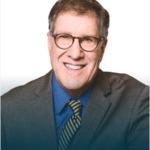
Andrew (Andy) R. Gillin co-founded GJEL Accident Attorneys in 1972 after earning his J.D. from the University of Chicago Law School. He has represented seriously injured Californians in state and federal courts for more than five decades, holds an AV Preeminent rating from Martindale-Hubbell, and has been named Best Lawyers Lawyer of the Year for Personal Injury Litigation in Oakland.
A lawyer will personally review your case and call you shortly.
We’ll call from a local number and tell you when to expect us.