Beginning January 2019, AC Transit increased Transbay fares by $1 to $5.50 for a one-way trip to San Francisco and by $36 to $198 for a monthly pass.
This fare increase is the first of three that will bring fares to $6 next year and $6.50 in 2022 in order to pay access fees to the Salesforce Transit Center.
AC Transit proceeded with the fare hike on schedule in spite of the extended closure of the Salesforce Transit Center, which the agency has not served since September due to a crack in a load-bearing steel beam. Riders are left with the worst of both worlds: a 20 percent fare hike for the exact same service.
The Transbay fare hike was questionable even before the closure of the Salesforce Transit Center. Transbay buses are now the most expensive transit service for commuters traveling to San Francisco. For the core Transbay service area spanning Oakland, Berkeley, Alameda, Piedmont, Emeryville, and El Cerrito – an area that accounts for 84 percent of the agency’s 18,000 daily Transbay riders – Transbay fares are now more expensive than BART fares for single rides ($3.25-$4.55) and often more expensive than BART on a monthly basis ($143-$200) for a slower, less reliable, and less frequent service. Moreover, one-way fares are now more expensive than bus-to-BART transfers in downtown Oakland ($5.30) or ferry service from Alameda and Oakland ($5.10-$5.30).
FARE COMPARISON – TRANSBAY BUS VS. BART/FERRY
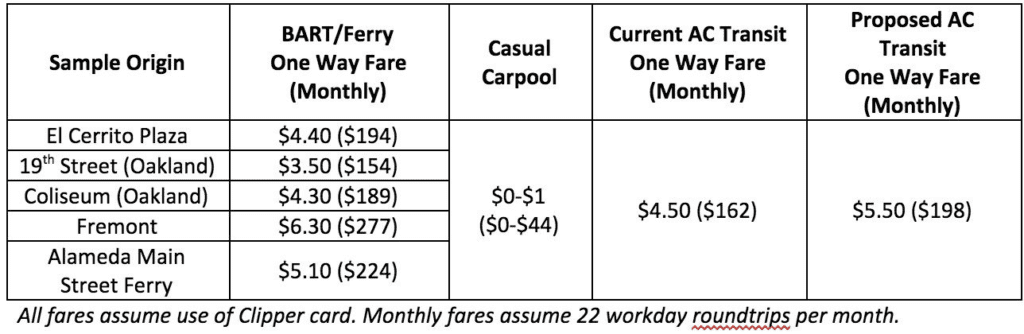
All fares assume use of Clipper card. Monthly fares assume 22 workday roundtrips per month.
Sadly, the agency did not consider alternatives to the fare increase to improve the efficiency of Transbay services and increase ridership. Most of AC Transit’s Transbay network predates BART and has not changed in over a half-century. Consequently, the system includes extensive inefficiencies in its legacy routes that are much less productive than local service, are redundant and uncompetitive to BART service, and are skewed to serving high-income neighborhoods.
The agency has acknowledged that the new fare structure will decrease ridership, though it remains to be seen how many riders will pay a premium for a seat versus shift to a cheaper, faster, more frequent options.
It’s unfortunate that the Salesforce Transit Center (whenever it reopens) will serve stagnant or declining Transbay bus ridership. The responsibility for the fare increase is ultimately on the Transbay Joint Powers Authority and its decision to shake down AC Transit for funding. But AC Transit can do so much more to optimize its Transbay routes to achieve a more productive and equitable system.
The agency is benefitting from more than just the Salesforce Transit Center – a new bus-only lane on West Grand Avenue and new double decker buses launched this month – but it simply cannot afford to continue operating the same old 1960s routes forever.