Last updated July 17, 2026
A minor injury collision in Napa left at least one person with minor injuries early Thursday morning, May 7, 2026. The crash occurred on Big Ranch Road just north of Salvador Avenue and was initially reported as a major injury incident, but was downgraded after emergency responders assessed the scene. While the injuries in this particular crash were ultimately classified as minor, even low-speed collisions can produce consequences that are far more serious than they first appear, and anyone hurt in a crash deserves to understand their legal rights.

What Happened in the Minor Injury Collision
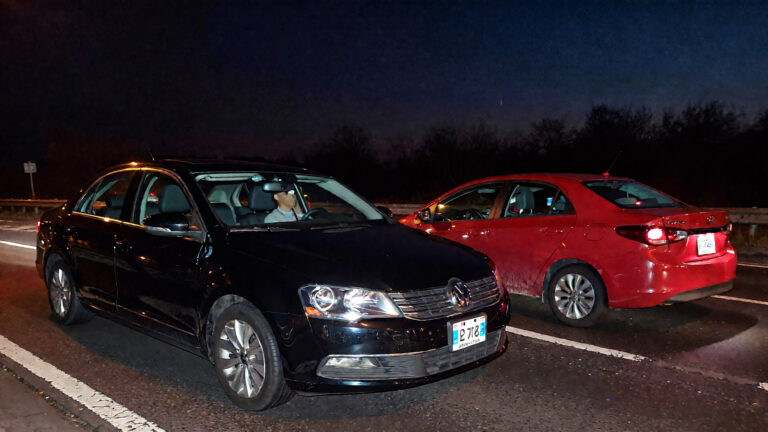
The California Highway Patrol received the initial report at approximately 4:38 a.m. on May 7, 2026. The collision involved a silver Toyota Camry and a second, unidentified vehicle on Big Ranch Road north of Salvador Avenue in Napa.
CHP dispatchers initially logged the incident as a major injury crash, a classification that was later revised to minor injuries once first responders evaluated those involved at the scene.
The identity of the second vehicle and the full circumstances leading up to the collision have not been publicly confirmed. Investigators are working to determine what caused the two vehicles to collide at that location in the early morning hours. No further details about the number of occupants or the direction of travel for either vehicle have been released at this time.
Why Minor Injury Classifications Can Be Misleading
The initial major injury designation in this crash illustrates an important reality: injury severity is not always immediately apparent at an accident scene. Emergency responders and dispatch personnel make their best assessments based on available information in real time, and those assessments are sometimes revised as more details emerge. The reverse is also true. A crash classified as minor at the scene can later reveal injuries that are far more significant.
Certain injuries are particularly prone to delayed onset. Whiplash and soft tissue damage to the neck and back may not produce noticeable pain for hours or even days after the collision. Concussions and mild traumatic brain injuries can be dismissed initially as headaches or fatigue.
Internal injuries, spinal stress fractures, and nerve damage can go undetected without a thorough medical evaluation. This is why medical professionals and personal injury attorneys consistently advise accident victims to seek a full examination from a doctor even when they feel relatively fine in the immediate aftermath of a crash.
Accepting a quick settlement or signing any documentation from an insurance company before completing a medical evaluation is one of the most common and costly mistakes collision victims make. Once a settlement is finalized, additional injuries discovered afterward are generally not compensable.
Big Ranch Road and the Hazards of Pre-Dawn Driving in Napa
Big Ranch Road is a two-lane rural road running through a largely agricultural and residential stretch of unincorporated Napa County and the city of Napa. Like many roads in this region, it sees a mix of local commuter traffic, farm and vineyard workers beginning early shifts, and vehicles traveling between Highway 29 and the Silverado Trail corridor.
Roadway lighting in this area is limited, and the conditions at 4:38 a.m. would have been full darkness, reduced visibility, and likely lower traffic volumes, which can give drivers a false sense of security.
Pre-dawn driving carries a statistically elevated risk. Fatigue is a major factor in early morning crashes, as many drivers are either at the end of an overnight period or starting a day before their circadian rhythm has fully adjusted. Reduced visibility limits reaction time, and other hazards, such as deer, farm equipment, or stopped vehicles, can appear with little warning.
When a collision occurs under these conditions, determining fault often requires careful reconstruction of vehicle speeds, headlight conditions, road positioning, and driver alertness in the moments before impact.
California Law and Your Rights After a Napa Traffic Collision
If you were injured in this collision or in any California traffic accident caused by another driver, you have legal rights that are worth understanding before taking any steps with an insurance company. California Civil Code Section 1714 establishes that every person is responsible for injuries to others caused by their own negligence. In a two-vehicle collision, liability most often turns on which driver failed to exercise reasonable care, whether through unsafe speed, distracted driving, failure to yield, or impaired operation.
California operates under a pure comparative fault system, which means that even if you were partially responsible for a crash, you can still recover compensation proportional to the other party’s degree of fault. This is a meaningful protection for accident victims who might otherwise assume that any shared responsibility bars them from recovering.
Under California Code of Civil Procedure Section 335.1, you generally have two years from the date of a collision to file a personal injury lawsuit. This statute of limitations applies to claims against private parties. If a public entity or government agency is involved, different and substantially shorter deadlines may apply under Government Code Section 835.
Missing these deadlines typically results in losing the right to pursue compensation entirely, which makes early consultation with an attorney important even when an injury initially seems manageable.
Damages Available to Collision Victims
Victims of traffic collisions in California may be entitled to compensation across several categories. Economic damages include medical expenses, both past and future; lost wages; reduced earning capacity; vehicle repair or replacement costs; and out-of-pocket rehabilitation expenses.
Non-economic damages cover physical pain, emotional distress, loss of enjoyment of life, and the impact of lasting injuries on daily functioning. In cases involving particularly reckless or intentional conduct, courts may also award punitive damages.
The value of a personal injury claim depends on many factors, including the nature and severity of the injuries, the clarity of fault, the insurance policy limits of the at-fault driver, and the quality of documentation gathered in the aftermath of the crash. Experienced personal injury attorneys typically use one of two valuation methods.
The multiplier method applies a factor, often between 1.5 and 5, to total economic damages based on the severity and permanence of the injuries. The per diem method assigns a daily dollar value to pain and suffering and multiplies it by the number of days the victim has been affected. Both approaches require thorough medical documentation to support the claimed figures.
Understanding Personal Injury Settlement Calculators and How They Help Compute Settlement Values
Personal injury settlement calculators are online tools designed to help accident victims estimate the potential value of their claims before entering negotiations with insurance companies or proceeding to litigation. These calculators take into account the key financial and non-financial losses a victim has suffered as a direct result of the accident.
Users typically enter figures for current and anticipated medical expenses, lost wages, property damage costs, and the projected duration of recovery. The calculator then applies one of two widely used valuation methods to produce an estimated settlement range. The multiplier method multiplies a victim’s total economic damages by a factor, generally between 1.5 and 5, with the multiplier rising in proportion to the severity, permanence, and impact of the injuries.
A minor soft tissue injury might carry a multiplier of 1.5, while a permanent disability or disfigurement could push that figure significantly higher. The per diem method, by contrast, assigns a specific daily dollar value to the victim’s pain and suffering and multiplies it by the total number of days the person has been affected by their injuries, from the date of the accident through the expected end of recovery or, in permanent injury cases, for the remainder of the victim’s life.
While these calculators provide a useful starting point for understanding what a claim may be worth, they are not a substitute for a thorough legal evaluation. Settlement values are ultimately shaped by factors that no calculator can fully account for, including the quality of available evidence, the insurance policy limits of the at-fault party, the jurisdiction in which the claim is filed, and the skill of the attorney negotiating on the victim’s behalf.
Used alongside professional legal guidance, however, a settlement calculator can give injured victims a clearer sense of their position before any negotiation begins. Call us now at +1-866-218-3776 to speak with our experts.
What to Do If You Were Involved in This Crash
Whether you were a driver, passenger, or someone indirectly affected by this collision, there are practical steps that protect both your health and your legal options. Seek medical attention promptly, even if you believe your injuries are minor. Document everything you can, including photos of the vehicles, the road conditions, any visible injuries, and contact information for witnesses. Preserve all records related to the crash, including medical bills, repair estimates, and any correspondence with insurance companies.
Be cautious about making recorded statements to any insurance adjuster, including your own insurer, without first speaking to an attorney. Adjusters are trained to gather information to minimize claim values. A personal injury attorney can advise you on what to say and, more importantly, what not to say during those early communications.
Injuries from crashes like this deserve to be taken seriously, even when they appear minor at first. Many times over the years, someone walks away from a crash feeling okay, only to realize days later that they’re dealing with something much more significant.
GJEL’s job is to make sure that people who’ve been hurt by another driver’s negligence have someone in their corner who is paying attention to the full picture, not just what’s visible at the scene. If you’re unsure about your situation after a crash, a conversation with our team costs you nothing.”
Take Action Today – Get the Help You Deserve
“Even when a crash is classified as minor, the injuries it causes can quietly become something much more serious in the days that follow. I’ve worked with many clients who felt fine at the scene and later discovered they were dealing with whiplash, a concussion, or spinal damage that needed significant treatment. My advice to anyone involved in this Napa collision is straightforward: see a doctor before you decide how serious your injuries are, and speak with an attorney before you decide how serious your claim is. Insurance companies move quickly after accidents, and their goal is to close your case for as little as possible. At GJEL, we’ve spent more than 40 years making sure that injured Californians have someone fighting for the full value of what they’ve lost, not just what an adjuster is willing to offer on day one. If you were hurt on Big Ranch Road, please don’t navigate this alone.” — Andy Gillin, Managing Partner, GJEL Accident Attorneys
GJEL Accident Attorneys has represented injured Californians for more than 40 years and has recovered over $980 million on behalf of clients throughout the state. Our attorneys handle cases on a contingency fee basis, meaning you pay no legal fees unless we recover compensation for you. If you or someone you love was injured in the Big Ranch Road collision or any other traffic accident in Napa County, we encourage you to reach out for a free consultation.
At GJEL, we ensure that all evidence is properly preserved and that all potential sources of compensation are thoroughly investigated, allowing families to focus on healing. Talk to an experienced GJEL accident attorney for a free legal consultation. Contact us at +1-866-218-3776 or visit our San Francisco office to secure your future and compensation.
Local Resources for Napa Collision Victims
If you were involved in this crash or are dealing with the aftermath of a traffic accident in the Napa area, the following local resources may be helpful:
California Highway Patrol, Napa Area Office Address: 601 Trancas Street, Napa, CA 94558 Phone: (707) 253-4000 Website: chp.ca.gov The Napa Area CHP office handles crash reports, traffic enforcement, and investigation on state highways and unincorporated roads, including Big Ranch Road.
Napa County Sheriff’s Office Address: 1535 Airport Blvd, Napa, CA 94558 Phone: (707) 253-4509 Website: napasheriff.org
Providence Queen of the Valley Medical Center Address: 1000 Trancas Street, Napa, CA 94558 Phone: (707) 252-4411 Website: providence.org/locations/queen-of-the-valley-medical-center The primary full-service hospital in Napa, offering emergency care, trauma services, and follow-up treatment for accident victims.
Napa County Department of Public Works Address: 1195 Third Street, Suite 101, Napa, CA 94559 Phone: (707) 253-4351 Website: countyofnapa.org/government/departments-and-divisions/public-works For road condition reports and infrastructure concerns related to the crash location.
California DMV, Napa Field Office Address: 1500 Third Street, Napa, CA 94559 Phone: (800) 777-0133 Website: dmv.ca.gov For SR-1 accident report forms and vehicle-related matters following a collision.