A bus passenger sustained a head injury on Monday when the driver was forced to make an emergency stop to avoid a collision with a vehicle that allegedly ran a stop sign at the intersection of North 11th Street and Mission Street in San Jose. The incident highlights the serious risks that reckless driving poses to public transportation passengers, even when direct collisions are avoided. Bus passengers are particularly vulnerable to these “no-contact” injuries because they lack the safety restraints found in private vehicles, leaving them exposed to the violent forces generated during emergency maneuvers.
This case demonstrates how a single driver’s decision to disregard traffic laws can have cascading consequences, transforming what should be a routine commute into a traumatic experience requiring emergency medical intervention. The intersection where this incident occurred is a busy transit corridor where buses frequently navigate alongside general traffic, making compliance with traffic control devices essential to protecting the safety of dozens of passengers who rely on public transportation daily.
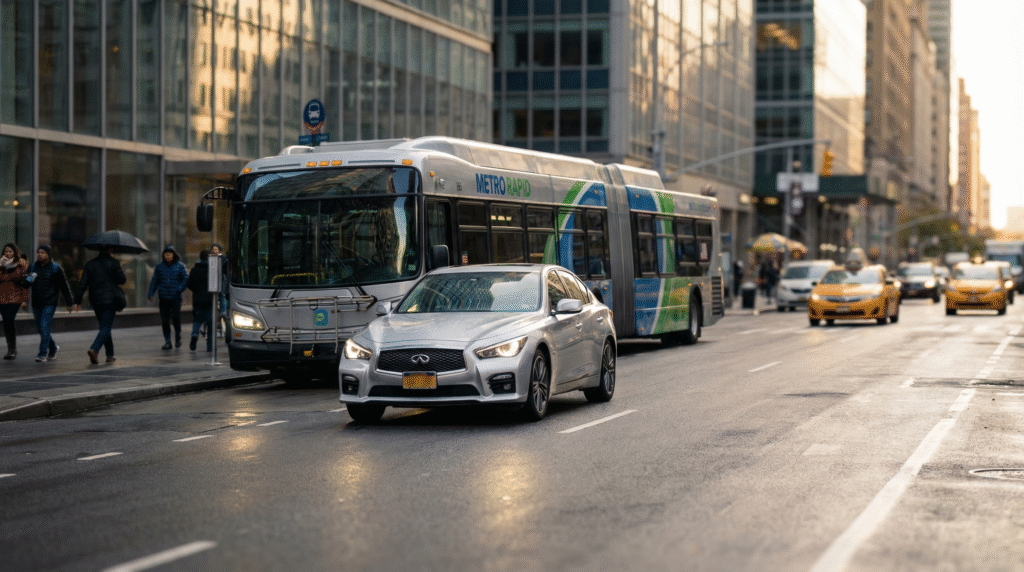
Details of the Near-Miss Incident
The incident occurred when a silver Infiniti sedan reportedly disregarded a stop sign and nearly T-boned Transit bus 6673 at the North 11th Street and Mission Street intersection. Witnesses reported that the Infiniti driver failed to yield the right of way, creating a dangerous situation that required immediate evasive action.
The bus driver, demonstrating quick reflexes and professional training, slammed on the brakes to prevent what could have been a devastating collision. While the emergency maneuver successfully avoided a direct collision between the two vehicles, the sudden deceleration resulted in serious injuries to passengers on the bus.
A female passenger, believed to be in her fifties, was thrown forward by the abrupt stop and struck her head on a pole in the ADA (Americans with Disabilities Act) seating section of the bus. The woman sustained a visible bump on her head, though fortunately, no bleeding was observed at the scene.
The geometry of the near-collision suggests the silver Infiniti approached from a direction that would have resulted in a T-bone or broadside impact—one of the most dangerous types of crashes for vehicle occupants. Had the bus driver not reacted so quickly, the Infiniti would likely have struck the bus in the area where passengers were seated, potentially causing catastrophic injuries or fatalities to multiple riders.
The fact that the bus was already in the intersection when the Infiniti ran the stop sign indicates that the driver either failed to observe the traffic control device at all or made a reckless decision to proceed despite seeing the bus’s approach. Transit buses, due to their size and weight, require significantly longer stopping distances than passenger vehicles, making the driver’s split-second decision to brake aggressively all the more remarkable.
Other passengers on the bus reportedly experienced jarring from the sudden stop, though the woman who struck her head on the pole appeared to be the only one requiring medical evaluation. The incident occurred during regular transit service hours, when buses on this route typically carry large numbers of commuters through downtown San Jose.
Emergency Response and Medical Evaluation
Emergency medical services responded promptly to the scene following the incident. Transit authorities confirmed the exact location as the far side of Mission Street at North 11th Street, where paramedics were dispatched to evaluate the injured passenger.
Medical personnel arrived to assess the woman’s condition and determine whether hospital transport was necessary. At the time of evaluation, the passenger remained conscious and alert, which was an encouraging sign given the nature of her injury. However, head injuries can be deceptive, and symptoms may not always manifest immediately, making professional medical evaluation essential.
The decision regarding hospital transport would depend on various factors, including the passenger’s neurological responses, the severity of the visible injury, and any symptoms she reported, such as dizziness, nausea, confusion, or headache intensity.
The bus driver immediately activated emergency protocols following the incident, securing the scene and ensuring no further passengers were at risk while awaiting emergency responders. Fellow passengers who witnessed the incident comforted the injured woman and helped keep her calm and stable until paramedics arrived.
The visible bump on the woman’s head, while concerning, represented only the external manifestation of the trauma—medical professionals would need to conduct thorough assessments to rule out more serious internal injuries, such as skull fractures, brain contusions, or intracranial bleeding that might not be immediately apparent.
Paramedics likely performed standard neurological assessments at the scene, including checking the woman’s pupils for equal size and reactivity to light, testing her memory and orientation to person, place, and time, evaluating her balance and coordination, and monitoring for worsening symptoms. The absence of external bleeding was positive, but medical personnel understand that closed head injuries can sometimes be more dangerous than those with visible wounds, as internal pressure can build without obvious external indicators.
Transit supervisors also responded to the scene to document the incident, interview witnesses, and ensure proper reporting procedures were followed. The bus itself remained at the scene during the initial response phase, serving as both evidence in the incident investigation and a protected space for the injured passenger to receive care. Emergency dispatchers would have relayed critical information about the nature of the injury to responding paramedics, allowing them to arrive prepared with appropriate equipment and protocols for head trauma assessment.
Investigation into Hit-and-Run Driver
Perhaps most troubling about this incident is that the driver of the silver Infiniti fled the scene after nearly causing the collision. Authorities are actively working to identify and locate the driver who failed to stop at the stop sign and then left without taking responsibility for the dangerous situation they created.
Under California Vehicle Code Section 20002, drivers involved in accidents—even those that don’t result in direct vehicle contact but cause injury—are required to stop and provide information. Leaving the scene of an accident that results in injury is a serious offense that can lead to criminal charges, including misdemeanor or felony hit-and-run charges, depending on the severity of the injuries sustained.
Investigators are likely reviewing surveillance footage from the area, seeking witnesses who may have captured license plate information, and examining available transit camera footage to help identify the vehicle and driver. The intersection of North 11th Street and Mission Street is in a busy area of San Jose, which may increase the likelihood of finding witnesses or camera evidence.
Understanding Passenger Injuries from Sudden Bus Stops
While this incident didn’t involve a direct collision, it demonstrates an often-overlooked danger: injuries to passengers caused by emergency maneuvers. Public transportation passengers are particularly vulnerable during sudden stops because:
Limited Protection: Unlike vehicle occupants who have seatbelts, airbags, and structured seating, bus passengers often stand or sit in seats without restraints, leaving them unprotected during sudden movements.
ADA Seating Hazards: The ADA seating area, designed to accommodate passengers with disabilities, often includes poles and handrails for stability. During sudden stops, these safety features can ironically become hazards when passengers are thrown against them.
Unpredictable Forces: Emergency stops can generate significant G-forces that throw standing or seated passengers forward, backward, or sideways with considerable velocity.
Common Injuries: Passengers in these situations frequently suffer head injuries, neck and back trauma, broken bones, and soft tissue injuries, even without any vehicle-to-vehicle impact.
The physics of sudden deceleration in large transit vehicles creates unique injury risks that many passengers don’t anticipate when boarding public transportation. When a bus traveling at even moderate speeds—say 25 to 35 miles per hour through urban streets—comes to an abrupt stop, the momentum of passengers’ bodies continues forward even as the vehicle stops beneath them.
This phenomenon, governed by Newton’s first law of motion, means passengers become projectiles inside the bus, moving at the vehicle’s pre-braking speed until something stops them, whether that’s a pole, another seat, another passenger, or the floor. The forces involved can be substantial: a 150-pound person in a bus stopping suddenly from 30 mph experiences forces equivalent to several hundred pounds of impact when striking a fixed object.
Bus interiors, while designed for passenger comfort and accessibility during normal operations, contain numerous hard surfaces and protrusions that become impact hazards during emergency stops—metal poles, plastic seat edges, handrails, farebox equipment, and window frames all pose injury risks. Standing passengers face even greater danger than seated passengers, as they have less stability and a higher center of gravity, making them more likely to be thrown off balance and suffer falls that result in injuries to multiple body parts.
Elderly passengers, those with mobility challenges, pregnant women, and children are at particularly elevated risk because they may have slower reaction times, reduced ability to brace themselves, or less physical resilience to absorb impacts. The configuration of modern transit buses, with priority seating areas near the front, often places the most vulnerable passengers in positions where they’re more likely to be injured during sudden stops.
Research into public transportation safety has documented that these “secondary impact” injuries—where passengers strike objects inside the vehicle—account for a significant percentage of bus-related injuries, sometimes exceeding injuries from actual collisions with other vehicles.
Legal Rights of Injured Bus Passengers
Passengers injured on public transportation have important legal rights, even when the injury results from avoiding a collision rather than from an actual crash. Several parties may bear responsibility:
The At-Fault Driver: The driver of the silver Infiniti who ran the stop sign is primarily responsible for this incident. Their negligent driving created the dangerous situation that necessitated the emergency stop. Injured passengers may have valid claims against this driver for medical expenses, lost wages, pain and suffering, and other damages.
Transit Authority Liability: In some cases, the transit authority may share responsibility if factors such as inadequate maintenance, driver error, or unsafe bus design contributed to the passenger’s injuries. However, claims against public transit agencies involve special procedures and shortened filing deadlines.
Third-Party Responsibility: If other factors contributed—such as poor intersection design, malfunctioning traffic signals, or inadequate signage—additional parties might share liability.
Determining liability in public transportation cases requires careful investigation and a thorough understanding of both personal injury law and the specific regulations governing transit agencies.
California Stop Sign Laws and Enforcement
This incident underscores the critical importance of obeying traffic control devices. California Vehicle Code Section 21453 requires drivers to come to a complete stop at stop signs and to yield the right-of-way to vehicles and pedestrians with priority.
Running stop signs remains one of the most common causes of intersection accidents in California. According to the National Highway Traffic Safety Administration, stop sign violations contribute to hundreds of thousands of crashes annually, many resulting in serious injuries or fatalities.
Intersections like North 11th Street and Mission Street, where multiple travel lanes meet, require particular caution. Drivers must not only stop completely but also ensure they have adequate visibility and sufficient gaps in traffic before proceeding through the intersection.
Why Head Injuries Require Immediate Medical Attention
Even seemingly minor head injuries, like the bump sustained by the bus passenger, warrant serious medical evaluation. Head trauma can result in complications that may not be immediately apparent:
Concussions: A blow to the head can cause a concussion even without visible external injury. Symptoms may include headaches, confusion, memory problems, dizziness, and sensitivity to light or noise.
Internal Bleeding: Subdural hematomas and other forms of internal bleeding can develop hours or even days after the initial injury, potentially leading to life-threatening complications if not diagnosed and treated.
Traumatic Brain Injuries (TBI): More severe impacts can cause various forms of TBI, ranging from mild to severe, with long-term cognitive, physical, and emotional consequences.
Secondary Symptoms: Head injury victims may develop secondary symptoms including chronic headaches, vision problems, difficulty concentrating, mood changes, and sleep disturbances.
Medical professionals use various assessment tools to evaluate head injuries, including neurological examinations, cognitive testing, and imaging studies like CT scans or MRIs when indicated. Prompt evaluation ensures that any serious complications are identified and treated before they worsen.
What to Do After a Public Transportation Accident
If you’re injured as a passenger on a bus or other public transit vehicle, taking certain steps can protect both your health and your legal rights:
- Seek immediate medical attention: Even if you feel fine initially, get evaluated by medical professionals. Some injuries don’t present symptoms immediately.
- Report the incident: Inform the bus driver or transit personnel about your injury and ensure an official accident report is filed.
- Document everything: Take photos of the scene, your injuries, and any hazards that contributed to your injury. Get contact information from witnesses.
- Preserve evidence: Keep your bus ticket or transfer, and note the bus number, route, time, and location of the incident.
- Follow medical advice: Attend all follow-up appointments and follow your doctor’s treatment recommendations. Gaps in treatment can be used to minimize your claim.
- Avoid giving recorded statements: Insurance adjusters may contact you seeking recorded statements. Be cautious about what you say before consulting with an attorney.
- Be aware of deadlines: Claims against public transit agencies often have shorter filing deadlines than standard personal injury cases—sometimes as short as six months.
Compensation Available for Bus Passenger Injuries
Injured bus passengers may be entitled to various forms of compensation, depending on the severity of their injuries and the circumstances of the incident:
Economic Damages include medical expenses (emergency treatment, hospitalization, surgery, rehabilitation, ongoing care), lost wages and lost earning capacity, transportation costs to medical appointments, and out-of-pocket expenses related to the injury.
Non-Economic Damages encompass pain and suffering, emotional distress and trauma, loss of enjoyment of life, permanent disability or disfigurement, and loss of consortium (for impacts on relationships).
In cases involving particularly reckless conduct—such as fleeing the scene after causing an accident—punitive damages may also be available in some circumstances, though these are relatively rare in personal injury cases.
Challenges in Cases Involving Hit-and-Run Drivers
When the at-fault driver flees the scene, as in this incident, pursuing compensation becomes more complex but not impossible. Several options may be available:
Uninsured Motorist Coverage: If the hit-and-run driver is never identified, injured parties may be able to file claims under uninsured motorist provisions of their own auto insurance policies or those of family members.
Transit Agency Insurance: Public transportation agencies typically carry liability insurance that may provide coverage for passenger injuries, depending on the circumstances and applicable laws.
Crime Victim Compensation: California’s Victim Compensation Board may provide assistance for medical expenses and other losses for victims of hit-and-run crashes, which are considered crimes.
Civil Claims Upon Identification: If authorities successfully identify the hit-and-run driver, injured passengers can pursue civil claims against that driver for all damages.
Experienced personal injury attorneys can investigate all available sources of compensation and ensure injured passengers receive the full recovery they deserve.
The Importance of Traffic Safety Near Public Transportation
This incident serves as a reminder of the unique safety considerations at intersections frequently used by public transportation. Drivers should exercise particular caution when:
- Approaching intersections where buses regularly operate
- Navigating stops near bus stops or transit centers
- Yielding to buses that are merging back into traffic
- Obeying all traffic control devices, especially in areas with high pedestrian and transit traffic
Bus drivers receive specialized training in defensive driving and emergency procedures, but they cannot always prevent injuries when other drivers behave recklessly. The physics of stopping a large vehicle carrying passengers makes every emergency maneuver potentially dangerous for those aboard.
Andy Gillin’s Perspective on Transit Passenger Rights
“Passengers who choose public transportation deserve safe passage to their destinations, and when another driver’s recklessness causes them harm, those passengers have every right to seek full compensation for their injuries,” says Andy Gillin, a leading personal injury attorney at GJEL Accident Attorneys. “What makes this case particularly egregious is that the driver who caused this incident—the person who ran the stop sign and created this dangerous situation—fled the scene rather than taking responsibility. We’ve successfully represented numerous clients injured in public transportation incidents, and we understand the unique legal challenges these cases present. If you or a loved one has been injured on a bus, even in a no-contact incident like this one, you should speak with an experienced attorney who can protect your rights and pursue all available compensation.”
Gillin emphasizes that victims shouldn’t assume they have no recourse simply because there was no direct collision: “California law recognizes that drivers can be held liable for injuries they cause, even when there’s no actual contact between vehicles. The negligent driver who ran that stop sign set in motion a chain of events that resulted in a passenger being injured. That driver should be held accountable, and the injured passenger deserves compensation for her medical expenses, pain and suffering, and any other losses she experiences as a result of this incident.”
How GJEL Accident Attorneys Can Help
GJEL Accident Attorneys has extensive experience representing clients injured in public transportation accidents throughout California. Our legal team understands the complex liability issues, governmental claim requirements, and insurance coverage questions that these cases involve.
We offer comprehensive legal services for bus accident victims, including:
- Thorough investigation of the accident circumstances
- Identification of all liable parties and insurance coverage
- Navigation of governmental claim procedures and deadlines
- Expert consultation to establish injury causation and damages
- Negotiation with insurance companies and transit agencies
- Trial representation when fair settlements cannot be reached
Our firm operates on a contingency fee basis, which means you pay no attorney fees unless we recover compensation for you. This arrangement allows injured passengers to obtain experienced legal representation without upfront costs or financial risk, ensuring that everyone has access to quality legal advocacy regardless of their financial situation.
Understanding Settlement Values in Bus Passenger Injury Cases
The potential value of a bus passenger injury claim depends on numerous factors unique to each case. While every situation is different, understanding the considerations that influence settlement amounts can help injured passengers appreciate the importance of thorough legal representation.
Injury Severity and Medical Treatment: The extent and nature of injuries significantly impact case value. Head injuries range from minor bumps requiring minimal treatment to severe traumatic brain injuries requiring extensive medical intervention and resulting in permanent impairment. Cases involving lasting complications, permanent disabilities, or chronic symptoms typically command higher settlements than those with complete recovery.
Medical Expenses: Both past and future medical costs factor into settlements. This includes emergency treatment, diagnostic testing, specialist consultations, rehabilitation, medications, medical equipment, and any ongoing care needs. Properly documenting all medical expenses and projecting future needs requires careful attention and often expert medical testimony.
Lost Income and Earning Capacity: If injuries prevent you from working, both immediate lost wages and future lost earning capacity must be calculated. Cases involving permanent disabilities that limit career options or earning potential require sophisticated economic analysis to ensure full compensation.
Pain and Suffering: The physical pain, emotional distress, and reduced quality of life resulting from injuries constitute significant damages. Factors include injury severity, recovery duration, permanent limitations, impact on daily activities and relationships, and psychological effects such as anxiety, depression, or post-traumatic stress.
Liability Strength: The clarity of fault influences settlement negotiations. In this case, the fact that a driver ran a stop sign and nearly caused a collision establishes strong liability, though the driver’s flight from the scene complicates matters. The strength of available evidence—including witness statements, surveillance footage, and transit records—affects the negotiating position.
Insurance Coverage: Available insurance coverage often impacts settlement amounts. Cases involving hit-and-run drivers may require creative approaches to identify all potential sources of compensation. Transit agency coverage, uninsured motorist policies, and other insurance sources must all be evaluated.
Importantly, accepting early settlement offers without fully understanding the extent of your injuries and their long-term impact can result in inadequate compensation. Insurance companies often pressure injured parties to settle quickly, before the full scope of damages becomes apparent. Consulting with an experienced personal injury attorney ensures you understand the true value of your claim before accepting any settlement. Taking Action After Your Bus Accident Injury
If you’ve been injured as a bus passenger due to another driver’s negligence, time is of the essence. California law imposes strict deadlines for filing claims, and these deadlines are even shorter when public transit agencies are involved. Evidence can disappear, witnesses’ memories can fade, and surveillance footage may be overwritten if not preserved quickly.
Don’t let insurance companies minimize your claim or pressure you into accepting inadequate settlements. Your injuries deserve serious attention, and your rights deserve protection by experienced legal advocates who understand both personal injury law and the specific challenges of public transportation accidents.
Contact GJEL Accident Attorneys today for a free, no-obligation consultation. We’ll review the facts of your case, explain your legal options, and help you understand the full value of your claim. Remember, we work on a contingency fee basis—you pay nothing unless we recover compensation for you.
Our experienced legal team is ready to fight for the justice and compensation you deserve. Let us handle the legal complexities while you focus on your recovery.