A rear-end collision on Cabrillo Highway left at least one person injured during the late morning commute in the Aptos area of Santa Cruz County on Tuesday, June 9, 2025. The crash occurred along one of the Central Coast’s most traveled coastal corridors, where State Route 1 winds through a mix of residential neighborhoods, state parks, and commercial areas that generate steady traffic throughout the day.
Morning hours along this stretch are particularly active, with commuters heading toward Santa Cruz and Watsonville joining recreational visitors bound for the nearby beaches and parklands. What may have appeared to be a routine rear-end impact can carry lasting consequences for those involved, and the circumstances of this crash are a reminder of how quickly conditions on a busy highway can lead to serious harm.
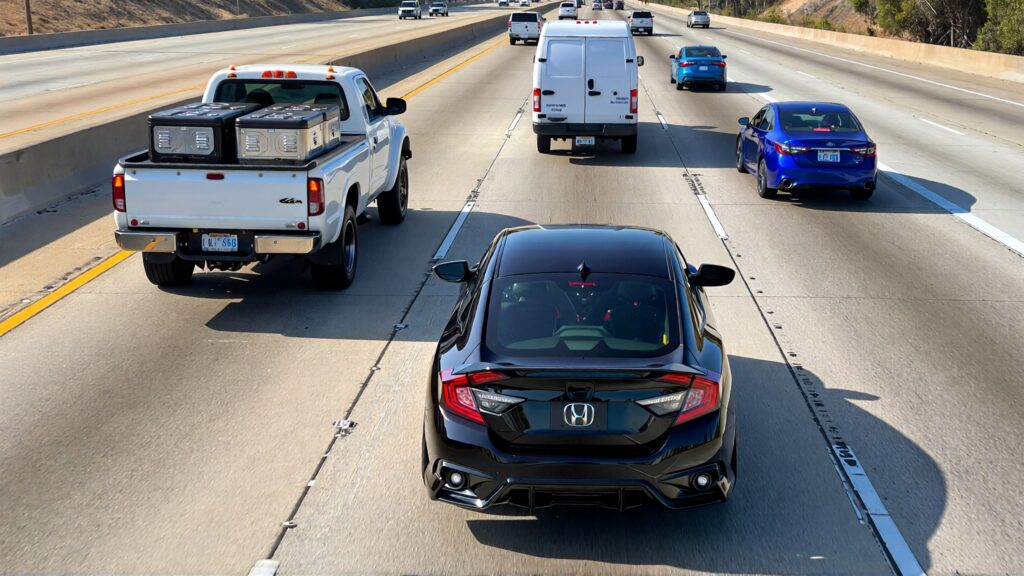
What We Know About the Rear-End Collision
California Highway Patrol records show the incident was logged at 9:56 a.m. on June 9th along State Route 1, north of State Park Road in the Aptos community. According to CHP reports, a small vehicle struck the rear of a black pickup truck, resulting in minor injuries to at least one of those involved. The exact number of occupants and any lane closures or traffic impacts were not immediately available in the initial report.
State Route 1, commonly known as Cabrillo Highway through this stretch of Santa Cruz County, sees a consistent mix of local commuters, agricultural workers, beachgoers, and through traffic heading along the Central Coast. The area north of State Park Road is near several parks, residential neighborhoods, and commercial zones, making it a regularly busy corridor during the morning hours.
Rear-End Collisions: Common Causes and Legal Consequences
Rear-end crashes are among the most frequently reported collision types on California highways, and while they are sometimes dismissed as minor fender-benders, the physical and financial consequences for the person struck from behind can be significant. Under California Civil Code §1714, every driver owes a duty of reasonable care to others on the road. When a driver fails to maintain a safe following distance, becomes distracted, or travels at a speed inconsistent with traffic conditions, that negligence can give rise to legal liability.
In rear-end collisions, California law generally applies a rebuttable presumption that the trailing driver was at fault, based on the duty to maintain a safe stopping distance under California Vehicle Code §21703. That presumption can be overcome with evidence, but it frequently places the burden squarely on the driver who made contact from behind to explain why the collision was not the result of inattention or excessive speed.
Even crashes categorized as resulting in minor injuries can produce soft tissue damage, whiplash, back and neck strain, and head trauma that may not become fully apparent for hours or days after impact. Victims who accept early settlements before understanding the full scope of their injuries risk receiving far less than what their case is actually worth.
What Your Claim May Be Worth After a Santa Cruz County Crash
Determining the value of a personal injury claim after a collision on State Route 1 or any California roadway depends on a range of factors specific to each injured person’s circumstances. California courts and insurance adjusters evaluate both economic and non-economic damages when assessing the worth of a claim.
Economic damages include quantifiable financial losses such as emergency medical treatment, follow-up care, physical therapy, prescription costs, vehicle repair or replacement, and lost income during recovery.
Non-economic damages compensate for the more personal dimensions of a collision’s impact, including physical pain and suffering, emotional distress, disruption to daily activities, and loss of enjoyment of life.
Two common methods are used to estimate non-economic losses. The multiplier method multiplies your total economic damages by a factor, typically between 1.5 and 5, depending on the severity of your injuries, the duration of recovery, and the degree of fault. A crash involving $15,000 in medical bills and lost wages, multiplied by a factor of 2.5, would yield a non-economic estimate of $37,500, bringing the total estimated claim value to approximately $52,500.
The per diem method assigns a daily dollar value to your pain and suffering, often pegged to your daily earnings or another reasonable daily rate, and multiplies it by the number of days you experienced significant discomfort or limitation. If you experienced pain for 120 days at a rate of $150 per day, that portion of your claim would equal $18,000.
These are estimates, not guarantees. An experienced personal injury attorney can evaluate the specific details of your case to develop a more accurate picture of what fair compensation looks like.
Understanding California’s Statute of Limitations for Injury Claims
Time is a critical factor in any personal injury matter arising from a California traffic collision. Under California Code of Civil Procedure §335.1, injured parties generally have two years from the date of the accident to file a personal injury lawsuit. If a loved one was killed in the crash, wrongful death claims under CCP §377.60 carry the same two-year window running from the date of death.
While two years may feel like ample time in the immediate aftermath of a crash, the reality is that building a strong personal injury case requires action well before that deadline arrives. Insurance companies begin their own investigations almost immediately after a collision is reported, and their adjusters are trained to gather information and craft narratives that minimize the payout they ultimately owe.
Claimants who wait months before consulting an attorney often find that critical evidence has disappeared, that witness memories have faded, and that the opposing side has already established a version of events that is difficult to challenge. Engaging legal representation early gives your attorney the opportunity to preserve dashcam footage, obtain the official CHP collision report, photograph the scene and vehicles, identify and interview witnesses, and secure any available traffic or surveillance camera recordings from businesses near the crash site on State Route 1. The sooner you act, the stronger your position.
How a Rear-End Accident Settlement Calculator Can Help You Understand Your Claim’s Value
When you are recovering from a rear-end collision on a California highway, one of the most pressing questions you will face is what your injury claim is actually worth. A rear-end accident settlement calculator is a practical tool that helps injured victims understand the potential value of their case by factoring in the key categories of damages recognized by California personal injury law.
By entering information such as your total medical expenses, projected future treatment costs, lost wages, the estimated duration of your recovery, and the degree of pain and disruption the collision has caused in your daily life, a settlement calculator applies either the multiplier method or the per diem method to generate a reasonable starting estimate of what fair compensation might look like.
While no calculator can replace the individualized analysis of an experienced personal injury attorney, having a ballpark figure before you enter negotiations with an insurance adjuster gives you an important baseline, helping you recognize whether an early settlement offer genuinely reflects the full scope of your losses or falls significantly short of what your case deserves.
For victims of rear-end crashes on State Route 1 and throughout Santa Cruz County, using a settlement calculator as an early reference point, alongside a free consultation with GJEL Accident Attorneys, is a smart first step toward protecting your financial recovery. Call us now at +1-866-218-3776 to speak with our experts.
Taking the First Step Toward Justice
“If you were injured in this crash on Cabrillo Highway, I want you to know that what you are going through right now — the pain, the uncertainty, the stress of dealing with insurance companies while you are trying to heal — is something we understand deeply and take seriously. A rear-end collision can leave you with injuries that are not immediately obvious, and the pressure to settle quickly from an insurer who is looking out for their own bottom line, not yours, can lead people to accept far less than they truly deserve. My advice is simple: do not give a recorded statement to any insurance company, do not sign anything, and please speak with an experienced personal injury attorney before making any decisions about your claim. At GJEL, we have spent more than 40 years fighting for injured Californians, and we are here to make sure that the full weight of what happened to you is recognized and compensated. Your consultation with us is completely free, and you will never owe us anything unless we win for you.” — Andy Gillin, Managing Partner, GJEL Accident Attorneys
GJEL Accident Attorneys has spent more than 40 years representing injured Californians and has recovered over $950 million in verdicts and settlements for accident victims throughout the state. Our attorneys handle every case on a contingency fee basis, which means you pay nothing unless and until we win compensation for you. There are no upfront costs, no hourly fees, and no financial risk to you.
Compassionate GJEL accident attorneys are always available to discuss your case, and you pay nothing unless we secure a favorable outcome. Let our experienced legal team shoulder the legal burden while you focus on what matters most – your family’s healing and recovery. Contact us today at +1-866-218-3776 or visit our San Francisco office for free legal advice.
Local Resources for Santa Cruz County Accident Victims
If you were involved in this collision or need assistance following a traffic accident in the Aptos area or broader Santa Cruz County, the following agencies and resources may be of help:
California Highway Patrol — Santa Cruz Area Office Address: 2001 Freedom Blvd., Watsonville, CA 95076 Phone: (831) 662-0511 Website: chp.ca.gov The Santa Cruz Area CHP office handles crash reporting and traffic enforcement along State Route 1 and other state highways in the county. Request a copy of your collision report through this office or via the CHP’s online portal.
Santa Cruz County Sheriff’s Office Address: 701 Ocean St., Santa Cruz, CA 95060 Phone: (831) 471-1121 Website: scsheriff.com The Sheriff’s Office provides law enforcement services to unincorporated areas of Santa Cruz County, including the Aptos community.
Dominican Hospital — Santa Cruz Address: 1555 Soquel Dr., Santa Cruz, CA 95065 Phone: (831) 462-7700 Website: dominicanhospital.org The primary hospital serving Santa Cruz County, offering emergency and trauma services.
Palo Alto Medical Foundation — Aptos Center Address: 7601 Mission St., Aptos, CA 95003 Phone: (831) 688-9440 Website: sutter.org Provides urgent care and outpatient services in the Aptos area, convenient for those who may not require emergency room treatment.
California DMV — Santa Cruz Field Office Address: 2046 N. Pacific Ave., Santa Cruz, CA 95060 Phone: (800) 777-0133 Website: dmv.ca.gov Contact the DMV for assistance with accident-related vehicle registration matters, SR-1 form submissions, and driver record requests.
Caltrans District 5 — San Luis Obispo (State Route 1 Oversight) Phone: (805) 549-3111 Website: dot.ca.gov/caltrans-near-me/district-5 Caltrans District 5 oversees State Route 1 through Santa Cruz and Monterey Counties. Report roadway hazards or request information about road conditions through this office.