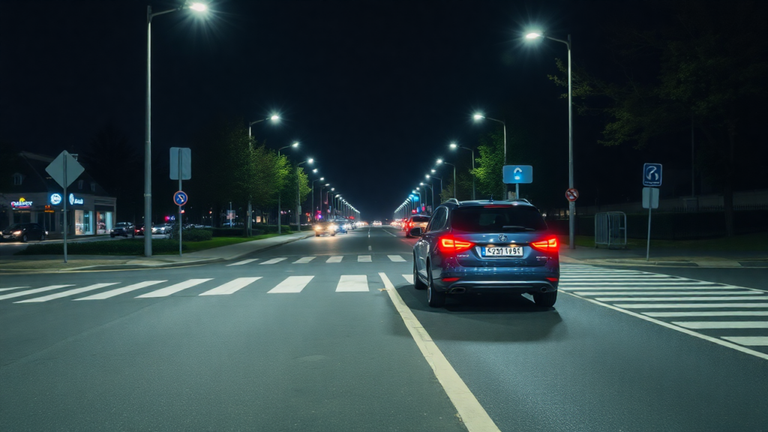
The California Highway Patrol (CHP) Solano Area is investigating a fatal pedestrian crash that occurred early Sunday morning, October 25, 2026, on westbound Interstate 80 in Solano County. The collision left a woman dead and has prompted a detailed investigation into how a pedestrian came to be on one of Northern California’s busiest freight and commuter corridors in the middle of the night.
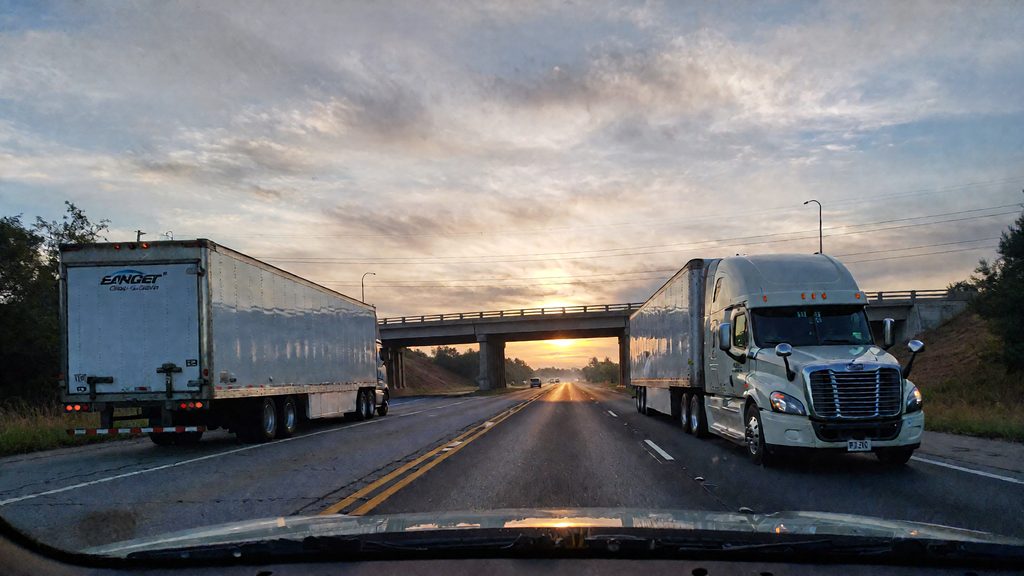
What Happened in the Pedestrian Crash
According to the CHP, the Golden Gate Communications Center received reports at approximately 12:49 a.m. of a large obstruction blocking the #3 and #4 lanes of westbound I-80, just east of the Cordelia Commercial Vehicle Enforcement Facility (CVEF) scales. Callers initially described the object as a large animal or possibly a body.
Solano Area units responded, initiated a traffic break, and arrived on scene at approximately 12:55 a.m. Officers located an unidentified woman in the roadway who showed obvious signs of death. All westbound lanes were temporarily stopped while investigators worked the scene. The number one lane was reopened at approximately 3:38 a.m., more than two and a half hours after officers first arrived.
Based on the CHP’s timeline, the first report came in at approximately 12:49 a.m., and officers arrived on scene just six minutes later at 12:55 a.m. That quick response suggests the obstruction was seen by other motorists, who described it as something large lying across the #3 and #4 lanes.
The CHP’s account places the point of impact in the number six lane, which means the woman’s body was in a different lane from where it was later reported, and investigators will need to determine how it came to rest across the freeway. That raises important questions about whether other vehicles passed through the area before the calls were made.
This stretch of westbound I-80 in Cordelia, east of the commercial vehicle enforcement scales, sees steady truck and commuter traffic at all hours. Drivers here are often traveling at highway speeds in the dark, which leaves very little time to recognize and react to an object in the roadway.
Because all westbound lanes were stopped while officers worked the scene, the closure also disrupted early morning travel through one of Solano County’s most heavily used corridors, and the number one lane did not reopen until 3:38 a.m.
The Truck Driver and the Physical Evidence
Investigators determined that a 59-year-old Oakley man was driving a 2015 Peterbilt truck and semi-trailer when the crash occurred. The CHP reports that he merged onto westbound I-80 from westbound State Route 12 (Rio Vista) and that his vehicle struck the pedestrian, who was located in the number six lane.
The driver told investigators he believed he had struck a large box. After noticing damage to the radiator, he pulled into the westbound scales. Solano Area units responded to that location and recovered physical evidence linking the truck to the collision. The CHP has stated that drugs and alcohol are not suspected to be a factor for the truck driver.
The investigation remains ongoing as authorities work to formally identify the pedestrian. The driver’s statement that he believed he had struck a large box is likely to draw close attention as the investigation continues. A commercial driver is expected to maintain a proper lookout and to drive at a speed that allows time to react to hazards, particularly when merging from State Route 12 onto a freeway in the dark.
Investigators will want to know how fast the truck was traveling, whether the headlights illuminated the roadway ahead, and how much time the driver had to see and respond before impact.
The fact that he pulled into the westbound scales after noticing radiator damage, rather than stopping at the scene, will also be part of the review, since California Vehicle Code §20001 requires drivers involved in a crash that results in injury or death to stop immediately and fulfill their legal duties.
Whether he realized the object was a person is a question that will turn on the evidence. The physical evidence recovered by Solano Area units at the scales, which the CHP says links the truck to the collision, will help establish the sequence of events. In a case like this, the truck itself can be a valuable source of information.
Its engine control module may record speed, braking, and throttle data, and any onboard cameras or electronic logging devices can show how long the driver had been on the road.
The CHP’s statement that drugs and alcohol are not suspected as factors for the driver is an important early finding, but it does not end the inquiry, because fatigue, distraction, and equipment condition can also contribute to a crash and are not detected by a standard impairment screening.
Why Pedestrian Crashes on Freeways Raise Complex Legal Questions
A crash like this raises difficult questions that can only be answered once the investigation is complete. California Vehicle Code §21960 generally restricts pedestrians from entering freeways, and the defense in a case like this will often point to that rule.
However, restrictions on pedestrian access do not automatically excuse a driver from responsibility. Under California’s pure comparative fault doctrine, a person’s recovery is reduced by their percentage of fault but is not eliminated, even if a jury assigns most of the fault to them.
Vehicle Code §21954 also makes clear that pedestrians outside a crosswalk must yield to vehicles, but the same statute preserves a driver’s duty to exercise due care for the safety of any pedestrian on the roadway. Civil Code §1714 establishes the broader principle that everyone is responsible for injuries caused by a failure to use ordinary care.
The reasons the woman was on the freeway are not yet known, and no one should draw conclusions before investigators finish their work. She may have been the victim of a vehicle breakdown, a prior collision, an abandoned vehicle, a medical emergency, or another event that placed her in the roadway.
Questions Investigators and Families May Need Answered
In a collision involving a commercial truck, the evidence goes well beyond the crash scene. Federal regulations under 49 CFR Parts 391, 395, and 396 govern driver qualifications, hours of service, and vehicle inspection and maintenance.
Electronic logging device data, engine control module information, dash camera footage, and company dispatch records can show how fast the truck was traveling, whether the driver was fatigued, and whether he had time to perceive and react to an object in the lane.
Questions about the merge from State Route 12 are also important. Lighting conditions, visibility, lane position, and following distance can all shape how responsibility is assigned.
If the driver was employed by a motor carrier at the time, the company may also be held liable under the doctrine of respondeat superior. Evidence of this kind is often overwritten or discarded within weeks, which is why prompt preservation requests matter.
Legal Options for the Family Under California Law
When a person dies because of another party’s negligence, California law allows the family to pursue accountability in two ways. A wrongful death claim under Code of Civil Procedure §377.60 may be brought by eligible family members.
These include a spouse, domestic partner, children, and, in some cases, parents, siblings, or others who depended on the deceased. These claims can seek compensation for the loss of love, companionship, guidance, and financial support, as well as funeral and burial costs.
A survival action under Code of Civil Procedure §377.30 allows the deceased person’s estate to recover damages the victim could have pursued had she lived, such as medical expenses incurred before death and lost income.
The general statute of limitations for wrongful death claims is 2 years under Code of Civil Procedure § 335.1. If a dangerous condition of public property, such as inadequate roadway lighting, contributed to the crash, Government Code §835 may apply, and claims against a public entity carry much shorter deadlines. A government tort claim generally must be filed within six months of the incident.
How Wrongful Death Settlements Are Evaluated
Because every case turns on its own facts, no responsible attorney can promise a particular outcome. Still, it helps families to understand the frameworks commonly used to evaluate value.
Under the multiplier method, economic damages, such as medical bills, funeral costs, and lost financial support, are summed and multiplied by a factor, typically based on the severity of the loss and the strength of the liability evidence. Under the per diem method, a daily dollar value is assigned to the survivors’ suffering and loss, which is then multiplied by the number of days the family is expected to experience that loss.
Neither method is a formula that guarantees a result. Comparative fault, insurance coverage limits, the identity of the defendants, and the quality of the evidence all affect what a claim may ultimately be worth. Commercial trucking cases often involve higher insurance limits than ordinary auto cases, which can matter significantly when a family is trying to secure long-term stability after a loss.
Wrongful Death Settlement Calculators and Why They Matter
A wrongful death settlement calculator is an online tool that gives families a rough estimate of what a claim might be worth based on the details they enter. Most calculators work from the same two approaches that attorneys and insurance adjusters use to value a case.
The multiplier method sums economic losses, such as funeral and burial costs, medical bills incurred before death, and the income and benefits the family has lost, and then multiplies that total by a factor that reflects the severity of the loss and the strength of the liability evidence.
The per diem method assigns a daily dollar value to the family’s suffering and loss of companionship and multiplies it by the number of days they are expected to live with that loss.
These tools matter because they give grieving families a starting point for understanding the financial scope of their loss at a time when everything feels uncertain, and they help families recognize that the true value of a claim often extends well beyond the bills on the table. A calculator is only an educational estimate, however, and it cannot account for the factors that shape real outcomes.
Comparative fault, available insurance coverage, the number of liable parties, the decedent’s age and earning history, and the quality of the evidence can all move a settlement significantly in either direction. In a case involving a commercial truck, for example, the carrier’s policy limits and the preservation of electronic data can significantly change the picture.
For that reason, a calculator should be treated as a way to begin the conversation rather than a promise of any particular result, and families are best served by having an experienced California wrongful death attorney evaluate the specific facts of their case.
Speak With a California Wrongful Death Attorney
“No one should have to face the aftermath of a crash like this alone. If you or someone you love was hurt, or if your family has lost someone, please know that your first priority should be your health and healing, and ours is to handle everything else. Evidence in truck collisions, such as electronic data and driver records, can disappear quickly, and California’s deadlines are shorter than most people realize. Speaking with an experienced attorney early protects your rights and gives you clear answers without any pressure. Call us anytime for a free, confidential consultation, because you pay nothing unless we recover compensation for you.” – Andy Gillin, Managing Partner, GJEL Accident Attorneys
If your family has been affected by a fatal pedestrian or truck crash in Solano County or anywhere in California, the attorneys at GJEL Accident Attorneys are here to help.
With more than 40 years of experience and over $950 million recovered for clients, our team has the resources to investigate complex commercial vehicle cases. We work on a contingency fee basis, which means you pay nothing unless we recover compensation for you. Call us at 1-855-508-9565 or visit our Antioch office for a free, confidential consultation.
Local Resources and Agencies That Can Help After a Solano County Crash
Families and witnesses affected by this collision may need to contact several agencies, each of which plays a different role in the aftermath. The following organizations can provide information, support, and official records:
California Highway Patrol, Solano Area Office
The CHP Solano Area office is the agency investigating this crash and is the best point of contact for anyone with information about it. Witnesses, including motorists who passed the scene near the Cordelia scales shortly before 12:49 a.m. on October 25, 2026, are encouraged to reach out. Families can also request a copy of the traffic collision report once it is complete. The office is located at 3050 Travis Boulevard, Fairfield, CA 94534, and its phone number is (707) 639-5600. Office hours are Monday through Friday, 8:00 a.m. to 5:00 p.m. Website: https://www.chp.ca.gov/find-an-office/golden-gate-division/offices/(365)-solano
Solano County Sheriff’s Office and Coroner Services
Family members waiting for the woman’s formal identification may need to contact the county’s coroner services, which work with investigators on identification and notification of next of kin. The Sheriff’s Office administrative offices are located at 530 Union Avenue, Suite 100, Fairfield, CA 94533. Website: https://www.solanocounty.gov
Solano County District Attorney, Crime Victim Assistance
The District Attorney’s Office offers victim services that help families understand the criminal justice process, apply for financial assistance, and connect with counseling services. The Fairfield office can be reached at (707) 784-6827 and the Vallejo office at (707) 553-5052. Website: https://www.solanocounty.com/depts/da/
California Victim Compensation Board (CalVCB)
CalVCB may reimburse eligible families for funeral and burial expenses, counseling, and certain other losses when a loved one dies as a result of a crime or qualifying crash. A county-specific resource page is available for Solano County. Website: https://www.victims.ca.gov/victims/counties/solano.aspx
SafeQuest Solano
SafeQuest Solano provides crisis support and advocacy for victims and survivors in the county, connecting families with trained advocates during a very difficult time. Its crisis line is 1-866-487-7233. Website: https://www.safequest.us/
Caltrans District 4
Interstate 80 through Solano County is maintained by Caltrans District 4. Anyone concerned about roadway lighting, signage, or other highway conditions near the Cordelia and State Route 12 interchange can report them here. Website: https://dot.ca.gov/caltrans-near-me/district-4
Solano Transportation Authority
The Solano Transportation Authority coordinates transportation planning and safety programs across the county, including projects along the I-80 corridor. Website: https://sta.ca.gov
Solano County Superior Court
Families who pursue a civil wrongful death claim will file it with the Superior Court of California, County of Solano. The Hall of Justice is located at 600 Union Avenue, Fairfield, CA 94533, and the Civil Division can be reached at (707) 207-7330. Website: https://solano.courts.ca.gov