
You did not expect your day to end in a collision with an Amazon delivery truck. Now you are managing injuries, medical treatment, lost income, and insurance calls that seem to come before you have had time to process what happened. It can feel overwhelming and urgent all at once.
When an Amazon delivery vehicle is involved, this is not a routine accident. You are no longer dealing with a single driver and a standard auto policy. You are facing a commercial delivery network, layered insurance coverage, and corporate entities that begin protecting their financial interests immediately. You should not have to navigate that while you are trying to recover.
That is where GJEL Accident Attorneys steps in to protect your rights and pursue the full compensation you are entitled to under California law.
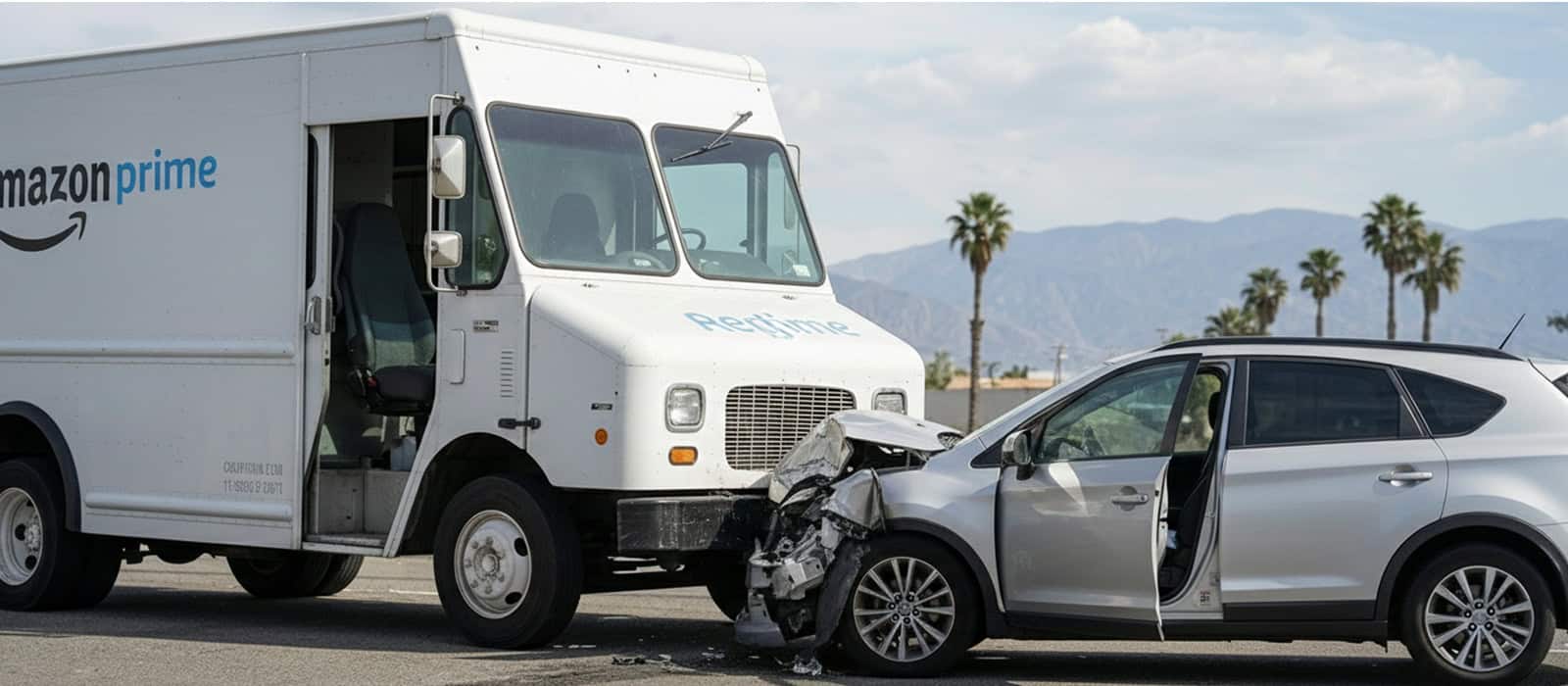
When an Amazon Delivery Truck Hits You, the Rules Change
When an Amazon delivery truck hits you during an active delivery, your case is treated differently from the very beginning. These crashes often involve commercial insurance policies, third-party delivery contractors, and layered corporate structures that can make liability appear more complicated than it truly is.
You may be told the driver was an independent contractor. You may be told Amazon is not responsible. You may even feel pressure to accept that explanation before the full facts are known.
Under California law, responsibility is determined by control and whether the delivery operation was acting within the scope of its work at the time of the collision. You should not have to investigate corporate relationships or prove liability on your own. GJEL steps in immediately to examine every layer of responsibility and ensure your claim is evaluated based on the law, not what is most convenient for the companies involved.
What You’re Likely Dealing With Right Now
Here is the refined version with:
• Strong second person • Clean emotional progression • Humanity + reassurance • Clear authority shift • TJH commercial tone • No em dashes
What You’re Likely Dealing With Right Now
After an Amazon delivery truck accident, it is common to feel overwhelmed quickly.
Medical bills begin arriving. You may be missing work or wondering how long your recovery will take. At the same time, insurance adjusters may already be contacting you, requesting statements or encouraging a fast resolution.
You should not have to manage medical treatment, financial stress, and corporate insurers at the same time. Once GJEL becomes involved, those calls come to us. Communication with insurance carriers and delivery companies is handled through our office so decisions are made carefully, based on your health and long-term recovery, not pressure.
You Don’t Need All the Answers to Call
You do not need to know who is legally at fault. You do not need to know whether your injuries will resolve quickly or require ongoing care. You do not need to know whether the delivery truck was officially on duty at the time of the crash.
If you were hit by an Amazon delivery truck and you are injured, that is enough to begin.
When you contact GJEL, the goal is not to rush you into litigation. The goal is to understand what happened, determine how the delivery operation was structured, and decide what action is necessary to protect your physical recovery and your financial future.
Responsibility Often Goes Beyond the Driver
When an Amazon delivery truck is working at the time of a crash, responsibility rarely ends with the driver alone.
You may be dealing with a Delivery Service Partner operating an Amazon-branded van, an Amazon Flex driver using a personal vehicle, or a third-party carrier transporting Amazon freight. Each structure involves different insurance policies, contractual relationships, and layers of legal responsibility.
You should not have to untangle those corporate arrangements while you are recovering. That is our role. GJEL investigates who controlled the delivery operation, who directed the work being performed, and which companies are legally accountable under California law.
“Independent Contractor” Does Not Mean “No Responsibility”
You may be told that Amazon is not responsible because the driver was classified as an independent contractor. That explanation is often incomplete and sometimes misleading.
When a company controls delivery routes, timing requirements, performance metrics, and driver conduct through digital systems and supervision, California law may still allow corporate responsibility to attach. This becomes especially important when the delivery vehicle was actively making deliveries at the time of the collision.
These arguments are raised quickly by insurers to limit exposure. GJEL addresses them just as quickly, before a one-sided narrative becomes the version of events you are pressured to accept.
Yes — it’s strong, but we can tighten the constituent flow further.
Right now it’s:
Operational pressure → Example crashes → Evidence tools Disappearing evidence → What we do Insurers move fast → We step in
That’s good, but we can sharpen the internal movement of each section so it flows:
Pressure → Risk to you → Proof → Protection Loss risk → Irreversibility → Action Power imbalance → Shield → Outcome
Here’s the improved version with stronger progression and tighter cadence:
Why These Crashes Happen
Amazon delivery systems are built for speed. Routes are optimized. Stops are tracked. Performance is measured. That pressure can reduce reaction time and increase risk, especially in residential areas and busy intersections where you are sharing the road.
You may have been rear-ended, struck while turning, sideswiped during a lane change, or hit while walking or biking. In many cases, drivers are rushing to meet delivery expectations or interacting with handheld devices.
Those facts are not assumptions. They can be proven. GJEL analyzes delivery app activity, GPS movement data, onboard camera footage, and route logs to determine exactly what was happening at the moment of impact and whether delivery demands contributed to the crash.
Evidence You Shouldn’t Have to Chase
In Amazon delivery truck cases, key evidence is digital and temporary.
Driver logs, GPS records, app activity, vehicle data, and camera footage are often stored for limited periods before being overwritten. Once lost, that evidence cannot be recreated.
You should not have to worry about preserving corporate data while you are recovering from injuries. GJEL sends preservation notices immediately, secures records through formal legal demands, and acts quickly to prevent critical proof from disappearing.
We Handle the Insurance Companies
After a commercial delivery crash, insurers begin working to control exposure before the full impact of your injuries is known.
You should not be fielding calls, answering strategic questions, or negotiating under pressure. Once GJEL steps in, insurers communicate with us. We manage the documentation, the negotiations, and the legal strategy so decisions are made based on verified medical evidence and a complete understanding of your losses.
Here is the refined version with:
• Very simple constituent flow • Shorter sentences • Strong second person • Clear progression • Easy readability • TJH authority tone • No em dashes
Compensation That Reflects What You’re Facing
You are entitled to compensation that reflects the full impact of this crash on your life.
That may include medical bills, future treatment, lost income, reduced earning capacity, and pain and suffering. Many Amazon delivery truck injuries do not resolve quickly. Your recovery must account for what lies ahead, not just what has already happened.
GJEL pursues full and fair financial compensation under California law based on the specific facts of your case.
Time Matters Under California Law
California law sets strict deadlines for filing a personal injury claim. Missing those deadlines can permanently prevent recovery, no matter how strong your case may be.
Getting legal help early allows evidence to be preserved and responsibility to be addressed before it is limited or denied.
What Changes When GJEL Is Involved
For many clients, contacting GJEL is when things begin to feel manageable again.
You are no longer fielding insurance calls. You are no longer guessing what happens next. You know someone is protecting evidence, communicating with insurers, and guiding the legal process.
You focus on healing. We focus on accountability.
Free Consultation
Your consultation with GJEL Accident Attorneys is free and confidential. There are no upfront fees. We are paid only if compensation is recovered for you.
The consultation is an opportunity to understand your options and determine whether legal action is necessary to protect your recovery.

Written by GJEL Accident Attorneys, reviewed by Andrew (Andy) R. Gillin.
ABOUT THE REVIEWER Andrew (Andy) R. Gillin is a founding partner of GJEL Accident Attorneys and has practiced personal injury law in California state and federal courts since 1970. He earned his Juris Doctor from the University of Chicago Law School and co-founded GJEL in 1972. Over the course of his career, Andy has helped hundreds of injured plaintiffs recover compensation, including multiple seven-figure settlements and verdicts. He specializes in serious injury and wrongful death cases and holds an AV Preeminent rating from Martindale-Hubbell, with recognition from Super Lawyers and Best Lawyers in America.
Frequently Asked Questions
What if I’m not sure whether the Amazon delivery truck was working at the time of the crash?
You do not need to know that before contacting a lawyer. Many people are unsure whether the driver was on duty or logged into a delivery app. GJEL determines that through delivery records and evidence you don’t have access to on your own.
Can I still have a case if the driver was an independent contractor?
Yes. Independent contractor status does not automatically prevent liability under California law. When delivery work is controlled and monitored, responsibility may still extend beyond the driver.
Should I talk to the insurance company before calling a lawyer?
You are not required to speak with insurance adjusters before seeking legal advice. In delivery truck cases, early statements are often used to limit claims. Once GJEL is involved, insurers communicate through us.
What if my injuries don’t seem serious yet?
That’s common. Many injuries worsen over time. You do not need a final diagnosis to speak with GJEL. Early review helps protect your options before insurers push quick resolutions.
How much does it cost to talk to GJEL Accident Attorneys?
Consultations are free and confidential. If GJEL represents you, legal fees are paid only if compensation is recovered.
How long do I have to file a claim in California?
California law sets strict deadlines for personal injury claims. Waiting too long can permanently bar recovery, even if the delivery truck was clearly at fault.
What if the Amazon delivery truck hit me while I was walking or biking?
GJEL represents pedestrians and cyclists injured by Amazon delivery trucks. Responsibility is evaluated based on delivery activity and control, not the type of road user involved.
Amazon-branded delivery crashes can involve several companies and insurance policies. Our California delivery truck accident lawyers explain how responsibility is investigated across that delivery network.