
Distracted driving is a serious crash risk, but national data do not establish it as the most common cause of all car accidents. It includes anything that pulls a driver’s eyes, hands, or attention from the road. Texting combines several forms of distraction, according to NHTSA. At 55 mph, the five seconds it takes to read a text means you travel the length of a football field while practically blind.
Crash factors can overlap, and their reported counts depend on how crashes are investigated. For 2024 traffic fatalities, NHTSA reports:
Alcohol impaired driving caused about 11,904 deaths in 2024, close to 30% of all traffic fatalities.
Speeding was a factor in roughly 29% of all traffic fatalities.
For California specific numbers, see our California car accident statistics page: 4,061 deaths and 163,848 fatal and injury crashes in 2023, with data for all 58 counties.
[Note: If you or someone you love was seriously injured in a car crash in Northern California, contact our attorneys today for a free case review.
What is the number one cause of car accidents?
10 causes of road accidents include distracted driving, speeding, drunk driving, reckless behavior, poor weather conditions, tailgating, running red lights, inexperienced drivers, road rage, and mechanical failures. Understanding these factors can help prevent car accidents and promote safer roads. There is no reliable national ranking that establishes one cause as the most common in all crashes. NHTSA cautions that distraction is difficult to identify after a crash and reporting varies.
Distracted drivers divert their attention from the road by engaging in activities such as using a cell phone, texting, eating, or multitasking while driving. Now you may be wondering what are some causes of car crashes? Check out the other top 25 causes below.
Here Are The Top 25 Causes of Car Crashes
1. Distracted Driving
Distracted Driving: This caused 3,208 deaths and 315,167 injuries in 2024, and drivers aged 15 to 20 have the highest share of distraction in fatal crashes. The fix is easy. Switch your phone to Do Not Disturb before you start driving.
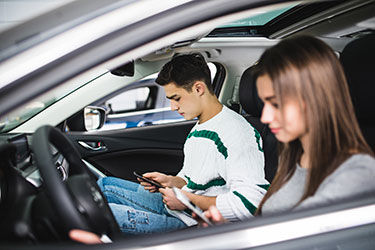
Distracted driving is one important crash risk. NHTSA reports 3,208 deaths in distraction-related traffic crashes in 2024, but that figure does not establish a ranking of all crash causes. Distracted driving can lead to serious car accidents, often resulting in severe injuries or fatalities.
Distracted driving includes, but is not limited to, texting while driving, operating another handheld device while driving, driving with the music blaring, talking to backseat passengers while driving, eating while driving and more.
Be smart when behind the wheel, and keep all senses attuned to the task at hand.
It’s one of the reasons why our firm focuses on helping victims injured in car crashes
2. Speeding
A factor in about 29% of all traffic fatalities. Give yourself extra travel time so you are never racing the clock.
“Everyone speeds” is not a good enough reason to put the pedal to the metal. There are speed limits for a reason. Speed limits are designed to give you enough time to break for obstacles and other vehicles.
If you are doing 50 in a 35, you may not be able to stop for a red light in time, or you may brake too late when a kid runs out into the road chasing after his or her ball. Follow the speed limit no matter how ridiculous you think it is.
Speeding is a common cause of car accidents. When drivers exceed the speed limit, they have less time to react to changes on the road, which can lead to accidents. The three most important things to know about speeding are:
Speeding is a leading cause of fatal accidents.
Speed limits are in place for a reason, and drivers should always obey them.
Driving at a safe and reasonable speed can help to prevent accidents.
Speeding is also a common cause of bicycle crashes in California
For local historical context, explore speeding-related crashes in San Jose in GJEL’s 2020–2024 crash map, with filters for reported speeding and injury severity.
3. Drunk Driving
Responsible for about 11,904 deaths in 2024, close to 30% of all traffic deaths, even after three straight years of decline. Arrange your ride home before your first drink.
Alcohol impairment remains a major traffic safety risk. NHTSA reports 11,904 deaths in alcohol-impaired driving crashes in 2024. That count cannot be used to rank the causes of all crashes.
That said, an unacceptable amount of accidents are caused by drunk drivers each year. Do not be the cause of another tragedy and stay sober. If you do drink while out, have someone DD you, or call an Uber.
4. Reckless Driving
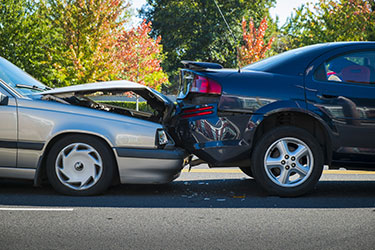
Reckless drivers, who engage in aggressive driving, speeding, swerving in and out of traffic, tailgating, and other aggressive behaviors, contribute to the high number of accidents each year.
Be courteous to others on the road—after all, other drivers have places to be too!—and drive like a polite, civilized human being.
Reckless driving is a traffic offense and can result in fines, points on your license, and even jail time.
Drivers who engage in reckless driving behaviors are more likely to be involved in accidents.
It is important to always drive defensively and be aware of other drivers on the road.
5. Running Red Lights
Like drunk driving, this is one of the more obvious causes of car accidents. Red means stop and will never mean anything else. If your light is red, it means that the lights directing traffic in other directions are likely green or yellow.
If you blow through a red light, chances are you will hit someone whose actual turn it is to go. Being distracted by work matters or family matters is not an excuse. If you are too distracted to drive, do not get behind the wheel.
6. Driving in the Rain
While you cannot always avoid driving in the rain, you can practice safe driving in the rain. Drive slow and if visibility becomes impaired, pull to the side of the road until the worst of the storm passes.
Your boss or significant other or mother will understand if you were late because of bad weather.
The three most important things to know about driving in bad weather are:
Drivers should reduce their speed and increase their following distance in bad weather.
It is important to ensure that your vehicle is equipped with appropriate tires and other equipment for the weather conditions.
Drivers should be aware of changing weather conditions and adjust their driving accordingly.
7. Tailgating
A leading cause of crashes where one vehicle strikes the one ahead. Keep at least a three second gap, and more in rain or fog.
There is never an excuse for driving too close to another vehicle. Tailgating is a dangerous behavior that has led to many fatal car accidents. Ultimately, you should keep two to three car lengths between you and the vehicle in front of you —that distance allows you ample time to stop should the car before you suddenly stop. Keep a safe distance between you and the car ahead of you at all times.
8. Drowsy Driving
Fatigue slows reaction time about as much as alcohol does. Pull over and rest at the first sign of drifting or heavy eyes.
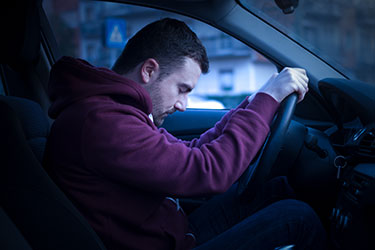
Research indicates that driving while tired is just as dangerous as driving while drunk. Being overtired can impair your judgment, slow your reaction time, mess with your vision, and even cause you to fall asleep behind the wheel.
If you catch yourself drifting off or are having difficulty concentrating, pull off to the side of the road and rest. If you are near home or a hotel, stop and get some sleep before hitting the road again.
9. Drugs
Alcohol and drowsy driving are not the only things that can impair your vision or judgment. Both illegal and legal drugs can inhibit your senses and make it difficult for you to drive safely.
Do not do narcotics or take heavy prescription medications before getting behind the wheel. If your doctor does prescribe you a medication, ask him or her if use of the medication will impair your judgement in any way.
10. Fog
Like with rain, you cannot always avoid driving in the fog. If you are forced to drive in the fog, use your fog lights, drive at or below the speed limit, and constantly check to make sure that you are in your own lane.
11. Snow
If there is a great deal of snow on the ground, avoid getting behind the wheel entirely. Driving in the snow is almost always avoidable. In fact, many employers make allowances for heavy snows and let workers either work from home or take the day off. If, however, you are forced to drive in the snow, put your vehicle into four-wheel drive and drive slowly. If you do not have a four-wheel drive vehicle, put chains on your tires. If you do live in an area prone to snow, make sure to equip your vehicle with snow tires.
12. Unsafe Lane Changes
Changing lanes is not unsafe. Changing lanes without looking, when there is little space between the cars in front of and behind you, or at fast speeds, however, is. When changing lanes, always check your mirrors and look over your shoulders, and only change lanes when there is adequate space to do so.
13. Teenagers
Though teenagers have a lot of redeeming qualities, carefulness is not one of them. Not only are teenagers inexperienced behind the wheel, but also, they tend to exhibit reckless behaviors, especially behind the wheel. Their inexperience combined with naturally reckless tendencies often result in accidents, and unfortunately, more work for car accident attorneys
14. Night Driving
Forty-nine percent of fatal car accidents happen at night, and the fatality rate per mile is nearly three times as high at night as during daylight hours. Night driving is dangerous.
Not only is vision impaired at night, but many people behind the wheel at night are tired, intoxicated, or both.
While you will be required to drive at night sometimes, remain vigilant behind the wheel, stay sober, and if you find yourself getting tired, either have someone else drive or pull over and rest.
15. Animal Crossings
When a large animal jumps into the middle of the road, it can cause a lot of damage, to both the car that hits it and any cars behind the lead vehicle. While there is no way to anticipate animals crossing the road, you can keep an eye out.
When driving at night, use your high beams to look for glowing eyes, and when you see animal crossing signs, become even more vigilant.
16. Construction Sites
Construction zones can be confusing, and oftentimes, there is not adequate enough warning for them. That said, if you see orange, be on the lookout. Always follow the posted speeds even when you do not see any workers present, and be extra vigilant about those around you. If you are confused, chances are other drivers are as well.
17. Improper Turns
As a licensed driver in the U.S., you should know how to make a legal and safe turn. Improper turns are a common cause of motor vehicle accidents. Steps for performing a legal turn include using your blinker, slowing down, and obeying all traffic signs and signals. Do not perform an illegal turn when signs clearly indicate turns in a certain direction are forbidden. If you need to get somewhere, take the correct way to that place, as shortcuts cause accidents.
18. Wrong Way Driving
Wrong way driving is worse than improper turns. Unfortunately, wrong-way driving accidents are more common than most people might think, and many of those crashes happen on freeways, where cars are driving along at speeds of between 60 and 80 miles per hour. A head-on collision at those speeds can be fatal. If you are unfamiliar with an area, pay close attention to all signs and to the direction in which traffic is flowing
19. Vehicle Malfunctions
It is not unheard of for cars to stall in the middle of a freeway, or for gears to shift while a car is in drive. Cars that stall out of nowhere are both dangerous to the occupants and occupants of other vehicles. You can prevent a crash by maintaining your vehicle and fixing issues when they arise, and not just when they become inconvenient.
20. Potholes
Potholes are a pain, and unfortunately, they cannot always be avoided. However, if you see a pothole ahead of you, either try to avoid it or slow down when you go through it. Speeding through a pothole is a guaranteed way to lose control and/or blow a tire.
21. Tire Blowouts
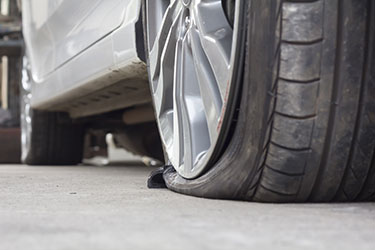
Speaking of blown tires, these are just as dangerous as potholes or vehicle malfunctions, as they can cause you to lose control of your vehicle.
You can prevent tire blowouts by having your tires rotated regularly, changing them when they start to wear, and inspecting them for imperfections every so often.
22. Curves
Tight and blind curves are hazards to drivers. Though curves can be fun to drive around—especially for those familiar with an area—they are the cause of several accidents. When driving on curvy roads, make sure to maintain the speed limit and look out for others.
23. Failing to Obey the Rules of the Road
Again, rules are in place for a reason, and it is not to make your life difficult. Rules are there to protect us. Speeding, running red lights, ignore traffic signs, following too closely, and other illegal driving behaviors cause accidents.
You can help reduce the number of accidents by following the rules of the road and hoping that others are wise enough to do the same.
24. Street Racing
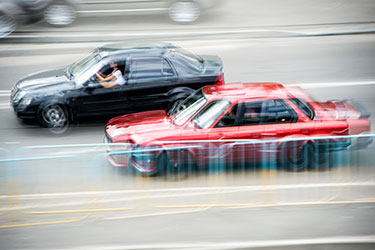
Though street racing is illegal, people still do it. Street racing on public roads with other drivers is downright dangerous, and if one is caught partaking in street racing activities, he or she could be charged with a lot more than reckless driving.
If you have the need for speed, find a street racing league and race only on private roads.
25. Ice
Ice is difficult to avoid, especially black ice. However, if it is cold enough out to ice, be extra cautious. Slow down before bridges, drive the speed limit, and leave plenty of room between your car and the vehicle in front of you.
When approaching a stop sign or stoplight, start stopping far in advance to allow room for skidding.
Most car accidents are caused by human error and negligence, as this list indicates. If everyone did their part and obeyed the rules of the road and practiced safe driving in dangerous conditions, the accident statistics would be a lot less dismal.
Though it is unrealistic to think that we can reduce accident numbers to zero, even one less accident is a step in the right direction.
Tips to avoid car accidents
Avoid distractions while driving, such as using electronic devices or eating while behind the wheel.
Obey speed limits and traffic signals, and avoid aggressive driving behaviors.
Never drink or drive under the influence of drugs.
Adjust your driving habits to account for poor weather and road conditions.
Keep your vehicle in good condition, and have it regularly serviced and maintained.
Be aware of other drivers on the road, particularly inexperienced or elderly drivers.
Pay attention to pedestrians and cyclists, and give them plenty of room to maneuver.
Frequently asked questions about car accidents
What is the number one cause of car accidents?
There is no dependable national ranking of the single most common cause of all car accidents. NHTSA tracks factors such as distraction, alcohol impairment, and speeding, but these categories can overlap and are measured differently.
How many car accidents happen each year?
There were about 6.14 million police reported crashes in the United States in 2023, which is roughly 16,800 a day. An estimated 39,345 people died in traffic crashes in 2024.
What is the most common cause of car accident deaths?
In 2024, NHTSA reports that alcohol-impaired driving crashes involved about 30% of traffic deaths and speeding was a factor in about 29%. These groups can overlap and should not be added together. Failing to wear a seat belt also sharply raises the chance of dying in a crash.
Who causes the most car accidents?
Younger and less experienced drivers are involved at higher rates. Drivers aged 15 to 20 have the largest share of distraction at the time of fatal crashes.
Why do I keep getting into car accidents?
Repeated crashes often come down to habits a driver can change, such as following too closely, speeding, driving tired, or using a phone. Looking honestly at what happened each time and fixing one habit at a time measurably lowers your risk.
Are car accidents becoming more or less common?
Traffic deaths fell below 40,000 in 2024 for the first time since 2020, and the fatality rate reached its lowest point since 2019. The total number of crashes, however, is still rising slightly each year.
Were you in a car accident? Reach Out to a Skilled Car Accident Attorney for Help
If you were involved and injured in a car accident in California, contact GJEL to learn more about your compensation recovery options today.
We are eager to assist you throughout each step of your case.
Car Accident Statistics for 2024 and 2026
39,345 people died in U.S. traffic crashes in 2024 according to NHTSA estimates.
That is down about 3.8% from 40,901 deaths in 2023, and it is the first time the total has fallen below 40,000 since 2020. It works out to roughly 108 deaths every day.
The 2024 fatality rate fell to 1.20 deaths for every 100 million miles driven, the lowest rate since 2019.
There were about 6.14 million police reported crashes in 2023, up 3.5% from 5.93 million in 2022.
A driver was assigned the critical reason in about 94% of the crashes NHTSA studied. NHTSA notes this means the driver was the last failure in the chain of events, not necessarily the only cause.
Alcohol impaired driving accounted for about 11,904 deaths in 2024, close to 30% of all traffic deaths.
Speeding was a factor in roughly 29% of all traffic fatalities.
Distracted driving was responsible for 3,208 deaths and 315,167 injuries in 2024.
The trend is moving in the right direction thanks to safer vehicles, stronger laws, and public awareness campaigns. Even so, tens of thousands of these deaths are still preventable.
If you or someone you love was injured in an accident contact our California wrongful death attorneys today for a free case review.
Reviewed June 2006 by Andy Gillin, Esq., SuperLawyers®‑rated car‑accident attorney (CA Bar #45226