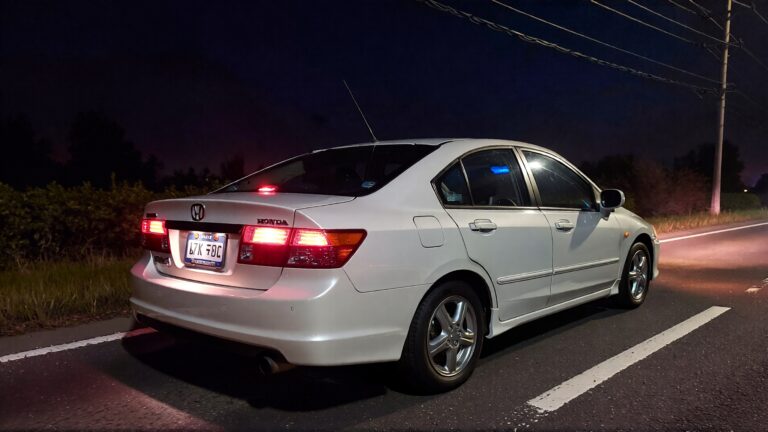
A 60-year-old Chico man has died following a wrong-way head-on crash on State Route 99 in unincorporated Butte County early Monday morning, and the California Highway Patrol is now working to determine what caused him to cross into oncoming traffic.
The crash occurred around 3:18 a.m. on August 31 on SR-99 north of Broyles Road, north of Chico. According to the CHP, the man was driving a 2019 Nissan Altima northbound when, for reasons still under investigation, his vehicle crossed the center line into the southbound lane. He collided head-on with a 2017 Kenworth truck tractor driven by a 54-year-old man from Anderson.

How the Crash Unfolded
Responding officers and emergency personnel found the Altima driver entrapped in the driver’s seat when they arrived on the scene. Fire crews worked to extricate him from the wreckage before paramedics transported him to Enloe Medical Center in Chico. Despite these efforts, he was pronounced dead just before 5 a.m.
The CHP has stated that drugs and alcohol do not appear to be factors in the crash, leaving the cause of the fatal lane departure unresolved for now. Investigators will likely examine several possibilities in a case like this, including driver fatigue, a medical emergency behind the wheel, a mechanical failure such as a tire blowout or steering malfunction, or simple driver error during the pre-dawn hours when visibility is limited and fatigue is common.
The stretch of SR-99 north of Broyles Road where the crash occurred is a rural, undivided highway segment, the kind of two-lane configuration common throughout unincorporated Butte County where a center line is often the only separation between northbound and southbound traffic. At 3:18 a.m., the highway would have been dark and largely empty, conditions that can make a wrong-way vehicle especially difficult for an oncoming driver to detect and react to in time.
The driver of the loaded Kenworth truck tractor would have had only a matter of seconds to perceive the oncoming Altima and attempt evasive action before impact. The severity of the collision and the extended extrication effort required to free the Altima driver from the wreckage reflect the force typically generated when a passenger vehicle and a commercial truck collide head-on at highway speed.
Why Wrong-Way Highway Collisions Are So Dangerous
Wrong-way crashes are statistically among the most severe types of collisions on California highways. Because both vehicles are typically traveling at highway speed toward one another, the combined force of impact is far greater than in a same-direction rear-end or sideswipe collision.
Nighttime wrong-way crashes are disproportionately common, and safety researchers have long pointed to factors like driver impairment, disorientation at interchanges, and medical episodes as recurring causes, even when, as here, impairment has been ruled out. For families in Butte County and across the North State, these crashes are a sobering reminder of how quickly a routine overnight drive on SR-99 can turn catastrophic.
Beyond the physics of a head-on impact, wrong-way crashes are especially dangerous because the driver traveling correctly typically has almost no time to react.
Studies of wrong-way collisions have consistently found that most occur at night or in the early morning hours, often on rural highways or on undivided segments, such as the stretch of SR-99 involved in this crash, where there is no physical median barrier to prevent a vehicle from drifting into oncoming lanes.
Unlike a same-direction collision, where a following driver may have some warning and space to brake or swerve, a driver facing an oncoming wrong-way vehicle often has only a second or two to process what is happening before impact is unavoidable.
This narrow reaction window is one of the reasons safety agencies across California have pushed for wrong-way detection systems, additional signage, and rumble strips at highway interchanges, particularly in rural counties where long stretches of undivided roadway remain common.
Determining Fault and Liability in California
Under California Civil Code Section 1714, every person is responsible for injuries caused by their want of ordinary care or skill in the management of their property, including a motor vehicle. When a driver crosses into oncoming traffic and causes a collision, that action is typically central to any liability analysis, though the final determination depends on the completed CHP investigation and any contributing factors it uncovers, such as a possible medical event or vehicle defect.
California follows a pure comparative fault system, meaning that if more than one party bears some responsibility for a crash, compensation can still be recovered, with the award reduced in proportion to the plaintiff’s share of responsibility. Government Code Section 835 may also be relevant if any evidence indicates a dangerous roadway condition, such as inadequate lighting, signage, or a gap in a median barrier, that contributed to the crash.
In cases involving a commercial vehicle such as the Kenworth truck tractor driver a, liability analysis can also extend beyond the driver. If evidence later shows that a mechanical issue, such as brake failure or a tire blowout, contributed to the Altima crossing the center line.
The investigation could examine whether a vehicle manufacturer, parts supplier, or maintenance provider bears some responsibility under California product liability principles. Similarly, if the truck was found to have any equipment or maintenance issues that affected the drivers ability to avoid the collision, his employer’s compliance with federal and state commercial vehicle safety regulations could become relevant.
Because fault in a wrong-way crash is not always as straightforward as it first appears, a thorough investigation, including data from the vehicles’ event recorders, physical evidence at the scene, and witness accounts, is often necessary before any party’s degree of responsibility can be fairly assessed.
Wrongful Death Claims Under California Law
When a fatal crash like this one occurs, surviving family members may have the right to pursue a wrongful death claim under California Code of Civil Procedure Section 377.60.
This statute allows a decedent’s surviving spouse, domestic partner, children, or other qualifying heirs to seek compensation for the losses that follow a preventable death, including funeral and burial expenses, loss of the financial support the decedent would have provided, and loss of companionship, guidance, and care.
Separately, CCP Section 377.30 allows a decedent’s estate to bring a survival action for damages the decedent could have claimed had they lived, such as pain and suffering experienced between the crash and their death. Families generally have two years from the date of death to file a wrongful death claim under California’s statute of limitations, though exceptions can apply, which is why speaking with an attorney early preserves the widest range of options.
Calculating the full scope of a family’s losses in a wrongful death claim involves more than adding up bills and lost paychecks. California law allows surviving family members to recover for the loss of the decedent’s love, companionship, comfort, care, assistance, protection, affection, society, and moral support, damages that are inherently personal and vary significantly from family to family.
Courts and insurance adjusters will often look at factors like the closeness of the relationship, the decedent’s role within the household, and the ages of any surviving children when evaluating these non-economic losses. For a family that has lost a 60-year-old father, spouse, or grandparent, these damages can represent a substantial portion of the claim’s overall value, particularly when the loss affects multiple generations of a single household.
How Settlement Value Is Calculated in Fatal Crash Cases
Attorneys evaluating a wrongful death or catastrophic injury claim typically rely on one of two accepted methods to estimate non-economic damages such as pain, suffering, and loss of companionship.
The multiplier method takes the total of a victim’s economic damages, including medical bills, funeral costs, and lost future income, and multiplies that figure by a number generally ranging from 1.5 to 5, depending on the severity of the harm and the strength of the liability evidence.
The per diem method instead assigns a specific dollar value to each day the victim’s family will live with the loss and multiplies that daily figure across the expected duration of the impact. Both approaches are starting points for negotiation rather than guarantees, and the right method often depends on the specific facts of the case, including whether liability is contested and what documentation exists to support the claimed losses.
The insurance company on the other side of a claim will almost always perform its own valuation, often using proprietary software and internal formulas designed to minimize payouts rather than reflect a family’s actual losses.
This is one of the key reasons families benefit from experienced legal representation early in the process, before an initial settlement offer is made. An attorney can help build a complete picture of economic damages by gathering documentation of the decedent’s income history, benefits, and career trajectory.
This is along with expert input on life expectancy and future earning potential, ensuring that the multiplier or per diem calculation used to negotiate a settlement is grounded in verifiable evidence rather than the insurer’s default assumptions. Without this documentation, families risk accepting an offer that undervalues both their economic losses and the profound personal impact of their loved one’s death.
Fatal Accident Settlement Calculators and How They Help Estimate Case Value
Many families researching a wrongful death claim encounter online settlement calculators, tools that ask for basic inputs like medical expenses, lost income, and funeral costs, then generate an estimated dollar range using a version of the multiplier or per diem method described above.
These calculators can be a useful starting point for understanding the general shape of a claim and getting a rough sense of how economic and non-economic damages interact, but they are not a substitute for a case-specific evaluation. A calculator cannot account for the strength of the liability evidence, the presence of comparative fault, policy limits available from the at-fault party’s insurance.
Also, the unique circumstances of a family’s loss, all of which can significantly move a case’s actual value up or down. In a fatal crash like this one, where the cause is still under investigation and questions about vehicle condition or contributing factors remain open, an online estimate is especially limited because it cannot weigh evidence that hasn’t yet been gathered.
Families are best served by treating these tools as an educational first step, then following up with an attorney who can review the specific facts of the crash, the available insurance coverage, and the full extent of both economic and non-economic losses before any settlement figure is finalized. Call us now at 1-855-508-9565 to speak with the experts.
Take Action Today: You Won’t Pay Unless We Win
“Losing someone in a crash like this one is devastating, and it often comes with a flood of questions families shouldn’t have to face alone, questions about medical bills, insurance adjusters, and what happens next. My advice is always the same: don’t wait to get answers. Evidence from a scene like this can disappear quickly, and the investigation into what happened matters for your family’s future, not just for closure. If you or someone you love has been hurt or lost in a crash on our California highways, please reach out. You deserve someone in your corner who will fight for the truth and for what your family is owed, and that consultation costs you nothing.” — Andy Gillin, Managing Partner, GJEL Accident Attorneys
If you or a loved one has been affected by a serious or fatal crash on a California highway, you don’t have to face the insurance companies alone, and you don’t have to worry about how you’ll pay for legal help while you’re already dealing with medical bills and grief.
GJEL Accident Attorneys works entirely on a contingency fee basis, which means there are no upfront costs, no hourly fees, and no payment at all unless we recover compensation for you.
With more than $950 million recovered for injured Californians and over 40 years of experience handling catastrophic injury and wrongful death cases, our team is ready to put that same dedication to work for your family. Call 1-855-508-9565 today for a free, no-obligation consultation, or visit Sacramento office to learn how we can help you move forward.
Resources for Butte County Families
Families seeking more information or assistance following this crash can find additional support through the following agencies:
The California Highway Patrol Chico Area Office, which is investigating this collision, maintains detailed office information, incident reporting guidance, and traffic safety resources at https://www.chp.ca.gov/find-an-office/valley-division/241-chico.
The Butte County Sheriff-Coroner’s Office, which handles death investigations, next-of-kin notifications, and the release of a decedent’s personal property, provides detailed guidance for families at https://www.buttecounty.net/1009/Coroner
General sheriff’s department contact information at https://www.buttecounty.net/1393/SheriffCoroner.
Enloe Medical Center, the Level II trauma center where the driver was treated, offers patient and family services information at https://www.enloe.org/contact-us.
Families can also review general CHP traffic incident and collision reporting information, including how to request a copy of an official collision report, through the CHP’s statewide site at https://www.chp.ca.gov.
For those affected by wrong-way and impaired driving crashes more broadly, the California Office of Traffic Safety provides statewide safety data and prevention resources at https://www.ots.ca.gov.