The pedestrian crash occurred at approximately 8:49 p.m. in the 1100 block of Coffee Road, a busy Modesto corridor where drivers and pedestrians regularly share the roadway, including in the evening hours. According to the Modesto Police, two female juveniles were struck by a vehicle while crossing the road. Officers responded to the scene, and both girls were taken to the hospital with serious injuries.
One of them later died from her injuries, and the second remains hospitalized in critical condition, meaning her life may still be at risk and her recovery is uncertain. Police have not yet released the identities of the juveniles or the specific circumstances that led to the crash, and the investigation remains ongoing.
Because the collision involved a fatality and a critically injured minor, investigators will likely review the scene, collect physical evidence, and speak with witnesses to establish exactly how it happened.
A Devastating Loss for Two Families and a Community
When a child dies in a traffic collision, the grief reaches far beyond the immediate family. Friends, classmates, neighbors, and everyone who travels Coffee Road feel its weight. For the family of the second juvenile, the hours and days ahead are filled with fear, uncertainty, and difficult medical decisions. Our thoughts are with both families.
Families in this position are often overwhelmed. They are trying to be present at a hospital bedside or to plan a funeral, and they are also facing questions about what happened, who is responsible, and how they will cover costs. Understanding your legal rights is not the first thing on anyone’s mind, but it is an important part of protecting your family’s future.
How California Law Treats Pedestrian Crashes
Under California Civil Code §1714, every person is responsible for injuries caused by a failure to use ordinary care. For drivers, that includes watching for pedestrians, controlling speed, and adjusting to road and lighting conditions. California Vehicle Code §21950 requires drivers to yield the right-of-way to pedestrians crossing in a marked or unmarked crosswalk.
Vehicle Code §21954 says that pedestrians crossing outside a crosswalk must yield to vehicles, but it also states that this does not relieve a driver of the duty to exercise due care for pedestrian safety. Vehicle Code §22350, the basic speed law, requires drivers to travel at a speed that is safe for existing conditions, which matters a great deal for a collision that happened after 8:00 p.m.
California follows a pure comparative fault system. Even when a pedestrian is found partly responsible, the pedestrian can still recover damages, reduced by that percentage of fault. When the injured pedestrian is a child, California courts generally measure conduct against what a reasonably careful child of similar age, intelligence, and experience would do, not against an adult standard. That distinction is often significant in cases involving young pedestrians.
Wrongful Death and Survival Claims
When a pedestrian dies because of another party’s negligence, California law provides two separate types of claims. A wrongful death action under Code of Civil Procedure §377.60 allows certain surviving family members to seek compensation for their own losses, such as funeral and burial expenses, the loss of the child’s love, companionship, comfort, and guidance, and, where applicable, financial support.
In the case of an unmarried child without children of her own, the parents are typically the family members entitled to bring this claim. A survival action under Code of Civil Procedure §377.30 is different. It allows the decedent’s estate to pursue the losses the child herself suffered before she died, such as medical expenses and other damages that accrued between the collision and her passing.
The statute of limitations for most personal injury and wrongful death claims in California is 2 years under Code of Civil Procedure § 335.1. Deadlines can be much shorter in some situations, and families should not assume they have two years to act. Pursuing Wrongful Death and Survival Claims After the Loss of a Child
When a child dies because of another person’s negligence, California law allows the family to pursue accountability through two distinct but related legal actions. A wrongful death claim under Code of Civil Procedure §377.60 belongs to the surviving family members, who are typically the parents when the child was unmarried and had no children of her own.
It is intended to compensate them for their own losses, including funeral and burial expenses, the loss of the child’s love, companionship, comfort, and guidance, and, in some cases, the loss of financial support or household contributions. A survival action under Code of Civil Procedure §377.30 is brought on behalf of the child’s estate and addresses the losses she personally suffered between the moment of the collision and her death, such as emergency medical and hospital expenses.
Because these claims are separate, they may be filed together in a single lawsuit, and each has its own rules regarding who may bring it and what can be recovered. Time limits apply as well. Most wrongful death and personal injury claims must be filed within two years under Code of Civil Procedure §335.1, and if a public entity may share responsibility, a government claim generally must be presented within six months.
Insurance companies often contact grieving families within days of a fatal crash, so speaking with an attorney before giving any recorded statement or signing any document can help protect the family’s rights while they focus on healing.
Why Roadway Conditions May Matter
Investigators will look at the driver’s conduct, but a thorough review also looks at the roadway itself. Lighting, crosswalk placement, signage, lane configuration, posted speed limits, and sight lines can all contribute to a pedestrian collision. If a dangerous condition of public property played a role, Government Code §835 may allow a claim against a public entity.
Those claims come with strict procedural requirements, including a short window to file a government claim, generally six months for personal injury and wrongful death. Evidence such as surveillance footage, vehicle data, and witness accounts can also disappear quickly, which is why prompt action is important.
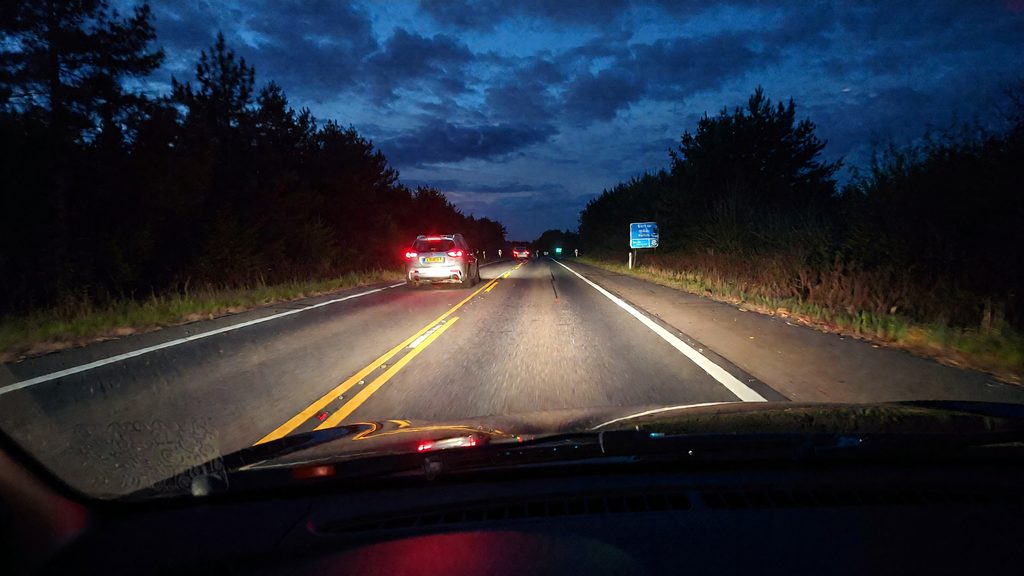
A thorough investigation of a pedestrian crash looks beyond the driver and examines the roadway itself. Coffee Road is a busy Modesto corridor, and the collision happened at approximately 8:49 p.m., when visibility is often reduced. Factors such as street lighting, the placement and visibility of crosswalks, signage, posted speed limits, lane configuration, and sight lines can all affect.
Whether a driver has enough time to see and react to someone crossing the street. Investigators have not said whether any of these conditions played a role in this crash, and it would be premature to draw conclusions. In general, though, if a dangerous condition of public property contributed to a collision, Government Code §835 may allow a claim against the public entity responsible for the road.
These claims carry strict procedural requirements, including a short deadline to present a government claim, generally six months for personal injury and wrongful death under Government Code §911.2. Evidence such as surveillance and traffic camera footage, vehicle data, and lighting conditions at the time of the crash can also be lost or altered quickly, which is why families benefit from having an attorney act early to preserve it.
Understanding Compensation in a Catastrophic Injury Case
For a juvenile who remains hospitalized in critical condition, the financial and emotional impact of a catastrophic injury can extend well beyond the initial hospital stay. Recovery may involve multiple surgeries, intensive care, long-term rehabilitation, specialized equipment, in-home care, and ongoing therapy, and for a young person, those needs can continue for decades.
Attorneys and insurers commonly use two methods to estimate the value of this kind of claim. The multiplier method begins with the total of economic damages, such as past and future medical expenses and lost earning capacity, and multiplies that figure by a number that reflects the severity and permanence of the injury and its effect on the person’s quality of life.
The more serious and lasting the harm, the higher the multiplier tends to be. The per diem method assigns a reasonable daily dollar value to the pain, suffering, and loss of enjoyment of life the injured person experiences, then multiplies it by the number of days she is expected to live with those effects, which, in the most severe cases, can mean a lifetime.
Neither method guarantees a particular outcome. The value of any claim depends on the medical evidence, the available insurance coverage, and how fault is allocated under California’s pure comparative fault rules. Because a child’s injuries can affect her education, development, and independence for many years, it is especially important that a claim account for future needs and not only the bills that have already arrived. Any settlement involving a minor also requires court approval in California, which helps ensure the child’s interests are protected.
Catastrophic Injury Settlement Calculators and Why They Matter
A catastrophic injury settlement calculator is an online tool that gives injured people and their families a rough estimate of what a claim might be worth. The user enters information such as medical expenses to date, projected future medical care, lost income or lost earning capacity, the severity and permanence of the injury, and sometimes the degree of fault assigned to each party.
The calculator then applies a formula, most often the multiplier method or the per diem method, to produce an estimated range. These tools matter because they help families who are overwhelmed by hospital bills and uncertainty see how the different parts of a claim fit together. They show that value is not based on medical bills alone, and that future care, lost earning capacity, pain and suffering, and loss of enjoyment of life can all affect the total.
They can also help families set realistic expectations before speaking with an insurance adjuster, who may offer a quick settlement that does not account for long-term needs. At the same time, a calculator is only a starting point. It cannot weigh the strength of the liability evidence or the limits of the available insurance coverage.
The comparative fault under California law, or the opinions of medical and life care planning experts who project a catastrophically injured person’s needs over a lifetime. For a young person with a critical injury, those future costs can be substantial and easy to underestimate.
An experienced attorney uses the same underlying methods but builds the figures on documented evidence, making the resulting valuation far more reliable than an automated estimate. Families are encouraged to treat any calculator result as a general guide and to speak with an attorney before accepting any settlement offer.
Take Action Today: You Won’t Pay Unless We Win
“My heart goes out to the families affected by this tragedy on Coffee Road. When a child is lost or critically injured, nothing we say can ease that pain, but you do not have to face what comes next alone. If you or someone you love has been hurt in a pedestrian collision, please speak with an attorney before talking to an insurance company or signing anything. Evidence disappears quickly, and legal deadlines can be shorter than most families realize. Our team will listen, explain your rights, and handle the legal burden so you can focus on healing and being together. There is no cost to speak with us, and we only get paid if we recover for you.” – Andy Gillin, Managing Partner, GJEL Accident Attorneys
At GJEL Accident Attorneys, we have more than 40 years of experience representing families after serious and fatal pedestrian collisions, and we have recovered more than $950 million for our clients.
We handle these cases on a contingency fee basis, which means you pay no attorney fees unless we recover compensation for you. If your family has been affected by a pedestrian collision in Modesto or anywhere in California, call us at 1-855-508-9565 or visit our San Francisco office for a free consultation. We will listen, explain your options, and help you decide what comes next.
Local Resources and Websites for Affected Families
Modesto Police Department
The Modesto Police Department is the lead agency investigating this collision, and its main page links to crime victim information, victim compensation, forms, and records: https://www.modestogov.com/223/Police-Department. The department is at 600 10th Street, Modesto, CA 95354, and its main number is 209-572-9500. Call 911 for emergencies. The city’s directory lists the non-emergency dispatch line as 209-552-2470.
Families who need a copy of the collision report can find the department’s instructions, request forms, and fee information at https://www.modestogov.com/274/Modesto-Police-Records. Reports can take time to finalize, and some may require supervisor or Juvenile Court approval before release. The department’s contact directory lists a dedicated line for traffic accident reports at 209-572-9580: https://www.modestogov.com/1064/Contacts.
California Highway Patrol, Modesto Area
Coffee Road is a city street handled by the Modesto Police Department, but the CHP Modesto Area Office covers the freeways, state routes, and unincorporated areas of Stanislaus County. Families with questions about a crash on one of those roads can use the office page at https://www.chp.ca.gov/find-an-office/central-division/465-modesto. The office is at 4030 Kiernan Avenue, Modesto, CA 95356, and its phone number is 209-545-7440.
Stanislaus County District Attorney, Victim Services Unit
If the crash results in criminal charges, the Stanislaus County District Attorney’s Victim Services Unit can provide crisis support, court accompaniment, restitution, and assistance with victim compensation applications at no cost: https://www.stanislaus-da.org. The Victim Services Unit’s direct line is 209-525-5541, and the main office number is 209-525-5550.
California Victim Compensation Board
The state’s Victim Compensation Board may reimburse eligible families for certain crime-related expenses, such as funeral and burial costs and mental health counseling, in cases involving violent crime or certain impaired-driving crashes. Its Stanislaus County page lists local resources: https://victims.ca.gov/victims/counties/stanislaus.aspx. Eligibility depends on the circumstances of the crash, so families should confirm with the Victim Services Unit.
Mental Health and Crisis Support
Stanislaus County Behavioral Health and Recovery Services offers 24-hour crisis support and mobile crisis response for any county resident, regardless of ability to pay. Its main page is https://www.stancounty.com/bhrs, its crisis services page is https://www.stancounty.com/bhrs/crisis-services.shtm, and the crisis line is 1-888-376-6246.
For immediate emotional support, the 988 Suicide and Crisis Lifeline is available by call or text at 988, with more information at https://988lifeline.org. Young people ages 12 to 24, and adults supporting them, can reach the California Youth Crisis Line at 1-800-843-5200 or at https://calyouth.org. This matters here because the girls’ classmates and friends may need support as well.