A single-vehicle crash north of Calistoga left one person dead and another injured on Sunday, July 19. The California Highway Patrol reports the crash occurred on State Route 128 north of Tubbs Lane. According to CHP, the driver of a Jeep was not wearing a seatbelt at the time of the crash and was ejected from the vehicle.
The driver later died from injuries sustained in the collision. The passenger, who was wearing a seatbelt, was transported to Santa Rosa Memorial Hospital for treatment. The cause of the crash remains under investigation, and the identity of the deceased had not been released at the time of this report. CHP officials say the investigation is ongoing.
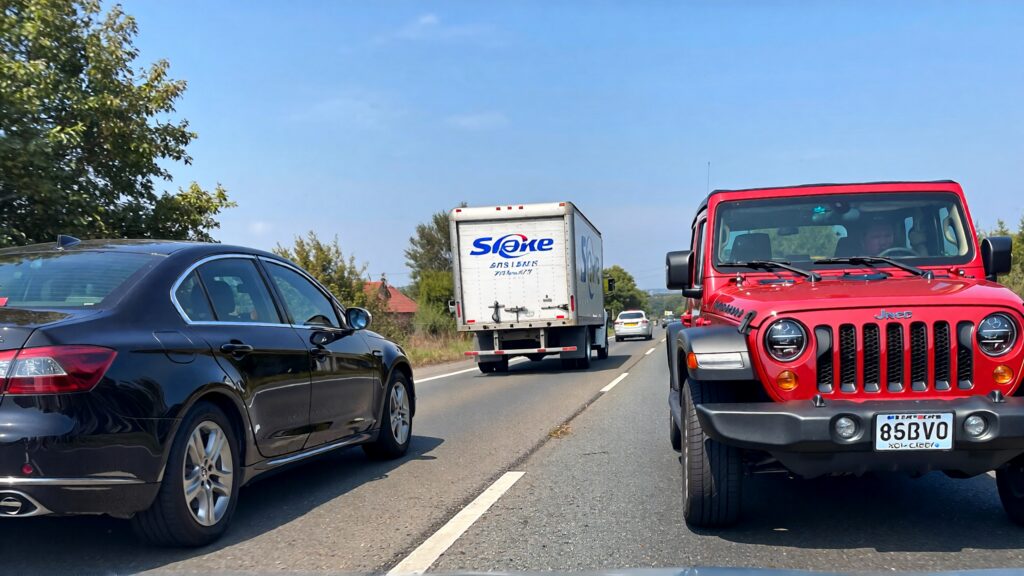
What Happens Next: Understanding the Investigation
CHP investigators will examine several factors as they work to determine what caused this crash, including roadway conditions along this stretch of SR-128, vehicle mechanical function, weather and visibility at the time of the collision, and speed. State Route 128 winds through hilly, rural terrain in this part of Napa County, and factors such as road design, signage, and maintenance can sometimes contribute to crashes, even when they aren’t immediately apparent.
Fatal collision investigations on rural highways like SR-128 often take weeks or even months to complete, particularly when the cause isn’t immediately obvious. CHP officers assigned to reconstruct the crash will typically document skid marks, vehicle damage patterns, and the Jeep’s final resting position to help determine speed and the sequence of events leading up to the collision.
They may also review the roadway’s curve design, shoulder width, and any history of prior accidents at or near this location, since a stretch of highway with a known pattern of crashes can point toward factors beyond driver error alone. Toxicology results, if requested, can take several weeks to return and may factor into the final report.
Investigators will also look closely at the Jeep itself, checking for any pre-existing mechanical issues, such as steering, suspension, or tire problems, that could have contributed to the driver losing control. Because the driver was ejected from the vehicle, examiners may also assess whether the door latches, seatbelt mechanism, or vehicle structure performed as intended, since a defect in any of these systems could shift some responsibility away from the driver alone.
Until CHP releases its final findings, it’s important for the family and the injured passenger not to assume the cause of the crash has already been determined. Early conclusions reported in the media are often incomplete, and a full investigation can reveal contributing factors that aren’t apparent in the initial hours after a crash.
Comparative Negligence in California Fatal Accidents
California follows the legal principle of comparative negligence. This means that even if a driver is found partially at fault for causing an accident, that does not automatically bar their surviving family from pursuing compensation if another party’s negligence also contributed to the crash. A defective vehicle part, a hazardous road condition, or another driver’s actions could all be contributing factors that investigators uncover as the case develops.
Under California Civil Code § 1714, individuals and entities are responsible for injuries caused by their failure to exercise reasonable care. If evidence shows that a road hazard, faulty equipment, or another driver’s conduct contributed to this crash, the family of the deceased driver may still have grounds to pursue a claim, even though the driver was not wearing a seatbelt.
California’s comparative negligence rule, established by the state Supreme Court in Li v. Yellow Cab Co., allows an injured party or a deceased victim’s family to recover damages even when the victim shares some responsibility for the accident. Under this rule, fault is divided by percentage, and any compensation awarded is reduced by the deceased’s share of fault rather than eliminated altogether.
For example, if an investigation ultimately determines that a road defect, a mechanical failure, or another driver’s actions contributed 30% to the cause of this crash, the driver’s family could still pursue that 30% of damages from the responsible party, even if the driver’s decision not to wear a seatbelt is considered a contributing factor.
This is an important distinction, because many families assume that any fault on the part of their loved one closes the door on a claim entirely. In California, that isn’t the case. The failure to wear a seatbelt may be relevant to the case, but it does not automatically prevent a family from holding another negligent party accountable if that party’s actions also contributed to the crash or the severity of the driver’s injuries. This is why a full, independent investigation into all contributing factors, not just the CHP’s initial findings, matters so much for families considering their legal options.
Legal Options for the Driver’s Family
The family of the driver killed in this crash may have the right to pursue a wrongful death claim under California Code of Civil Procedure § 377.60. Under California Code of Civil Procedure § 377.30, a survival action may also be available to recover damages the deceased could have claimed had they survived, such as pain and suffering experienced between the crash and their death.
A wrongful death claim can provide compensation for:
- Funeral and burial expenses
- Loss of financial support that the deceased would have provided
- Loss of companionship, guidance, and care
- Medical expenses incurred before death
- Other damages are tied directly to the loss
It’s important to note that California Code of Civil Procedure § 335.1 sets a two-year statute of limitations for these types of claims, so families should understand their options and deadlines early on. Pursuing a wrongful death claim isn’t only about financial recovery; it also gives a grieving family a formal path to get answers about what happened to their loved one.
Under California law, the right to bring a wrongful death claim generally belongs to the deceased’s surviving spouse, domestic partner, or children. If none of these survive the deceased, other family members who depended on them financially, such as parents or siblings, may also be eligible to bring a claim.
Because more than one family member may have the right to pursue damages, these cases can sometimes involve multiple parties with competing interests, which is one reason many families choose to work with an attorney early on to help navigate who is eligible to file and how any recovery should be handled.
It’s also worth understanding that a wrongful death claim and a survival action are not mutually exclusive. A family may be able to pursue both at the same time, since one compensates the family for their own losses, such as lost financial support and companionship, while the other compensates the deceased’s estate for damages the driver personally suffered before passing away.
Identifying all potentially liable parties, whether that’s another driver, a government entity responsible for road maintenance, or a manufacturer, is often the most time-sensitive part of building a strong claim, since evidence like roadway conditions and vehicle components can change or become harder to access as time passes.
The Passenger’s Right to Pursue a Personal Injury Claim
The passenger injured in this crash may also have grounds for a personal injury claim. A driver’s liability insurance is meant to cover injuries the driver causes to others, whether inside or outside the vehicle, including passengers. While the injured passenger likely has a personal relationship with the driver, that connection doesn’t eliminate the need to pursue a claim to receive fair compensation for medical bills, lost wages, and pain and suffering resulting from the crash.
Filing a personal injury claim against a driver who has passed away can feel uncomfortable, especially when that driver is a close friend or family member, but it’s important to understand that the claim is generally directed at the driver’s insurance policy, not at the driver’s family or estate directly.
Most auto insurance policies in California include liability coverage designed to compensate passengers injured by the policyholder’s negligence, regardless of the relationship between the driver and the passenger. If the driver’s policy limits aren’t enough to fully cover the passenger’s medical bills, lost wages, and other damages, the passenger may also want to look into whether their own auto insurance policy includes underinsured motorist coverage, which can help fill that gap.
Because the driver in this case has passed away, any claim brought by the passenger will typically need to be filed against the driver’s estate as a formality, even though the actual compensation comes from the insurance policy rather than the family’s personal assets. This distinction matters, and an experienced attorney can help the passenger understand that pursuing fair compensation isn’t about blaming a loved one’s memory.
It’s about accessing the coverage that was already in place to protect exactly this kind of situation. Given that the passenger may be recovering from injuries sustained at Santa Rosa Memorial Hospital, documenting ongoing treatment, missed work, and the physical and emotional impact of the crash early on can make a significant difference in the strength of the eventual claim.
Take Action Today – Get the Help You Deserve
“When a family loses someone this suddenly, the grief is overwhelming, and the last thing anyone wants to think about is a legal claim. But I’ve seen how important it is for families to understand their options early, especially when a crash happens on a rural stretch of highway like this one. If negligence beyond the driver’s control played any part in what happened, that matters and can make a real difference for the people left behind. My team and I are here to help families get real answers and the support they need during an incredibly difficult time.”- Andy Gillin, GJEL Accident Attorneys
If you or a loved one has been affected by this crash, or by a similar accident on California’s roadways, GJEL Accident Attorneys is here to help. With over $950 million recovered for our clients and more than 40 years of experience representing accident victims and their families, we understand what it takes to build a strong case.
We work on a contingency fee basis, meaning you pay nothing unless we win your case. Call us today at +1-866-218-3776 for a free, no-obligation consultation, or visit our San Francisco office to learn more about your legal options.
Understanding Your Potential Settlement
When a fatal crash or serious injury is involved, attorneys often use one of two methods to estimate non-economic damages, such as pain and suffering:
The Multiplier Method: This approach takes the total economic damages, such as medical bills, lost income, and funeral costs, and multiplies that number by a factor (typically between 1.5 and 5) based on the severity of the injury or loss. A wrongful death claim involving a sudden, traumatic loss often falls toward the higher end of that range.
The Per Diem Method: This method assigns a specific dollar value to each day the injured person has experienced or will experience pain, suffering, or the effects of loss, then multiplies that value by the number of days affected. This method is more commonly used in personal injury claims involving ongoing recovery, such as the injured passenger’s case, rather than wrongful death claims.
Every case is different, and the right approach depends on the specific facts involved. An experienced attorney can help determine which method, or combination of methods, most accurately reflects the losses a family or injured individual has experienced.
Local Resources for This Case
California Highway Patrol – Napa Area Office
975 Golden Gate Drive, Napa, CA 94558
(707) 253-4906
Patrols State Route 128 and can provide updates on this ongoing investigation.
chp.ca.gov/find-an-office/golden-gate-division/325-napa
Napa County Sheriff-Coroner’s Office
1535 Airport Boulevard, Napa, CA 94559
(707) 253-4256
Handles the identification and notification of next of kin for the deceased.
napacounty.gov/1673/Coroner
Providence Santa Rosa Memorial Hospital
1165 Montgomery Drive, Santa Rosa, CA 95405
(707) 546-3210
Level II Trauma Center, where the injured passenger was treated.
providence.org/locations/norcal/santa-rosa-memorial-hospital