A tragic two-vehicle crash on State Route 145 in Madera County claimed the life of a 77-year-old woman who succumbed to her injuries the day after a two-vehicle crash on Sunday evening, January 4, 2026. The fatal accident, which occurred just before 10:30 p.m. west of State Route 41, resulted from an attempted U-turn maneuver that placed one vehicle directly in the path of oncoming traffic, leading to a devastating collision that left all parties involved with serious injuries.
Two-Vehicle Crash Accident Details
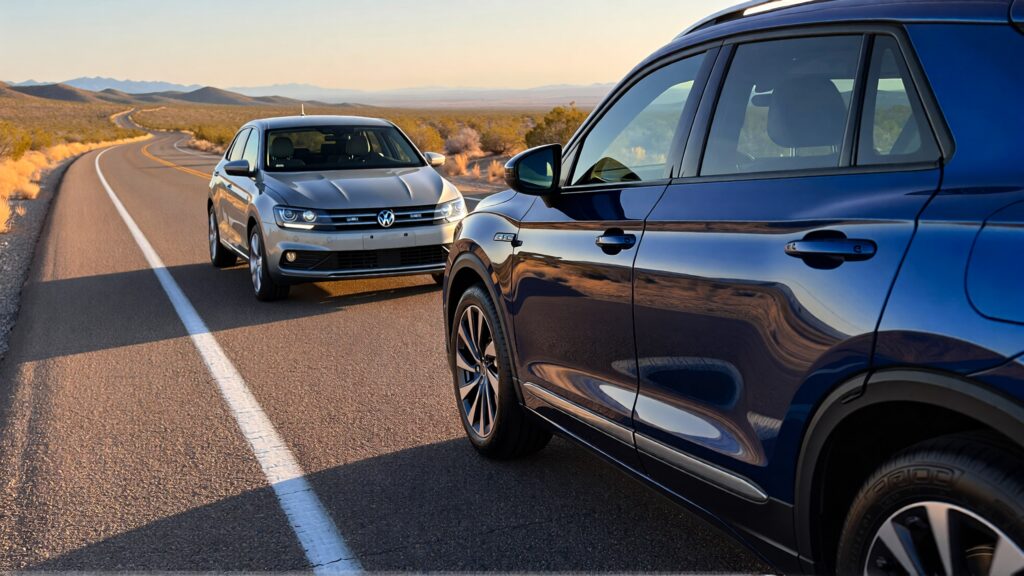
California Highway Patrol officers from the Madera division responded to the scene and conducted a preliminary investigation that revealed the circumstances leading to this preventable tragedy. According to CHP’s initial findings, a 22-year-old woman from Madera was driving a 2011 Volkswagen Jetta westbound on SR-145 when she pulled onto the right shoulder with the intention of making a U-turn to travel eastbound. As she initiated this maneuver, she failed to observe a 2022 Volkswagen Taos approaching from behind, also traveling westbound and operated by a 62-year-old man from Madera.
When the Jetta driver attempted the U-turn directly into the path of the approaching Taos, the left front portion of the Jetta collided with the right front of the Taos. The impact proved severe, causing significant damage to both vehicles. Despite all occupants wearing their seatbelts at the time of the collision, everyone involved sustained moderate to major injuries requiring immediate emergency medical attention. All parties were transported to local hospitals for treatment.
Tragically, on Monday, January 5, 2026, the CHP Madera office received notification that the 77-year-old female passenger who had been riding in the Taos had died from injuries sustained in the crash. The investigation remains ongoing, though authorities have stated that alcohol and drugs are not suspected as contributing factors in this collision.
The Dangers of Improper U-Turn Maneuvers on California Highways
U-turn collisions represent one of the most hazardous categories of traffic accidents, as they often involve vehicles traveling at highway speeds with minimal time to react. When a driver executes a U-turn without ensuring the maneuver can be completed safely, the results can be catastrophic, as demonstrated by this fatal crash in Madera County. The sudden appearance of a vehicle crossing lanes creates an immediate hazard that oncoming drivers may have no reasonable opportunity to avoid.
In this SR-145 collision, the Jetta driver’s failure to observe the approaching Taos before initiating the U-turn created a situation in which the collision became virtually inevitable. At typical highway speeds, vehicles cover a significant distance in just seconds. A driver focused on completing a U-turn may underestimate how quickly approaching traffic closes the gap, or may fail to check adequately before beginning the maneuver. By the time the turning vehicle reaches the opposite lane, oncoming traffic may be so close that even emergency braking cannot prevent impact.
The nighttime conditions at the time of the crash may have contributed to visibility challenges; however, drivers remain responsible for ensuring they can safely complete any turning maneuver, regardless of lighting conditions. If visibility is insufficient to observe approaching traffic clearly, the U-turn should not be attempted. The devastating outcome of this collision underscores the importance of California law’s strict requirements regarding when and where U-turns can be performed, as well as the need for drivers to exercise extreme caution even when such turns are permitted by law.
California U-Turn Laws and Right-of-Way Requirements
California Vehicle Code establishes comprehensive requirements for U-turn maneuvers specifically to prevent the type of collision that occurred on SR-145. Understanding these legal requirements is essential for all drivers, as violations frequently result in serious accidents and establish liability for resulting injuries and deaths.
Under California Vehicle Code Section 22102, drivers may make U-turns on highways only at intersections or designated openings in divided highways where appropriate signs permit such turns. Even when U-turns are legally allowed at a location, drivers must yield the right-of-way to all approaching vehicles that are close enough to constitute an immediate hazard. This requirement places the burden squarely on the turning driver to ensure adequate distance exists before initiating the maneuver.
California Vehicle Code Section 22103 prohibits U-turns in several specific circumstances, including in business districts, except at intersections with traffic control devices; in residential neighborhoods, at intersections controlled by traffic signals where local ordinances prohibit such turns; and whenever official signs prohibit the movement. Additionally, U-turns are prohibited when the driver cannot see clearly in both directions for at least 200 feet due to curves, hills, weather conditions, or other obstructions.
Perhaps most critically, California Vehicle Code Section 21801 requires drivers initiating any turn to yield the right-of-way to approaching traffic. A driver preparing to make a U-turn must ensure sufficient distance exists between their vehicle and oncoming traffic to complete the maneuver safely without creating a hazard. The driver making the U-turn bears complete responsibility for ensuring the turn can be executed without endangering other motorists. This legal requirement reflects the common-sense principle that the driver choosing to make an unexpected maneuver must do so only when it’s safe for all other road users.
Establishing Legal Liability in U-Turn Accidents
In crashes involving U-turns, liability typically falls on the driver executing the turn, as California law presumes that these drivers must yield to oncoming traffic. Failure to yield constitutes negligence, and when a U-turning vehicle collides with an approaching vehicle that had the right of way, the driver making the turn generally bears legal responsibility for all resulting injuries, damages, and fatalities.
In this SR-145 collision, the preliminary investigation indicates the Jetta driver initiated a U-turn without seeing the approaching Taos, placing her vehicle directly in its path. This failure to observe approaching traffic before executing the maneuver establishes a clear breach of the duty to yield right-of-way. The Taos driver, traveling westbound in his proper lane, had the right to expect the roadway ahead would remain clear and had no reason to anticipate a vehicle would suddenly enter his path.
California’s comparative negligence system requires examination of all parties’ actions, even in cases where one driver’s fault appears clear. Investigators will review whether the Taos driver was traveling at an appropriate speed for conditions, whether the vehicle’s headlights were functioning correctly, and whether the driver took appropriate evasive action once the U-turn became apparent. However, given the preliminary findings that the Jetta driver did not see the approaching vehicle before initiating the turn, and that alcohol and drugs are not suspected factors, liability will likely rest primarily with the driver who executed the unsafe U-turn.
For the family of the 77-year-old woman who lost her life in this collision, establishing liability is a critical step toward obtaining justice and compensation. Her death resulted from another driver’s negligent decision to make a U-turn without ensuring the maneuver could be completed safely. The moderate to major injuries sustained by all other parties involved further demonstrate the severity of the collision and the extent of harm caused by this single unsafe turning maneuver.
Common Factors Contributing to U-Turn Collisions
U-turn accidents often occur due to several recurring factors, many of which likely contributed to this tragic incident in Madera County. Understanding these contributing factors can help prevent similar crashes and also help establish negligence in personal injury and wrongful death claims.
Inadequate observation remains the most common cause of U-turn collisions. Drivers often fail to check their mirrors thoroughly, neglect to look over their shoulders, or don’t take the time to ensure that approaching traffic is far enough away to allow for a safe completion of the turn. The CHP’s preliminary report indicates the Jetta driver “did not see the Taos approaching” before attempting the U-turn—a failure of observation that directly caused the collision. This type of inadequate checking represents apparent negligence, as reasonable drivers must observe traffic conditions before executing any turning maneuver.
Misjudgment of speed and distance represents another frequent factor. Some drivers do see approaching vehicles but incorrectly believe they have sufficient time to complete the U-turn safely. The maneuver takes longer than many people anticipate, particularly when turning from a stopped or slow-moving position. Oncoming vehicles traveling at highway speeds cover ground rapidly, and what appears to be an adequate distance can disappear in seconds. By the time the turning vehicle completes the U-turn and enters the opposite lane, the approaching vehicle may be dangerously close.
Nighttime conditions increase the risk of U-turn accidents, as occurred in this case. The crash happened just before 10:30 p.m., when darkness limits visibility and makes it more difficult to judge the speed and distance of approaching vehicles. Headlights can create misleading impressions about the distance of other cars, and the absence of ambient light means drivers must rely entirely on their own headlights and those of different vehicles to assess traffic conditions. However, darkness does not excuse failure to observe approaching traffic—it simply means drivers must exercise even greater caution before attempting turning maneuvers.
Some drivers execute U-turns from the shoulder or from stopped positions without adequately accelerating to match traffic flow. This creates a situation where the turning vehicle moves slowly across lanes while faster-moving traffic approaches. Even if the turning driver did observe approaching vehicles, the slow speed of the turn can result in a collision if the driver misjudges how long the maneuver would take. The preliminary investigation indicates the Jetta driver pulled onto the right shoulder before attempting the U-turn, suggesting she may have been starting from a stopped or very slow position when she tried to cross back into the westbound lane and continue into the eastbound lane.
The Severe Impact Forces in Highway-Speed Collisions
The collision between the Jetta and Taos resulted in significant damage to both vehicles and moderate to major injuries to all occupants, ultimately proving fatal for the elderly passenger. The severity of these injuries, despite seatbelt use by all parties, illustrates the violent forces involved when vehicles collide at highway speeds.
When the left front of the Jetta struck the right front of the Taos, both vehicles experienced tremendous deceleration forces. The front portions of modern cars feature crumple zones designed to absorb impact energy and protect occupants, but these safety features have their limitations. At highway speeds, the kinetic energy involved in a collision can overwhelm these protective systems, particularly when the impact occurs at an angle that directs forces into areas of the vehicle not optimally designed to manage them.
The Taos, traveling westbound at what was likely a typical highway speed for SR-145, had minimal opportunity to brake or evade once the Jetta entered its path. The right front impact to the Taos suggests the driver may have attempted to steer left to avoid the collision, but insufficient distance remained to prevent contact. For occupants of the Taos, the sudden deceleration from highway speed to zero in a fraction of a second created enormous forces on their bodies, despite their seatbelts.
The 77-year-old passenger who ultimately succumbed to her injuries faced particular vulnerability due to her age. Elderly individuals often sustain more severe injuries in crashes than younger people because bones become more fragile, tissues heal more slowly, and the body’s ability to withstand trauma decreases. What might be survivable injuries for a younger person can prove fatal for someone in their seventies or eighties. Her death the day after the collision suggests she suffered internal injuries or trauma severe enough that medical intervention could not save her life.
For the 22-year-old Jetta driver who made the unsafe U-turn, the collision resulted in her own moderate to major injuries as well. The left front impact to her vehicle meant the force of the crash occurred near her seating position, with only the door, frame, and front quarter panel between her and the point of impact. While modern vehicles provide substantial protection, front-corner impacts can be hazardous for drivers because the protective crumple zones are shorter in these areas than in direct frontal impacts.
Investigation Process Following Fatal Traffic Collisions
The CHP’s ongoing investigation into this fatal crash will examine various factors to gain a comprehensive understanding of how and why the collision occurred. While the preliminary findings suggest that the Jetta driver failed to observe approaching traffic before making the U-turn, investigators will conduct a thorough analysis to rule out any additional contributing factors.
Accident reconstructionists will analyze the physical evidence at the scene, including skid marks, debris patterns, vehicle damage, and final resting positions of both vehicles. These details help determine the speeds of both vehicles at impact, the precise angle of collision, and whether either driver attempted evasive braking or steering before impact. Investigators will also examine whether road conditions, visibility factors, or any roadway defects may have contributed to the crash.
Both vehicles will be inspected to determine their mechanical condition before the collision. Investigators will verify that the Taos’s headlights were functioning correctly and providing adequate illumination, that both vehicles’ brakes were in proper working order, and that no mechanical failures contributed to the crash. While the preliminary report indicates alcohol and drugs are not suspected factors, toxicology testing of the drivers’ blood will be conducted to rule out impairment definitively.
Witness statements, if any witnesses observed the collision or the moments leading up to it, will be collected and analyzed. On a rural highway late on a Sunday evening, witnesses may be limited, but any individuals who saw the crash can provide valuable information about the actions of both drivers. Cell phone records may be examined to determine whether either driver was using a phone at the time of the crash, as distraction could explain the Jetta driver’s failure to observe the approaching Taos.
The investigation findings will ultimately be compiled into a formal traffic collision report, which will establish the primary collision factor and identify any contributing circumstances. This report becomes critical evidence in any civil lawsuit filed by the family of the deceased passenger or by others injured in the crash. The CHP’s determination of fault carries significant weight in establishing liability for insurance claims and personal injury litigation.
Rights of Families Following Fatal Traffic Accidents in California
The family of the 77-year-old woman who died from injuries sustained in this crash has legal rights under California’s wrongful death statutes. When someone dies due to another person’s negligence, certain family members may pursue compensation for their losses through a wrongful death lawsuit.
California Code of Civil Procedure Section 377.60 permits wrongful death claims to be filed by the deceased person’s surviving spouse, domestic partner, children, and, in some cases, other family members who were financially dependent on the deceased. These claims seek compensation for the loss of the deceased person’s companionship, love, care, and support, as well as funeral and burial expenses. The emotional devastation of losing a loved one in a preventable accident cannot be quantified. Still, California law recognizes that families deserve compensation for the profound impact such a loss has on them.
In this case, the elderly passenger’s death resulted directly from the unsafe U-turn maneuver executed by the Jetta driver. Had that driver properly observed approaching traffic and yielded the right-of-way as required by law, this collision would not have occurred, and the 77-year-old woman would still be alive. This clear causal connection between the negligent act and the fatal outcome establishes the foundation for a wrongful death claim.
Beyond wrongful death claims, the other injured parties in this collision may pursue personal injury claims for their own moderate to significant injuries. Medical expenses, lost wages during recovery, pain and suffering, and long-term impacts on quality of life all represent compensable damages. The 62-year-old driver of the Taos, who was traveling lawfully in his lane when the Jetta entered his path, bears no fault for this collision and has every right to full compensation for his injuries and losses.
California law requires all drivers to carry minimum liability insurance specifically to provide compensation when their negligence injures others. In crashes involving serious injuries or death, insurance coverage may be insufficient to compensate all victims fully. Additional recovery may be pursued from the at-fault driver’s personal assets; however, this can be challenging if the driver lacks substantial resources beyond their insurance coverage. This reality underscores the importance of working with experienced personal injury attorneys who understand how to maximize recovery from all available sources.
How GJEL Accident Attorneys Can Help Madera County Crash Victims
The aftermath of a serious traffic collision creates overwhelming challenges for victims and their families. Medical treatment demands attention and resources, lost income creates financial strain, and the emotional toll of serious injury or the loss of a loved one can be devastating. During this difficult time, securing experienced legal representation ensures your rights are protected and that you receive the full compensation you deserve.
At GJEL Accident Attorneys, our team has extensive experience handling complex traffic collision cases throughout California, including fatal crashes resulting from unsafe turning maneuvers. We understand the pain and uncertainty families face following tragedies like the SR-145 collision, and we’re committed to providing compassionate support while aggressively pursuing justice on behalf of our clients.
Our attorneys conduct thorough investigations of crash circumstances, working with accident reconstruction experts, medical professionals, and other specialists to build the strongest possible case. We handle all communications with insurance companies, protecting you from tactics insurers use to minimize payouts. Insurance adjusters may contact victims or their families shortly after a crash, hoping to secure quick settlements for far less than claims are truly worth. Having experienced legal representation ensures these conversations are handled appropriately and that your interests are fully protected.
We pursue maximum compensation for all losses stemming from the accident, including medical expenses, future care needs, lost wages, loss of earning capacity, pain and suffering, and, in fatal cases, the full range of wrongful death damages available under California law. Your focus should be on healing and caring for your family, not battling with insurance companies or navigating complex legal processes. We handle every aspect of your case so you can concentrate on what matters most.
Take Action: Free Consultation for Madera County Crash Victims
“The loss of a loved one in a preventable traffic accident creates a devastating void that no family should have to endure. When someone makes the dangerous decision to execute a U-turn without ensuring it’s safe—without looking, without yielding, without considering the lives they’re putting at risk—and that choice results in death, the family deserves both justice and accountability. These families are left not only grieving an irreplaceable loss but often facing enormous medical bills from their loved one’s final days, funeral expenses, and the crushing reality of moving forward without someone they depended on. While no amount of compensation can bring back a mother, grandmother, or cherished family member, pursuing a wrongful death claim ensures the negligent driver is held responsible and provides the financial resources families need during an impossibly difficult time. If you’ve lost a loved one in a crash caused by another driver’s careless actions, please don’t hesitate to reach out. We handle these cases with the compassion and respect your family deserves, and we fight relentlessly to secure the full compensation you’re entitled to under California law.”- Andy Gillin, GJEL Accident Attorneys
If you or a family member was injured in the SR-145 crash, or if you lost a loved one in this or any other traffic collision caused by another driver’s negligence, contact GJEL Accident Attorneys today for a free, confidential consultation. Our team will review your case, explain your legal rights, and advise you on the best course of action to take. We operate on a contingency fee basis, which means you pay no attorney fees unless we successfully recover compensation on your behalf. This no-win, no-fee structure ensures everyone has access to high-quality legal representation regardless of their financial situation.
Time limits apply to filing personal injury and wrongful death claims in California, so it’s essential to seek legal counsel promptly following a serious accident. The sooner we begin working on your case, the better we can preserve evidence, interview witnesses, and build the most substantial possible claim for compensation.
To discuss your case with an experienced California traffic collision attorney, call us or use our online settlement calculator to get an estimate of your claim’s potential value. Don’t face the aftermath of a serious crash alone—let GJEL Accident Attorneys fight for the justice and compensation you deserve. Talk to an experienced GJEL accident attorney for a free legal consultation. Contact us at +1-866-218-3776 or visit our Sacramento office to secure your future and compensation.
Local Resources for Madera County Residents Following Traffic Accidents
Emergency and Law Enforcement:
- California Highway Patrol Madera Office Address: 1233 East Yosemite Avenue, Madera, CA 93638 Phone: (559) 673-2900 Non-Emergency: (559) 673-2900 Website: www.chp.ca.gov Hours: 24/7 emergency response Services: Traffic collision reports, accident investigations, highway safety enforcement
- Madera Police Department Address: 200 South “G” Street, Madera, CA 93638 Phone: (559) 675-4220 Non-Emergency: (559) 675-4220 Website: www.madera.gov/police Services: City traffic enforcement, collision reports, victim assistance referrals
- Madera County Sheriff’s Office Address: 200 West 4th Street, Madera, CA 93637 Phone: (559) 675-7770 Non-Emergency: (559) 675-7770 Website: www.madera-county.com/government/sheriff Services: Unincorporated area enforcement, traffic collision reports, public safety
Medical Facilities:
- Madera Community Hospital Address: 1250 East Almond Avenue, Madera, CA 93637 Phone: (559) 675-5555 Emergency Room: (559) 675-5555 Website: www.maderahospital.org Services: 24/7 emergency care, trauma treatment, surgical services
- Valley Children’s Hospital Address: 9300 Valley Children’s Place, Madera, CA 93636 Phone: (559) 353-3000 Emergency: (559) 353-5437 Website: www.valleychildrens.org Services: Pediatric emergency care, specialized children’s trauma care
- Community Regional Medical Center (Fresno) Address: 2823 Fresno Street, Fresno, CA 93721 Phone: (559) 459-6000 Emergency Room: (559) 459-4000 Website: www.communitymedical.org Services: Level I trauma center, 24/7 emergency services
- Saint Agnes Medical Center (Fresno) Address: 1303 East Herndon Avenue, Fresno, CA 93720 Phone: (559) 450-3000 Emergency Room: (559) 450-3333 Website: www.samc.com Services: Level II trauma center, emergency care, critical care
Transportation and Road Conditions:
- Caltrans District 6 (Central Valley) Phone: 1-800-427-7623 Website: www.dot.ca.gov/caltrans-near-me/district-6 QuickMap (Live Traffic): quickmap.dot.ca.gov Services: Road conditions, highway maintenance, traffic alerts, construction updates
- California Highway Information Network (CHIN) Phone: 1-800-427-7623 (1-800-GAS-ROAD) Website: roads.dot.ca.gov Services: Real-time road conditions, closures, chain requirements
- Madera County Transit Address: 2001 Howard Road, Madera, CA 93637 Phone: (559) 661-7100 Website: www.maderactc.org/transit Services: Public transportation, paratransit services for disabled individuals
- Madera County Transportation Commission Address: 2001 Howard Road, Madera, CA 93637 Phone: (559) 675-0721 Website: www.maderactc.org Services: Regional transportation planning, traffic safety programs
Victim Services and Support:
- Madera County Victim Services Address: 200 West 4th Street, Madera, CA 93637 Phone: (559) 416-5620 Website: www.madera-county.com/government/district-attorney/victim-witness Services: Crisis intervention, court accompaniment, victim compensation assistance, counseling referrals
- California Victim Compensation Board Phone: 1-800-777-9229 Website: victims.ca.gov Services: Financial assistance for medical bills, funeral expenses, lost wages, mental health counseling
- Mothers Against Drunk Driving (MADD) Central Valley Victim Services Hotline: 1-877-MADD-HELP (1-877-623-3435) Website: www.madd.org Services: 24/7 victim support, emotional support groups, court accompaniment, help navigating the criminal justice system
- National Organization for Victim Assistance (NOVA) Phone: 1-800-879-6682 Website: www.trynova.org Services: Crisis counseling, referrals to local services, victim advocacy
Mental Health and Counseling:
- Madera County Behavioral Health Services Phone: (559) 673-3508 Crisis Line: (800) 654-3937 (24/7) Website: www.maderabhs.org Services: Crisis intervention, trauma counseling, grief support, mental health treatment
- Suicide Prevention Lifeline Phone: 988 (24/7) Website: 988lifeline.org Services: Crisis counseling, suicide prevention, emotional support
Legal and DMV Resources:
- State Bar of California Lawyer Referral Service Phone: 1-866-442-2529 Website: www.calbar.ca.gov/public/need-legal-help/lawyer-referral-service Services: Referrals to qualified attorneys, 30-minute consultations
- California Department of Motor Vehicles Phone: 1-800-777-0133 Website: www.dmv.ca.gov Services: Driver records, license issues, vehicle registration, collision reports
- Madera DMV Office Address: 2081 West Cleveland Avenue, Madera, CA 93637 Phone: 1-800-777-0133 Website: www.dmv.ca.gov/portal/field-office/madera Services: Driver’s licenses, ID cards, vehicle registration, driving records
- California Courts Self-Help Center Website: www.courts.ca.gov/selfhelp.htm Services: Legal forms, court procedures information, filing assistance
Insurance Resources:
- California Department of Insurance Consumer Hotline: 1-800-927-4357 Website: www.insurance.ca.gov Services: Insurance complaints, policy questions, claims assistance, fraud reporting
- Insurance Information Network of California Phone: (800) 927-4357 Website: www.insurance.ca.gov/01-consumers Services: Understanding coverage, filing claims, resolving disputes
Additional Support Services:
- United Way of Fresno and Madera Counties – 211 Phone: 211 or (559) 230-2452 Website: www.211fresnomadera.org Services: 24/7 connection to community resources, emergency assistance, financial help
- Madera County Social Services Phone: (559) 675-7710 Website: www.madera-county.com/government/social-services Services: Emergency financial assistance, food programs, medical assistance
- American Red Cross Central California Region Phone: (559) 455-1000 Website: www.redcross.org/local/california/central-california Services: Emergency assistance, disaster relief, transportation assistance
Towing and Vehicle Recovery:
- California Highway Patrol Tow Service Authority Phone: (559) 673-2900 Website: www.chp.ca.gov Services: Official tow information, vehicle release, storage fees
These comprehensive resources provide immediate assistance, ongoing support, and essential services for individuals and families affected by traffic collisions in Madera County and throughout the Central Valley region.