Last updated July 13, 2026
A devastating early morning crash between two semi-trucks on westbound Interstate 580 in Tracy has resulted in the death of a commercial truck driver, highlighting the persistent dangers faced by those in the trucking industry. The California Highway Patrol is investigating a fatal collision involving two big rigs that occurred in the predawn hours of Tuesday morning on one of the region’s busiest interstate corridors.
The fatal big rig crash, which took place around 1:30 a.m. on westbound I-580 just east of International Parkway in Tracy, claimed the life of one truck driver and serves as a sobering reminder of the catastrophic consequences that can result from commercial vehicle accidents on California’s highways.
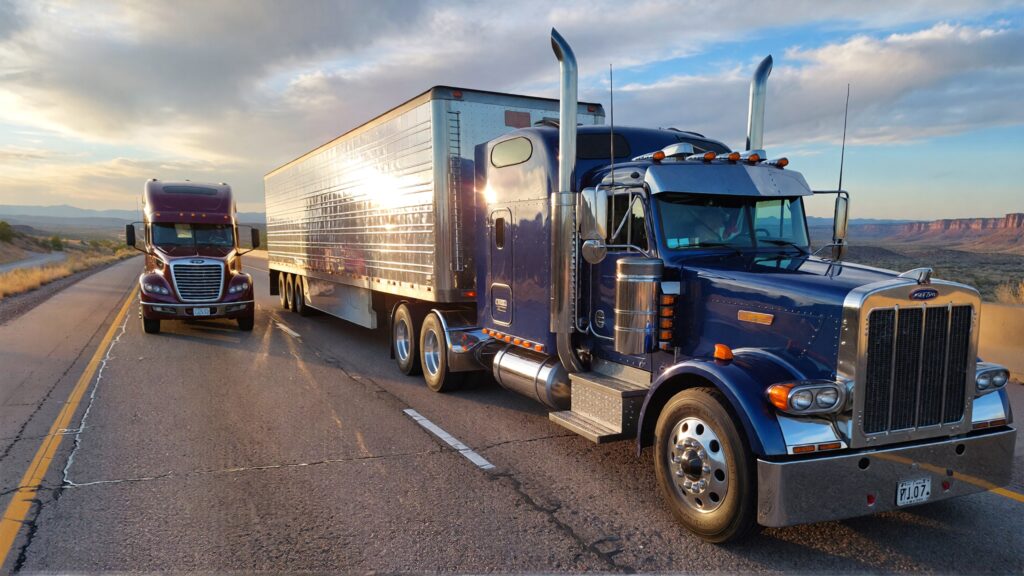
According to CHP reports, a white Volvo big rig and trailer traveling in the No. 2 lane struck the rear end of another big rig and trailer that had come to a stop in traffic. The force of the impact proved fatal for the driver of the moving truck, though authorities have not yet released the victim’s identity pending notification of next of kin.
Understanding the Circumstances of the Big Rig Crash
This tragic collision occurred during the overnight hours when commercial truck traffic is typically heavy on Interstate 580, a critical east-west transportation corridor connecting the Central Valley to the San Francisco Bay Area. The stretch of I-580 near Tracy sees substantial rig traffic as it serves as a major route for goods movement between the Port of Oakland and inland distribution centers.
The preliminary investigation indicates that traffic had slowed or stopped on westbound I-580 when the white Volvo big rig failed to slow down in time and collided with the rear of the stopped semi-truck ahead. Rear-end collisions involving commercial trucks often result in catastrophic outcomes due to the massive size and weight of these vehicles—fully loaded big rigs can weigh up to 80,000 pounds and require significantly greater stopping distances than passenger vehicles.
Several factors may have contributed to this deadly crash. The early morning hour raises questions about driver fatigue, a well-documented issue in the trucking industry that federal regulations attempt to address through hours-of-service requirements. Visibility conditions at 1:30 a.m., potential highway congestion, mechanical problems, or driver distraction could also have contributed to the striking driver’s inability to recognize and respond to the stopped traffic ahead.
The California Highway Patrol continues to investigate the exact cause of the collision, examining factors such as:
- Whether the striking driver was complying with federal hours-of-service regulations
- If driver fatigue or distraction contributed to the failure to stop
- Road and weather conditions at the time of the crash
- The mechanical condition of both vehicles involved
- Whether the stopped truck had adequate warning devices deployed
- Speed and braking patterns of the striking vehicle
The Devastating Impact of Commercial Truck Accidents
Big rig accidents represent some of the most dangerous collisions on California roadways. The sheer physics involved when a vehicle weighing tens of thousands of pounds collides with another object—whether another truck, a passenger car, or a fixed obstacle—almost invariably results in severe damage, serious injuries, or fatalities.
For truck drivers themselves, the occupation carries inherent risks. According to the Bureau of Labor Statistics, truck driving consistently ranks among the most dangerous professions in America, with heavy and tractor-trailer truck drivers experiencing injury and fatality rates significantly higher than the national average for all occupations. Drivers face long hours behind the wheel, pressure to meet delivery schedules, exposure to hazardous road conditions, and the constant risk of being involved in serious accidents.
This particular crash underscores several critical safety concerns in the trucking industry:
Stopping Distance Requirements: A fully loaded commercial truck traveling at highway speeds can require more than 500 feet to come to a complete stop—nearly the length of two football fields. When traffic suddenly slows or stops, truck drivers need to maintain adequate following distances and remain vigilant to avoid rear-end collisions.
Nighttime Driving Hazards: The overnight hours present unique challenges for commercial drivers, including reduced visibility, increased fatigue, and the physiological effects of disrupted circadian rhythms. Studies have consistently shown that accident risk increases during nighttime driving, particularly in the early morning hours when this Tracy collision occurred.
Traffic Congestion in High-Volume Corridors: Interstate 580 through Tracy frequently experiences heavy traffic, including a substantial volume of commercial vehicles. When traffic patterns shift suddenly—due to accidents, construction, or other factors—the risk of secondary collisions increases dramatically, particularly for vehicles unable to stop quickly.
Legal Implications and Liability in Tracy Big Rig Accidents
When a commercial truck accident results in fatalities or serious injuries, determining liability and pursuing appropriate compensation becomes a complex legal matter involving multiple potential parties and intricate regulations governing the trucking industry.
In accidents involving commercial vehicles, liability may extend beyond just the individual driver to include:
The Trucking Company: Employers can be held vicariously liable for accidents caused by their drivers acting within the scope of employment. Additionally, trucking companies may face direct liability for negligent hiring, inadequate training, failure to maintain vehicles properly, or pressuring drivers to violate hours-of-service regulations.
Vehicle Owners and Lessors: In cases where the truck and trailer are owned by entities separate from the employing carrier, these parties may also be held responsible for accidents caused by mechanical failures or inadequate maintenance.
Cargo Loaders and Shippers: If improper loading or securement of cargo contributed to an accident, the parties responsible for loading the truck may share liability.
Third-Party Maintenance Providers: Companies contracted to perform maintenance and repairs on commercial vehicles can be held accountable if mechanical failures due to negligent service contribute to accidents.
Parts Manufacturers: In cases where defective vehicle components—such as brake systems, tires, or other critical safety equipment—cause or contribute to accidents, product liability claims may be pursued against manufacturers.
Investigating commercial truck accidents requires extensive resources and expertise. Unlike typical passenger vehicle collisions, big rig crashes involve:
- Federal Motor Carrier Safety Administration (FMCSA) regulations governing driver qualifications, hours of service, vehicle maintenance, and cargo securement
- Electronic logging device (ELD) data that tracks driver hours and vehicle operations
- Commercial driver’s license (CDL) requirements and driver qualification files
- Vehicle maintenance records and inspection reports
- Onboard event data recorders (similar to “black boxes” in aircraft)
- Company policies regarding safety, training, and compliance
Experienced truck accident attorneys understand how to obtain and analyze this evidence before it is destroyed or becomes unavailable, building strong cases for victims and their families.
California Laws Governing Commercial Truck Operations and Accidents
California has implemented comprehensive regulations designed to enhance commercial vehicle safety and protect all road users from the dangers posed by negligently operated big rigs. These state laws work in conjunction with federal regulations to establish safety standards and provide legal remedies in the event of accidents.
Hours-of-Service Compliance: California enforces federal hours-of-service regulations that limit the duration of time truck drivers can operate their vehicles without taking rest breaks. These rules exist specifically to combat driver fatigue, which is a contributing factor in thousands of truck accidents nationwide. Violations of hours-of-service regulations can establish negligence in accident cases.
Vehicle Maintenance Requirements: California Vehicle Code Section 34501 requires motor carriers to systematically inspect, repair, and maintain all vehicles under their control. Regular inspections and maintenance records must be kept and made available for review. Failure to properly maintain commercial vehicles can form the basis for liability when mechanical failures contribute to accidents.
Commercial Driver’s License Standards: California requires all commercial truck drivers to hold a valid CDL that is appropriate to the class and type of vehicle they operate. Drivers must meet specific medical qualification standards, pass knowledge and skills tests, and maintain a clean driving record. Employing unqualified or medically unfit drivers can subject trucking companies to liability.
Comparative Fault Considerations: Under California’s pure comparative negligence system, accident victims can recover damages even if they bear partial responsibility for a collision, with their recovery reduced by the percentage of fault attributed to them. This principle applies in truck accident cases where multiple parties may share responsibility for the circumstances leading to a crash.
The Unique Challenges Facing Truck Drivers
While this article focuses primarily on the legal and safety aspects of truck accidents from the perspective of victims and their families, it’s essential to acknowledge the challenges and pressures faced by professional truck drivers themselves. The victim in this Tracy collision was also a working professional, likely supporting a family and pursuing a livelihood in an industry that demands long hours, frequent time away from home, and constant vigilance.
Truck drivers operate under tremendous pressure to meet delivery schedules, often facing economic penalties for delays. Many work as independent contractors rather than employees, shouldering financial risks and expenses while lacking the benefits and protections typically afforded by traditional employment. The sedentary nature of the work, combined with irregular schedules and limited access to healthy food options, contributes to significant health challenges within the profession.
Safety advocates continue pushing for reforms to address systemic issues in the trucking industry, including:
- Adequate compensation that doesn’t incentivize speeding or hours-of-service violations
- Improved rest area availability and facilities along major trucking corridors
- Enhanced technology, including collision avoidance systems and stability control
- More vigorous enforcement of existing safety regulations
- Comprehensive training programs that go beyond minimum licensing requirements
Understanding Settlement Values in Fatal Truck Accident Cases
When a truck accident claims a life, no amount of financial compensation can truly make a family whole or replace their loved one. However, California law recognizes that families suffer both economic and non-economic losses when a family member dies due to someone else’s negligence. It provides legal remedies through wrongful death claims.
In fatal truck accident cases, damages may include:
Economic Losses: These quantifiable financial impacts include the deceased’s lost future earnings and benefits, the loss of household services they would have provided, funeral and burial expenses, and medical costs incurred before death.
Non-Economic Losses: These more subjective but equally real damages compensate for the loss of love, companionship, comfort, care, assistance, protection, affection, society, and moral support that the deceased provided to surviving family members. The value of wrongful death claims involving commercial truck accidents often exceeds typical vehicle accident cases for several reasons:
First, commercial trucking policies typically carry liability insurance with minimum coverage limits of $750,000 to $1 million or more, significantly higher than the $15,000 minimum for passenger vehicles in California. Many trucking companies carry policies with multi-million dollar limits, particularly those hauling certain types of cargo.
Second, the severe nature of big rig collisions and the catastrophic injuries or fatalities they cause generally result in substantial damages. The significant disparity between the size and weight of commercial and passenger vehicles means that truck accidents typically involve more severe consequences, justifying higher compensation.
Third, the complex web of potential defendants in commercial truck accident cases—including drivers, trucking companies, maintenance providers, and others—may provide multiple sources of recovery for victims and their families.
Every case is unique, and settlement values depend on numerous factors specific to the circumstances, including:
- The victim’s age, earnings history, and future earning potential
- The nature and strength of family relationships
- The number of dependents left behind
- The degree of negligence and whether punitive damages may apply
- The available insurance coverage and assets of the defendants
- The strength of evidence establishing liability
- The skill and experience of legal representation
Our firm has secured significant settlements and verdicts for families devastated by truck accidents throughout Northern California. We understand the financial pressures families face in the aftermath of tragedy and work diligently to ensure they receive maximum compensation for all their losses.
How GJEL Accident Attorneys Can Help Your Family
At GJEL Accident Attorneys, we recognize that no legal case can undo the tragedy of losing a loved one in a preventable truck accident. However, holding negligent parties accountable and securing just compensation can provide financial stability for surviving family members and contribute to broader efforts to improve safety standards in the trucking industry.
Our firm has more than 50 years of experience representing accident victims and their families throughout California. We have successfully handled numerous complex commercial vehicle accident cases, securing millions of dollars in compensation for clients while holding trucking companies and negligent drivers accountable for their actions.
When we take on a truck accident case, our approach includes:
Immediate Investigation: Time is critical in truck accident cases. Evidence can be lost, destroyed, or become unavailable if not preserved quickly. We immediately begin investigating crashes, working with accident reconstruction experts, obtaining electronic logging device data, securing maintenance records, and maintaining critical evidence before it disappears.
Comprehensive Damage Analysis: We collaborate with economists, vocational experts, and other professionals to thoroughly document the financial impact of your loss, ensuring that settlement demands and trial presentations accurately reflect the actual value of your claim.
Aggressive Advocacy: Trucking companies and their insurers often employ teams of lawyers and investigators to minimize their liability and reduce payouts to victims. We level the playing field, advocating fiercely for our clients’ rights and refusing to accept inadequate settlement offers.
No Win, No Fee Commitment: We handle all truck accident cases on a contingency fee basis, meaning you pay no attorney fees unless we recover compensation for you. This arrangement enables families to access experienced legal representation without upfront costs or financial risk, ensuring that quality legal assistance is available when needed most, regardless of their economic circumstances.
Compassionate Support: Beyond legal expertise, we offer empathetic guidance to families navigating the aftermath of tragedy, connecting them with resources, explaining complex legal processes in clear and understandable terms, and treating each client with the dignity and respect they deserve during a tough time.
Understanding Truck Accident Settlement Calculators
Truck accident settlement calculators are online tools designed to provide families and victims with preliminary estimates of potential compensation values in commercial vehicle accident cases. These calculators typically request information about the accident circumstances, injury severity, medical expenses, lost wages, and other economic damages to generate an estimated settlement range.
While these tools can offer helpful starting points for understanding the potential value of a claim, it’s essential to recognize their significant limitations. Settlement calculators use generalized formulas and averages that cannot account for the unique complexities of individual cases, particularly in fatal truck accidents, where non-economic damages like loss of companionship and emotional suffering constitute major components of recovery.
The actual value of a wrongful death or catastrophic injury claim involving a commercial truck depends on numerous case-specific factors that no automated calculator can fully assess, including the strength of liability evidence, the specific defendants involved and their insurance coverage, the victim’s age and earning potential, the number of dependents, the jurisdiction where the case is filed, and the skill of legal representation.
Additionally, truck accident cases often involve multiple liable parties—including trucking companies, vehicle owners, maintenance providers, and cargo loaders—creating complex liability scenarios that simple calculators cannot evaluate. At GJEL Accident Attorneys, we provide personalized case evaluations that go far beyond what any online calculator can offer, analyzing the specific facts of your situation, identifying all potential sources of recovery, and developing comprehensive demand packages that reflect the full value of your losses.
Rather than relying on generic estimates, we encourage families affected by the Tracy I-580 truck accident or similar crashes to contact our experienced attorneys for a free consultation, where we can provide realistic assessments based on our decades of experience handling complex commercial vehicle cases throughout California. Call us now at +1-866-218-3776 to speak with our experts.
Moving Forward After Tragedy
“Losing a fellow truck driver in a collision like this reminds us that behind every commercial vehicle accident statistic is a real person—someone’s husband, father, brother, or friend who was simply trying to make a living. For the family now facing this unimaginable loss, I want you to know that you have legal rights to hold negligent parties accountable and secure the financial stability your loved one would have wanted for you. Truck accident investigations are time-sensitive—critical evidence, such as electronic logging data, driver qualification files, and vehicle maintenance records, can disappear quickly if not preserved immediately. Don’t let insurance companies pressure you into quick settlements before you understand the full value of your claim or make recorded statements without legal representation. These cases are complex, often involving multiple defendants and substantial insurance policies, and you deserve an attorney who will fight aggressively to maximize your recovery while treating your family with the compassion and respect you deserve during this devastating time. If you’ve lost a loved one or been seriously injured in a truck accident, please reach out to our team for a free consultation—we’re here to help you navigate this difficult journey, and you won’t pay a penny in attorney fees unless we win your case.”- Andy Gillin, GJEL Accident Attorneys
The death of a truck driver in this early morning collision on I-580 represents not just a statistic but a profound loss—a family member who will never return home, plans that will never be realized, and a void that can never truly be filled. While the California Highway Patrol continues investigating the specific circumstances that led to this fatal crash, the incident serves as a stark reminder of the dangers present on our highways and the devastating consequences when safety is compromised.
If your family has lost a loved one in a truck accident, or if you’ve been seriously injured in a commercial vehicle collision, you don’t have to face the legal complexities alone. The experienced attorneys at GJEL Accident Attorneys are here to help you understand your rights, explore your options, and pursue the justice and compensation your family deserves.
Compassionate GJEL accident attorneys are always available to discuss your case, and you pay nothing unless we secure a favorable outcome. Let our experienced legal team shoulder the legal burden while you focus on what matters most – your family’s healing and recovery. Contact us today at +1-866-218-3776 or visit our Stockton office to secure your future and compensation.
Local Resources for Tracy I-580 Truck Accident Victims and Families
In the aftermath of this devastating collision, the victim’s family faces not only profound grief but also numerous practical and legal challenges. Several local and regional resources can provide support during this difficult time:
California Highway Patrol – Stockton Area Office, 5555 N. Pershing Avenue, Suite 100, Stockton, CA 95207. Phone: (209) 938-4800. Non-Emergency: 1-800-835-5247. Website: www.chp.ca.gov. The investigating agency can provide accident reports and information about ongoing investigations. CHP handles all traffic incidents on state highways and interstates throughout California.
Tracy Police Department, 1000 Civic Center Drive, Tracy, CA 95376. Phone: (209) 831-6550. Non-Emergency: (209) 831-6550. Website: www.tracypd.com. Can assist with victim services and referrals for families dealing with traumatic events.
San Joaquin County Coroner’s Office, 7000 Michael Canlis Boulevard, French Camp, CA 95231. Phone: (209) 468-3400. Website: www.sjgov.org/department/coroner. Assists families with death certification, provides information regarding the deceased, and coordinates the release of remains.
San Joaquin County Sheriff’s Office – Traffic Division 7000 Michael Canlis Boulevard French Camp, CA 95231 Phone: (209) 468-4400 Website: www.sjgov.org/department/sheriff Provides traffic safety information and accident investigation support.
California Victim Compensation Board Phone: 1-800-777-9229 Website: victims.ca.gov Provides financial assistance to victims of violent crime and their families, which may include inevitable traffic-related deaths. Can help cover funeral expenses, lost wages, medical bills, and mental health counseling.
San Joaquin County Behavioral Health Services 1212 N. California Street, Stockton, CA 95202 Crisis Line: (209) 468-8686 or 1-888-376-6246 (available 24/7) Website: www.sjcbhs.org Offers mental health crisis intervention and counseling referrals for individuals experiencing trauma following tragic accidents.
Tracy Community Connections Center, 950 W. Clover Road, Tracy, CA 95376. Phone: (209) 831-6452. Website: www.ci.tracy.ca.us. Offers various community services and connects families with local support resources.
Federal Motor Carrier Safety Administration (FMCSA) – Western Service Center 12600 West Colfax Avenue, Suite B-300 Lakewood, CO 80215 Phone: (303) 757-9384 Website: www.fmcsa.dot.gov Provides information about federal trucking regulations, safety data on motor carriers, and complaint procedures for unsafe commercial vehicles or drivers.
California Department of Motor Vehicles – Commercial Vehicle Section Phone: 1-800-777-0133 Website: www.dmv.ca.gov/portal/vehicle-industry-services/commercial-vehicle Maintains records on commercial drivers and vehicle registrations. Can provide information on driver qualifications and vehicle inspection records.
National Highway Traffic Safety Administration (NHTSA) Phone: 1-888-327-4236 Website: www.nhtsa.gov. A federal agency providing vehicle safety information, recall data, and resources for traffic accident victims.
Truck Safety Coalition 107 S. West Street, Suite 634 Alexandria, VA 22314 Phone: (202) 857-1244 Website: www.trucksafety.org National nonprofit organization providing support, advocacy, and resources specifically for truck crash victims and their families. Offers peer support connections with other families who have experienced similar losses.
Parents Against Tired Truckers (PATT) Website: www.patt.org Advocacy organization founded by families affected by truck accidents, offering support and working to improve trucking industry safety standards.
Tracy Chamber of Commerce, 223 E. 10th Street, Tracy, CA 95376. Phone: (209) 835-2131. Website: www.tracychamber.org. Can provide connections to local support services and community resources.
San Joaquin County District Attorney’s Office – Victim Services 222 E. Weber Avenue, Room 412 Stockton, CA 95202 Phone: (209) 468-2400 Website: www.sjcda.org Provides support and information to victims and families involved in criminal proceedings related to traffic incidents.
California Department of Insurance – Consumer Hotline Phone: 1-800-927-4357 Website: www.insurance.ca.gov Assists with insurance-related questions and complaints, including issues with truck accident claims.
Legal Aid Society of San Joaquin County 20 S. Sutter Street Stockton, CA 95202 Phone: (209) 948-0587 Website: www.las-sj.org Provides free legal assistance to qualifying low-income individuals on various matters, including consumer rights and insurance issues.
American Red Cross – San Joaquin County Chapter Phone: (209) 464-8343 Website: www.redcross.org Offers emergency assistance and support services to families dealing with traumatic events.
Caltrans District 10 – Highway Information 1976 E. Dr. Martin Luther King Jr. Boulevard Stockton, CA 95205 Phone: (209) 948-7636 Website: www.dot.ca.gov/caltrans-near-me/district-10 Provides information about highway conditions, construction, and safety improvements on I-580 and other state routes in the region.
These organizations and agencies can provide crucial support as families navigate the brutal aftermath of a fatal truck accident. Whether you need help understanding the investigation process, accessing mental health services, pursuing victim compensation, or simply connecting with others who understand your experience, these resources are available to assist you during this challenging time.