Last updated July 17, 2026
In the early morning hours of Sunday, May 17, 2026, a fatal highway crash occurred on southbound Highway 41 in Fresno that claimed the life of a Selma man and left a 3-year-old child with critical injuries. The crash serves as a sobering reminder of the dangers posed by disabled vehicles on high-speed roadways and the life-or-death importance of proper child passenger restraints.

What Happened in the Highway Crash
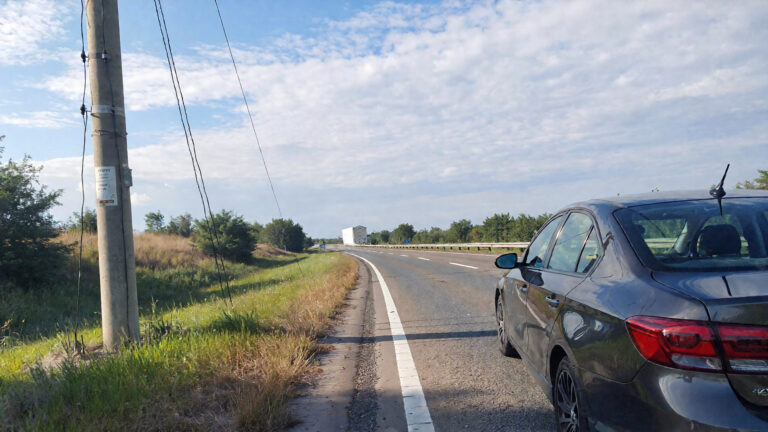
According to the California Highway Patrol, the crash occurred at approximately 2:25 AM on southbound Highway 41, north of Highway 180. A Toyota Camry had come to a stop in the middle lane, with its lights off, rendering it nearly invisible to approaching drivers in the dark. Multiple motorists had already reported near misses with the stopped vehicle before the fatal collision took place.
A Kia Optima driven by a 33-year-old Fresno woman struck the rear of the disabled Toyota. The driver of the Toyota was transported to a local hospital, where he was later pronounced dead. An adult passenger in the Kia sustained major injuries and was transported for medical treatment. A 3-year-old child riding in the Kia was wearing a seat belt but was not secured in a child safety seat as required by California law, and suffered critical injuries as a result. The investigation remains ongoing.
Legal Responsibility for Disabled Vehicles on California Roads
Under California Civil Code §1714, every person is responsible for injuries caused to others through their own negligence. A vehicle stopped in an active traffic lane without lights or hazard signals in the middle of the night presents an extreme and foreseeable danger to other drivers. Under this statute, the estate of the Toyota driver, or other responsible parties, could face civil liability for the injuries sustained by the occupants of the Kia.
California Vehicle Code §22504 prohibits parking or leaving a vehicle stopped on a highway except under specific circumstances, and Vehicle Code §24600 requires that all lights be properly visible when a vehicle is on a roadway during darkness. When a driver or vehicle owner violates these statutes and the violation causes injury or death, it can serve as the basis for a negligence per se claim, making it easier for injured parties to establish liability in civil court.
California Vehicle Code §22505 further restricts stopping or parking on a state highway without authorization from the Department of Transportation, reinforcing that an unattended or disabled vehicle left in an active travel lane represents not merely an inconvenience but a statutory violation with serious legal consequences.
Beyond direct liability, California’s negligence per se doctrine holds that when a party violates a safety statute and that violation causes the type of harm the statute was designed to prevent, negligence may be established as a matter of law. A vehicle sitting dark and unlit in a freeway lane in the early morning hours is precisely the danger these statutes exist to address.
If evidence gathered during the investigation shows that the Toyota was stopped long enough for multiple drivers to report near misses before the fatal impact, that timeline could be significant in establishing how foreseeable the collision truly was and in assigning proportionate liability to all responsible parties.
California’s Child Passenger Safety Laws and Liability
California law places strict requirements on how young children must be restrained in moving vehicles. Under Vehicle Code §27360, children under 8 years old must be secured in a federally approved child passenger restraint system. Infants and toddlers must ride in rear-facing car seats until they reach the maximum height or weight limit specified by the seat’s manufacturer. A 3-year-old child must be in an appropriate child safety seat, not merely a standard seat belt.
When a child is not properly restrained and sustains injuries in a crash, the adult responsible for that child’s safety may share liability for those injuries under California’s comparative fault framework. California Civil Code §1714 and related negligence principles allow courts to apportion fault among multiple parties. Even in cases where another driver caused the initial collision, an additional claim may arise from the failure to provide adequate child restraint.
Beyond the immediate question of criminal liability, the failure to secure a child in a proper restraint system carries significant weight in the civil context as well. California’s pure comparative fault system, established in Li v. Yellow Cab Co. (1975) and codified in practice through Civil Code §1714, allows a jury to apportion fault among all parties whose negligence contributed to an injury.
This means that even if another driver bears primary responsibility for causing the crash itself, a finding that a child was improperly restrained could reduce the total compensation awarded for that child’s injuries by the percentage of fault attributed to the responsible adult. However, it is equally important to understand that comparative fault does not bar recovery entirely.
A skilled personal injury attorney will work to minimize any fault attributed to your client while aggressively pursuing the full measure of damages against all other negligent parties, including the driver or owner of a vehicle that was left disabled and unlit in a live freeway lane, creating the dangerous conditions that set this tragedy in motion.
Understanding Your Right to Compensation
Victims of traffic accidents in California and their families have the right to pursue compensation for the full range of losses they have suffered. Under California law, recoverable damages in a personal injury or wrongful death case typically include:
Medical expenses, both current and future, including emergency care, hospitalization, surgery, rehabilitation, and ongoing treatment. Lost wages and diminished earning capacity if injuries prevent a victim from returning to work. Pain and suffering, emotional distress, and loss of enjoyment of life. Funeral and burial costs in cases involving wrongful death. Loss of companionship and financial support for family members who have lost a loved one.
California’s wrongful death statute, Code of Civil Procedure §377.60, allows surviving spouses, children, and other qualifying family members to bring claims on behalf of a person who has died due to another’s negligence. A survival action under CCP §377.30 allows the deceased’s estate to pursue compensation for pain, suffering, and economic losses the victim experienced before death.
Estimating the Value of a Serious Injury Claim
No calculator can capture the full weight of losing a loved one or watching a child fight for their life in a hospital. However, understanding the general framework attorneys use to evaluate serious injury claims can help families make informed decisions during an extraordinarily difficult time.
There are two primary methods for calculating general damages, such as pain and suffering. The multiplier method takes all of a victim’s economic damages, such as medical bills and lost wages, and multiplies that figure by a number typically ranging from 1.5 to 5, depending on the severity of the injuries and the permanence of any disability. A critical injury to a 3-year-old child, which will affect that child across an entire lifetime, could reasonably support a multiplier at the higher end of that range.
The per diem method assigns a daily dollar value to the victim’s pain and suffering and multiplies it by the number of days the victim is expected to live with those effects. For a young child facing a lifetime of consequences from a preventable crash, this method can generate substantial figures that more accurately reflect the ongoing human cost of the injury.
An experienced personal injury attorney can evaluate the specific facts of your case, gather the evidence necessary to support maximum compensation, and advise you on which approach best reflects the true value of what your family has endured.
Why Independent Investigation Matters After a Crash
When law enforcement responds to a serious accident, officers work quickly under pressure and with limited time. Evidence can be misread, overlooked, or incorrectly documented. Skid mark measurements may be inaccurate.
Witness statements may not be thoroughly collected. The condition of the disabled vehicle, including whether its hazard lights were functioning, whether the battery was dead, or how long it had been stopped in the lane, may not be fully examined by the initial responding officers.
One of the most valuable services a personal injury attorney can provide is conducting an independent follow-up investigation. This may include retaining accident reconstruction experts, obtaining surveillance footage from nearby cameras, subpoenaing phone records, and interviewing witnesses who were not contacted by authorities.
In complex multi-vehicle crashes involving questions of comparative fault, independent investigation can be the difference between a full recovery and a denied or reduced claim.
The Statute of Limitations in California
Time is a critical factor in any personal injury or wrongful death case. Under California Code of Civil Procedure §335.1, injured victims generally have two years from the date of the accident to file a civil lawsuit. For a wrongful death claim, surviving family members typically have two years from the date of the decedent’s death.
Do not wait. Evidence disappears, witnesses’ memories fade, and surveillance footage is routinely overwritten within days or weeks. Contacting an attorney as soon as possible after an accident preserves your options and gives your legal team the best chance to build the strongest possible case on your behalf.
There is an important exception worth noting for cases involving injured minors. Under California Code of Civil Procedure §352, the statute of limitations is tolled, meaning paused, for children who are under the age of 18 at the time of their injury. In most cases, a minor has until their 20th birthday to file a personal injury claim arising from a childhood accident.
While this extended window may seem to reduce the urgency for families of young victims, it does not diminish the practical importance of acting quickly. Physical evidence degrades, witnesses relocate or become unavailable, and electronic data such as traffic camera footage and cell phone records is routinely deleted long before a child reaches adulthood.
Retaining an attorney promptly ensures that time-sensitive evidence is preserved through formal legal mechanisms such as spoliation letters and early discovery requests, laying the groundwork for the strongest possible case regardless of when the claim is ultimately filed.
How a Fatal Accident Settlement Calculator Can Help Families Understand Their Case
When a family loses a loved one in a preventable traffic accident, one of the most overwhelming questions they face is what their legal claim may actually be worth. A fatal accident settlement calculator is a practical tool that helps surviving family members understand the range of compensation they may be entitled to under California law.
These calculators work by gathering inputs across the major categories of compensable loss in a wrongful death claim, including the deceased’s age, occupation, annual income, life expectancy, and the nature of the family relationships involved, and applying established legal frameworks to generate an estimated value range.
Economic damages, such as lost future earnings, benefits, and household contributions, are calculated using actuarial data and wage-projection models, while non-economic damages, such as loss of love, companionship, guidance, and moral support, are estimated based on comparable verdicts and settlements in California courts.
For families dealing with the aftermath of a crash like the one on Highway 41, where a breadwinner or parent has been lost, the gap between what an insurance company initially offers and what the claim is genuinely worth can be substantial. While no online tool can replace the judgment of an experienced wrongful death attorney who knows the local courts and the full facts of your case.
A settlement calculator provides a valuable starting point, helping families enter the legal process with a clearer picture of what fair compensation looks like and the confidence to reject lowball offers that fall far short of what California law entitles them to recover. Call us now at +1-866-218-3776 to speak with our experts.
Taking the First Step Toward Justice
“A crash like this one, a family riding together in the early morning hours and then everything changes in an instant, is something no one should ever have to go through. I have seen firsthand how these moments reshape lives forever, and my heart goes out to everyone affected by this tragedy on Highway 41. What I want the families involved to know is this: the disabled vehicle sitting dark and unlit in a live freeway lane, the absence of proper warning to approaching drivers, the failure to ensure a 3-year-old was secured in the restraint the law requires, these are not just tragic details. They are evidence. And evidence is what we build cases on. At GJEL, we have spent more than 40 years recovering over $980 million, making sure that injured Californians and grieving families are not left to absorb losses caused by someone else’s negligence. If you lost someone in this crash, or if your child or a loved one is fighting to recover, please do not wait and do not try to handle this alone. Call us. There is no fee unless we win for you, and the conversation that could protect your family’s future costs you nothing.” — Andy Gillin, Managing Partner, GJEL Accident Attorneys
GJEL Accident Attorneys has been representing injured Californians and their families for more than 40 years. Our firm has recovered over $980 million for clients throughout the state, and we have extensive experience handling complex highway accident cases involving wrongful death, catastrophic injury, and child injury claims.
We handle every case on a contingency fee basis. You pay no attorney fees unless and until we recover compensation for you. There is no financial risk in calling us, and no obligation after your initial consultation.
If you or a family member was involved in this crash, or if you have lost a loved one in a California traffic accident, call GJEL Accident Attorneys today at +1-866-218-3776 or visit our Concord office to speak with a member of our team.
Local Resources for Fresno Accident Victims
If you or a family member has been involved in a traffic accident in the Fresno area, the following local resources may be helpful:
California Highway Patrol, Fresno Area. As the primary investigating agency for this crash on Highway 41, the CHP Fresno Area office handles traffic collision reports, provides copies of official accident reports, and can direct victims and families to victim assistance services. Address: 1900 N. Sunnyside Ave., Fresno, CA 93727 Phone: (559) 650-3000 Accident Reports: https://www.chp.ca.gov/ChpWebSite/requests-and-permits/collision-reports Website: https://www.chp.ca.gov
Fresno Police Department The Fresno Police Department handles traffic collisions occurring within city limits and maintains a traffic bureau that investigates serious injury and fatal crashes. Victims and families can request collision reports and access victim support services through the department. Address: 2323 Mariposa St., Fresno, CA 93721 Non-Emergency Line: (559) 621-7000 Traffic Bureau: (559) 621-7000 Collision Report Requests: https://www.fresno.gov/police/records-division Website: https://www.fresno.gov/police
Fresno County Sheriff’s Office The Fresno County Sheriff’s Office provides law enforcement services throughout unincorporated areas of Fresno County and maintains a victim services unit to assist those affected by serious accidents and crimes. Address: 2200 Fresno St., Fresno, CA 93721 Phone: (559) 600-3111 Victim Services: https://www.fresnosheriff.org/divisions/administrative/victim-services.html Website: https://www.fresnosheriff.org
California Office of Traffic Safety (OTS) The California Office of Traffic Safety is a state agency dedicated to reducing traffic fatalities and injuries across California. Their website offers resources on traffic safety laws, child passenger safety, seat belt requirements, and local grant-funded safety programs, and can connect families with regional traffic safety resources. Website: https://www.ots.ca.gov
California DMV — Accident Reporting California law requires drivers involved in accidents resulting in injury or death to report the collision to the DMV within 10 days using the SR-1 form. The DMV website provides the form and instructions for compliance. SR-1 Form and Instructions: https://www.dmv.ca.gov/portal/file/sr-1-pdf Website: https://www.dmv.ca.gov
Community Regional Medical Center — Trauma Center Community Regional Medical Center is the Central Valley’s only Level I Trauma Center and the facility most likely to receive critically injured victims from major highway crashes in the Fresno area. Their patient services team can assist families in locating admitted patients and accessing support resources. Address: 2823 Fresno St., Fresno, CA 93721 Main Line: (559) 459-6000 Patient Services: https://www.communitymedical.org/community-regional/patient-visitor-information Website: https://www.communitymedical.org
Valley Children’s Healthcare is the Central Valley’s dedicated pediatric medical center and is equipped to provide specialized trauma and critical care for seriously injured children. Families of pediatric victims can access social work services, family support resources, and care coordination through the hospital. Address: 9300 Valley Children’s Pl., Madera, CA 93636 Main Line: (559) 353-3000 Family Support Services: https://www.valleychildrens.org/services/family-support Website: https://www.valleychildrens.org
Fresno County Victim Services Unit, operating through the Fresno County District Attorney’s Office, provides emotional support, case updates, assistance with victim compensation applications, and referrals to community resources for individuals and families affected by serious accidents and crimes. Address: 2220 Tulare St., Suite 1000, Fresno, CA 93721 Phone: (559) 600-3141 California Victim Compensation Program: https://victims.ca.gov Website: https://www.fresnocountyca.gov/Departments/District-Attorney/Victim-Services
California Victim Compensation Board (CalVCB) The California Victim Compensation Board provides financial assistance to victims of violent crimes and certain accidents for expenses not covered by insurance, including medical costs, mental health counseling, funeral and burial expenses, and lost wages. Families affected by this crash may be eligible to apply. Phone: 1-800-777-9229 Apply for Compensation: https://victims.ca.gov/victims/apply Website: https://victims.ca.gov
Safe Kids Fresno County — Child Passenger Safety Safe Kids Fresno County is a local chapter of the national Safe Kids Worldwide network and provides free child safety seat inspections, installation assistance, and education on proper restraint use for children of all ages. Given the circumstances of this crash, families seeking guidance on child passenger safety can contact this program directly. Car Seat Inspection Locator: https://www.safekids.org/buckle-up/car-seat-safety-check Website: https://www.safekids.org