Last updated July 17, 2026
A fatal pedestrian accident in Sonoma County has left the community grieving and raising urgent questions about road safety at a rural intersection. The collision occurred around 4:44 p.m. at the intersection of Burnside Road and Sexton Road, claiming the life of one pedestrian. A second person was transported to Memorial Hospital with head injuries following the crash. The driver involved remained at the scene and cooperated with responding authorities.
What Happened in the Fatal Pedestrian Accident
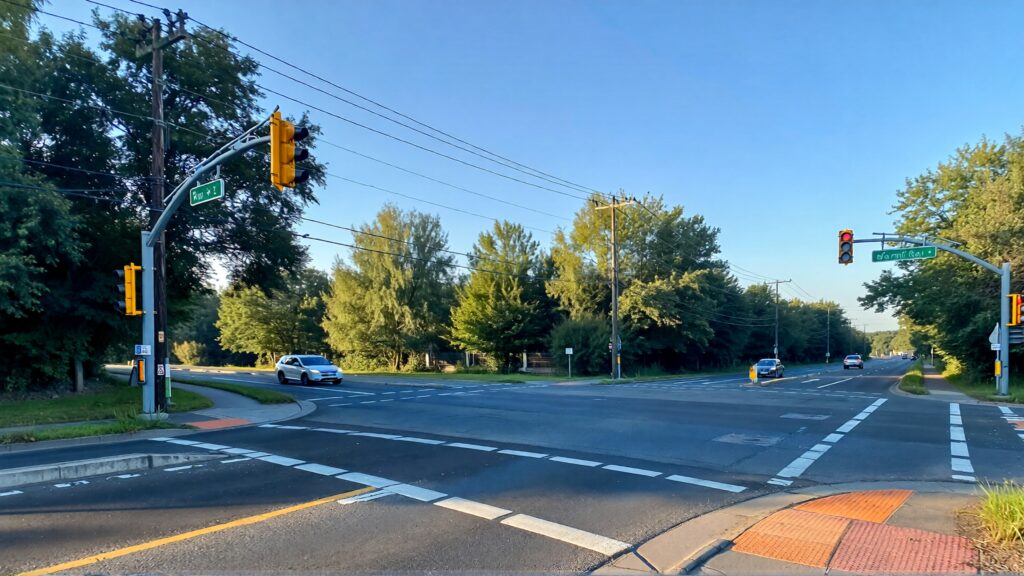
The collision took place in the late afternoon, a time of day when visibility can become compromised as sunlight shifts and glare increases. The crash occurred at the intersection of Burnside Road and Sexton Road, a location that may pose particular challenges for both pedestrians and drivers.
One pedestrian was fatally struck by a vehicle, and emergency responders transported a second individual to Memorial Hospital with reported head injuries. Authorities confirmed the driver stayed at the scene following the collision. An investigation into the precise cause and circumstances of the crash is expected to follow.
The intersection of Burnside Road and Sexton Road sits within unincorporated Sonoma County, a region where rural roadways often serve both agricultural traffic and local residents traveling on foot or by vehicle. At 4:44 p.m., daylight remains, but the sun’s position can create challenging glare for westbound or southbound drivers, potentially reducing their ability to detect pedestrians near the roadway.
The lack of dedicated pedestrian infrastructure at many rural Sonoma County intersections means that pedestrians must often share the road with vehicle traffic, without the protection of marked crosswalks, barriers, or pedestrian signals.
The presence of a second injured person at the scene suggests that the impact was significant, and the fact that the driver remained on-site indicates initial cooperation with law enforcement. As investigators examine vehicle speed, road conditions, sightlines, and driver behavior, the findings may prove critical to any subsequent civil or criminal proceedings arising from this crash.
The Dangers Pedestrians Face at Rural Intersections
Rural and semi-rural intersections across California, including those in Sonoma County, often lack pedestrian infrastructure found in more urban areas. Without proper crosswalks, signage, lighting, or traffic signals, pedestrians face significantly elevated risk when attempting to cross or travel near roadways. California law under Vehicle Code § 21950 requires drivers to yield the right of way to pedestrians.
This is in marked and unmarked crosswalks, yet collisions at intersections continue to occur with tragic regularity. In areas where sidewalks and pedestrian paths are absent, the responsibility placed on motorists to exercise reasonable care is even greater. When drivers fail to meet that standard, the consequences can be fatal.
Sonoma County’s rural road network, while scenic and integral to the region’s agricultural and residential character, poses distinct hazards for pedestrians. Many of these roads were designed and built decades ago with vehicle traffic as the primary consideration, leaving little accommodation for pedestrians who may need to walk along or cross a roadway to access homes, farms, bus stops, or neighboring properties.
Sight distance limitations caused by curves, hills, vegetation, and uneven terrain can reduce a driver’s ability to spot a pedestrian until it is too late to stop safely. At higher speeds common on rural roads, the stopping distance required to avoid a collision increases dramatically, and the severity of impact when a crash does occur rises proportionally.
Studies conducted by the National Highway Traffic Safety Administration have consistently found that pedestrian fatalities occur disproportionately on rural roadways compared to urban streets, despite lower overall traffic volumes. For Sonoma County residents and visitors who must navigate these conditions on foot, the risks are real, and the consequences of a single driver’s inattention or excessive speed can be irreversible.
Head Injuries in Pedestrian Accidents: What Survivors and Families Should Know
Head injuries are among the most serious and life-altering consequences of pedestrian accidents. When a vehicle strikes a person on foot, the force of impact can result in traumatic brain injuries, skull fractures, intracranial bleeding, and other severe neurological damage. Even injuries that initially appear moderate can evolve into long-term conditions requiring ongoing medical care, rehabilitation, and cognitive support.
For the individual transported to Memorial Hospital following this crash, the road to recovery may be lengthy and demanding. Medical costs, lost income, and the emotional toll of such an injury can place enormous strain on victims and their families. Understanding the full scope of these damages is essential when pursuing a legal claim.
Families supporting a loved one with a serious head injury often find themselves navigating a medical and legal landscape that is unfamiliar, emotionally exhausting, and financially overwhelming all at once. In California, damages recoverable in a personal injury claim involving a traumatic brain injury extend well beyond immediate hospital bills.
Future medical expenses, including the projected cost of ongoing neurological care, cognitive rehabilitation, assistive technology, and in-home support services, can be quantified with the help of medical experts and life care planners who specialize in evaluating long-term injury costs. Lost earning capacity is another significant component of these claims, particularly when a brain injury prevents the victim from returning to their previous occupation or from working at all.
California courts recognize both the economic and non-economic dimensions of brain injury damages, allowing injured victims to seek compensation not only for measurable financial losses but also for pain and suffering, loss of enjoyment of life, and emotional distress. Insurance companies are well aware of how costly traumatic brain injury claims can be, and they frequently deploy tactics designed to minimize payouts.
These include disputing the severity of the injury, questioning the causal connection between the accident and the victim’s symptoms, or pressing for a quick settlement before the full extent of the injury is understood. Having an experienced California pedestrian accident attorney by your side from the earliest stages of a claim is one of the most important steps a head injury victim or their family can take to protect their rights and secure the full compensation they deserve.
California Law and Pedestrian Accident Liability
Under California Civil Code § 1714, every person is responsible for injuries caused by their failure to exercise ordinary care. In pedestrian accident cases, liability may rest with the driver, a government entity responsible for road design or maintenance, or other third parties, depending on the specific facts of the incident.
California follows a pure comparative fault system, meaning that even if an injured party is found partially responsible, they may still recover compensation proportional to the other party’s degree of fault. Government entities may bear liability under Government Code § 835 if a dangerous road condition contributed to the crash.
Claims against public agencies require strict compliance with the California Government Claims Act, including filing a claim within 6 months of the incident. Families of deceased victims may pursue wrongful death claims under CCP § 377.60, while survivors of a deceased victim’s estate may bring survival actions under CCP § 377.30. Personal injury claims in California are generally governed by the two-year statute of limitations found in CCP § 335.1.
How Compensation Is Calculated in Pedestrian Accident Cases
Determining the value of a pedestrian accident claim involves a thorough analysis of the physical, financial, and emotional damages sustained by the victim and their family. California courts and insurance adjusters typically rely on two primary methodologies to estimate settlement value.
The multiplier method involves adding up all economic damages — including medical expenses, lost wages, and future care costs — and multiplying that total by a factor typically ranging from 1.5 to 5, depending on the severity of the injuries and the degree of negligence involved. In cases involving fatalities or catastrophic injuries, the multiplier may reach the higher end of that range.
The per diem method assigns a daily dollar value to a victim’s pain and suffering, then multiplies that figure by the number of days the victim has experienced or is expected to experience those effects. For serious injuries requiring years of recovery or resulting in permanent disability, this method can yield substantial compensation.
In wrongful death cases, recoverable damages may include funeral and burial expenses, the financial support the deceased would have provided, and the loss of love, companionship, and guidance suffered by surviving family members.
How a Wrongful Death Settlement Calculator Can Help Families Understand Their Case Value
When a family loses a loved one in a fatal pedestrian accident, the question of financial compensation can feel secondary to grief, yet understanding what a wrongful death claim may be worth is a practical and necessary step toward securing long-term stability. A wrongful death settlement calculator is a tool designed to help surviving family members begin estimating the potential value of their claim by accounting for the key categories of damages recognized under California law.
These calculators typically incorporate factors such as the deceased’s age, occupation, annual income, expected years of remaining employment, and the financial contributions they would have made to their household over their lifetime. They also account for the value of services the deceased provided, such as childcare, household maintenance, and other forms of support that surviving family members must now manage or pay for independently.
Non-economic damages, including the loss of love, companionship, comfort, moral support, and guidance that surviving spouses and children experience, are also factored into a comprehensive wrongful death valuation, though these figures require careful legal judgment rather than simple arithmetic. While an online calculator can provide a general starting point, it cannot replicate the analysis performed by an experienced California wrongful death attorney.
These lawyers understand how local courts value these claims, how to counter insurance company lowball offers, and how to present evidence of the deceased’s full economic and personal contributions to maximize the family’s recovery. At GJEL Accident Attorneys, our legal team works with medical experts, economists, and life care planners to build thorough and well-supported wrongful death claims on behalf of Sonoma County families and injured Californians throughout the state. Call us now at +1-866-218-3776 to speak with the experts.
Take Action Today – Get the Help You Deserve
“Losing someone at a rural intersection like Burnside Road and Sexton Road — or watching a family member fight to recover from a serious head injury — is a pain that no family should have to carry alone. As an accident attorney who has spent more than 40 years fighting for injured Californians and the families of those who did not survive, I want you to know that what happened to your loved one matters, and the law exists to hold responsible parties accountable. If you lost someone in this crash or you are supporting an injured family member through recovery, please do not wait to speak with an attorney. Evidence at the scene can disappear, witness memories fade, and insurance companies move quickly to protect their own interests. At GJEL Accident Attorneys, we have recovered over $980 million for our clients, and we handle every case on a contingency fee basis, meaning you pay nothing unless we win. You deserve answers, you deserve accountability, and you deserve a legal team that will fight for every dollar you are owed. “— Andy Gillin, Managing Partner, GJEL Accident Attorneys
If you or a loved one has been affected by a pedestrian accident in Sonoma County or anywhere in California, GJEL Accident Attorneys is ready to help. Our team brings more than 40 years of experience representing pedestrian accident victims and their families across the state.
We handle all cases on a contingency fee basis, meaning there are no upfront costs and no attorney fees unless we secure compensation on your behalf. Talk to an experienced GJEL accident attorney for a free legal consultation. Contact us at +1-866-218-3776 or visit our San Francisco office to speak with an experienced California pedestrian accident attorney.
Local Resources for Sonoma County Accident Victims
Families and survivors navigating the aftermath of a serious or fatal pedestrian accident in Sonoma County can access a range of local support services and agencies:
Sonoma County Sheriff’s Office handles law enforcement response and investigations for incidents in unincorporated areas of the county. They can be reached at 3600 Westwind Blvd., Santa Rosa, CA 95403, by phone at (707) 565-2511, or online at sonomasheriff.org.
Santa Rosa Memorial Hospital, operated by Providence, provides trauma and emergency care to accident victims in the region. The hospital is located at 1165 Montgomery Dr., Santa Rosa, CA 95405, and can be reached at (707) 525-5300 or at providence.org/locations/ca/memorial-hospital.
Sonoma County Victim Services offers support, case information, and referrals to local resources for crime and accident victims. They can be contacted through the Sonoma County District Attorney’s Office at 2300 County Center Dr., Suite B-170, Santa Rosa, CA 95403, by phone at (707) 565-2311, or at sonomacounty.ca.gov.
California Highway Patrol — Santa Rosa Area Office investigates traffic collisions on state highways and may be involved in the investigation of this crash. They are located at 1900 Corby Ave., Santa Rosa, CA 95407, and can be reached at (707) 588-1400 or at chp.ca.gov.