Last updated July 17, 2026
A Sunday morning single-vehicle crash claimed one life in Morgan Hill when a driver struck a power pole along a rural stretch of Watsonville Road, leaving the South Santa Clara County community mourning another roadway tragedy. The quiet rural corridor of Watsonville Road, which winds through the agricultural outskirts of Morgan Hill and connects South Santa Clara County communities, has seen its share of serious crashes over the years.
This makes Sunday’s fatal collision a sobering reminder of how quickly a morning drive can turn devastating. First responders arriving at the scene near Hayes Lane found no survivors, and the driver was pronounced dead before any chance of transport to a trauma center.
What We Know About the Fatal Single-Vehicle Crash
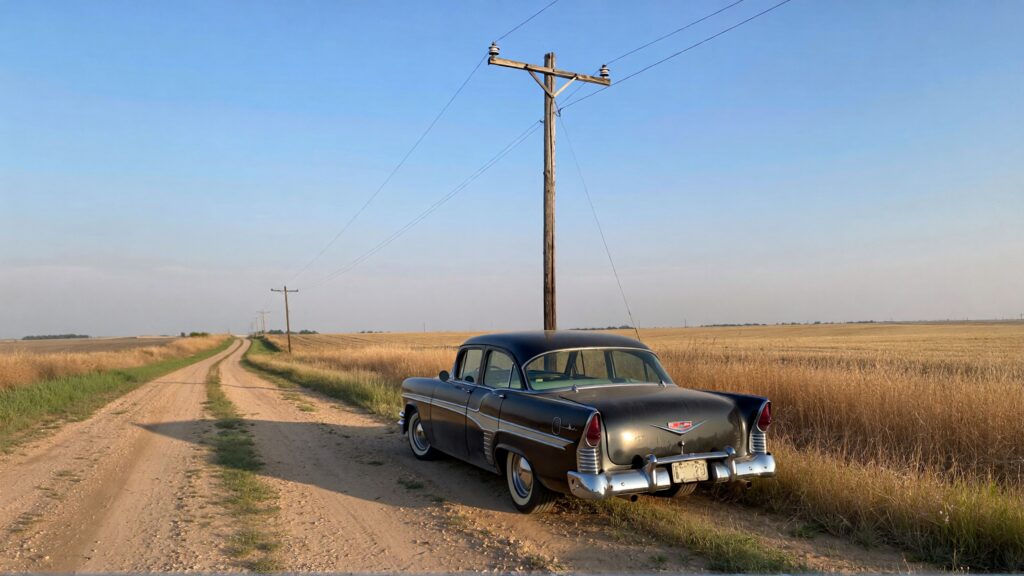
The crash occurred in the area of Watsonville Road and Hayes Lane at around 8 a.m. on Sunday, May 3, when a vehicle struck a power pole. The driver was pronounced dead at the scene, according to the California Highway Patrol. No additional passengers were reported to be involved. The victim’s identity had not been publicly released as of initial reporting, and the cause of the collision remains under investigation by the CHP.
The stretch of Watsonville Road near Hayes Lane passes through a semi-rural area on the outskirts of Morgan Hill, a region where two-lane roadways, utility infrastructure, and higher travel speeds can create unforgiving conditions when a driver loses control or drifts off course.
Authorities have not yet released the name, age, or gender of the driver pending next-of-kin notification, a standard protocol followed by the CHP in fatal crash investigations. The vehicle involved has also not been publicly described as of initial reporting.
The CHP’s Multidisciplinary Accident Investigation Team, known as MAIT, may be called upon to conduct a deeper forensic analysis of the crash scene, examining factors such as vehicle speed, road conditions, tire marks, and the precise point of impact with the pole.
Watsonville Road near Hayes Lane is a two-lane rural roadway with limited lighting and wide open shoulders, conditions that can mask the hazards present when a driver drifts even slightly off the travel lane at speed. The investigation is expected to take several weeks before a formal determination of cause is issued.
Common Causes of Single-Vehicle Power Pole Crashes
Single-vehicle crashes involving fixed objects, such as power poles, are among the most deadly types of accidents on California roads. When a vehicle leaves the roadway and strikes a rigid structure, the occupant absorbs an enormous amount of force in a fraction of a second, leaving little margin for survival. Common contributing factors in these crashes include:
Driver fatigue or drowsiness, particularly during early morning hours, when circadian rhythms naturally impair alertness. A crash occurring around 8 a.m. on a Sunday falls within a window when some drivers may be operating on limited sleep.
Distracted driving, including cell phone use and other in-vehicle distractions, can cause a driver to drift onto a shoulder or lose awareness of a curve.
Medical emergencies such as sudden cardiac events or loss of consciousness, which may cause a driver to abruptly lose control with no braking or corrective steering response.
Speeding or reckless driving, which reduces the ability to react to changes in road conditions, curves, or debris.
Impaired driving due to alcohol or drugs, which affects perception, reaction time, and vehicle control.
The CHP investigation will work to determine which, if any, of these factors played a role in the Watsonville Road crash.
California Legal Rights After a Fatal Single-Vehicle Crash
When a fatal collision occurs, the families of victims deserve answers — and in many cases, they also have legal rights worth understanding. Even in single-vehicle crashes, liability is not always limited to the driver. Under California Civil Code §1714, parties whose negligence contributes to a fatal accident can be held accountable. Families should consider whether any of the following factors may have contributed to the crash
Road design or maintenance defects. If a roadway shoulder, guardrail, or signage was inadequate, a government entity may be responsible under California Government Code § 835, which allows claims against public agencies for dangerous conditions on public property.
Utility pole placement. In some cases, the placement of power poles in close proximity to the travel lane, without adequate setback or protective barriers, has been a factor in litigation following fatal crashes.
Vehicle defects. A tire blowout, brake failure, or steering malfunction could point to manufacturer or maintenance liability.
Families who have lost a loved one in a fatal crash have two years from the date of death to file a wrongful death claim under California Code of Civil Procedure §335.1. Eligible claimants under CCP §377.60 include surviving spouses, children, and other dependents. A survival action under CCP §377.30 may allow the estate to separately recover for losses the decedent incurred prior to death.
Estimating Damages in a Wrongful Death Case
The financial losses that follow a fatal accident can be staggering. California law allows wrongful death claimants to pursue compensation for economic and non-economic damages, including:
Lost financial support the deceased would have provided to surviving family members over their lifetime. Using the multiplier method, attorneys and economists calculate projected lifetime earnings, adjusted for age, occupation, and work-life expectancy.
Loss of household services, including the value of domestic contributions such as childcare, home maintenance, and financial management. Funeral and burial expenses. Loss of love, companionship, comfort, care, and moral support — non-economic damages that reflect the profound human cost of losing a family member.
The per diem method is sometimes applied to non-economic damages, assigning a daily dollar value to the loss of companionship and calculating that figure across the surviving family members’ expected lifespans. An experienced attorney will use both approaches to present the strongest possible damages case on your behalf.
It is also worth noting that California does not cap wrongful death damages in most personal injury cases, meaning families are not artificially limited in what they may recover.
However, building a compelling damages case requires thorough documentation and expert testimony. Attorneys typically work alongside forensic economists, vocational experts, and life care planners to construct a comprehensive picture of everything the family has lost and will continue to lose in the years ahead.
In cases where the decedent was a parent of minor children, courts give particularly close attention to the long-term loss of parental guidance, protection, and nurturing — losses that extend well beyond financial support and can represent a significant portion of the total damages awarded.
The sooner a family retains experienced legal counsel, the better positioned they are to preserve evidence, secure expert witnesses, and build the strongest possible case before the two-year statute of limitations under CCP §335.1 expires.
Understanding Fatal Accident Settlement Calculators: How They Help Families Estimate Compensation
Wondering what a wrongful death or serious injury claim may be worth? Fatal accident settlement calculators help families get an initial understanding of their potential recovery. While every case is different and no tool can substitute for a personalized legal evaluation, the calculator provides a starting point grounded in California law and real case outcomes. The attorneys at GJEL have recovered over $980 million for injured clients and grieving families over more than 40 years of practice in California.
A fatal accident settlement calculator is a practical starting point for families trying to make sense of the financial dimensions of their loss during an overwhelmingly difficult time. These tools work by gathering key inputs — such as the decedent’s age, annual income, occupation, number of dependents, and the circumstances of the crash.
This also includes established legal and actuarial frameworks to generate an estimated range of potential compensation. The calculation draws on two primary methodologies recognized under California law: the multiplier method, which projects the decedent’s lost earnings and support over their expected working lifetime.
Also, it applies a multiplier to account for non-economic losses such as companionship and emotional support, and the per diem method, which assigns a reasonable daily dollar value to the surviving family’s ongoing loss and multiplies it across their remaining life expectancy.
While no calculator can replicate the nuanced analysis an experienced wrongful death attorney brings to a specific case — accounting for liability disputes, comparative fault, insurance policy limits, and jurisdiction-specific jury verdicts — it gives families an informed, grounded baseline from which to begin conversations with legal counsel.
For families grieving a loved one lost in a crash like the one on Watsonville Road, understanding even a rough estimate of potential recovery can help them make clear-headed decisions about whether and how to pursue a claim. Call us now at +1-866-218-3776 to speak with our experts.
Our Commitment: No Fees Unless We Win Your Case
“Losing someone to a crash like this — on an ordinary Sunday morning on a road they may have driven hundreds of times — is a pain no family should have to endure alone. At GJEL, we understand that the last thing on your mind right now is legal strategy, but the steps taken in the weeks immediately following a fatal accident can make an enormous difference in your family’s ability to recover the compensation you deserve. Evidence gets preserved, witnesses remain reachable, and your rights stay fully intact when you act early. If you lost someone on Watsonville Road or anywhere else in the Morgan Hill area, I personally invite you to call us. There is no cost, no obligation, and no pressure — just honest answers from attorneys who have spent over 40 years fighting for California families in exactly your situation.”— Andy Gillin, Managing Partner, GJEL Accident Attorneys
GJEL Accident Attorneys has represented families throughout the San Francisco Bay Area and Northern California for over four decades. Our attorneys handle wrongful death and serious injury claims on a contingency fee basis, meaning you pay nothing unless we win your case. There are no upfront costs, no hourly billing, and no financial risk to your family during what is already an incredibly difficult time.
If you lost a loved one in the Watsonville Road crash or any other fatal accident in the Morgan Hill area, contact GJEL Accident Attorneys today for a free, no-obligation consultation.
Let our experienced legal team shoulder the legal burden while you focus on what matters most – your family’s healing and recovery. Contact us today at +1-866-218-3776 or visit our Berkeley office.
Local Resources for Families Affected by the Morgan Hill Crash
Morgan Hill Police Department The Morgan Hill Police Department serves as the primary local law enforcement agency for the city, responding to traffic incidents, providing crash reports, and connecting residents with victim support services. Address: 16200 Vineyard Blvd., Morgan Hill, CA 95037 Phone: (408) 779-2101 Website: https://www.morganhillca.gov/police
California Highway Patrol — San Jose Area Office The CHP holds primary jurisdiction over Watsonville Road and is the lead investigating agency for the fatal May 3 crash. Families can request official crash reports through this office once the investigation reaches an appropriate stage. Address: 111 W. Alma Ave., San Jose, CA 95110 Phone: (408) 961-0900 Website: https://www.chp.ca.gov
CHP Crash Report Request (SWITRS) Families and attorneys can request official California traffic collision reports through the CHP’s Statewide Integrated Traffic Records System, which archives crash data and investigation findings. Website: https://www.chp.ca.gov/programs-services/services-information/switrs-internet-statewide-integrated-traffic-records-system
Santa Clara County Sheriff’s Office The Sheriff’s Office provides law enforcement services in unincorporated areas of Santa Clara County surrounding Morgan Hill, including portions of Watsonville Road outside city limits. Address: 55 W. Younger Ave., San Jose, CA 95110 Phone: (408) 808-4500 Website: https://www.sccgov.org/sites/sheriff
Santa Clara County Roads and Airports Department Responsible for the maintenance, design, and safety of county roads in unincorporated areas, including rural stretches of Watsonville Road. Families and attorneys may request road maintenance records and safety inspection histories relevant to crash investigations. Address: 101 Skyport Dr., San Jose, CA 95110 Phone: (408) 573-2400 Website: https://www.sccgov.org/sites/roads
California Office of Traffic Safety (OTS) The OTS funds and coordinates statewide traffic safety programs, publishes crash data by city and county, and provides resources for crash victims and community advocates working to improve road safety. Website: https://www.ots.ca.gov
Santa Clara Valley Transportation Authority (VTA) The VTA oversees public transit and regional transportation planning for Santa Clara County, including road safety initiatives and infrastructure improvements in the Morgan Hill area. Address: 3331 N. First St., San Jose, CA 95134 Phone: (408) 321-2300 Website: https://www.vta.org
California Department of Transportation (Caltrans) — District 4 Caltrans District 4 oversees state highway infrastructure and safety programs throughout the Bay Area, including roads in and around Morgan Hill. Families can access road condition reports and submit safety concerns through this office. Address: 111 Grand Ave., Oakland, CA 94612 Phone: (510) 286-4444 Website: https://dot.ca.gov/caltrans-near-me/district-4
Santa Clara County Medical Examiner-Coroner’s Office Handles identification of decedents, cause-of-death determinations, and issuance of death certificates following fatal accidents in Santa Clara County. Families can contact this office to obtain documentation needed for legal and estate proceedings. Address: 2220 Moorpark Ave., San Jose, CA 95128 Phone: (408) 793-1900 Website: https://www.sccgov.org/sites/mec
California Victim Compensation Board (CalVCB) provides financial assistance to victims of violent crimes and certain accident-related incidents, helping eligible California residents cover costs such as funeral expenses, counseling, and lost wages. Website: https://victims.ca.gov
Santa Clara County Victim Services Unit Offers crisis intervention, emotional support, court accompaniment, and practical assistance to families affected by traumatic incidents, including fatal traffic crashes. Address: 70 W. Hedding St., San Jose, CA 95110 Phone: (408) 295-2656 Website: https://www.sccgov.org/sites/da/victim-services
211 Santa Clara County is a free, confidential helpline and online directory connecting Santa Clara County residents with local health and human services, including grief counseling, financial assistance, and legal aid resources following a traumatic loss. Phone: Dial 2-1-1 Website: https://www.211sc.org