The stretch of I-5 running through Stanislaus County connects the Central Valley to communities across California, carrying a steady flow of commuters, commercial trucks, and long-distance travelers every day. While this corridor is a vital artery for the region, its high speeds and heavy traffic demand constant driver attention. A momentary loss of control or an unexpected vehicle malfunction can have irreversible consequences in an instant, as this tragedy painfully illustrates. Fatal single-vehicle rollover crash leave behind not only physical devastation but also a ripple of grief that touches families, friends, and the broader community for years to come.
What Happened in the Fatal Single-Vehicle Rollover Crash
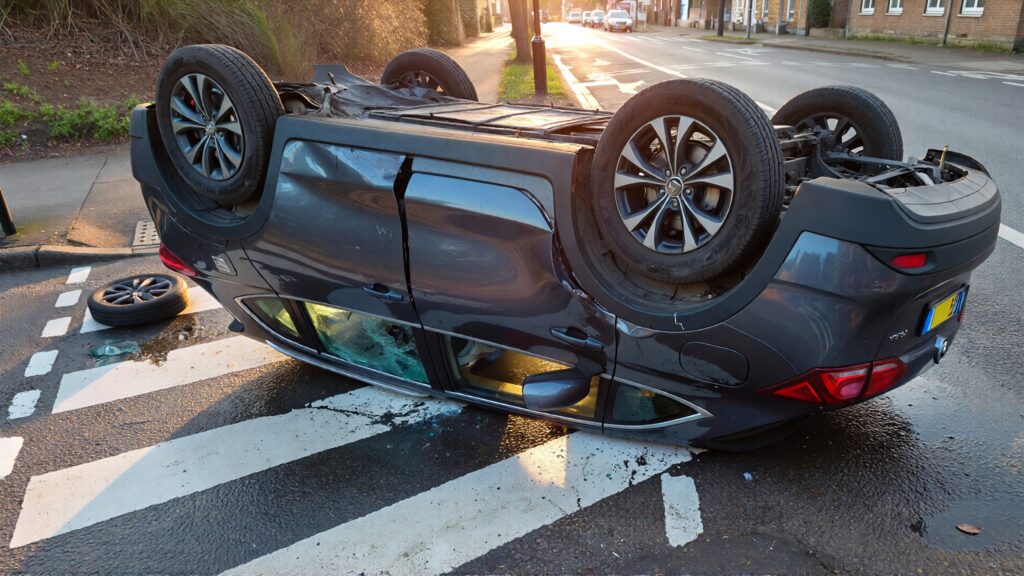
The incident was reported at approximately 10:40 a.m., when a 44-year-old man driving northbound on I-5 made a left turn for reasons that remain unknown, causing his 2004 Ford SUV to overturn into the center divide. The vehicle landed on its roof on the southbound I-5 shoulder.
The driver, from Van Nuys, was pronounced dead at the scene. His passenger, a 32-year-old woman, also from Van Nuys, was transported by helicopter to a local hospital with major injuries.
It is unknown whether DUI was a factor in the crash, and officials confirmed that no other vehicles were involved. Modesto CHP Officer Aaron Fay confirmed that it was not known how fast the vehicle was going or what lane it was in at the time of the collision. Both occupants were wearing seat belts.
The California Highway Patrol issued a traffic advisory warning drivers that both northbound and southbound lanes of I-5 in the area were affected while officers investigated. Officials later confirmed that all lanes had reopened. The investigation into the cause of the crash remains ongoing, and additional details are expected to be released as they become available.
What Causes Single-Vehicle Rollover Crashes on Highways
Single-vehicle rollover accidents can happen when a driver abruptly changes direction or loses control while traveling at highway speeds. Sudden steering maneuvers, tire problems, or road conditions can all lead to this kind of accident. When a vehicle rolls over, the risk of severe injury increases due to the intense forces involved in the motion and impact.
In this case, investigators have not yet determined why the driver turned sharply to the left while traveling northbound on I-5. Possible factors in similar crashes include a sudden medical emergency, driver fatigue, an overcorrection after drifting, a blowout, or an attempt to avoid a road hazard. Until the CHP concludes its investigation, the underlying cause here remains unknown.
SUVs and trucks are statistically more prone to rollovers than lower-profile passenger vehicles because of their higher center of gravity. When these vehicles tip past a critical angle at highway speeds, occupants are subjected to severe rotational forces even when belted in. Roof crush, window intrusion, and ejection risk all increase in a rollover event, which is why these crashes so frequently produce life-threatening injuries or fatalities even among restrained occupants.
California Law and Liability in Single-Vehicle Accidents
Not every single-vehicle accident is the driver’s fault alone. California Civil Code §1714 establishes that individuals and entities have a duty to exercise ordinary care to prevent harm to others. When a crash results from a defective roadway, a malfunctioning vehicle component, or another party’s negligence, injured survivors and the families of those who died may have legal options that are not immediately obvious at the scene.
Potential third-party liability arising from a single-vehicle rollover can stem from several sources. A vehicle manufacturer may be responsible if a tire defect, steering component failure, or a rollover stability problem contributed to the crash. Caltrans or another public agency may be liable under Government Code §835 if a dangerous road condition played a role. In cases where another driver’s conduct forced an evasive maneuver, that driver’s negligence could also be a factor.
For surviving family members, California Code of Civil Procedure §377.60 allows wrongful death claims to be filed by spouses, children, and other qualifying dependents. Loss of consortium, financial support, and the profound emotional toll of losing a loved one are all compensable damages under California law. The statute of limitations for most personal injury claims is two years under CCP §335.1, making it important to speak with an attorney without delay.
Compensation Available to Injured Victims and Surviving Families
When a crash involves third-party negligence, California law provides multiple avenues of financial recovery. Economic damages cover medical expenses, emergency transport costs, hospitalization, rehabilitation, lost income, and future care needs. Non-economic damages account for pain and suffering, emotional distress, and loss of enjoyment of life.
Two methods are commonly used to calculate non-economic damages in serious injury cases. The multiplier method applies a factor, typically between 1.5 and 5, to total economic damages depending on the severity of the injuries and their expected long-term impact on the victim’s life. The per diem method assigns a daily dollar value to pain and suffering and multiplies it by the number of days the victim has lived, or is expected to live, with those effects.
An experienced personal injury attorney can evaluate which approach produces the most appropriate result given the specific circumstances of a case. In wrongful death cases, CCP §377.30 also allows the estate to pursue survival damages for losses the deceased sustained between the time of the crash and death, including medical costs and conscious pain and suffering.
How a Fatal Rollover Crash Settlement Calculator Can Help You Understand Your Claim’s Value
Determining the full value of a wrongful death or serious injury claim after a fatal rollover crash is a complex process that goes far beyond tallying medical bills. A fatal rollover crash settlement calculator helps surviving family members and injured victims begin to understand the potential range of compensation they may be entitled to under California law.
These tools factor in both economic damages, such as emergency medical costs, hospitalization, lost income, and future financial support the deceased would have provided, and non-economic damages, including pain and suffering, emotional distress, and loss of companionship. Two primary methods are used in this calculation.
The multiplier method multiplies total economic damages by a factor, generally between 1.5 and 5, based on the severity and permanence of the harm suffered. The per diem method assigns a daily monetary value to the victim’s pain and suffering and multiplies it by the number of days they lived with those effects, or in wrongful death cases, the expected remaining lifespan of the deceased.
While no calculator can capture the full human cost of losing a loved one, these tools provide a meaningful starting point for understanding what a fair settlement might look like, and they reinforce why working with an experienced personal injury attorney is essential to pursuing every dollar a family deserves. Call us now at +1-866-218-3776 to speak with our experts.
Take Action Today – Get the Help You Deserve
“Losing someone in a crash like this, or watching a loved one get airlifted away, is a trauma that no family should ever have to face. As someone who has spent over 40 years fighting for injured Californians and the families of those taken too soon, I want you to know that you do not have to navigate this alone. The investigation is still ongoing, and evidence from the scene, the vehicle, and the roadway can disappear quickly. If you or someone you love was hurt in this crash, please reach out to our team as soon as possible. There is no cost to speak with us, and we will not charge you anything unless we win your case. Your only job right now is to heal. Let us handle the rest.”— Andy Gillin, Managing Partner, GJEL Accident Attorneys
GJEL Accident Attorneys has spent over 40 years fighting for injured Californians and the families of those killed in preventable accidents. With more than $950 million recovered for clients, our firm handles all personal injury and wrongful death cases on a contingency fee basis, meaning you pay nothing unless we win.
Compassionate GJEL accident attorneys are always available to discuss your case, and you pay nothing unless we secure a favorable outcome. Let our experienced legal team shoulder the legal burden while you focus on what matters most – your family’s healing and recovery. Contact us today at +1-866-218-3776 or visit our Sacramento office for free legal advice.
Local Resources for Those Affected by This Crash
Newman Police Department 1200 Main Street, Newman, CA 95360 Phone: (209) 862-2902 | Non-Emergency Dispatch: (209) 243-2399 | Emergency: 911 Website: https://cityofnewman.gov/departments/newman-police-department/ Business office hours are Monday through Friday, 8:00 a.m. to 4:00 p.m., closed on holidays.
California Highway Patrol, Modesto Area Office 4030 Kiernan Avenue, Modesto, CA 95356 Phone: (209) 545-7440 | Emergency: 911 Website: https://www.chp.ca.gov/find-an-office/central-division/465-modesto/
Caltrans District 10, Stanislaus County Phone: (209) 941-6562 | Email: district10publicaffairs@dot.ca.gov | Road Conditions Hotline: 1-800-427-7623 Website: https://dot.ca.gov/caltrans-near-me/district-10
Stanislaus County Coroner’s Division 921 Oakdale Road, Modesto, CA 95355 Phone: (209) 552-2468 Website: https://www.scsdonline.com/administration/coroner-s-division
Stanislaus County Clerk-Recorder, Vital Records, 1021 I Street, Suite 101, Modesto, CA 95354. Phone: (209) 525-5250. Website: https://www.stancounty.com/clerkrecorder/vital-records/death-certificate.shtm
Stanislaus County District Attorney, Victim Services Division, 832 12th Street, Suite 300, Modesto, CA 95354. Phone: (209) 525-5541. Website: https://www.stanislaus-da.org/victim-services/ Office hours are Monday through Friday, 9:00 a.m. to 5:00 p.m.
Stanislaus County Behavioral Health and Recovery Services Phone: (888) 376-6246 | Emergency Line: (209) 558-4600 Website: https://www.stancounty.com/bhrs/ The grief support line is available at 1-800-395-5755.
Stanislaus County Office of Emergency Services Phone: (209) 525-4640 Website: https://oes.stancounty.gov/