Last updated July 17, 2026
A tragic pedestrian fatality occurred Friday afternoon in Bay Point when a person was struck and killed in a multi-vehicle collision on westbound Highway 4 near the San Marco Boulevard on-ramp. The fatal crash, which involved multiple vehicles including a garbage truck and a white van, has left the community grieving and raised serious questions about pedestrian safety on one of Contra Costa County’s busiest highways.
Details of the Bay Point Highway 4 Fatal Crash
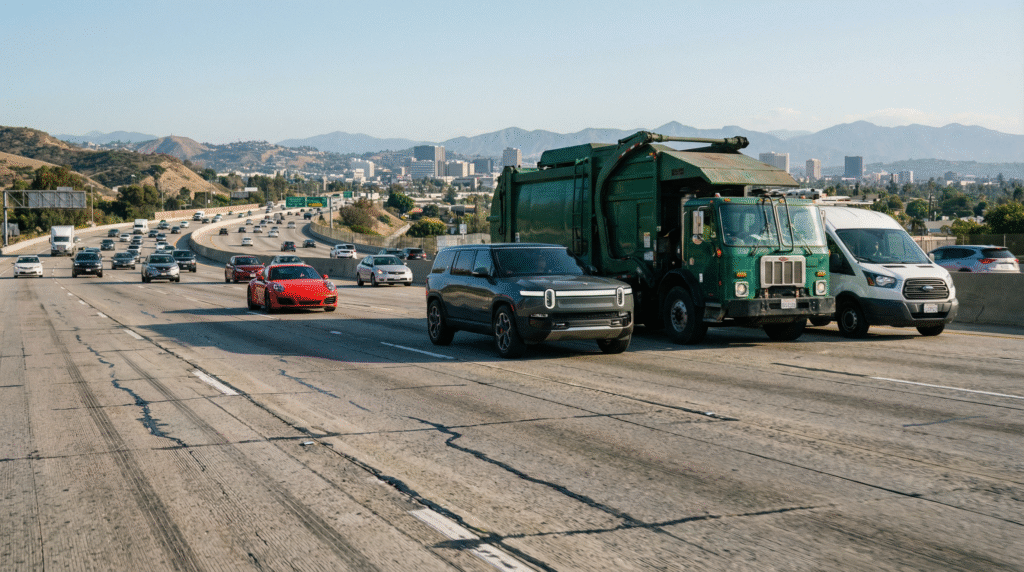
The fatal collision was reported on February 6th shortly after 2:30 p.m. on westbound State Route 4 at San Marco Boulevard in Bay Point. According to initial reports from the California Highway Patrol, the crash involved a complex sequence of events with multiple vehicles, including a garbage truck and a white van.
Emergency responders arrived at the scene to find a pedestrian had been struck by one or more of the vehicles involved in the collision. Despite the rapid response from emergency medical personnel, the pedestrian was pronounced dead at the scene. The identity of the victim has not yet been released pending notification of next of kin.
The circumstances that led to the pedestrian being on the highway remain under investigation. Highway 4 is a major thoroughfare with limited pedestrian access, making pedestrian crossings particularly dangerous. Investigators are working to determine how the pedestrian came to be in the roadway and what sequence of events led to the fatal collision.
The involvement of a garbage truck and a white van suggests the crash may have developed rapidly, potentially with one vehicle striking the pedestrian and others becoming involved as they attempted to avoid the initial collision or couldn’t stop in time. Multi-vehicle crashes of this nature often create chaotic scenes in which visibility and reaction time become critical.
Emergency Response and Highway Closure
The California Highway Patrol responded to the scene along with emergency medical services and the Contra Costa County Coroner’s Office. Due to the severity of the collision and the need for a thorough investigation, the westbound Highway 4 lanes near San Marco Boulevard were closed for several hours on Friday afternoon and evening.
The lane closures caused significant traffic delays during the evening commute, diverting vehicles off the highway while investigators documented the scene, collected evidence, and reconstructed the sequence of events. The extended closure allowed CHP officers to conduct a comprehensive investigation, including measuring skid marks, photographing vehicle positions, and interviewing witnesses.
Traffic was diverted around the crash site, causing mile-long backups on westbound Highway 4. Commuters were advised to use alternate routes, though options in the area are limited given Highway 4’s role as a primary east-west corridor through eastern Contra Costa County.
The roadway was eventually reopened to traffic later Friday evening after investigators completed their on-scene work and the vehicles involved were removed from the highway.
Investigation into the Multi-Vehicle Collision
The California Highway Patrol is conducting a comprehensive investigation into the fatal crash to determine exactly how the collision occurred and what factors contributed to the pedestrian’s death. Investigators are examining multiple aspects of the incident, including:
Vehicle movements and speeds: Determining the speeds at which the garbage truck, white van, and any other involved vehicles were traveling, and reconstructing their paths leading up to the collision.
Pedestrian location and actions: Understanding how and why the pedestrian came to be on Highway 4, whether they were attempting to cross the roadway, walking along the shoulder, or in the travel lanes for another reason.
Driver statements and witness accounts: Interviewing the drivers of all vehicles involved, as well as any witnesses who may have seen the pedestrian before the collision or observed how the crash unfolded.
Visibility and environmental conditions: Assessing weather conditions, lighting, and any factors that may have affected drivers’ ability to see the pedestrian in time to avoid the collision.
Mechanical inspections: Examining the vehicles involved, particularly the garbage truck and white van, to ensure there were no mechanical failures that contributed to the crash.
Impairment factors: Determining whether alcohol, drugs, or driver distraction played any role in the collision, though no information has been released suggesting impairment at this time.
The investigation into multi-vehicle crashes involving pedestrians can be particularly complex because investigators must determine not only how the pedestrian came to be struck but also how subsequent vehicle impacts occurred and whether any of those impacts could have been avoided.
Toxicology results for the pedestrian may also be part of the investigation to determine if impairment played a role in their presence on the highway or their actions leading up to the collision.
The Dangers of Highway Pedestrian Accidents
Pedestrian accidents on highways are among the most dangerous types of traffic collisions due to the high speeds involved, and the complete lack of protection pedestrians have against multi-ton vehicles. Highway 4, as a major commuter route, experiences heavy traffic volumes with vehicles traveling at highway speeds, creating an exceptionally hazardous environment for pedestrians.
Several factors make highway pedestrian accidents particularly deadly:
High vehicle speeds: Vehicles on Highway 4 typically travel at 65 mph or higher, giving drivers minimal time to react to a pedestrian in the roadway and resulting in catastrophic injuries when impact occurs.
Limited pedestrian infrastructure: Highways are designed exclusively for vehicle traffic, with no sidewalks, crosswalks, or pedestrian signals, meaning anyone on foot is immediately in danger.
Driver expectations: Drivers on highways do not expect to encounter pedestrians, which can delay recognition and response time even when a person becomes visible.
Multiple lanes of traffic: Multi-lane highways create situations in which a pedestrian may successfully avoid vehicles in one lane only to be struck by vehicles in adjacent lanes that cannot see them or react in time.
Traffic volume: Heavy traffic flow increases the likelihood that even if one driver manages to avoid a pedestrian, following vehicles may not have sufficient time or space to do the same, leading to multi-vehicle crashes.
Pedestrians end up on highways for various reasons—vehicle breakdowns that force people to walk for help, mental health crises, impairment, confusion about location, or, in some tragic cases, intentional actions. Regardless of the reason, the outcome is frequently catastrophic when a pedestrian encounters highway traffic.
Multi-Vehicle Crash Liability and Legal Implications
When a pedestrian fatality occurs in a multi-vehicle crash, determining legal liability becomes significantly more complex than in a simple two-party collision. Multiple factors must be considered when assessing who may bear responsibility for the tragic outcome.
In California, all drivers have a duty to operate their vehicles safely and watch for hazards, including pedestrians, even in locations where pedestrians are not expected. However, the specific circumstances of how the pedestrian came to be on the highway and how the collision unfolded will be critical in determining liability.
Potential liability scenarios in a case like this might include:
Primary impact driver liability: The driver who first struck the pedestrian may bear the greatest responsibility, particularly if they were speeding, distracted, or otherwise negligent in failing to see and avoid the person in the roadway.
Subsequent driver liability: Drivers of other vehicles involved in the collision may also bear responsibility if they were following too closely, speeding, or otherwise unable to stop safely when the initial collision occurred ahead of them.
Commercial vehicle considerations: If the garbage truck or white van were commercial vehicles being operated in the course of business, the employers of those drivers may face liability under respondeat superior principles, which hold employers responsible for their employees’ actions during work hours.
Comparative negligence: California’s comparative negligence law may apply if the pedestrian’s own actions contributed to the collision, though this would only reduce a potential recovery for the victim’s family rather than eliminate it entirely.
Multiple liable parties: It’s possible that several drivers share liability for the fatal outcome, particularly if the crash involved a chain reaction where multiple failures to maintain safe speeds and distances contributed to the pedestrian being struck multiple times or by multiple vehicles.
The investigation’s findings will be crucial in determining which parties may face civil liability for wrongful death damages or potential criminal charges if gross negligence or impairment is discovered.
Rights of Families After a Fatal Pedestrian Crash
When a pedestrian is killed in a traffic collision, their surviving family members have important legal rights under California law. A wrongful death claim allows certain family members to seek compensation for the losses they have suffered due to their loved one’s untimely death.
In California, the following individuals may file a wrongful death lawsuit:
- The deceased person’s surviving spouse or domestic partner
- The deceased person’s children
- If there is no surviving spouse or children, other dependents who can prove they were financially dependent on the deceased, including parents or siblings, in some cases
A wrongful death claim can seek compensation for multiple categories of damages:
Economic damages include funeral and burial expenses, medical costs if the victim received treatment before death, loss of the financial support the deceased would have provided to their family, loss of benefits such as health insurance or pension benefits, and the value of household services the deceased performed.
Non-economic damages encompass loss of companionship, guidance, and moral support, loss of affection and consortium for a surviving spouse, and the grief and emotional trauma suffered by surviving family members.
California law also allows for survival action claims, which are brought on behalf of the deceased person’s estate to recover damages the victim themselves experienced before death, such as pain and suffering between the time of injury and death.
The time limit for filing a wrongful death lawsuit in California is generally two years from the date of death, making it important for families to consult with an experienced attorney relatively soon after their loss to preserve their legal rights.
The Importance of Thorough Investigation in Fatal Crashes
Fatal traffic collisions demand comprehensive investigations to ensure justice for victims and their families. The California Highway Patrol’s investigation into this Bay Point crash will examine all available evidence to construct an accurate account of how the tragedy occurred.
Key investigative elements typically include:
Physical evidence: Skid marks, debris patterns, vehicle damage, and the final resting positions of vehicles and the victim all provide crucial clues about speeds, impact points, and the sequence of events.
Electronic evidence: Many commercial vehicles, including garbage trucks, are equipped with electronic logging devices, GPS tracking, and, in some cases, dash cameras that can provide objective data on vehicle speed and location. Similarly, many passenger vehicles now have event data recorders (black boxes) that capture pre-crash data.
Witness testimony: Statements from other drivers on the highway, nearby residents, or anyone who may have seen the pedestrian before the collision can help establish what happened and why.
Forensic analysis: Accident reconstruction experts can use physics and engineering principles to calculate vehicle speeds, impact forces, and sightlines to determine what drivers could have seen and when.
Regulatory compliance: For commercial vehicles such as garbage trucks, investigators examine whether the driver complied with hours-of-service regulations, whether the vehicle was properly maintained, and whether the company had adequate safety policies.
This thorough investigative process serves multiple purposes: it can lead to criminal charges if egregious negligence or illegal conduct is discovered, provides a foundation for civil wrongful death claims, and identifies safety improvements that might prevent similar tragedies in the future.
For families of victims, the investigation’s findings often provide some measure of understanding about what happened to their loved one, even though no explanation can truly compensate for the loss they’ve experienced.
Highway 4 Safety Concerns in Bay Point
The stretch of Highway 4 through Bay Point and eastern Contra Costa County has long been known for heavy traffic congestion, particularly during commute hours. The highway serves as a vital corridor connecting eastern county communities to employment centers in western Contra Costa County and beyond.
This particular area near the San Marco Boulevard interchange sees significant traffic volumes as vehicles enter and exit the highway. The combination of merging traffic, high speeds, and heavy congestion creates conditions where crashes can quickly escalate from minor to serious.
While pedestrian collisions on Highway 4 are relatively uncommon due to limited pedestrian access, when they do occur, the results are nearly always catastrophic. The highway’s design simply does not accommodate pedestrians, and the speed differential between highway traffic and a pedestrian is so extreme that survival is unlikely in most collision scenarios.
Previous safety improvements along Highway 4 have focused primarily on vehicular traffic flow and collision prevention, including lane additions, interchange improvements, and enhanced signage. Pedestrian safety measures are limited because highways are not intended for pedestrian use, though barriers and fencing in some areas help prevent people from inadvertently entering the roadway.
Community advocates have long called for improved public transportation and pedestrian infrastructure in eastern Contra Costa County, noting that some residents without vehicles face dangerous conditions when trying to reach essential services, particularly in areas where sidewalks and crosswalks are lacking on surface streets parallel to the highway.
How GJEL Accident Attorneys Can Help After a Fatal Pedestrian Crash
Losing a family member in a pedestrian accident is one of the most devastating experiences a family can endure. At GJEL Accident Attorneys, we understand that no amount of money can bring back your loved one or undo the pain your family is suffering. However, a wrongful death claim can provide the financial resources your family needs to move forward and can hold negligent parties accountable for their actions.
Our experienced wrongful death attorneys have represented families throughout the Bay Area for over 40 years, recovering more than $980 million for our clients. We understand the unique challenges of fatal pedestrian crash cases, particularly those involving multiple vehicles and complex liability questions.
When you work with GJEL, our legal team will:
Conduct an independent investigation to determine exactly how your loved one’s fatal crash occurred and identify all potentially liable parties, going beyond the official police investigation when necessary to uncover additional evidence.
Work with accident reconstruction experts who can analyze the physical evidence, vehicle data, and witness statements to build a clear picture of what happened and who should be held responsible.
Identify all available insurance coverage, including policies covering the multiple vehicles involved in the collision, commercial truck policies if applicable, and any umbrella policies that might provide additional compensation.
Calculate the full value of your family’s loss, including both economic damages like lost financial support and non-economic damages like loss of companionship, ensuring we pursue the maximum compensation your family deserves.
Handle all communications with insurance companies so you can focus on grieving and healing while we deal with the legal complexities and push back against insurers’ attempts to minimize your claim.
Prepare your case for trial if necessary, while keeping settlement options open and ensuring negligent parties and their insurers know we are fully prepared to present your case to a jury if they refuse to offer fair compensation.
We know this is an incredibly difficult time for your family. Questions about legal claims may seem overwhelming when you’re coping with grief, but we’re here to make the legal process as straightforward as possible. We handle wrongful death cases on a contingency fee basis, which means you pay no attorney fees unless we recover compensation for your family. There are no upfront costs, and we advance all case expenses, so financial concerns never stand in the way of your family and justice.
Understanding Pedestrian Accident Settlement Calculators
When a pedestrian is injured or killed in a traffic accident, one of the most pressing questions families face is understanding the potential value of their claim. Pedestrian accident settlement calculators are online tools designed to provide families with a general estimate of what their case might be worth based on key factors in their situation.
These calculators typically ask users to input information such as the severity of injuries sustained, medical expenses incurred, lost wages, the degree of fault assigned to each party, and the impact on the victim’s quality of life. By analyzing these inputs against historical settlement data and legal precedents, the calculator generates an estimated range of potential compensation.
While these tools can be helpful in providing families with a preliminary understanding of their claim’s value and what types of damages they may be entitled to recover, it’s important to understand their limitations. Settlement calculators cannot account for the unique nuances of each case, such as the specific jurisdiction’s jury tendencies, the skill of the attorneys involved, the quality of available evidence, or the full extent of a victim’s long-term prognosis and future care needs.
Additionally, cases involving multiple liable parties—such as the multi-vehicle crash in Bay Point—add layers of complexity that generic calculators cannot adequately address. For these reasons, while settlement calculators serve as a useful starting point for understanding the general landscape of pedestrian accident compensation, they should never replace a consultation with an experienced personal injury attorney who can evaluate the specific facts of your case.
They can also identify all potential sources of recovery and provide a more accurate assessment of your claim’s true value. At GJEL Accident Attorneys, we offer free case evaluations to help families obtain a realistic assessment of their wrongful death or injury claim, drawing on our 4 decades of experience handling pedestrian accident cases throughout California. Call us now at +1-866-218-3776 to speak with our experts.
Take Action Today – Get the Help You Deserve
“When a pedestrian is struck on a highway, the trauma extends far beyond the physical injuries—families are left grappling with devastating loss, unanswered questions, and mounting financial pressures. In cases involving multiple vehicles, as in the Bay Point tragedy, determining who is responsible becomes critically important because several parties may share liability for what happened. If your loved one was killed or injured in a pedestrian crash, please know that you have legal rights, and you don’t have to face the insurance companies alone. These cases require immediate investigation to preserve evidence, identify all liable parties, and protect your family’s ability to recover full compensation for your loss. We handle these cases on a contingency fee basis—you pay nothing unless we win—because we believe financial concerns should never prevent grieving families from accessing justice. Please reach out for a free consultation so we can explain your options and help your family through this incredibly difficult time.”- Andy Gillin, GJEL Accident Attorneys
If you or a loved one has been affected by the tragic pedestrian accident on Highway 4 in Bay Point, or if you’ve lost a family member in any pedestrian crash in the Bay Area, GJEL Accident Attorneys is here to help you pursue justice and fair compensation. We understand that after such a devastating loss, the last thing you want to worry about is how you’ll afford legal representation, which is why we handle all pedestrian accident and wrongful death cases on a contingency fee basis.
This means you pay absolutely no attorney fees unless we successfully recover compensation for your family. There are no upfront costs, retainer fees, or hourly charges. We advance all case expenses out of our own pocket, including costs for expert witnesses, accident reconstruction specialists, and investigation fees, so you never have to worry about out-of-pocket expenses while your case is pending.
Our commitment is simple: we only get paid if you get paid, and our fee comes as a percentage of your recovery—never from your own resources. This “no win, no fee” structure ensures that every family, regardless of their financial situation, has access to the experienced, aggressive legal representation they deserve. With over 40 years of experience and more than $980 million recovered for our clients, GJEL has the knowledge, resources, and track record to take on complex multi-vehicle pedestrian accident cases.
Don’t let financial concerns prevent you from seeking justice for your loved one. Contact GJEL Accident Attorneys today for a free, no-obligation consultation where we’ll review your case, explain your legal rights, answer all your questions, and provide honest guidance on the best path forward. Call us now at +1-866-218-3776 or visit our Fremont office to schedule your free consultation—because your family deserves answers, accountability, and the compensation needed to rebuild after this tragedy.
Comprehensive Resources for Bay Point Residents and Accident Victims
If you witnessed the February 6th fatal collision on Highway 4 in Bay Point and have not yet spoken with investigators, or if you need assistance following a traffic accident, the following agencies and organizations can provide support and information.
California Highway Patrol – Contra Costa Office
1500 Court Street, Martinez, CA 94553
Non-Emergency Phone: (925) 646-4980
Emergency: 911
Website: www.chp.ca.gov
The CHP is responsible for investigating traffic collisions on state highways, including Highway 4. Contact them to report accidents, request collision reports, or provide witness information about crashes on state routes.
Contra Costa County Sheriff’s Office
1980 Muir Road, Martinez, CA 94553
Non-Emergency Phone: (925) 646-2441
Emergency: 911
Website: www.contracostasheriff.org
The Sheriff’s Office handles law enforcement in unincorporated areas of Contra Costa County, including parts of Bay Point, and can assist with accident reports and traffic safety concerns.
Contra Costa County Office of the Sheriff – Bay Point Substation
3343 Willow Pass Road, Bay Point, CA 94565
Phone: (925) 646-2441
Local law enforcement presence serving the Bay Point community.
For information about road conditions, closures, and traffic incidents on Highway 4 and other state routes:
Caltrans District 4 (Bay Area)
111 Grand Avenue, Oakland, CA 94612
Phone: (510) 286-5950
24-Hour Maintenance & Emergency: 1-800-427-7623
Website: www.dot.ca.gov/caltrans-near-me/district-4
QuickMap (real-time traffic): quickmap.dot.ca.gov
Caltrans maintains state highways and provides real-time traffic information, construction updates, and road condition reports.
511 Traveler Information
Phone: 511 (from Bay Area) or 1-800-427-7623
Website: 511.org
Mobile App: Available for iOS and Android
Provides real-time traffic updates, incident reports, transit information, and alternate route suggestions for Bay Area highways and roads.
Contra Costa Transportation Authority
2999 Oak Road, Suite 100, Walnut Creek, CA 94597
Phone: (925) 256-4700
Fax: (925) 256-4701
Email: info@ccta.net
Website: www.ccta.net
The CCTA plans, funds, and implements transportation projects throughout Contra Costa County and can provide information about road safety initiatives and transportation planning.
County Connection (Public Transit)
2477 Arnold Industrial Way, Concord, CA 94520
Customer Service Phone: (925) 676-1976
TDD: (925) 676-1174
Website: www.countyconnection.com
Provides fixed-route bus service and paratransit services throughout central Contra Costa County, offering alternatives to driving for those without vehicles.
Tri Delta Transit
801 Wilbur Avenue, Antioch, CA 94509
Phone: (925) 754-6622
Website: www.trideltatransit.com
Serves eastern Contra Costa County, including Bay Point, Pittsburg, and Antioch, with public bus transportation.
California Department of Motor Vehicles (DMV) – Concord Office
1745 Willow Pass Road, Concord, CA 94520
Phone: 1-800-777-0133
Website: www.dmv.ca.gov
For driver’s license issues, vehicle registration, and reporting unsafe drivers.
Contra Costa Health Services – Behavioral Health
1340 Arnold Drive, Suite 200, Martinez, CA 94553
Crisis Line: 1-888-678-7277 (24/7)
Phone: (925) 957-5150
Website: www.cchealth.org/mentalhealth
Provides mental health services and crisis intervention for those experiencing trauma or emotional distress following accidents.
Contra Costa Crisis Center
P.O. Box 3737, Walnut Creek, CA 94598
24-Hour Crisis Line: 1-800-833-2900
Teen Line: (925) 609-8839
Text Line: Text “HOPE” to 20121
Website: www.crisis-center.org
Offers 24/7 crisis intervention, emotional support, and suicide prevention services for individuals and families coping with trauma and loss.
Mothers Against Drunk Driving (MADD) – Northern California Office
Victim Services: 1-877-MADD-HELP (1-877-623-3435)
Website: www.madd.org
Email: victims@madd.org
Provides support services for victims of drunk and drugged driving crashes, including emotional support, court accompaniment, and navigation of the criminal justice system.
National Highway Traffic Safety Administration (NHTSA)
Vehicle Safety Hotline: 1-888-327-4236
Website: www.nhtsa.gov
Report unsafe vehicles or equipment, access crash statistics, and find safety information.
California Victim Compensation Board
P.O. Box 350, Sacramento, CA 95812-0350
Phone: 1-800-777-9229
Website: www.victims.ca.gov
Provides financial assistance to victims of violent crime, including hit-and-run accidents, for medical expenses, funeral costs, lost wages, and other expenses.
California Office of Traffic Safety
2208 Kausen Drive, Suite 300, Elk Grove, CA 95758
Phone: (916) 509-3030
Website: www.ots.ca.gov
Focuses on traffic safety issues and provides resources for crash prevention and pedestrian safety education.
AAA Northern California, Nevada & Utah
Roadside Assistance: 1-800-AAA-HELP (1-800-222-4357)
Website: www.california.aaa.com
Provides roadside assistance, traffic safety resources, and advocacy for road improvements.
Bay Area Legal Aid
1800 Market Street, San Francisco, CA 94102
Phone: (800) 551-5554
Website: www.baylegal.org
Provides free civil legal assistance to low-income residents of the Bay Area, though personal injury cases are typically handled on contingency by private attorneys.
Contra Costa County Coroner’s Office
850 Ward Street, Martinez, CA 94553
Phone: (925) 313-1500
Website: www.contracostasheriff.org/divisions/coroner
Provides information about obtaining death certificates and the status of investigations into traffic fatalities.
These resources can provide critical assistance whether you need to report an accident, access victim services, obtain transportation alternatives, or find emotional support following a traffic tragedy. Keep these contacts accessible and don’t hesitate to reach out for help when needed.