Last updated July 17, 2026
A fatal small plane crash in the backcountry southwest of Olympic Valley has claimed the life of a pilot, according to the Placer County Sheriff’s Office. The March 22, 2026, accident has prompted investigations by federal aviation authorities and raised difficult questions for the victim’s family about accountability and their legal rights. The crash occurred within the Granite Chief Wilderness area of the Tahoe National Forest, a remote and rugged stretch of backcountry where steep ridgelines, high elevation, and unpredictable mountain weather make aircraft operations particularly demanding.
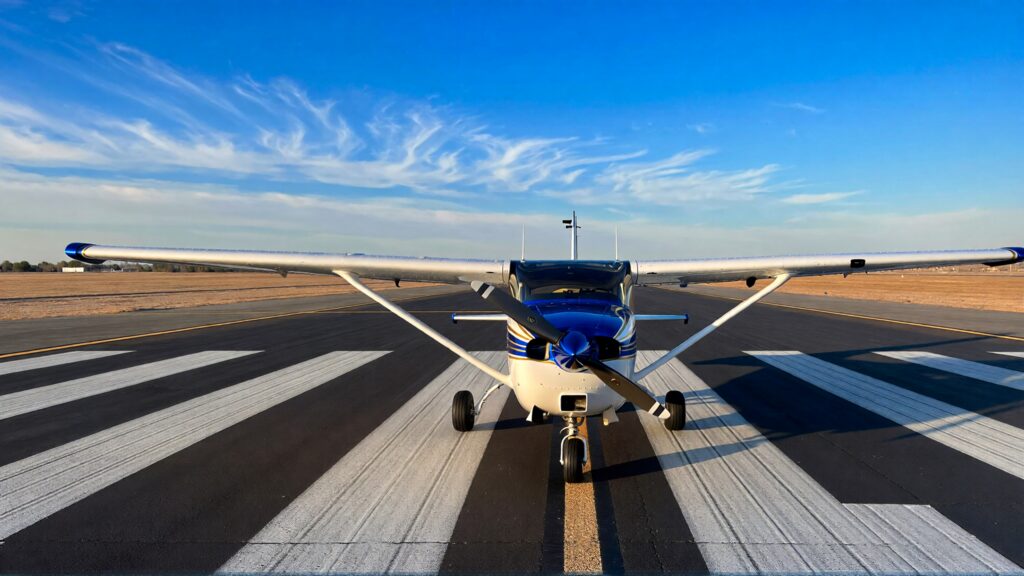
What Happened on the Plane Crash
On Sunday evening, March 22, 2026, a Beechcraft A36 aircraft disappeared from radar at approximately 5:30 p.m. while en route to Truckee Tahoe Airport. The plane went down southwest of Olympic Valley in Placer County, in terrain described by search crews as remote and rugged.
At roughly the same time the aircraft vanished from radar, the Placer County Sheriff’s Office dispatch center received an Apple crash alert from the area — a signal that ultimately helped rescuers narrow the search zone. With assistance from CHP Air Operations and Care Flight, aerial crews launched a search and located the downed aircraft.
Due to the difficult backcountry terrain, members of the Tahoe Nordic Search & Rescue Team were deployed, with some personnel, including sheriff’s deputies, flown into the area and others reaching the site on foot. When crews finally reached the wreckage, they found one person deceased inside the plane. Officials identified the victim as the pilot, believed to have been the sole occupant on board.
The National Transportation Safety Board (NTSB) and Federal Aviation Administration (FAA) have been notified and are leading the investigation into the cause of the crash. In connection with the ongoing investigation, the Tahoe National Forest has issued a closure of all National Forest lands and trails surrounding the crash site within the Granite Chief Wilderness through April 7, 2026.
California Aviation Accidents and the Legal Framework for Victim Families
The death of a pilot in a small plane crash can leave surviving family members facing profound grief while also confronting urgent legal questions. California law provides meaningful remedies for families in these circumstances, and understanding those rights from the outset can make an enormous difference.
Wrongful Death Claims Under California Law
When a fatal accident results from negligence, California’s wrongful death statute — California Code of Civil Procedure §377.60 — allows the surviving spouse, domestic partner, children, and other qualifying heirs to file a civil action to recover damages. In aviation accidents, potential defendants may include:
- Aircraft manufacturers or component part makers, if a mechanical defect or design flaw contributed to the crash
- Maintenance providers, if improper or negligent servicing played a role
- Air traffic control or federal agencies, if a deviation from proper procedures contributed (claims against government entities require strict compliance with the California Government Claims Act)
- Third parties, if any other person or entity’s conduct was a contributing factor
Even when the pilot is the sole occupant — as appears to be the case here — wrongful death claims may still be viable depending on what the NTSB and FAA investigations ultimately reveal about the cause of the crash.
Survival Actions
California Code of Civil Procedure §377.30 also permits the estate of a deceased person to bring a survival action, which preserves claims the decedent would have had if they had survived. These claims can include compensation for pain and suffering endured prior to death and economic losses suffered from the time of injury.
The Two-Year Statute of Limitations
Under California Code of Civil Procedure §335.1, wrongful death and personal injury claims must generally be filed within two years of the date of death. For claims against government entities — including potential federal agencies — the deadlines are much shorter. The Federal Tort Claims Act requires an administrative claim to be presented to the appropriate federal agency within two years of the incident. Families are strongly advised not to delay consulting an attorney.
General Negligence Under California Civil Code §1714
California’s foundational negligence law, Civil Code §1714, holds that every person is responsible for injuries to others caused by a want of ordinary care or skill. This standard applies to aviation accidents as it does to any other type — anyone whose failure to exercise reasonable care contributed to the crash may be held liable.
What Causes Small Plane Crashes? Understanding the Risk Factors
Aviation accidents involving small general aviation aircraft, such as the Beechcraft A36, are thoroughly investigated by the NTSB, which examines a wide range of potential contributing factors. Common causes identified in general aviation crashes include:
- Controlled flight into terrain (CFIT): When a functioning aircraft is inadvertently flown into terrain, water, or obstacles — a particular risk in mountainous backcountry environments like the Lake Tahoe region
- Weather-related factors: Low visibility, icing conditions, or sudden weather changes in mountain passes can challenge even experienced pilots
- Mechanical failure or component defect: Engine failures, flight control issues, or structural problems can occur regardless of pilot skill
- Pilot error or spatial disorientation: Disorientation is a well-documented hazard, especially during low-visibility or nighttime operations
- Air traffic control factors: Miscommunications or failures in coordination can contribute to accidents
The rugged terrain of the Granite Chief Wilderness area southwest of Olympic Valley — a region characterized by steep ridgelines and elevations exceeding 9,000 feet — presents unique hazards for aircraft approaching Truckee Tahoe Airport (TRK), which sits at approximately 5,900 feet. Mountain flying demands specialized training, and the conditions at the time of this crash will be a key focus of the federal investigation.
It is also worth noting that general aviation accidents — those involving smaller, privately operated aircraft rather than commercial airlines — account for the overwhelming majority of fatal aviation incidents in the United States each year. According to the NTSB, general aviation fatality rates remain significantly higher per flight hour than those of commercial air carriers.
In part because smaller aircraft are more susceptible to environmental factors, they may lack the redundant safety systems found on commercial planes, and are often operated without the same level of crew resource management and oversight. In mountain environments like the Sierra Nevada, these risks are compounded by rapidly changing weather.
Likewise, reduced engine performance at altitude and limited emergency landing options in the event of a mechanical failure or loss of control. For families trying to understand how a tragedy like this could happen, these systemic factors are an important part of the picture — and they are factors that investigators, attorneys, and courts take seriously when evaluating questions of negligence and liability.
Calculating Damages in a Fatal Aviation Accident Case
If negligence contributed to this crash, the families of the victims in fatal aviation accidents may be entitled to significant financial compensation. California law recognizes several categories of damages in wrongful death and survival actions:
Economic Damages
- Lost income and earning capacity that the decedent would have provided over their lifetime
- Loss of financial support and household services
- Funeral and burial expenses
- Medical expenses incurred prior to death
Non-Economic Damages
- Loss of love, companionship, comfort, and affection
- Loss of moral support and guidance
- Emotional distress suffered by surviving family members
How Damages Are Calculated
In serious wrongful death cases, attorneys typically work with economists, actuaries, and life care planners to calculate the full value of economic losses. Non-economic damages are assessed based on the nature of the relationship, the age of the deceased, and the totality of circumstances.
GJEL Accident Attorneys uses both the multiplier method and the per diem method to assess the potential value of serious injury and wrongful death claims. The multiplier method applies a factor — typically between 1.5 and 5 — to total economic damages based on the severity of the circumstances and long-term impact on survivors. The per diem method assigns a daily dollar value to the loss and projects it over the surviving family members’ life expectancy. Both methods are presented to insurance carriers and juries to illustrate the true human cost of a preventable loss.
What Families Should Do After a Fatal Aviation Accident
The period immediately following a fatal plane crash is critical for preserving legal rights. Families of victims are encouraged to take the following steps:
Preserve all records. Request copies of any FAA records, maintenance logs, flight records, and communications related to the aircraft and its maintenance history. These records can be difficult to obtain later.
Document everything. Keep records of all correspondence with insurance companies, government investigators, and any other parties involved.
Do not sign anything. Insurance companies may move quickly to present settlement offers following aviation accidents. Do not accept any settlement or sign any release without consulting an attorney.
Contact an experienced aviation accident attorney. Aviation fatality cases involve complex federal regulations, multiple potential defendants, and strict deadlines. An experienced California aviation accident attorney can help families navigate the NTSB process, preserve evidence, and identify all avenues for recovery.
It is also important for families to understand that the NTSB investigation — while thorough and valuable — is not designed to assign legal liability or secure financial compensation for survivors. The NTSB’s role is to determine the probable cause of the accident and issue safety recommendations to prevent future crashes.
Its findings, however, can be extremely useful in a civil case, as they often identify contributing factors such as mechanical deficiencies, maintenance failures, or environmental conditions that may support a negligence claim. Families should work closely with an attorney who can monitor the federal investigation, obtain relevant records through discovery, and retain independent aviation experts to conduct a parallel analysis of the crash.
Waiting for the NTSB to complete its investigation before consulting an attorney — a process that can take a year or more — risks allowing critical evidence to deteriorate and legal deadlines to pass. Acting early is not just advisable; in many cases, it is essential to protecting a family’s right to full and fair compensation.
How Aviation Accident Settlement Calculators Help Determine Compensation
For families trying to understand the potential value of a wrongful death or survival claim following a fatal aviation accident, an aviation accident settlement calculator can serve as a helpful starting point. These tools are designed to organize and quantify the many categories of loss that California law recognizes — from lost future income and the cost of household services to the deeply personal losses of companionship, guidance, and emotional support that no dollar figure can truly capture.
By inputting key variables such as the decedent’s age, occupation, annual income, life expectancy, and the number and relationship of surviving dependents, a settlement calculator can generate a preliminary range of potential compensation that helps families and their attorneys enter negotiations with a clearer picture of what a fair outcome looks like.
It is important to understand, however, that settlement calculators are not a substitute for a thorough legal and economic analysis — aviation accident cases often involve multiple liable parties, disputed liability, and complex federal regulatory considerations that can significantly affect the final value of a claim. The most reliable estimates come from working with an experienced attorney who can combine the calculator’s framework with input from forensic economists, vocational experts, and aviation specialists to build the strongest possible case for maximum compensation. Call us now at +1-866-218-3776 to speak with our experts.
How GJEL Accident Attorneys Can Help
“When a family loses a loved one in a plane crash, the grief is immediate and devastating — but the legal questions don’t wait. Families deserve to know what happened, who may be responsible, and what their rights are. The NTSB investigation is just beginning, and the findings could point to mechanical failures, maintenance issues, or other factors that might not be obvious at this time. Our firm has spent more than 40 years fighting for families in situations exactly like these. If you lost someone in this crash, please reach out to us — a free consultation costs you nothing, and it could make all the difference for your family’s future.” — Andy Gillin, Managing Partner, GJEL Accident Attorneys
GJEL Accident Attorneys has spent more than 40 years representing the families of accident victims throughout California, recovering over $980 million for injured clients and grieving families. Our attorneys are experienced in complex wrongful death litigation, including aviation accidents, and we handle every case on a contingency fee basis, meaning you pay nothing unless we win.
If you lost a loved one in the Olympic Valley plane crash or any other fatal accident in California, contact GJEL Accident Attorneys today for a free, no-obligation consultation. Let our experienced legal team shoulder the legal burden while you focus on what matters most – your family’s healing and recovery. Contact us today at +1-866-218-3776 or visit our Fremont office for free legal advice.
Local Resources for Families and Loved Ones Affected by This Crash
Placer County Sheriff’s Office 2929 Richardson Drive, Auburn, CA 95603 Phone: (530) 889-7800 Website: www.placer.ca.gov/sheriff
National Transportation Safety Board (NTSB) — Western Pacific Regional Office 777 S. Aviation Blvd., Suite 150, El Segundo, CA 90245 Phone: (310) 725-3300 Website: www.ntsb.gov
Federal Aviation Administration (FAA) — Western-Pacific Region P.O. Box 92007, Los Angeles, CA 90009 Phone: (424) 405-7900 Website: www.faa.gov
Tahoe National Forest — Supervisor’s Office 631 Coyote Street, Nevada City, CA 95959 Phone: (530) 265-4531 Website: www.fs.usda.gov/tahoe
Truckee Tahoe Airport 10356 Truckee Airport Road, Truckee, CA 96161 Phone: (530) 587-4119 Website: www.truckeetahoeairport.com
Tahoe Nordic Search & Rescue Team P.O. Box 2014, Truckee, CA 96160 Website: www.tahoenordic.org
Placer County Victim Services Unit Phone: (530) 889-7188 Website: www.placer.ca.gov/victimservices