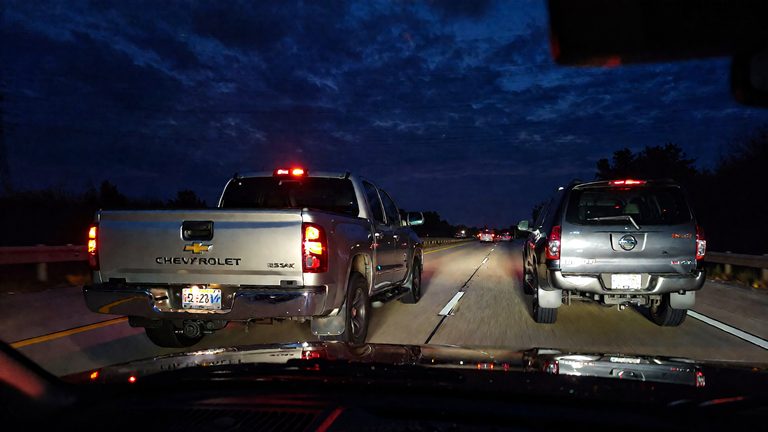
Two men lost their lives in a head-on collision in Tehama County in the early hours of Sunday, Nov. 8, 2026. The California Highway Patrol (CHP) reported that the crash happened at about 3:42 a.m. on South Avenue near Rhode Island Avenue. Two families are now facing a sudden and devastating loss, and our thoughts are with everyone affected.
What the CHP Has Reported
According to the CHP, a solo adult man was driving a 2020 Toyota eastbound on South Avenue near Rhode Island Avenue. Another solo adult man was driving a 2024 Toyota westbound in the same area.
The CHP said the driver of the 2020 Toyota made a left-turn movement directly into the path of the 2024 Toyota for reasons that remain unknown. The two vehicles collided head-on, and both men suffered fatal injuries.
The CHP has asked anyone with information about the crash to contact the Red Bluff Area office at (530) 737-6746. The investigation is ongoing, and the agency has not released the men’s names or identified a cause beyond the left-turn movement.
Why Left-Turn Collisions Can Be So Dangerous
Left turns across oncoming traffic are among the most hazardous maneuvers on any roadway. The turning driver has to judge the speed and distance of approaching vehicles, and a misjudgment can place a vehicle directly in the path of traffic traveling at highway speed. California Vehicle Code §21801 requires a driver turning left to yield the right-of-way to oncoming vehicles that are close enough to pose an immediate hazard.
Head-on and angled impacts of this kind transfer enormous force to the occupants, which is why they so often result in catastrophic or fatal injuries. Darkness in the early morning hours can also make it harder to gauge the distance and speed of oncoming headlights, particularly on rural roads.
Another factor that makes left-turn collisions so dangerous is the way the crash forces are distributed. In a head-on or near head-on impact, the speeds of both vehicles contribute to the collision’s energy, so even moderate speeds can produce devastating results for the occupants of both cars.
A driver making a left turn also has very little time to react if an oncoming vehicle is closer or faster than expected, and the oncoming driver may have only a split second to brake or steer away.
Modern safety features such as seat belts, airbags, and crumple zones are designed to reduce injuries, but they have limits when two vehicles meet with this much combined force. Left turns often happen at intersections and driveway entrances along rural roads, where there may be no turn lane, no signal, and little street lighting to help drivers see one another.
These conditions are why investigators pay close attention to visibility, sight lines, and the exact position of each vehicle at the moment of impact when they work to understand what happened.
Understanding Fault After a Fatal Crash
In a collision like this, the cause is rarely settled by the first report. Investigators look at the physical evidence, vehicle damage, roadway conditions, lighting, and any available data from the vehicles themselves. California applies a pure comparative fault system, meaning liability can be apportioned among the parties based on the evidence.
A person’s recovery can be reduced by their percentage of fault, but they are not barred from recovering simply because they share some responsibility. Under California Civil Code §1714, people are generally responsible for injuries caused by a failure to use ordinary care, and families should not assume that a preliminary description answers every question about liability.
Fault determinations become especially complex when both drivers have died, because the people who know best what happened in those final seconds cannot describe it. In these situations, investigators and attorneys must rely on physical evidence and other sources to reconstruct the collision.
That can include the final resting positions of the vehicles, skid marks and debris patterns, roadway design and lighting, event data recorders (often called “black boxes”) that capture speed and braking data, and statements from any witnesses or first responders.
A CHP report is an important starting point, but its findings are not the final word in a civil case, and conclusions can change as more evidence comes to light.
Because California’s pure comparative fault rules can reduce a family’s recovery by the percentage of responsibility assigned to their loved one, the way evidence is gathered and interpreted can significantly impact the outcome. Insurance companies also begin their own investigations quickly, and they may reach conclusions that favor their policyholders.
For that reason, families are often wise to have an attorney review the facts early, help preserve key evidence, such as vehicle data and surveillance footage, and ensure their loved one’s story is told fairly and completely.
Legal Options for Families Who Lose a Loved One
When a person dies because of someone else’s negligence, California law gives surviving family members ways to seek accountability. Under California Code of Civil Procedure §377.60, a wrongful death action may be brought by certain surviving family members, including a spouse, domestic partner, children, and others who qualify under the statute.
These claims can address funeral and burial costs, the financial support the person would have provided, the loss of household services, and the loss of love, companionship, comfort, and guidance.
A separate survival action under Code of Civil Procedure §377.30 allows the estate to pursue claims the deceased person could have brought had they lived, such as medical expenses incurred before death. In most cases, the statute of limitations for these claims is 2 years from the date of death under Code of Civil Procedure § 335.1.
Waiting can make it harder to preserve evidence such as vehicle data, surveillance footage, and witness memories, so speaking with an attorney early matters. Because two vehicles and two families are involved here, insurance coverage, including policy limits and any applicable uninsured or underinsured motorist coverage, may also play an important role.
How Wrongful Death Claims Are Valued
Every case is different, and no responsible attorney can promise a specific outcome. Still, it helps families to understand how claims are commonly evaluated. One approach is the multiplier method, which starts with economic losses, such as medical bills, funeral costs, and lost income, and applies a multiplier reflecting the severity of the loss and the strength of the evidence to estimate non-economic damages.
Another approach is the per diem method, which assigns a daily dollar value to suffering and applies it over a relevant period. In wrongful death cases, the non-economic portion focuses heavily on the family’s loss of the relationship, and insurance limits and comparative fault can shape what is realistically recoverable.
Beyond the two valuation methods, several practical factors influence what a wrongful death claim may ultimately be worth. The age, health, and earning history of the person who died matter because the financial support and household services a family loses over a lifetime can be substantial, particularly when the person was a parent, a spouse, or the primary earner.
The number and closeness of surviving family members, as well as the strength of the relationships they shared, also shape the non-economic portion of a claim, since the law recognizes the loss of love, companionship, and guidance as real and compensable harm.
Insurance coverage often sets the practical boundaries of recovery, which is why attorneys examine every available policy, including liability coverage, umbrella policies, and uninsured or underinsured motorist coverage, and, in some cases, the assets of the at-fault party’s estate.
When fault is shared or disputed, as it can be when both drivers have died, the percentage of responsibility assigned to each person can raise or lower the final figure under California’s pure comparative fault system.
For this reason, a fair valuation depends on a thorough investigation, careful documentation of every loss, and an honest assessment of the evidence; families should be wary of any early settlement offer made before those steps are completed.
Wrongful Death Settlement Calculators and Why They Matter
A wrongful death settlement calculator is an online tool that helps families estimate the potential value of a claim by organizing the financial and personal losses that follow the death of a loved one.
Most calculators ask for details such as funeral and burial expenses, medical bills incurred before death, the income and benefits the person would have earned, the value of household services they provided, and the number and closeness of surviving family members.
The tool then applies a valuation method, commonly the multiplier or per diem method, to estimate non-economic losses, such as the loss of love, companionship, comfort, and guidance.
For families who are grieving and uncertain about what to expect, a calculator can bring clarity by showing which categories of damages California law may recognize and by providing a realistic starting point for conversations with an attorney. It can also help families recognize when an early insurance offer falls well short of the full scope of their losses.
At the same time, a calculator produces only an estimate and cannot account for every factor that shapes a real case, including the strength of the evidence, the percentage of fault assigned under California’s pure comparative fault rules, available insurance policy limits, and the unique circumstances of each family.
For that reason, the figures it generates should be treated as a guide rather than a guarantee, and families are best served by pairing these tools with a thorough case evaluation from an experienced wrongful death attorney who can verify the numbers and pursue the full compensation the law allows. Call us now at 1-855-508-9565 to speak with the experts.
Our Commitment: No Fees Unless We Win Your Case
“My heart goes out to the families of both men and to everyone touched by this tragedy. After a crash like this, grief and uncertainty can make every decision feel overwhelming, and insurance companies often move quickly to shape the story before a family has had time to breathe. If you or someone you love has been hurt or lost in a collision, please do not wait to learn your rights. Evidence disappears, deadlines in California are strict, and the early choices you make can affect your family’s future. You do not have to carry this alone. Our team has spent more than 40 years standing with California families, and we handle these cases on a contingency fee basis, so you pay nothing unless we recover compensation for you. Call us for a free, confidential conversation, and let us take the legal burden off your shoulders while you focus on healing.” – Andy Gillin, Managing Partner, GJEL Accident Attorneys
GJEL Accident Attorneys has more than 40 years of experience helping California families and has recovered over $950 million for clients. We handle wrongful death and serious injury cases on a contingency fee basis, which means there are no attorney fees unless we recover compensation for you. If you have lost a loved one in a crash in Tehama County or anywhere in California, call 1-855-508-9565 or visit our Sacramento office for a free, confidential consultation.
Local Resources and Websites for Tehama County Families
Families dealing with a fatal or serious crash often need to reach several agencies at once. The following contact details and official websites may help:
California Highway Patrol, Red Bluff Area Office. The CHP investigated this crash and serves all of Tehama County. The office is at 2550 Main Street, Red Bluff, CA 96080, and the public phone line is (530) 737-6746. Anyone with information about the collision is asked to call this office. Families can find the office listing and information on requesting a collision report at https://www.chp.ca.gov/find-an-office/northern-division/130-red-bluff.
Tehama County Sheriff’s Office. The Sheriff’s Office is at 22840 Antelope Blvd., Red Bluff, CA 96080, and can be reached at (530) 529-7900 or sheriff@tehamaso.org. Its website is https://www.tehamaso.org.
Red Bluff Police Department. The department is at 555 Washington Street, Red Bluff, CA 96080, with a non-emergency line at (530) 527-3131. Its website is https://www.rbpd.org.
Corning Police Department. The department is at 774 Third Street, Corning, CA 96021, and the non-emergency line is (530) 824-7000. Its website is https://corning.org/departments/police-department.
Caltrans District 2. The state transportation agency that oversees highways in Tehama County is headquartered at 1657 Riverside Drive, Redding, CA 96001, and its public information office can be reached at (530) 225-3426. District information is available at https://dot.ca.gov/caltrans-near-me/district-2/d2-popular-links/d2-about.
Tehama County Superior Court. Civil claims, including wrongful death actions, arising from a Tehama County crash are filed here. The court is at 1740 Walnut Street, Red Bluff, CA 96080, and the phone number is (530) 527-3484. Its website is https://www.tehama.courts.ca.gov.
Tehama County District Attorney’s Victim Witness Assistance Center. If the investigation determines that criminal conduct was involved, this program provides support and referrals to victims, witnesses, and family members. It is located at 444 Oak Street, Room M, Red Bluff, CA 96080, and the phone number is (530) 527-4296. More information is available at https://tehama.gov/government/departments/district-attorney/victim-witness/victim-witness-assistance-center.
Tehama County Government. The county’s official website lists local departments, police agencies, and community services, including NorCal 211, in one place at https://www.tehama.gov.