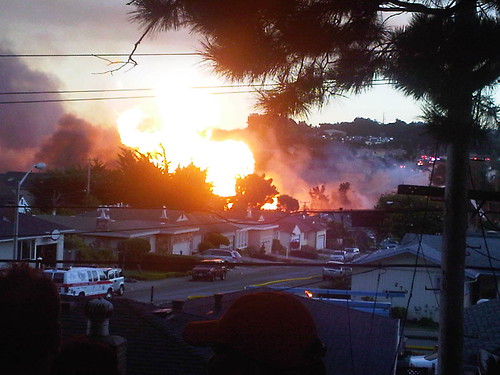
 I wish this had happened before, but I suppose it’s one of those ‘better late than never’ scenarios. In response to last week’s devastating pipeline explosion in San Bruno, the Department of Transportation has vowed to introduce a plan to improve safety in gas pipelines. Among other improvements, the proposal would increase the maximum fine for pipeline violations involving deaths or major environmental harm from $1 million to $2.5 million and add 40 safety regulators to the DOT by 2015.
The new safety improvements are an important step forward, but it is worth noting that PG&E, which oversaw the pipeline that exploded last week in San Bruno, has a history of getting around already-existing safety standards:
In 2008, the Pipeline and Hazardous Materials Safety Administration, which regulates the country’s gas pipelines, commissioned a report which found that the degradation of seams within pipes can occur with little obvious damage, leaving them suceptible to leaks or more serious damage. In 2004, the PHMSA required that all big gas-transmission companies perform “risk-based assessments” for high-danger situations in populated areas. As the Wall Street Journal reports, “it appears that none of the special measures was taken in the case of the San Bruno pipeline that exploded.”
The new proposal would likely not apply to PG&E in the case of last week’s San Bruno pipeline explosion. But the Bay Area utilities company has appeared willing to take responsibility for their role in the accident. “If it is ultimately determined that we were responsible for the cause of the incident, we will take accountability,” the company said in a statement last Thursday. And earlier this week, PG&E set aside $100 million to help the city of San Bruno reconstruct.
But with four dead, more than 50 injured, and more than 40 homes destroyed, it is important for government to enact stricter laws that will force utilities to be more safety conscious. Otherwise, these accidents will occur again and again. Even this month, pipelines in Canada and the American midwest have reported pipeline leaks. And the past decade has shown numerous dangerous pipeline explosions, including the 2004 Walnut Creek pipeline explosion that killed five leading to major lawsuits litigated in part by GJEL attorneys Jim Larsen and Luke Ellis.
The need for stricter pipeline safety regulations is clear. Let’s hope that the issue isn’t bogged down by myriad political interests and indusy obstacles that would continue to put California consumers in danger.
Photo credit: smi23le