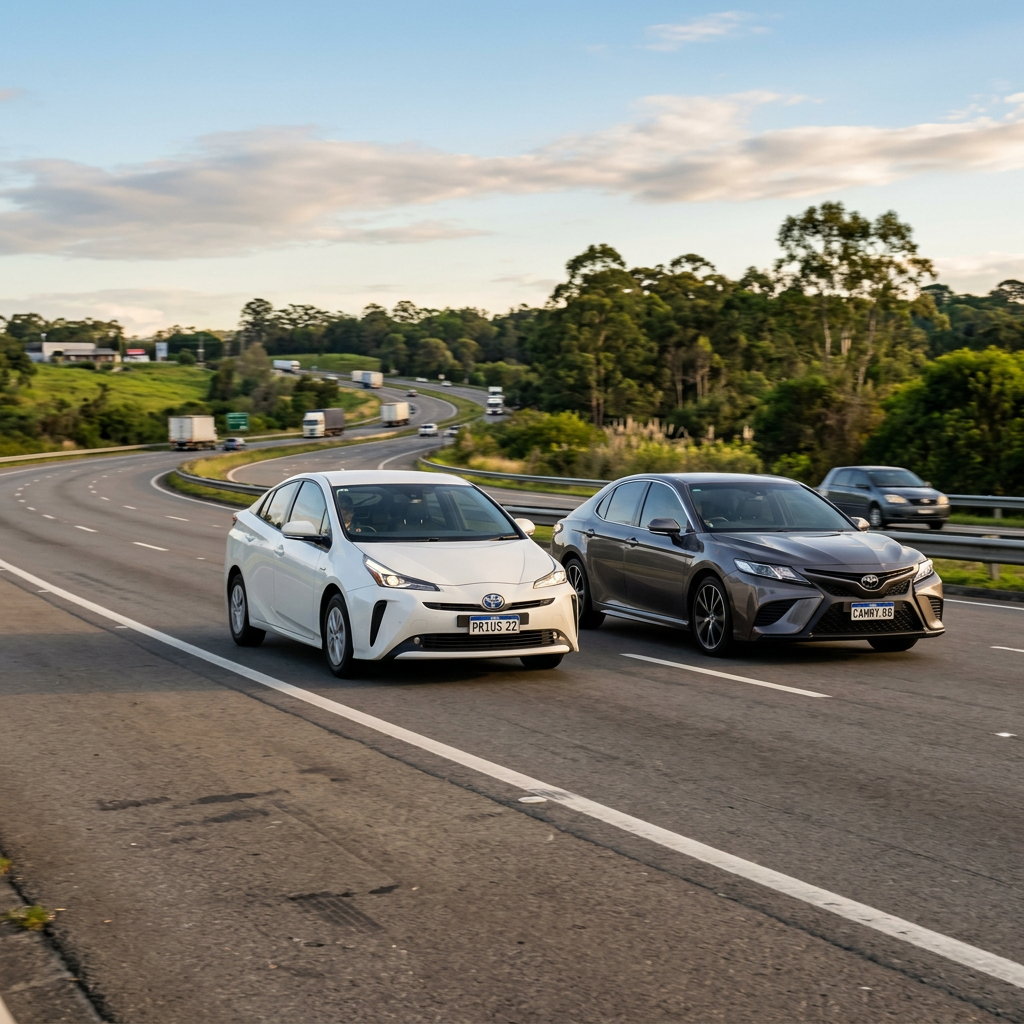
A two-vehicle collision on Interstate 5 near the Lathrop Road off-ramp sent shockwaves through the early morning commute on Friday, July 24, 2026. The crash, which occurred at approximately 5:20 a.m., resulted in minor injuries and prompted an emergency response in Lathrop, a city located just south of Stockton in San Joaquin County.
While the injuries reported in this collision were fortunately described as minor, any crash on a high-speed freeway corridor like I-5 carries the potential for far more serious consequences. Incidents like this one serve as a stark reminder of how quickly conditions can change on California’s freeways, especially during the early morning hours when visibility is low, and fatigue among commuters and commercial drivers is common.
What We Know About the Two-Vehicle Collision
According to preliminary information, the two-vehicle collision took place on Interstate 5 near the Lathrop Road off-ramp at around 5:20 a.m. Friday morning. Details regarding the exact cause of the crash, the vehicles involved, and the extent of injuries sustained are still emerging as authorities continue their investigation.
Early morning collisions on this stretch of I-5 are not uncommon. The corridor near Lathrop serves as a critical link between the Bay Area, the Sacramento region, and the Central Valley, carrying heavy volumes of both passenger and commercial traffic around the clock. Reduced visibility, driver fatigue, and high speeds all contribute to the risk profile of this section of freeway, particularly during the pre-dawn hours when this crash occurred.
The stretch of Interstate 5 near the Lathrop Road off-ramp is heavily traveled by commuters heading into the Bay Area and Sacramento, as well as by commercial trucking traffic moving goods throughout the Central Valley overnight. At the time of this collision, roughly 5:20 a.m., traffic on this segment typically includes early-shift workers, long-haul truckers nearing the end of overnight runs, and drivers just beginning their morning commute.
This combination of vehicle types and driver conditions can heighten the risk of a collision, particularly near an off-ramp where speed differentials between exiting and through traffic are common. As of this writing, CHP has not released the responding unit, the vehicles involved, or a preliminary determination of fault, and GJEL Accident Attorneys will update this article as those details are confirmed.
Common Causes of Early Morning Freeway Collisions
Crashes that occur in the early morning hours, like this one near the Lathrop Road off-ramp, often share a set of common contributing factors, including:
- Driver fatigue. Commuters and long-haul truckers alike are more prone to drowsy driving in the early morning, which can slow reaction times as severely as alcohol impairment.
- Reduced visibility. Darkness, combined with glare from oncoming headlights, can make it difficult for drivers to judge distances and react to sudden slowdowns.
- Speeding. Lighter traffic volumes in the early morning can tempt drivers to exceed posted speed limits, reducing the time available to avoid a collision.
- Distracted driving. Checking phones, adjusting navigation systems, or eating behind the wheel remain leading causes of collisions at all hours.
- Unsafe lane changes near off-ramps. Off-ramp areas, such as the Lathrop Road exit, require drivers to merge, slow down, or change lanes quickly, increasing the risk of a collision when following distances are too short.
Beyond the factors already outlined, mechanical and environmental conditions can also play a significant role in early morning freeway collisions. Vehicles that have gone unmaintained, particularly worn tires, faulty brakes, or malfunctioning headlights and taillights, can become far more dangerous during low-light hours when other drivers rely heavily on visual cues to judge a vehicle’s speed and position.
Add to this the possibility of morning fog, dew, or residual moisture on Central Valley roadways, and traction can be reduced just enough to turn a routine lane change or sudden stop into a serious collision.
For commercial drivers in particular, hours-of-service violations and pressure to meet delivery windows can compound the fatigue risk already present during pre-dawn driving, making thorough investigation of trucking logs and vehicle maintenance records an important step when a big rig is involved in a crash like this one.
Determining Fault in a California Freeway Collision
Under California law, drivers owe a duty of reasonable care to everyone else on the road. California Civil Code §1714 establishes that individuals are responsible for injuries caused by their failure to exercise ordinary care. When a driver breaches that duty, whether through speeding, following too closely, distracted driving, or other negligence, they can be held financially liable for the injuries and damages that result.
California follows a pure comparative negligence rule, meaning that even if a driver is partially at fault for a crash, they may still recover compensation for the percentage of damages attributable to the other driver. Determining fault typically involves a thorough review of the CHP collision report, witness statements, physical evidence at the scene, and, in some cases, traffic camera or dashcam footage.
In multi-vehicle freeway collisions, more than one party may share responsibility for causing a crash, making a careful, evidence-based investigation especially important. California Code of Civil Procedure §335.1 sets a two-year statute of limitations.
For most personal injury claims arising from a car accident, victims generally have two years from the date of the crash to file a lawsuit if a fair settlement cannot be reached through negotiation. If a government entity, such as Caltrans, is found to have contributed to the crash through a dangerous roadway condition or delayed maintenance under Government Code §835.
A much shorter claim-filing deadline applies, often just six months from the date of the incident. Because these timelines can vary significantly depending on who is found at fault, it’s important for accident victims to consult an attorney early, before evidence disappears, memories fade, or critical filing deadlines are missed.
What to Do If You Were Injured in This Crash
Anyone injured in a traffic collision, even one initially described as resulting in “minor” injuries, should take the following steps to protect their health and their legal rights:
- Seek medical attention promptly. Some injuries, including whiplash, soft tissue damage, and mild traumatic brain injuries, may not present symptoms immediately but can worsen without treatment.
- Document the scene. Photographs of vehicle damage, road conditions, and visible injuries can play a critical role in establishing what happened.
- Obtain the CHP collision report. This report will contain the responding officer’s initial assessment of the incident and can be requested once it becomes available.
- Avoid speaking with insurance adjusters before consulting an attorney. Insurance companies often seek recorded statements shortly after a crash, which they can use to minimize a claim’s value.
- Consult an experienced personal injury attorney. An attorney can help protect your rights while you focus on recovery.
Beyond the immediate steps of seeking treatment and documenting the scene, accident victims should also be mindful of what they say and post in the days and weeks following a crash. Casual comments made to insurance representatives, friends, or even on social media, such as saying you’re “fine” or posting photos of an active lifestyle while recovering, can later be used to argue that injuries were less serious than they actually were.
It’s also wise to keep a written log of medical appointments, physical limitations, missed work, and pain levels as recovery progresses, since this kind of contemporaneous record can be far more persuasive than trying to reconstruct the timeline of an injury months later.
Victims should feel empowered to focus entirely on healing and let an experienced attorney manage communications with insurance companies and opposing parties on their behalf.
How Settlement Value Is Calculated
When pursuing compensation after a car accident, personal injury attorneys typically rely on one of two primary methods to estimate a claim’s value: the multiplier method and the per diem method.
The multiplier method takes the total of a victim’s actual, calculable expenses (known as special damages), such as medical bills, lost wages, and property damage, and multiplies that figure by a number typically ranging from 1.5 to 5, depending on the severity of the injury and its impact on the victim’s life. More severe or permanent injuries generally warrant a higher multiplier.
The per diem method assigns a specific dollar value to each day that a victim experiences pain and disruption to their daily life, from the date of the incident until they reach maximum medical improvement. This daily rate is then multiplied by the number of affected days to calculate the pain and suffering component of a claim.
Both methods provide a starting point for negotiations, but actual settlement values depend heavily on the specific facts of each case, the quality of the supporting documentation, and the skill of the attorney negotiating on the victim’s behalf.
Personal Injury Settlement Calculators and How They Help in Computing Settlement Values
A personal injury settlement calculator is a tool designed to give accident victims an early, ballpark estimate of what their claim might be worth before they enter negotiations with an insurance company or pursue litigation.
These calculators typically ask for information such as total medical expenses, lost wages, property damage costs, and a general sense of how the injury has affected the victim’s daily life and long-term prospects.
Using this input, the calculator applies a version of the multiplier or per diem methods described above to generate an estimated range for both economic damages, like medical bills and lost income, and non-economic damages, such as pain and suffering.
While no calculator can account for every nuance of a case, including the strength of available evidence, the credibility of witnesses, or the tendencies of a particular insurance carrier, these tools offer a useful starting point for victims trying to understand whether a settlement offer they’ve received is reasonable.
It’s important to remember that a calculator’s estimate is not a guarantee of what a case will actually settle for; the final value of any claim depends heavily on the specific facts involved and is best evaluated in full by an experienced personal injury attorney. Call us now at +1-866-218-3776 to speak with the experts.
Take Action Today – Get the Help You Deserve
“Every time I read about a crash like this one on I-5, my heart goes out to everyone involved, especially given how routine that stretch of freeway is for so many families and commuters heading to work before the sun even comes up. Even when injuries are described as minor at the scene, the physical, emotional, and financial toll of a car accident can linger for weeks or months afterward. If you or someone you love was hurt in this collision, I’d encourage you to reach out to our office for a free consultation. We work on a contingency fee basis, so there’s no cost to you unless we recover compensation on your behalf.” — Andy Gillin, Managing Partner, GJEL Accident Attorneys
If you or a loved one was injured in this two-vehicle crash near the Lathrop Road off-ramp, or in any traffic collision on California’s freeways, the attorneys at GJEL Accident Attorneys are here to help. With more than 40 years of experience and over $950 million recovered for our clients, we understand what it takes to build a strong case and pursue full and fair compensation.
Call us today at +1-866-218-3776 for a free, no-obligation consultation, or visit our San Francisco office to learn more about your legal options. We work on a contingency fee basis, which means you pay nothing unless we win your case.
Local Resources for Lathrop Accident Victims
California Highway Patrol, Stockton Area Office
2720 Wilcox Road, Stockton, CA 95215
(209) 938-4800 chp.ca.gov
City of Lathrop Police Department
940 River Islands Parkway, Lathrop, CA 95330
Non-Emergency Dispatch: (209) 249-1800 | Administration: (209) 647-6400
ci.lathrop.ca.us/police
San Joaquin Council of Governments (SJCOG) — Local Transportation Authority
The regional transportation planning agency responsible for San Joaquin County’s Local Transportation Authority (Measure K) projects, including highway and interchange improvements affecting the I-5 corridor near Lathrop.
sjcog.org
Caltrans District 10
Oversees maintenance, construction, and traffic advisories on Interstate 5 and other state highways throughout San Joaquin County.
dot.ca.gov/caltrans-near-me/district-10
Caltrans QuickMap (Real-Time Traffic & Incident Information)
Provides live traffic conditions, lane closures, and incident alerts for Interstate 5 and other California highways.
quickmap.dot.ca.gov
Doctors Hospital of Manteca
1205 E. North Street, Manteca, CA 95336
(209) 823-3111
doctorsmanteca.com
Kaiser Permanente Manteca Medical Center (Emergency Department)
1777 W. Yosemite Avenue, Manteca, CA 95337
(209) 825-3555
healthy. kaiserpermanente.org
San Joaquin General Hospital
French Camp, CA
sjgeneral.org