A man died Wednesday evening after the vehicle he was driving left northbound Interstate 5 south of Walnut Grove Road and struck a tree on the embankment, according to the Stockton Police Department. The single-vehicle crash has left family and friends grieving and has once again raised questions about the safety of this stretch of freeway for Stockton-area drivers.
What Happened on I-5 Wednesday Evening
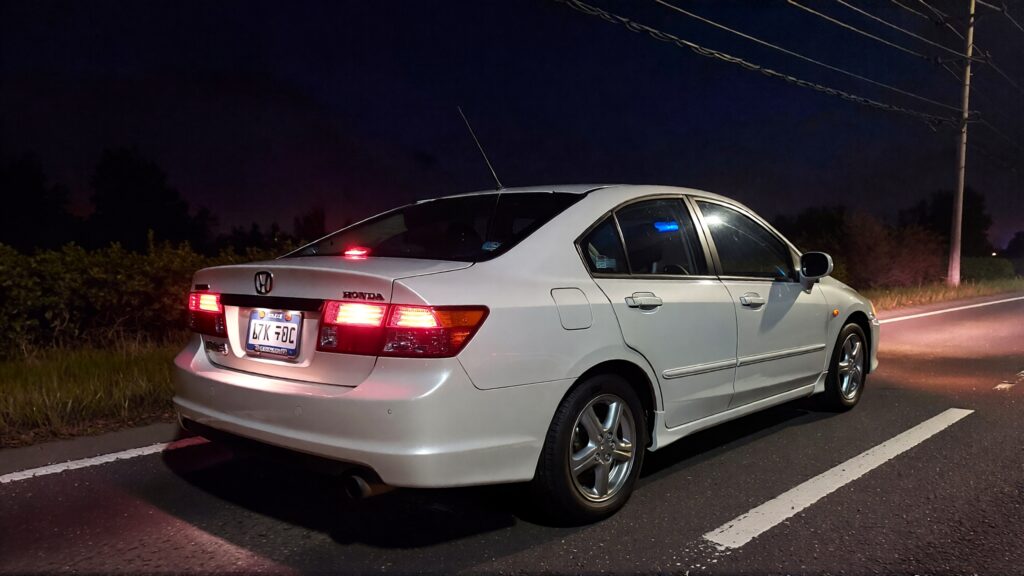
Stockton police units responded to the crash scene at approximately 6:23 p.m. Wednesday after reports of a single vehicle, a Honda Civic, leaving the roadway on northbound I-5 south of Walnut Grove Road. According to investigators, the Civic departed the freeway for reasons that have not yet been determined, then lost control before striking a tree on the roadside embankment.
The driver, who was the only person in the vehicle, was pronounced dead at the scene. Authorities have not released the driver’s identity pending notification of next of kin. Investigators have not yet said whether alcohol or drugs were factors in the crash, and the exact cause remains under investigation.
Single-vehicle crashes like this one are often among the most difficult to investigate. Without another driver involved, officers must rely on physical evidence at the scene, vehicle data, and witness accounts (if any exist) to reconstruct what happened in the moments before the vehicle left the roadway. Common contributing factors in run-off-road crashes include driver fatigue, distraction, medical emergencies, mechanical failure, roadway design issues, and impairment.
Why Fatal Single-Vehicle Crashes Still Raise Legal Questions
It’s a common misconception that a crash involving only one vehicle means there’s no one to hold accountable. That isn’t always true. Depending on what investigators find, liability could extend well beyond the driver alone.
For example, if a mechanical defect, such as a tire blowout, steering failure, or brake malfunction, caused the vehicle to leave the roadway, the manufacturer or a repair shop could be held liable under product liability law. If the roadway itself contributed to the crash, through poor design, inadequate signage, a damaged guardrail, or a hazard that Caltrans or the responsible public entity knew about and failed to fix.
A claim could potentially be pursued against a government entity under Government Code §835, which addresses liability for dangerous conditions of public property. These claihaverry str,and short filing deadlines, often as brief as six months, so time is critical if a dangerous roadway condition is suspected.
California’s general negligence standard, codified in Civil Code §1714, establishes that everyone is responsible for injury caused by their want of ordinary care. When a driver dies in a solo crash, families are often left trying to piece together what happened and whether any other party played a role.
Wrongful Death Claims Under California Law
When a crash proves fatal, surviving family members may have the right to pursue a wrongful death claim. California Code of Civil Procedure §377.60 identifies who may bring such an action, generally the decedent’s surviving spouse, domestic partner, children, or other dependents. A related statute, CCP §377.30, governs survival actions, which allow the deceased person’s estate to pursue claims for damages the victim could have brought had they survived, such as pain and suffering experienced before death.
The statute of limitations for wrongful death and personal injury claims in California is generally two years from the date of the incident under CCP §335.1, though exceptions can shorten or extend this deadline depending on the circumstances, including claims against government entities. Because evidence in single-vehicle crashes can be time-sensitive, especially if a roadway defect or vehicle malfunction is suspected, families are encouraged not to wait to have the crash independently investigated.
Understanding How Settlement Value Is Calculated
Families dealing with the aftermath of a fatal crash often want to understand how compensation is determined. While every case is different, attorneys and insurance companies commonly reference two methods as starting points for discussion, though neither substitutes for an individualized case evaluation.
The multiplier method takes the total of “special damages,” such as medical bills, funeral and burial costs, and lost income, and multiplies that figure by a number, typically between 1.5 and 5, based on the severity of the loss and the impact on the family. More catastrophic losses, including wrongful death, tend to warrant a multiplier at the higher end of that range.
The per diem method assigns a specific dollar value to each day affected by the loss, then multiplies it by the relevant time period. This method is more commonly used in injury cases involving a recovery period than in wrongful death claims, but it can still factor into certain damage calculations, such as a decedent’s pre-death pain and suffering.
Neither method accounts for every variable that goes into a real settlement or verdict, including the strength of the evidence, insurance policy limits, comparative fault issues, and the emotional and financial toll on surviving family members. These tools can offer a rough starting point, but they are no substitute for a full case evaluation by an experienced attorney.
If Your Family Has Been Affected by This Crash
“Losing a loved one in a crash like this one is a shock that words can’t fully capture, especially when the reasons behind it aren’t yet clear. Families in this situation deserve real answers, not just from the police report, but from a thorough, independent look at everything that may have contributed to the crash. We’ve spent decades helping California families get those answers and pursue the accountability and support they need to move forward. If your family is grieving after a crash on our highways, we’re here to help you understand your options.” – Andy Gillin, GJEL Accident Attorneys
Fatal single-vehicle crashes leave families with more questions than answers, especially when the cause hasn’t been publicly determined. At GJEL Accident Attorneys, we’ve represented California families for more than 40 years, recovering over $950 million for our clients. Our team knows how to thoroughly investigate freeway crashes, including examining vehicle maintenance records, roadway conditions, and weather and lighting factors that police reports don’t always fully capture.
If you’ve lost a loved one in this crash or a similar incident on California’s highways, you don’t have to navigate this alone. GJEL Accident Attorneys offers free, no-obligation consultations, and we work on a contingency fee basis, meaning you pay nothing unless we recover compensation for your family. Call us today at 1-855-508-9565 or visit gjel.com to learn how we can help.
Local Resources for Stockton-Area Families
Families affected by this crash or seeking more information may find the following San Joaquin County resources helpful:
Stockton Police Department
Non-Emergency Line: (209) 937-8377
Address: 22 E. Market St., Stockton, CA 95202
The department’s Traffic Section handles collision report requests and related inquiries.
California Highway Patrol, Stockton Area Office
Phone: (209) 938-4800
Address: 2720 Wilcox Road, Stockton, CA 95215
CHP’s Stockton command patrols Interstate 5 through San Joaquin County and can often provide additional detail on freeway collision investigations.
San Joaquin County Sheriff’s Office, Coroner’s Division
Phone: (209) 468-4400
Address: 7000 Michael Canlis Blvd., French Camp, CA 95231
The Coroner’s Division investigates deaths in the county and can provide information to next of kin regarding the official cause and manner of death.
San Joaquin County 211
Dial 211 or (800) 436-9997
This free service connects grieving families with grief counseling, financial assistance, and other community support resources across the county.