A 33-year-old motorcyclist died after a broadside collision with an SUV at Lewis Stein Road and West Stockton Boulevard in Elk Grove. Learn about the crash and your legal options. This fatal motorcycle accident serves as a sobering reminder of how quickly life can change on California roadways. A routine evening commute turned tragic in an instant, leaving behind a grieving family and a community left to wonder how such a preventable crash could occur.
For loved ones searching for answers, understanding the circumstances of the collision, from the actions of the SUV driver to the conditions at the intersection, is often the first step toward accountability. California law provides a path for families to pursue compensation when negligence contributes to a fatal crash, but that path comes with strict deadlines and legal complexities that can be difficult to navigate while grieving.
The Accident
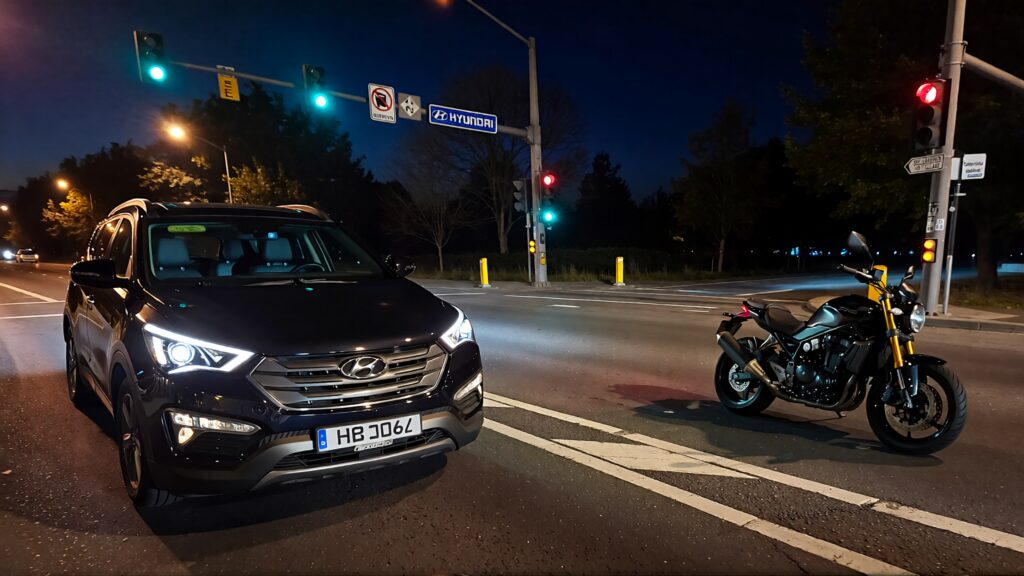
A motorcyclist died Tuesday evening after his motorcycle collided broadside with an SUV at the intersection of Lewis Stein Road and West Stockton Boulevard in Elk Grove. The crash was reported at approximately 6:14 p.m., according to authorities.
The 33-year-old man was riding a black motorcycle when it collided with a northbound Honda CR-V that was making a left turn at the intersection. The impact struck the motorcycle broadside, and the rider died at the scene.
Emergency crews responded quickly, but the man could not be saved. The intersection of Lewis Stein Road and West Stockton Boulevard was closed in multiple directions for several hours while investigators documented the scene, collected evidence, and worked to determine exactly how the collision unfolded.
Understanding Left-Turn Motorcycle Collisions
Broadside collisions between motorcycles and left-turning vehicles are among the most common and most dangerous types of motorcycle accidents on California roadways. These crashes typically happen when a driver turning left misjudges the speed or distance of an oncoming motorcycle, or simply fails to see the rider at all, a phenomenon safety researchers often refer to as “looked but failed to see.”
Because motorcycles present a smaller visual profile than cars or trucks, they can be harder for drivers to spot in cross traffic, especially at dusk or in low-light conditions. A collision at 6:14 p.m. in August would have occurred as daylight was fading, a period when visibility challenges increase and drivers may be less attentive to smaller silhouettes approaching from a distance.
Motorcyclists have virtually no protection in these collisions. Unlike occupants of a passenger vehicle, a rider has no airbags, crumple zones, or safety cage to absorb the force of impact. When a motorcycle is struck broadside by an SUV, the rider frequently suffers catastrophic injuries or, as in this case, fatal trauma.
Who May Be Liable in This Crash
Under California law, left-turning drivers generally owe a duty to yield to oncoming traffic, including motorcycles, unless they can safely complete the turn. California Vehicle Code section 21801 requires a driver turning left to yield the right-of-way to vehicles approaching from the opposite direction that are close enough to constitute an immediate hazard.
California Civil Code section 1714 establishes the general standard that everyone is responsible for injuries caused by their failure to exercise reasonable care. If the investigation determines that the SUV driver failed to yield or otherwise breached this duty of care, that driver’s insurance carrier could bear liability for the motorcyclist’s death.
Because this is a fatal collision, the surviving family members of the motorcyclist may have grounds to pursue a wrongful death claim under California Code of Civil Procedure sections 377.60 and 377.30, which allow a decedent’s spouse, children, or other qualifying heirs to seek compensation for their loss. California Code of Civil Procedure section 335.1 sets a two-year statute of limitations for most personal injury and wrongful death claims arising from a vehicle collision, so families should be aware of this deadline as they consider their legal options.
If any portion of the intersection design, signal timing, or roadway visibility contributed to the crash, Government Code section 835 may also come into play, as it governs claims against public entities for dangerous conditions of public property. Claims against a government agency carry a much shorter filing deadline, often just six months, so this avenue should be explored quickly if it appears relevant.
Calculating the Value of a Wrongful Death Claim
Families evaluating a wrongful death claim often want to understand how compensation is determined. California law allows recovery for both economic and non-economic damages. Economic damages can include the financial support the deceased would have provided, funeral and burial expenses, and any medical costs incurred before death. Non-economic damages account for the loss of companionship, guidance, and comfort the family has suffered.
Attorneys often use two general methods to help estimate the non-economic value of a claim. The multiplier method takes the total economic damages and multiplies them by a number, typically between 1.5 and 5, that reflects the severity of the loss and the circumstances of the case. More catastrophic and clearly documented losses tend to justify a higher multiplier.
The per diem method instead assigns a specific dollar value to each day the family will live with the loss, then multiplies that figure across an expected timeframe, such as the decedent’s remaining life expectancy or the years a surviving spouse or child would have depended on them. Neither method produces an automatic number. Insurance companies and courts weigh the specific facts of each case, including the decedent’s age, earning capacity, and relationship to survivors, so an experienced attorney’s guidance is essential to pursuing full and fair compensation.
Motorcycle Accident Settlement Calculators: Understanding Your Case Value
A motorcycle accident settlement calculator is a tool attorneys and injury victims use to estimate the potential value of a claim before negotiations with an insurance company begin. While no calculator can predict an exact settlement figure, since every case depends on its own unique facts, these tools provide a helpful starting point by organizing the key factors that typically drive compensation.
A settlement calculator generally begins with economic damages, such as medical bills, lost wages, and property damage, since these figures are documented and relatively straightforward to total. From there, the calculator applies a multiplier, often ranging from 1.5 to 5 depending on the severity of the injuries and the impact on the victim’s life, to estimate non-economic damages like pain, suffering, and loss of enjoyment of life.
More catastrophic injuries, permanent disability, or wrongful death typically justify a multiplier on the higher end of that range. For families pursuing a wrongful death claim, calculators may instead rely on the per diem method, assigning a daily value to the loss and multiplying it across the years the family would have depended on their loved one.
Understanding how these calculations work empowers accident victims and their families to recognize whether an insurance company’s initial offer reflects the true value of their claim, or falls short of what the law allows them to recover.
An experienced motorcycle accident attorney can refine these estimates further, accounting for factors a calculator alone cannot capture, such as comparative fault, policy limits, and the long-term financial impact of a serious injury or loss. Call us now at +1-866-218-3776 to speak with the experts.
How GJEL Accident Attorneys Can Help
“Our thoughts are with the family of the motorcyclist who lost his life in this crash, and with anyone else who may have been affected by what happened at that intersection. A tragedy like this changes everything in an instant, and no family should have to face the aftermath alone. If you’ve lost a loved one or been injured in this collision, you have the right to understand what happened and to hold the responsible party accountable. Our team has spent more than 40 years helping California families through exactly this kind of loss, and we’re ready to help you too. Please don’t wait to reach out. The sooner we can look into what happened, the better we can protect your rights.”- Andy Gillin, GJEL Accident Attorneys
For more than 40 years, GJEL Accident Attorneys has represented Californians injured or killed in motorcycle and vehicle collisions, recovering more than $950 million for our clients. We understand the financial and emotional toll a fatal crash places on a family, and we work on a contingency fee basis, meaning you pay nothing unless we recover compensation on your behalf.
If you lost a loved one in this Elk Grove collision or have information about the crash, contact GJEL Accident Attorneys today at 1-855-508-9565 or visit our Concord office for a free, no-obligation consultation. Let us help you understand your options while you focus on your family.
Local Resources for Those Affected
Elk Grove Police Department
The Elk Grove Police Department led the initial response and investigation into this crash. Their non-emergency line is (916) 714-5115, and their main business office can be reached at (916) 478-8000. Their office is located at 8400 Laguna Palms Way, Elk Grove, CA 95758. The department’s official website, www.elkgrovepd.org, includes information on requesting traffic collision reports through its Records Bureau, along with contact details for its Traffic Bureau, which investigates crashes like this one. The City of Elk Grove’s government site, elkgrove.gov/police, also provides emergency and non-emergency contact guidance for residents.
Sacramento County Coroner’s Office
Families seeking information following a fatal collision can contact the Sacramento County Coroner’s Office at (916) 874-9320, Monday through Friday from 1:00 p.m. to 5:00 p.m. Their office is located at 4800 Broadway, Suite 100, Sacramento, CA 95820. Their website, coroner.saccounty.gov, provides information on obtaining coroner’s reports and death certificates, as well as support resources for grieving families.
Sacramento County Superior Court
Civil claims connected to this crash, including a wrongful death action, would typically be filed through the Sacramento County Superior Court. Their website, saccourt.ca.gov, includes case information, filing procedures, and self-help resources for those pursuing a civil claim.
California Highway Patrol (SWITRS Collision Data)
For statewide collision statistics and general traffic safety information, the California Highway Patrol maintains the Statewide Integrated Traffic Records System (SWITRS) at iswitrs.chp.ca.gov, which tracks crash data across California roadways, including intersections like Lewis Stein Road and West Stockton Boulevard.
Sacramento County Department of Transportation
Questions about traffic signals, intersection design, or roadway safety concerns at the crash site can be directed to Sacramento County’s Department of Transportation. Their website, dot.saccounty.gov, provides information on traffic engineering, signal timing requests, and roadway safety improvement programs relevant to intersections throughout the county.
California DMV
Families needing to handle vehicle registration, title transfer, or other administrative matters following a fatal crash can find guidance at the California Department of Motor Vehicles website, dmv.ca.gov.