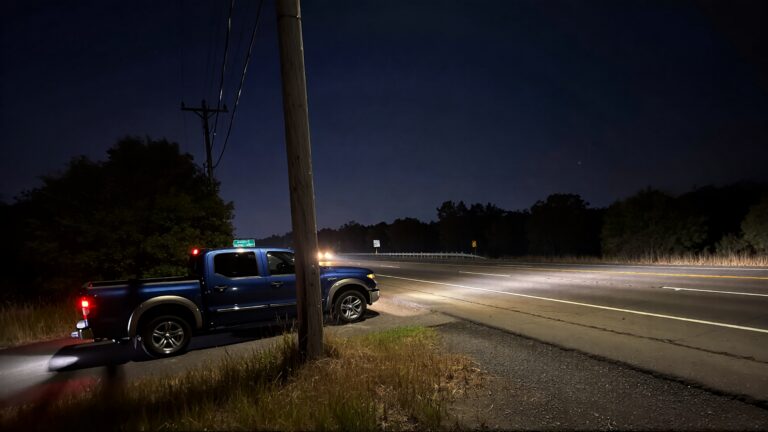
A pedestrian was seriously injured Friday afternoon after being struck by an SUV while walking in a crosswalk near the entrance to US 101 South in San Rafael, according to the California Highway Patrol. The pedestrian accident occurred during a time of day when foot traffic in the area is heavy, as patients, visitors, and hospital staff regularly cross Lucas Valley Road to and from Kaiser Permanente San Rafael Medical Center.
The intersection is where local surface-street traffic merges directly into a freeway on-ramp, meaning drivers are often focused on judging gaps in fast-moving traffic at the exact moment pedestrians are legally crossing in front of them.
This layout, common at freeway entrances throughout Marin County, places significant responsibility on drivers to remain alert to pedestrians even while preparing to merge onto US 101 South. The pedestrian’s current condition has not been publicly released, and GJEL Accident Attorneys will continue to monitor this developing situation for updates.
How the Crash Happened
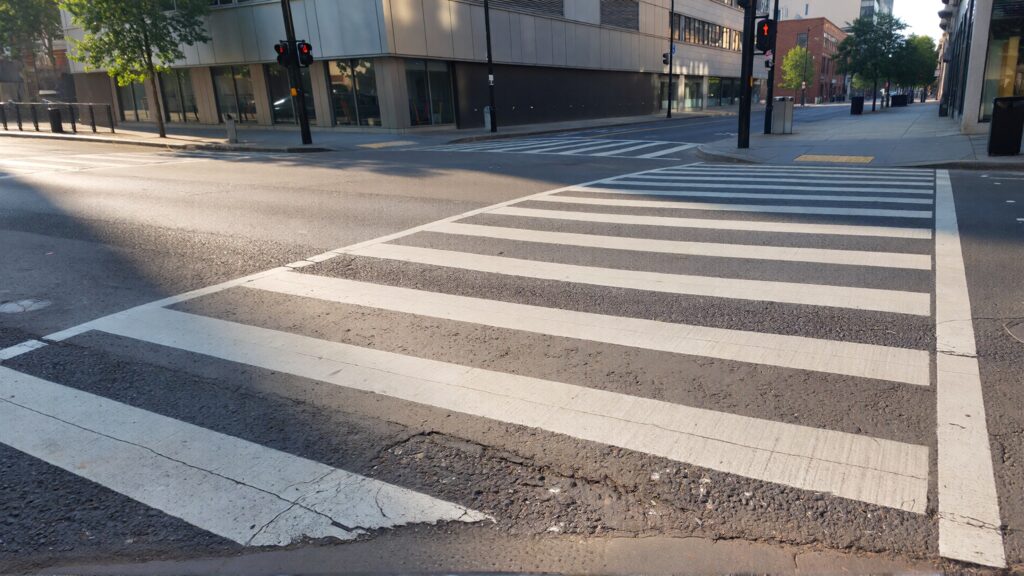
The collision occurred at approximately 1:40 p.m. on August 28, 2026, at the intersection of Lucas Valley Road and the on-ramp leading to US 101 South, near Kaiser Permanente San Rafael Medical Center. Investigators say the pedestrian was in the marked crosswalk when a driver in an SUV struck them while attempting to enter the freeway.
The extent of the pedestrian’s injuries has not yet been publicly disclosed. CHP officers responded to the scene and are continuing to investigate how the crash occurred, including whether the driver yielded appropriately before entering the crosswalk area.
This stretch of Lucas Valley Road sits at a high-traffic chokepoint where local surface streets, hospital traffic, and freeway on-ramp movements converge, a combination that can confuse drivers scanning for gaps in traffic while also watching for pedestrians.
Pedestrian Right-of-Way Under California Law
California law places a strong duty on drivers to protect pedestrians in marked crosswalks. Under California Vehicle Code Section 21950, drivers must yield the right-of-way to any pedestrian crossing within a marked crosswalk or at any intersection, and must exercise due care for the pedestrian’s safety by reducing speed or taking other necessary action.
This duty applies with particular force near driveways, ramps, and other points where vehicles cross a pedestrian’s path of travel, since drivers are expected to anticipate foot traffic even while focused on merging or turning maneuvers.
Beyond the Vehicle Code, California Civil Code Section 1714 establishes the broader principle that everyone is responsible for injuries caused by a want of ordinary care. When a driver fails to yield to a pedestrian with the right-of-way, that failure can form the basis of a negligence claim, particularly when supported by a CHP collision report, witness statements, or roadway camera footage.
Comparative Fault and Insurance Considerations
California follows a pure comparative negligence standard, meaning an injured pedestrian can still recover compensation even if they are found partially at fault for a collision, with any settlement or verdict reduced in proportion to their share of responsibility. This is especially relevant in crosswalk cases near freeway entrances, where insurance adjusters sometimes attempt to shift blame onto the pedestrian.
This is by questioning the pedestrian’s walking speed, visibility, or whether the pedestrian was fully within the marked lines. A thorough investigation, including scene photos, signal timing, and any available surveillance footage from nearby businesses or the hospital campus, can be critical to establishing the driver’s liability.
Insurance carriers investigating crosswalk collisions near freeway ramps often scrutinize the exact positioning of the pedestrian at the moment of impact, sometimes arguing that a victim stepped slightly outside the marked lines or entered the crosswalk against a signal.
Because these details can significantly affect the outcome of a claim, it is important for injured pedestrians to avoid speculating about fault when speaking with insurance representatives and to let the physical evidence, including skid marks, vehicle damage, and any available video footage, tell the story.
An experienced attorney can also request signal timing data and roadway design records from Caltrans or the local jurisdiction, which can reveal whether inadequate signage, poor visibility, or a poorly timed signal contributed to the crash and whether a public entity may share liability alongside the driver.
How Settlement Value Is Calculated in Pedestrian Injury Cases
Attorneys and insurance companies commonly use two methods to estimate the value of a personal injury claim. The multiplier method takes the total of a victim’s economic damages, such as medical bills and lost wages, and multiplies that figure by a number typically between 1.5 and 5, depending on the severity and permanence of the injury, to account for pain and suffering.
The per diem method instead assigns a specific dollar value to each day the victim experiences pain and limitations, from the date of injury through the projected date of maximum recovery, and adds that total to economic damages. Serious pedestrian injuries, including fractures, traumatic brain injuries, or spinal trauma, often justify a higher multiplier or per diem rate given the extended recovery timelines and long-term impact on daily life.
Beyond economic damages and pain and suffering, pedestrian injury settlements often account for future losses that are not immediately apparent in the days following a crash. This can include the projected cost of future surgeries, ongoing physical therapy, in-home care, or adaptive equipment for victims facing long-term mobility limitations.
Attorneys typically work with medical experts and, in more serious cases, life care planners and economists to project these future costs and incorporate them into a demand, since a settlement that only accounts for bills already incurred can leave an injured pedestrian without resources for care they will need years down the road.
This is one of the primary reasons involving trians are encouraged to avoid accepting an early settlement offer before the full scope of their injuries and long-term needs has been properly evaluated.
Steps to Take After a Pedestrian Accident in San Rafael
Anyone injured as a pedestrian in Marin County should seek medical attention immediately, even if injuries initially seem minor, since conditions like concussions or soft tissue damage are not always apparent right away. It is also important to obtain a copy of the CHP incident report, document the scene with photographs if possible, and avoid giving recorded statements to insurance adjusters before speaking with an attorney.
California’s statute of limitations generally allows two years from the date of injury to file a personal injury lawsuit, though this window can be shorter in claims involving government entities, such as roadway design issues connected to Caltrans or the local jurisdiction.
It is also worth noting that memories fade and physical evidence at a crash site can change quickly, so gathering as much information as possible in the days immediately following the collision can make a meaningful difference later.
This includes writing down the names and contact information of any witnesses who saw the crash, noting the exact time and lighting conditions, and keeping a simple daily record of pain levels, missed work, and how the injury is affecting everyday activities.
Photographs of visible injuries as they heal, along with copies of all medical bills and correspondence with insurance adjusters, help build a clear, well-documented record of how the crash has impacted the victim’s life, which can considerably strengthen a claim if the case does not resolve quickly.
Take Action Today: You Won’t Pay Unless We Win
“Our thoughts are with the victim and everyone affected by this crash. Being struck by a vehicle while doing something as simple as walking across the street is a traumatic experience, and the physical and emotional toll can last long after the initial injuries heal. If you or someone you love has been hurt in a pedestrian accident, please don’t wait to get medical attention and don’t wait to get answers about your rights. Insurance companies move quickly to protect their bottom line, and the evidence that proves what really happened, such as witness accounts and traffic camera footage, can disappear just as easily. Our team is here to make sure the people responsible are held accountable and that you have the support you need to focus on healing.” – Andy Gillin, GJEL Accident Attorneys
With more than 40 years of experience and over $950 million recovered for injured clients, GJEL Accident Attorneys has represented pedestrians and their families throughout California after serious crosswalk and roadway collisions.
The firm works on a contingency fee basis, meaning clients pay nothing unless a recovery is obtained. Anyone injured in this or a similar crash can call 1-855-508-9565 or visit our Sacramento office to speak with an attorney about their legal options.
Local Resources for Marin County Residents
California Highway Patrol – Marin Area Office
The CHP Marin Area Office is the primary agency handling this investigation and can provide updates on the collision report status. Visit www.chp.ca.gov/find-an-office/golden-gate-division/offices/(350)-marin for office hours, report request procedures, and additional contact options.
San Rafael Police Department
For traffic concerns within San Rafael city limits, including this crosswalk location, residents can find full contact information, online reporting tools, and traffic complaint forms at www.srpd.org.
Transportation Authority of Marin (TAM)
TAM oversees countywide transportation planning, funding, and safety improvement projects, including pedestrian infrastructure and Safe Routes to School programs. Residents concerned about crosswalk safety near freeway interchanges can review current projects and submit feedback at www.tam.ca.gov.
Caltrans District 4
Caltrans maintains the state highway system, including US 101 and its interchanges, and is responsible for signage, signal timing, and ramp design along freeway entrances. Information on district operations and how to report a roadway safety concern is available at dot.ca.gov/caltrans-near-me/district-4.
California Department of Motor Vehicles (DMV)
The DMV maintains driving records and can be a resource for understanding license status, traffic violations, and related administrative matters connected to a collision. Visit www.dmv.ca.gov for more information.
Marin County Superior Court
Civil claims arising from this type of collision, including personal injury lawsuits, are filed through the Marin County Superior Court. Case information, filing requirements, and self-help resources are available at www.marin.courts.ca.gov.
Kaiser Permanente San Rafael Medical Center
Located near the crash site, Kaiser Permanente San Rafael provides emergency and follow-up medical care for injured patients. Visit healthy.kaiserpermanente.org to find location details and patient services.