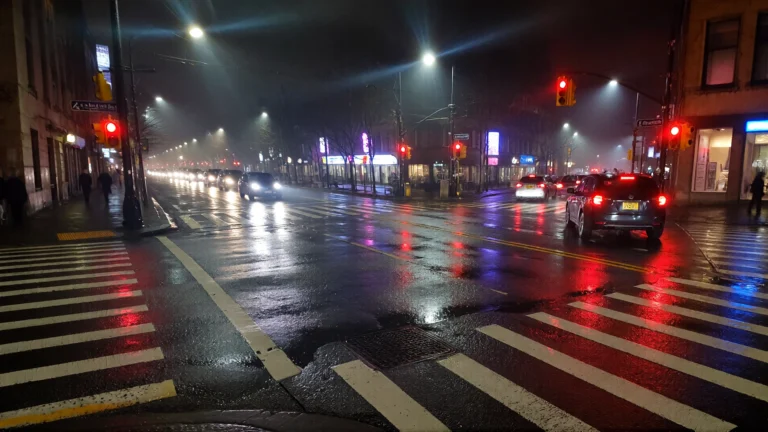
A woman is dead, and another driver was injured following a fiery head-on crash Thursday evening on State Route 120 in Oakdale, according to the California Highway Patrol. The crash occurred around 8:27 p.m. on September 10, 2026, on State Route 120, which runs concurrently with State Route 108 in that stretch of Stanislaus County, just east of Lancaster Road.
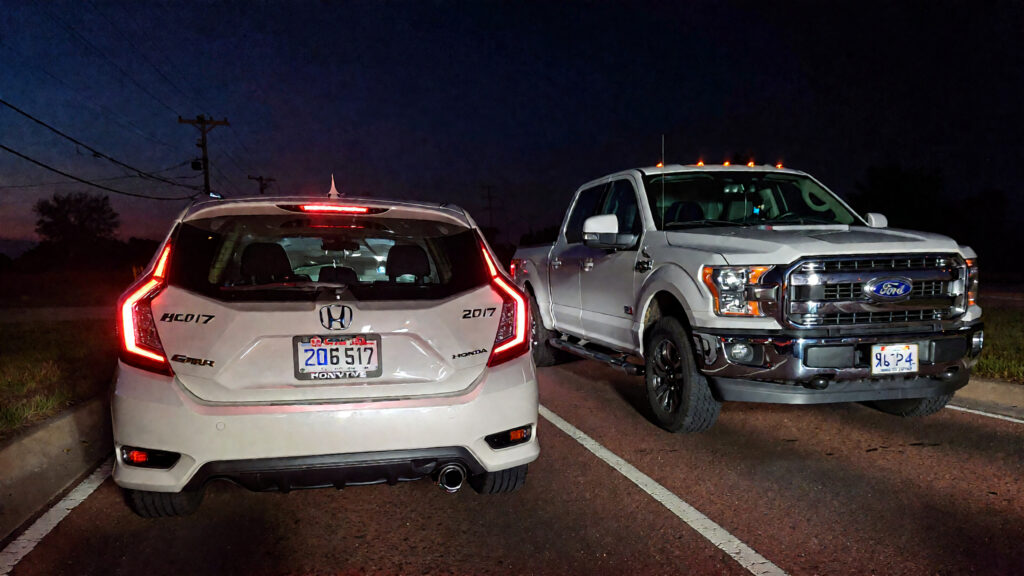
The collision involved a 2017 Honda Civic and a Ford F-150 pickup truck. Investigators say the woman was driving the Honda westbound when she attempted to pass another vehicle and struck the Ford head-on. The Honda caught fire immediately after impact while the driver was still trapped inside, and bystanders rushed to try to free her before first responders could arrive. Paramedics pronounced her dead at the scene. The driver of the Ford pickup sustained only minor injuries.
A Dangerous Stretch of Highway
State Route 120 through Oakdale is a heavily traveled corridor that connects the Central Valley to the Sierra foothills and Yosemite, carrying a steady mix of commuter, agricultural, and recreational traffic. Passing maneuvers on undivided two-lane sections of highways like this one are among the most common causes of catastrophic head-on collisions in California.
A driver who misjudges oncoming traffic or the distance needed to safely re-enter a lane has little to no room for error. When a crash of this severity results in a post-collision fire, occupants often have only seconds to escape, which is why bystander intervention, as seen in this incident, can be the difference between life and death.
This is not the first fatal head-on crash reported near the intersection of Orange Blossom and Lancaster roads in the Oakdale area, underscoring a pattern local investigators have flagged on these rural corridors: undivided two-lane highways with limited passing zones, higher posted speed limits, and a steady mix of passenger vehicles, agricultural equipment, and commercial trucks moving between the Central Valley and the Sierra foothills.
On roads built this way, there is little margin for error once a vehicle crosses the centerline, and the same conditions that make passing tempting, long straightaways and lighter traffic outside peak commute hours, can also make it harder for an oncoming driver to react in time.
Safety advocates have repeatedly called for expanded passing lanes, rumble strips, and centerline barriers on rural stretches like this one in Stanislaus County, arguing that engineering improvements, not just driver caution, are needed to prevent the kind of catastrophic crossover collisions that continue to occur here.
What the Investigation Will Likely Examine
The California Highway Patrol will continue to investigate the exact circumstances of the passing maneuver, including vehicle speeds, sightlines along that section of SR-120, and whether the gap in oncoming traffic was sufficient for the Honda to complete the pass safely.
Investigators typically review witness statements, vehicle data recorders, roadway skid evidence, and post-crash vehicle positioning to reconstruct how the collision occurred. Because the vehicle caught fire, the investigation may also examine the cause of the fire and whether fuel system damage, electrical failure, or another factor contributed to its rapid spread.
Investigators will also look closely at the passing zone itself, including whether the stretch of highway where the Honda attempted to overtake was marked with a broken centerline permitting passing or a solid line prohibiting it, since that distinction can significantly affect how fault is allocated.
CHP officers typically measure the distance between the point where the Honda began its pass and the point of impact to estimate how much time the driver had to judge the oncoming Ford’s speed and distance, and they may also examine the Ford’s data recorder for its speed and braking response in the moments before the crash.
Because the fire started so quickly after impact, the investigation may additionally involve the Stanislaus County Fire Department or a fire origin specialist to determine whether a ruptured fuel line, a damaged battery, or another mechanical failure caused the blaze, findings that could matter both for understanding how to prevent similar post-crash fires and for any claims involving the vehicle’s design or maintenance history.
Understanding Liability in a Head-On Collision
Under California law, a driver who attempts to pass another vehicle assumes a heightened duty of care, since California Vehicle Code sections governing passing require that the maneuver be completed only when there is a clear and sufficient gap in oncoming traffic. When a passing driver misjudges that gap and causes a head-on collision, that driver can be held liable for the resulting injuries or death under general negligence principles.
It is codified in California Civil Code section 1714, which establishes that everyone is responsible for injuries caused by a failure to exercise reasonable care. California also follows a pure comparative fault doctrine, meaning that if more than one party contributed to a crash, financial responsibility is divided according to each party’s share of fault, and a victim’s family can still recover damages even if the deceased driver is found partially at fault.
Liability in a head-on passing collision often turns on details that are not immediately obvious from the scene, such as whether the passing driver had a clear, unobstructed view of oncoming traffic for a sufficient distance, or whether the oncoming driver was traveling at or near the posted speed limit and had any opportunity to brake or steer away before impact.
If evidence later shows that the Ford driver was speeding, distracted, or otherwise failed to react reasonably once the Honda entered his lane, a portion of fault could shift toward him under California’s comparative fault framework, even though he was not the one who initiated the pass.
Roadway conditions can also factor into a liability analysis: if the passing zone was inadequately marked, poorly maintained, or obscured by vegetation or signage, Caltrans or the responsible public entity could share responsibility alongside the driver.
Because these determinations rely on physical evidence that can degrade or disappear quickly, such as skid marks, debris fields, and vehicle damage patterns, an early independent investigation is often critical to establishing exactly how much each party is legally responsible for the outcome.
Wrongful Death Claims Under California Law
When a fatal crash like this one occurs, the surviving family members of the deceased may have grounds to pursue a wrongful death claim. California Code of Civil Procedure section 377.60 identifies who may bring such a claim, generally the surviving spouse, domestic partner, children, or other dependents of the deceased.
A separate claim, known as a survival action under Code of Civil Procedure section 377.30, allows the deceased’s estate to recover for damages the victim personally suffered between the time of the crash and their death, including pain and suffering and medical expenses.
Because this crash involved a state highway, families should also be aware that claims against any public entity, such as Caltrans, are governed by Government Code section 835, which sets strict, much shorter deadlines for filing a government claim than for a standard personal injury lawsuit.
Beyond identifying who may bring a claim, California law also sets firm deadlines for doing so, and missing them can permanently bar a family from recovering compensation regardless of how strong the underlying case may be.
A standard wrongful death lawsuit against a private driver generally must be filed within two years of the date of death under California’s statute of limitations, but that window narrows considerably when a government entity, such as Caltrans, may share responsibility for the roadway itself, since a formal government claim typically must be submitted within six months of the incident.
Families are often navigating funeral arrangements, grief, and financial strain in the weeks after a loss like this one, which makes it easy to lose track of these deadlines, and it is one of the main reasons surviving family members are encouraged to speak with an attorney early, even before all the facts of the crash are fully known, so that no potential claim is inadvertently forfeited.
How Wrongful Death Settlements Are Calculated
Wrongful death damages in California typically fall into two categories: economic losses, such as lost future income, lost benefits, and funeral and burial expenses, and non-economic losses, such as the loss of the decedent’s love, companionship, comfort, care, and guidance. Attorneys generally use one of two methods to help estimate the non-economic value of a claim.
The multiplier method takes the total economic damages and multiplies that figure by a number, often between 1.5 and 5, depending on the severity of the loss and the strength of the liability case. The per diem method instead assigns a specific dollar value to each day the family is expected to live with the loss, then multiplies that daily figure across a projected lifespan or a portion of it.
Neither method yields an exact number, and any fair settlement should account for the family’s specific circumstances, the strength of the evidence, and applicable insurance policy limits.
Beyond the multiplier and per diem methods, several case-specific factors can meaningfully shift the final settlement value in either direction. The decedent’s age, earning capacity, and life expectancy at the time of death often carry significant weight in calculating economic losses, since a younger victim with decades of expected future income will generally produce a higher economic damages figure than an older victim closer to retirement.
The closeness of the relationship between the decedent and the surviving family members claiming damages, along with the degree of financial and emotional dependency involved, also shapes how a jury or insurance adjuster values the non-economic loss of companionship and guidance.
Insurance policy limits play a practical role as well, since even a clearly liable at-fault driver can only pay out up to the coverage available under their policy, which is why attorneys frequently investigate every possible source of recovery, including underinsured motorist coverage that the victim’s own policy may provide, to ensure a family is not left with an unpaid gap between what they are legally owed and what they can actually collect.
Wrongful Death Settlement Calculators
A wrongful death settlement calculator is an educational tool that helps families begin to understand the potential range of compensation available after a fatal crash, though it should never be mistaken for a precise legal valuation.
These tools typically ask for basic inputs, such as the decedent’s age, annual income, years of remaining working life, and estimated funeral and burial costs, and then apply either the multiplier or per diem method discussed above to generate a preliminary range for non-economic damages.
The real value of a calculator lies in giving grieving families an early, tangible sense of which factors drive a settlement, so they can ask more informed questions and recognize when an insurance company’s initial offer falls short of what the law may support.
However, a calculator cannot account for the nuances that often matter most, such as comparative fault disputes, policy limit constraints, or the specific evidence available in a given case, which is why families should treat any online estimate as a starting point for conversation with an attorney rather than a final number to expect at settlement. Call us now at 1-855-508-9565 to speak with the experts.
If You’ve Lost a Loved One in a California Crash, GJEL Can Help
“Our thoughts are with everyone affected by this tragedy on State Route 120. When a crash like this happens without warning, families are often left overwhelmed, trying to process grief while insurance companies start asking questions almost immediately. My advice is simple: don’t go through this alone, and don’t feel pressured to give a statement or accept an early settlement offer before you understand your rights. If you or someone you love was hurt in this collision, or in any accident on our California highways, reach out to an attorney early. It costs nothing to ask questions, and having the right guidance from the start can make all the difference in getting the answers and the support your family deserves.” – Andy Gillin, GJEL Accident Attorneys
Losing a family member in a sudden, violent crash is one of the hardest experiences anyone can face, and it often comes with confusing insurance calls, mounting expenses, and unanswered questions about what really happened on the road.
For more than 40 years, GJEL Accident Attorneys has helped California families get real answers and fair compensation after fatal and catastrophic collisions, recovering more than $950 million for injured clients and grieving families across the state.
There is no fee unless we win your case. If you have lost a loved one in this crash or another California accident, call GJEL Accident Attorneys today at 1-855-508-9565 or visit our Orinda office for a free, no-obligation consultation.
Local Resources for Those Affected
California Highway Patrol – Modesto Area Office: The CHP Modesto office handles crash reports, investigation updates, and public records requests for all state routes and unincorporated roadways in Stanislaus County, including the SR-120/SR-108 corridor near Oakdale. Located at 4030 Kiernan Ave, Modesto, CA 95356, the office can be reached at (209) 545-7440. More information is available at chp.ca.gov/find-an-office/central-division/465-modesto.
Oakdale Police Department: For local traffic concerns, witness statements, or general assistance related to incidents within city limits, the Oakdale Police Department is located at 250 N. 3rd Avenue, Oakdale, CA 95361, and can be reached at (209) 847-2231 for non-emergencies. Their department page, including contact forms and resources for citizen complaints, is available at oakdalegov.com/police.
Caltrans District 10: Caltrans District 10 maintains State Route 120 and State Route 108 and oversees roadway design, signage, and safety improvements along this corridor. Motorists can check real-time highway conditions, lane closures, and construction advisories at quickmap.dot.ca.gov, and general district information, including how to report a roadway hazard, is available at dot.ca.gov/caltrans-near-me/district-10.
Oak Valley Hospital District Emergency Department: Families seeking medical records or follow-up information related to this collision can contact Oak Valley Hospital, located at 350 S Oak Ave, Oakdale, CA 95361, with a 24-hour emergency department reachable at (209) 847-3011. More information is available at oakvalleyhospital.com.
Stanislaus County Office of Emergency Services: Residents can register for local emergency alerts, including road closures and public safety notifications affecting the Oakdale area, through the county’s alert system at oes.stancounty.gov/stanemergency/register-for-alerts.
Stanislaus County Crime Stoppers: Anyone with information about this collision who wishes to remain anonymous can submit a tip at stancrimetips.org.
Stanislaus County Superior Court: For those pursuing a wrongful death claim or needing information about court filings related to this case, the Stanislaus County Superior Court website, stanislaus.courts.ca.gov, provides self-help resources, court forms, and filing information.