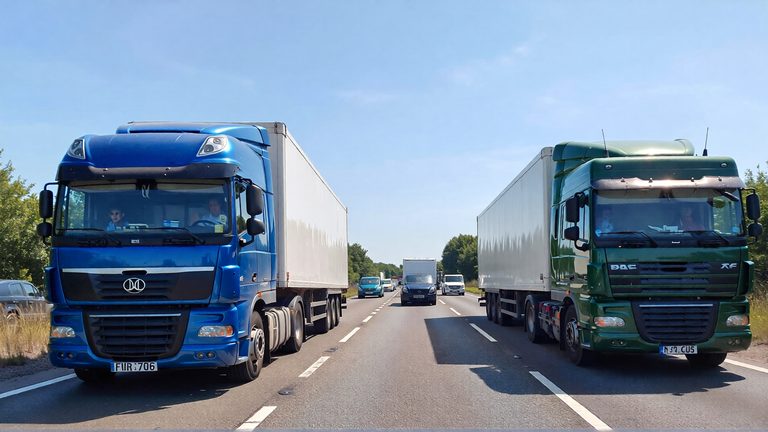
A two-vehicle crash on westbound State Route 4 near Pacheco in Contra Costa County left at least one person dead on Thursday, November 5, 2026. The crash was reported at around 4:49 p.m., just east of the Interstate 680 interchange, during the start of the evening commute.
The California Highway Patrol, local fire crews, and paramedics responded to the scene. At least one person died at the scene. The identity of the deceased has not been released, and the CHP has not announced what caused the collision or whether other people were hurt. Details may change as the investigation continues and the Contra Costa County Sheriff-Coroner’s Division completes its notification process.
Why This Stretch of Highway Demands Constant Attention
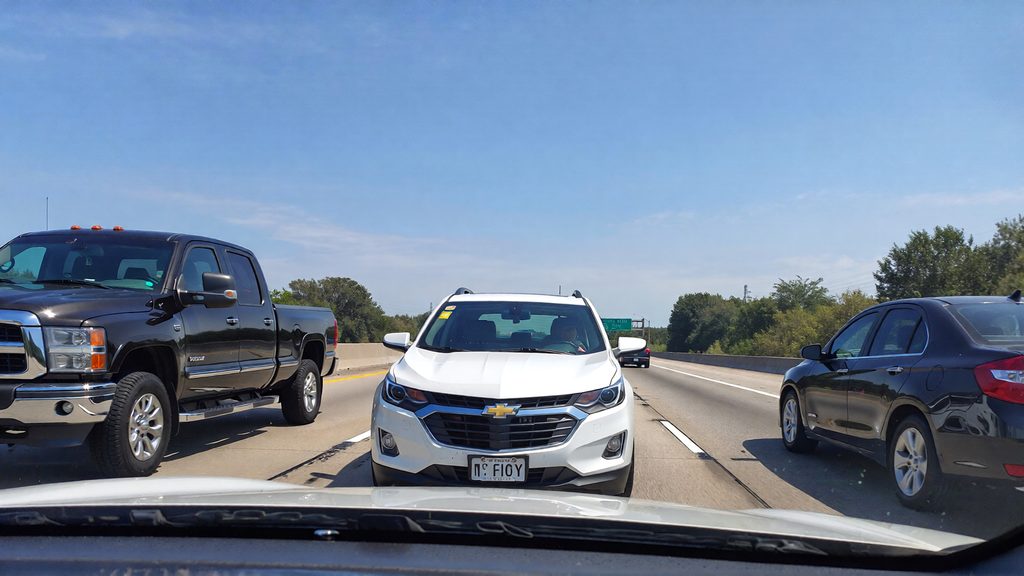
State Route 4 carries a heavy mix of commuters, delivery vehicles, and commercial trucks through central Contra Costa County. Near the I-680 interchange, drivers are merging, changing lanes, and adjusting their speed over short distances, often in stop-and-go conditions. Late afternoon adds fatigue, glare, and congestion as people head home.
In a crash involving two vehicles, investigators typically look at speed, following distance, lane position, and whether either driver was distracted or impaired. They also examine the roadway itself, including lane markings, signage, and visibility. Each of these factors can shape who bears legal responsibility.
Families Facing a Sudden Loss
When someone leaves for work or heads home and never arrives, the shock is profound. In the first days, families are asked to make decisions about funeral arrangements, finances, and the future while grieving. Many also feel pressure to speak with insurance adjusters who call quickly and sound sympathetic.
Those early conversations deserve caution. An adjuster’s goal is to resolve the claim for as little as possible, and a recorded statement given in the first few days, before the facts are known, can be used to limit what a family later recovers.
Andy Gillin, Managing Partner at GJEL Accident Attorneys, says, “No family should have to carry the weight of a sudden loss and a confusing legal process at the same time. Our role is to take the legal burden off their shoulders so they can focus on grieving and healing, while we work to find out what happened and hold the responsible parties accountable.”
Understanding Liability Under California Law
California Civil Code §1714 establishes that every person is responsible for injuries caused by their lack of ordinary care or skill in managing their property or person. In a roadway collision, that principle is applied through the Vehicle Code, which sets standards for safe driving.
Examples include the basic speed law under Vehicle Code §22350, which prohibits driving faster than is reasonable for conditions, and Vehicle Code §21703, which prohibits following another vehicle more closely than is reasonable and prudent.
California follows a pure comparative fault system. A person who bears some responsibility for a crash can still recover compensation, though the award is reduced by their percentage of fault. For that reason, preserving evidence early matters. Vehicle data, dashcam footage, surveillance video from nearby businesses, and witness accounts can disappear quickly.
If a dangerous roadway condition contributed to the crash, such as a design defect, a failure to maintain signage, or an unaddressed hazard, a claim against a public entity may be possible under Government Code §835. Claims against government agencies carry much shorter notice deadlines than ordinary injury claims. In many cases, a written claim must be presented within six months of the incident, so acting early protects a family’s options.
Wrongful Death and Survival Actions in California
When a person dies because of someone else’s negligence, California law provides two distinct avenues for recovery. A wrongful death action under Code of Civil Procedure §377.60 allows certain surviving family members to seek compensation for their own losses.
Eligible plaintiffs include a spouse, domestic partner, children, and others who would inherit under California’s intestacy rules. Those losses can include the financial support the person would have provided, the loss of household services, and the loss of love, companionship, comfort, and guidance.
A survival action under Code of Civil Procedure §377.30 is different. It allows the deceased person’s estate to pursue the claims that the person could have brought had they lived, including medical expenses and lost income between the time of injury and death, and any pain and suffering the person experienced.
Under Code of Civil Procedure §335.1, the statute of limitations for both types of claims is generally two years from the date of death. Missing that deadline typically ends the right to seek compensation, which is why families should not wait to get legal guidance.
How Settlement Value Is Evaluated
No two cases are alike, but attorneys and insurers commonly use two methods to estimate the value of non-economic damages. The multiplier method takes documented economic losses, such as medical bills, funeral costs, and lost earnings, and multiplies them by a factor that increases with the severity of the harm and the strength of the liability evidence.
The per diem method assigns a daily dollar amount to the suffering endured and multiplies it by the number of days the suffering lasted or is expected to last.
In wrongful death cases, the long-term economic picture matters a great deal. A person’s age, career trajectory, benefits, and the number of people who depend on them all affect the final calculation. A careful evaluation accounts for losses a family will feel for decades, not just the bills in front of them today.
Wrongful Death Settlement Calculators: Why They Matter When Estimating a Claim’s Value
A wrongful death settlement calculator is an educational tool that helps families estimate the value of a claim following a loss caused by someone else’s negligence. Most calculators work from the same building blocks that attorneys and insurers use.
Economic damages come first: funeral and burial costs, medical expenses before death, and the income, benefits, and household services the person would have provided over the rest of their working life. Non-economic damages follow, including the loss of love, companionship, comfort, and guidance that survivors under California Code of Civil Procedure §377.60 may seek.
Many calculators apply a multiplier to the economic total, with the number rising as the severity of the loss and the strength of the liability evidence increase. Others use a per diem approach that assigns a daily value to suffering and multiplies it across a period of time.
Entering a person’s age, earnings, number of dependents, and expected work life gives a family a clearer sense of the scale of what has been lost, at a time when many feel overwhelmed and unsure what a claim could involve.
The importance of these calculators lies in the perspective they provide and in their limitations. A calculator can help a family see that a fair valuation looks beyond immediate bills to losses that will be felt for decades, and it can help them recognize a lowball offer from an insurance adjuster who hopes to resolve the claim quickly.
However, it cannot account for everything that shapes a real case. California’s pure comparative fault rule can reduce an award by the percentage of fault assigned to the deceased; available insurance coverage may cap what is collectible; and survival action damages under Code of Civil Procedure §377.30 are calculated separately from the family’s own wrongful death losses.
For these reasons, a calculator should be treated as a starting point for understanding, not a promise of any particular result. An experienced wrongful death attorney can take those estimates, test them against the evidence, and pursue the full value of the claim. GJEL Accident Attorneys offers free, confidential consultations, and we work on a contingency fee basis, so families pay nothing unless we recover compensation.
Get Help From a Firm That Has Done This for Over 40 Years
“I am so sorry for what you and your family are going through. After a serious crash, the pain, the medical bills, and the uncertainty can feel overwhelming, and the insurance company’s phone calls only add to the stress. Please get the medical care you need first, and be careful about giving a recorded statement or accepting a quick settlement before you understand the full extent of your injuries. California law gives you a limited time to act, and evidence like vehicle data and surveillance footage can disappear quickly. You do not have to face this alone.” -Andy Gillin, Managing Partner, GJEL Accident Attorneys
If you lost a loved one in the State Route 4 collision, or in any crash in Contra Costa County, you do not have to figure out the next steps alone. GJEL Accident Attorneys has more than 40 years of experience and has recovered over $950 million for injured Californians and grieving families.
We work on a contingency fee basis, which means you pay nothing unless we recover compensation for you. Call us anytime at 1-855-508-9565 or visit gjel.com for a free, confidential consultation. We will listen, explain your options, and handle the details while you focus on your family.
Local Resources and Agencies That Can Help
California Highway Patrol, Contra Costa Area Office
The CHP Contra Costa Area Office is the primary investigating agency for crashes on State Route 4 and handles collision investigations in this part of the county. The office is located at 5001 Blum Road, Martinez, CA 94553, and can be reached at (925) 646-4980 and is open Monday through Friday from 8:00 a.m. to 5:00 p.m. Anyone who witnessed the November 5 collision or has information about the events leading up to it can also email 320Investigations@chp.ca.gov. Families can ask about the status of the investigation and how to request the official traffic collision report. Website: https://www.chp.ca.gov/find-an-office/golden-gate-division/320-contra-costa/
Contra Costa County Sheriff-Coroner’s Division
The Coroner’s Division determines the cause and manner of death and handles the formal identification and notification of next of kin. It is located at 1960 Muir Road, Martinez, CA 94553, and can be reached at (925) 313-2850. Families seeking information about a loved one or the release of remains should contact this office directly. Website: https://cocosheriff.org/bureaus/support-services/coroner-s-division
Contra Costa County Office of the Sheriff
The Sheriff’s Office headquarters is at 651 Pine Street, Martinez, CA 94553. For non-emergency matters, Sheriff’s dispatch can be reached at (925) 646-2441. In an emergency, always call 911. Website: https://cocosheriff.org
Contra Costa County District Attorney’s Office, Victim Witness Assistance Program
The Victim Witness Assistance Program offers advocacy and support to families affected by serious incidents, including help understanding how the legal system works and referrals to community agencies and counseling. The program has bilingual staff and can be reached in Martinez at (925) 957-8650, Monday through Friday, 9:00 a.m. to 5:00 p.m. The District Attorney’s main office can be reached at (925) 957-2200. Website: https://www.contracosta.ca.gov/10029/Victims-Rights-Resources
Caltrans District 4, Oakland
Caltrans maintains State Route 4 and is the agency responsible for roadway design, signage, striping, and maintenance. Families who believe a roadway condition may have contributed to the crash can contact Caltrans District 4 at 111 Grand Avenue, Oakland, CA 94612, or by phone at (510) 286-4444. The mailing address is P.O. Box 23660, Oakland, CA 94623-0660. Because claims involving public entities carry short-notice deadlines, families should speak with an attorney before sending any written claim. Website: https://dot.ca.gov/caltrans-near-me/district-4/d4-programs/d4-public-affairs
Caltrans QuickMap and 511 Traffic Information
Caltrans QuickMap provides real-time information on lane closures, collisions, and roadwork, helping drivers avoid affected areas as investigations and cleanup continue. The 511 Bay Area service provides traffic and transit updates across the region. Websites: https://quickmap.dot.ca.gov and https://511.org
Contra Costa Transportation Authority and 511 Contra Costa
The Contra Costa Transportation Authority plans and funds transportation improvements throughout the county and serves as its Congestion Management Agency. Residents who want to raise safety concerns about highway corridors or participate in transportation planning can reach the Authority at (925) 256-4720. The 511 Contra Costa program provides commute and mobility resources and can be reached at (925) 969-0841 or hello@511contracosta.org. Websites: https://ccta.net and https://511.ccta.ca.gov
California Victim Compensation Board
If a collision involved criminal conduct, such as DUI or a hit-and-run, surviving family members may be eligible for help with certain expenses, including funeral and burial costs, counseling, and loss of support for dependents. The Board can be reached at 1-800-777-9229 or info@victims.ca.gov, and a local Victim Witness advocate can help families complete the application. Eligibility depends on the circumstances of the case, so families should ask an advocate whether the program applies. Websites: https://victims.ca.gov and https://online.victims.ca.gov