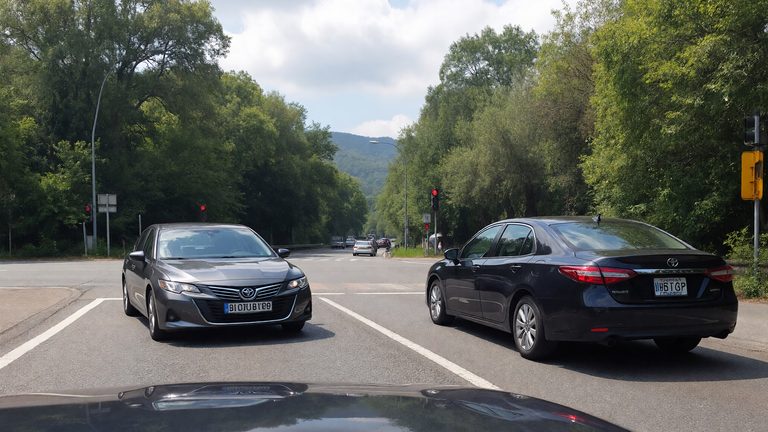
A pedestrian was seriously injured Friday morning, Nov. 13, in a collision involving a silver Mercedes at Franklin Boulevard and 47th Avenue in the Lemon Hill area of South Sacramento. The crash happened around 11:05 a.m., when the pedestrian was reportedly crossing the street and was struck by the vehicle.
The pedestrian’s identity, current condition, and the exact circumstances leading up to the crash have not been made public. Investigators have not announced whether the driver remained at the scene, whether a crosswalk or signal played a role, or whether impairment, distraction, or speed may have contributed. Our thoughts are with the injured person and their loved ones as they face what is likely to be a difficult recovery.
Why Franklin Boulevard and 47th Avenue Demand Caution
Franklin Boulevard is a busy corridor that carries a steady mix of commuters, delivery vehicles, and local traffic through South Sacramento neighborhoods.
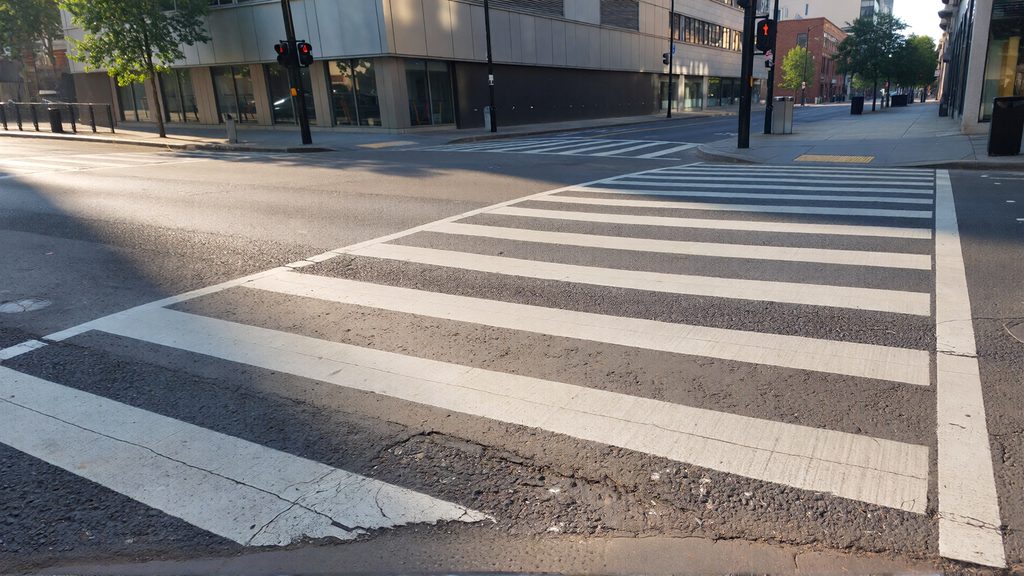
Where it meets 47th Avenue, drivers and pedestrians share a wide, multi-lane intersection. Late-morning hours may seem safer than rush hour or nighttime, but pedestrians crossing wide, multilane roads are exposed for longer, and a distracted or speeding driver can leave very little time to react.
Pedestrians have no protection when a vehicle strikes them. Even at moderate speeds, a collision with a car or SUV can cause fractures, traumatic brain injuries, spinal cord damage, and internal bleeding. Injuries like these often require emergency surgery, long hospital stays, and months or years of rehabilitation.
California Law and Pedestrian Right-of-Way
California law places a significant duty of care on drivers. Under Civil Code §1714, every person is responsible for injuries caused by a failure to use ordinary care. For drivers, that includes watching for pedestrians, controlling speed, and yielding when required.
Vehicle Code §21950 requires drivers to yield the right-of-way to pedestrians crossing in a marked crosswalk or an unmarked crosswalk at an intersection. Pedestrians have responsibilities too. Vehicle Code §21954 addresses the duty of pedestrians who cross outside a crosswalk, but it also makes clear that drivers must still exercise due care for the safety of anyone on the road.
Fault is rarely all or nothing. California follows a pure comparative fault system, meaning an injured person can still recover damages even if they are partially at fault. Their recovery is reduced by their percentage of fault. If a jury found a pedestrian 20 percent responsible for a crash, for example, their damages would be reduced by 20 percent. This is why a careful investigation of the facts matters so much.
Evidence That Can Make or Break a Pedestrian Injury Claim
The hours and days after a crash are critical. Surveillance footage from nearby businesses is often overwritten within days. Traffic camera footage, dashcam video, and 911 recordings can be lost if no one requests them promptly. Witnesses move on, memories fade, and physical evidence at the scene, including skid marks, vehicle debris, and signal timing, can change or disappear.
Medical records are equally important. They document the nature and severity of the injuries and connect them directly to the collision. Photographs of the scene, the vehicle, and visible injuries help paint a full picture of what happened. Anyone injured as a pedestrian should seek medical care right away and avoid giving a recorded statement to an insurance company until they understand their rights.
The strength of a pedestrian injury claim often depends on evidence that is gathered in the first days after the crash, before it disappears. Surveillance footage from nearby businesses, homes, and transit vehicles is frequently overwritten within days or weeks, and traffic camera footage, dashcam video, and 911 recordings can be lost if no one requests them in time.
Photographs of the scene, including the crosswalk markings, signal timing, lighting, sightlines, skid marks, and vehicle debris, help show how the collision happened, while images of the vehicle’s damage can help reconstruct the point of impact and the speed at which it was traveling.
Witness statements carry real weight, especially when provided by people with no connection to either side, so names and contact information should be collected before bystanders leave the scene. The official collision report prepared by responding officers can document the narrative, citations, and statements from the driver, though it is not the final word on fault and may contain errors worth challenging.
Medical records are just as important because they establish the nature and severity of the injuries and directly link them to the crash. Gaps in treatment, delays in seeking care, or inconsistencies in what a person tells providers can be used by insurers to argue that the injuries were less serious or came from another cause.
Because California applies pure comparative fault, the other side will often look for any evidence that the pedestrian shares responsibility, such as distraction, crossing outside a crosswalk, or crossing against a signal.
A prompt, thorough investigation, including a preservation letter demanding that the driver, employer, and insurer retain key records and data, can protect a claim against these arguments and provide the injured person with a stronger foundation for the compensation they deserve.
What Compensation May Be Available
A pedestrian injured by a negligent driver may be entitled to compensation for medical expenses, future medical care, lost income, reduced earning capacity, and pain and suffering. When a victim cannot return to work or daily activities as before, these losses can be substantial.
Attorneys and insurers often estimate non-economic damages using one of two approaches. The multiplier method takes the total of the medical bills and multiplies it by a number that reflects the severity and permanence of the injury, usually somewhere between 1.5 and 5. The per diem method assigns a daily dollar value to pain and suffering and multiplies it by the number of days a person is expected to suffer.
As a purely hypothetical illustration, $100,000 in medical expenses multiplied by 3 would suggest $300,000 in non-economic damages, though every case turns on its own facts, and these methods are tools for evaluating a claim, not guarantees of any outcome.
Catastrophic injuries often justify a more comprehensive analysis. Life care planners, economists, and medical experts may be needed to project the cost of lifelong care and the full impact on a person’s earning capacity.
Time Limits for Filing a Claim
California law sets strict deadlines. Under Code of Civil Procedure §335.1, most personal injury lawsuits must be filed within two years of the date of injury. If a government entity may share responsibility, for example, due to a dangerous roadway design or a malfunctioning signal, Government Code §835 governs liability for dangerous conditions on public property, and much shorter notice deadlines may apply.
Missing a deadline can permanently bar a claim, which is why speaking with an attorney early is so important. If a pedestrian does not survive their injuries, surviving family members may have the right to pursue a wrongful death claim under Code of Civil Procedure §377.60, and the estate may pursue a survival action under §377.30 for losses the person suffered before death.
California law sets firm deadlines for pedestrian injury claims, and missing one can end a case before it begins. Under Code of Civil Procedure §335.1, most personal injury lawsuits must be filed within two years of the date of the collision, and a court will generally dismiss a case filed after that window closes, no matter how serious the injuries or how clear the driver’s fault.
Different rules apply when a public entity may share responsibility, such as when a poorly timed signal, a faded crosswalk, inadequate lighting, or a defective roadway design contributed to the crash. Claims against a city, county, or state agency fall under the Government Claims Act.
This generally requires that a written claim be presented within six months of the injury under Government Code §911.2, well before the two-year lawsuit deadline. If that claim is denied, the injured person typically has only six months from the date the denial notice is mailed to file suit. Late-claim relief is sometimes available, but it is limited and never guaranteed.
When a pedestrian dies from their injuries, family members generally have two years from the date of death to bring a wrongful death claim under Code of Civil Procedure §377.60. Certain circumstances, such as injuries to a minor, can extend or pause these deadlines, but they are narrow exceptions that should never be relied on without legal guidance.
Insurance policies also contain their own notice and reporting requirements, which means waiting to act can complicate even a straightforward claim. Because evidence fades and deadlines vary depending on who may be responsible, speaking with an attorney as soon as possible after a pedestrian crash is the best way to protect the right to recover compensation.
Catastrophic Injury Settlement Calculators: Why They Matter in Estimating Case Value
Catastrophic injury settlement calculators are online tools that give injured people a rough estimate of what their claim may be worth, and they can be a helpful starting point for understanding how compensation is built. Most calculators rely on the same two approaches that attorneys and insurance adjusters use.
The multiplier method adds up economic losses such as medical bills and lost wages, then multiplies the medical costs by a number, often between 1.5 and 5, that reflects the severity and permanence of the injury. The per diem method assigns a daily dollar amount to pain and suffering and multiplies it by the number of days the person is expected to endure the injury.
In a catastrophic case involving a traumatic brain injury, spinal cord damage, amputation, or severe burns, these formulas can show how quickly the numbers grow once future care, lost earning capacity, and permanent impairment are considered. A calculator can also help a family see why an early insurance offer that only covers current medical bills may fall far short of the true cost of a lifetime of care.
Even so, a calculator is only as accurate as the information entered into it, and it cannot account for the factors that often drive the final value of a case, including the strength of the liability evidence, the percentage of fault assigned under California’s pure comparative fault rule, available insurance policy limits, and the opinions of life care planners, economists, and medical experts who project long-term costs.
For that reason, the figure a calculator produces should be treated as an educational estimate, not a prediction or promise of any outcome, and anyone facing a catastrophic injury should have an experienced attorney evaluate the full picture before accepting any settlement offer. Call us now at 1-855-508-9565 to speak with the experts.
Our Commitment: No Fees Unless We Win Your Case
“A serious pedestrian crash changes everything in a matter of seconds, and we know how overwhelming that can feel for the injured person and for the family waiting at the hospital. Please do not let an insurance company set the pace of your recovery. Get the medical care you need, write down what you remember, and keep every record, because evidence can disappear quickly and California’s filing deadlines are strict. You should not have to carry the legal burden while you are focused on healing. If you or someone you love was hurt, we are here to listen, explain your options, and fight for the compensation you deserve, and you pay nothing unless we win,” –Andy Gillin, Managing Partner at GJEL Accident Attorneys
If you or someone you love was injured in a pedestrian collision in South Sacramento or anywhere in California, GJEL Accident Attorneys is here to help. With more than 40 years of experience and over $950 million recovered for clients, our team knows how to investigate these cases, preserve critical evidence, and hold negligent drivers accountable.
We handle pedestrian injury cases on a contingency fee basis, which means you pay no attorney fees unless we recover compensation for you. Call 1-855-508-9565 or visit our San Francisco office for a free, confidential consultation.
Local Resources for Sacramento Pedestrian Accident Victims
The resources below cover both possibilities, along with the agencies that can help with collision reports, roadway safety concerns, and filing procedures:
Law Enforcement and Collision Reports
The Sacramento Police Department handles traffic collisions on city streets. Its main website is https://www.cityofsacramento.gov/police. Injured people and their representatives can find instructions for requesting a copy of a police report, including motor vehicle accident reports available online or by mail, at https://www.cityofsacramento.gov/police/police-services/request-a-police-report.
Information on how collisions are reported within the city is available at https://www.cityofsacramento.gov/police/traffic-enforcement/collisions, and the department’s guidance on when a vehicle accident report is taken and when a separate DMV report may be required is at https://www.cityofsacramento.gov/police/police-services/file-a-police-report/report-vehicle-accidents.
If the collision occurred in an unincorporated area, the Sacramento County Sheriff’s Office may be the responding agency. Its website is https://www.sacsheriff.com. The California Highway Patrol also responds to some collisions in the Sacramento area, and its collision report request page, which explains how to submit a CHP 190 form, is at https://www.chp.ca.gov/traffic/request-a-collision-report.
Traffic Safety and Roadway Concerns
The City of Sacramento Department of Public Works oversees transportation safety, including the city’s Vision Zero program, which aims to eliminate traffic deaths and serious injuries. Residents can learn about the program and report a transportation safety concern at https://www.cityofsacramento.gov/public-works/mobility-and-sustainability/transportation-planning/vision-zero. Information on the city’s transportation safety initiatives and signal-related programs is also available at https://www.cityofsacramento.gov/public-works/transportation/vision_zero_transportation. Reporting dangerous crossings, faded crosswalks, poor lighting, or malfunctioning signals can help the city identify problem areas, and it can also create an official record that may be relevant to a claim.
For state routes and freeway-related concerns in the region, the California Department of Transportation maintains information at https://dot.ca.gov.
Court and DMV Information
The California Department of Motor Vehicles provides information on the SR-1 Traffic Accident Report form and driver and vehicle record questions at https://www.dmv.ca.gov. The Superior Court of California, County of Sacramento provides information on civil filing procedures and court locations at https://www.saccourt.ca.gov.