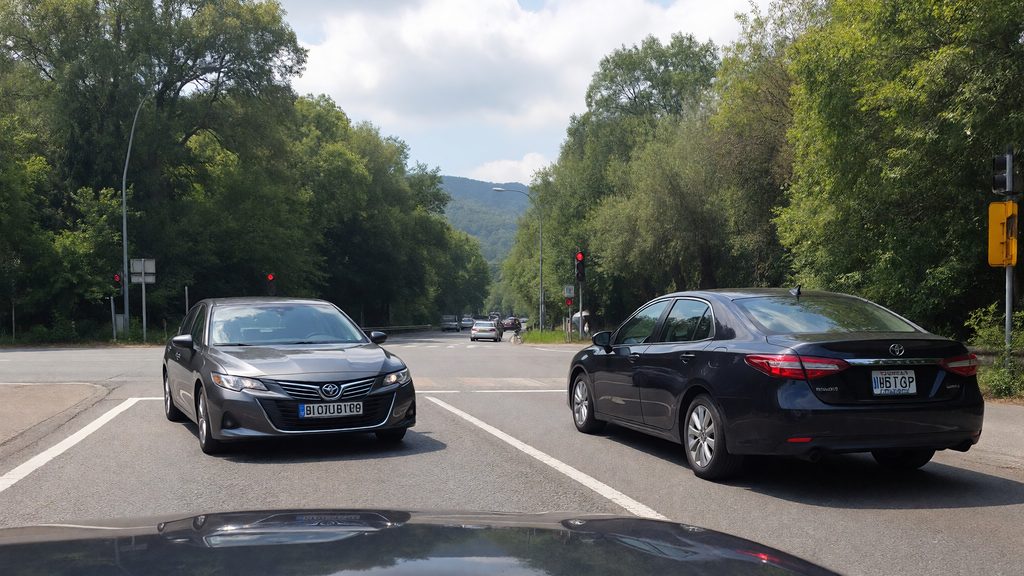
Early Friday morning, a violent two-vehicle crash occurred on Santa Fe Avenue near Avenue Two in the City of Atwater, sending people to the hospital with major injuries. Merced County authorities received the report on November 13th at approximately 6:02 a.m. Two black vehicles were involved. As of this writing, the identities of those hurt, the extent of their injuries, and the cause of the crash have not been released.
What We Know About the Two-Vehicle Crash
The crash happened during the early commute window, when many Merced County residents are heading to work, school, or Highway 99. Early reports describe a two-vehicle collision with injuries serious enough to be classified as major. Official crash reports usually take time to complete, so details can change as investigators interview drivers and witnesses, review the physical evidence, and finalize their findings.
Santa Fe Avenue is a well-traveled route through Atwater and connects residents to Avenue Two, Highway 99, and the surrounding Merced County communities. Because the crash occurred on a Friday morning, the roadway was likely carrying commuters and early-shift workers.
Investigators generally begin by documenting the final resting positions of the vehicles, the damage to each one, and any debris or skid marks left on the pavement. They also look at which direction each driver was traveling, the posted speed limit, and whether traffic signals or signage controlled the intersection.
Those details, along with statements from the drivers and any witnesses, will shape the official findings. Until a report is complete and released, it is too early to say what caused this collision or whether any driver may be held responsible, and families should be cautious about relying on early accounts that may change.
Why Early Morning Crashes Can Be So Dangerous
Dim light, low sun angles, drowsy drivers, and commuters rushing to get where they are going all raise the risk of a serious wreck. Intersections add another layer of danger because vehicles cross paths at different speeds and from different directions.
When two vehicles meet at an intersection or along a busy arterial road, the forces involved can cause fractures, head and spinal trauma, internal bleeding, and other life-altering injuries.
Injuries labeled “major” at the scene often turn out to be the beginning of a long recovery. Emergency surgery, extended hospital stays, rehabilitation, and time away from work can follow, and the financial strain on a family arrives just as the emotional strain peaks.
Determining Fault in a California Car Accident
California follows a pure comparative fault system. Under this doctrine, each party can be assigned a percentage of responsibility, and an injured person can still recover compensation even if they were partly to blame.
Their recovery is reduced by their share of fault. If a jury finds an injured driver 20 percent responsible for a crash, for example, their damages are reduced by 20 percent.
Civil Code §1714 establishes the general duty of every person to use ordinary care and skill to avoid injuring others. Drivers who speed, run red lights or stop signs, make unsafe turns, drive distracted, or drive impaired can be held responsible when their conduct causes harm.
Evidence that helps establish fault often includes the CHP crash report, photographs of the scene, vehicle damage patterns, traffic camera or nearby business video, event data from the vehicles, and witness statements. That evidence can disappear quickly, which is why acting early matters.
Time Limits That Apply to Injury Claims in California
Under Code of Civil Procedure §335.1, most personal injury lawsuits in California must be filed within two years of the date of injury. When a loved one is lost, wrongful death claims under Code of Civil Procedure §377.60 follow their own rules about who may bring the action, and survival actions under §377.30 allow a decedent’s claims to continue through their estate.
Different deadlines apply if a government entity may share responsibility, such as when a dangerous roadway condition contributed to a crash. Under Government Code §835, public entities can be liable for dangerous conditions on public property, but claims against them generally require written notice well before the standard two-year window. Missing that deadline can end a claim before it starts.
California drivers also have a reporting duty. Under Vehicle Code §16000, a driver involved in a crash that causes injury, death, or significant property damage generally must report it to the DMV within 10 days, whether or not police prepared a report.
How Compensation Is Calculated After a Serious Crash
Injury victims in California may pursue economic damages, such as medical bills, future treatment costs, lost wages, and reduced earning capacity, as well as non-economic damages for pain and suffering and loss of enjoyment of life. Attorneys and insurers commonly use two methods to estimate the value of non-economic losses.
The multiplier method sums the documented medical expenses and multiplies the total by a factor that reflects the severity and permanence of the injuries. More serious, longer-lasting injuries support a higher multiplier. The per diem method assigns a daily dollar value to the pain and limitations a person endures and multiplies it by the number of days from injury through the end of recovery.
Neither method is a formula that guarantees a result. Both are tools for organizing a claim, and the final value depends on the evidence, the available insurance coverage, and the degree of fault assigned to each party.
Coverage matters too. California’s minimum liability limits are 30,000 dollars per person, 60,000 dollars per accident, and 15,000 dollars for property damage. A major injury can quickly exceed those limits, which is why an attorney will also review underinsured motorist coverage and any other applicable insurance.
Catastrophic Injury Settlement Calculators and Why They Matter
A catastrophic injury settlement calculator is an educational tool that helps injured people and their families estimate what a serious claim may be worth by organizing the major categories of loss into one picture. Most calculators begin with economic damages, including emergency care, surgeries, hospital stays, rehabilitation, assistive equipment, home modifications, and lost income.
They then apply either the multiplier method, which multiplies documented medical expenses by a factor reflecting the severity and permanence of the injury, or the per diem method, which assigns a daily value to pain and limitation and multiplies it over the expected recovery period.
This matters most in catastrophic cases because the costs reach far beyond the first hospital bill. Spinal cord damage, traumatic brain injuries, amputations, and severe burns can require lifelong medical care and permanently reduce a person’s ability to work, and a claim that accounts only for current expenses can fall far short of what the family will actually need.
A calculator brings those future costs into focus early, helping families set realistic expectations and recognize a lowball insurance offer when it arrives. It also reminds claimants that California’s pure comparative fault rule can reduce a recovery by the percentage of fault assigned to the injured person, and that available insurance limits can cap what is collectible.
Still, a calculator produces an estimate, not a guarantee. The true value of a case depends on the medical evidence, expert opinions on future care and earning capacity, the strength of the liability proof, and the coverage in play, which is why a calculator works best as a starting point for a conversation with an experienced California injury attorney.
Speak With a California Car Accident Lawyer Today
“If you or someone you love was hurt in this crash, please know that you do not have to figure out what comes next on your own. Right now, your only job is to focus on your health and recovery. Get the medical care you need, keep every record and bill, and be careful about giving statements to an insurance company before you understand your rights. In California, strict deadlines apply, and evidence can disappear quickly, so it helps to speak with an attorney early. Our team is here to listen, answer your questions, and fight for the compensation you deserve, and you pay nothing unless we win.” – Andy Gillin, Managing Partner, GJEL Accident Attorneys
If you or someone you love was injured in this collision or any other crash in Merced County, GJEL Accident Attorneys is ready to help. With more than 40 years of experience and over $950 million recovered for clients, our team understands what it takes to stand up to insurance companies and pursue the full compensation you deserve. We work on a contingency fee basis, which means you pay nothing unless we win your case. Call 1-855-508-9565 or visit our Fresno office for a free consultation.
Helpful Resources and Websites for Those Affected by the Crash
The California Highway Patrol Merced Area office covers the unincorporated areas of eastern Merced County and patrols a stretch of State Route 99. Its page lists office hours, contact details, and information on obtaining crash reports: https://www.chp.ca.gov/find-an-office/central-division/460-merced/. Authorized parties, such as drivers, injured people, and their attorneys, can request a copy of an official crash report through the CHP online portal at https://crashes.chp.ca.gov. For live traffic incident information across the region, the CHP Traffic Incident Information Page is available at https://cad.chp.ca.gov.
The Atwater Police Department is the local law enforcement agency for the City of Atwater. Its website provides access to the Records Bureau, which handles requests for local reports and information: https://www.atwater.org/departments/police/. The Merced County Sheriff’s Office serves unincorporated areas of the county and can be a resource when a crash or related incident occurs outside city limits: https://www.countyofmerced.com/2516/Sheriffs-Office.
Caltrans District 10 oversees state highways in Merced County, including State Route 99. Its page includes contact information, current projects, and details on how to submit claims to the district: https://dot.ca.gov/caltrans-near-me/district-10/district-10-popular-links/about-caltrans-district-10. Drivers can also check current road conditions, closures, and incidents on the Caltrans QuickMap at https://quickmap.dot.ca.gov.
The Merced County Department of Public Works, Road Division, maintains county roads and accepts online road service requests for potholes and other hazards: https://www.countyofmerced.com/8. If poor road conditions, missing signage, or a malfunctioning signal may have contributed to a collision, documenting and reporting the hazard can be an important step.
Anyone who needs immediate or follow-up medical care can turn to Mercy Medical Center Merced, which operates a 24-hour emergency department in Merced: https://locations.dignityhealth.org/emergency-room-mercy-medical-center-merced.
For court matters, including civil filings, the Superior Court of California, County of Merced, provides forms, court locations, and case information at https://www.merced.courts.ca.gov. Drivers involved in a crash that caused injury, death, or significant property damage should also review reporting requirements with the California Department of Motor Vehicles at https://www.dmv.ca.gov. Finally, when a crash involves a crime such as a DUI, victims may be eligible for financial help with certain costs through the California Victim Compensation Board at https://victims.ca.gov.