A community in South Sacramento is grieving after a 15-year-old girl lost her life following a pedestrian accident near the intersection of Bruceville Road and Calvine Road. The Sacramento Police Department confirmed that officers responded to the scene on the evening of Friday, September 11, after receiving reports that a vehicle had struck a person in the roadway.
When officers arrived, they found the teenage girl down in the street. She was transported to a hospital for emergency treatment, but despite medical efforts, she succumbed to her injuries. Police confirmed the fatality after learning of her death over the following days, and her identity has not yet been released pending notification of her family.
What We Know About the Sacramento Pedestrian Collision
According to the Sacramento Police Department, the driver involved in the collision remained at the scene and cooperated with the ongoing investigation. Investigators have stated that driving under the influence does not appear to have been a factor in the crash, though the full circumstances that led to the collision remain under review.
The intersection of Bruceville and Calvine roads has drawn scrutiny in recent months as the site of multiple fatal incidents involving pedestrians, underscoring broader concerns about traffic safety in this part of South Sacramento. Anyone who witnessed the collision or who has information relevant to the investigation is asked to contact the Sacramento Police Department.
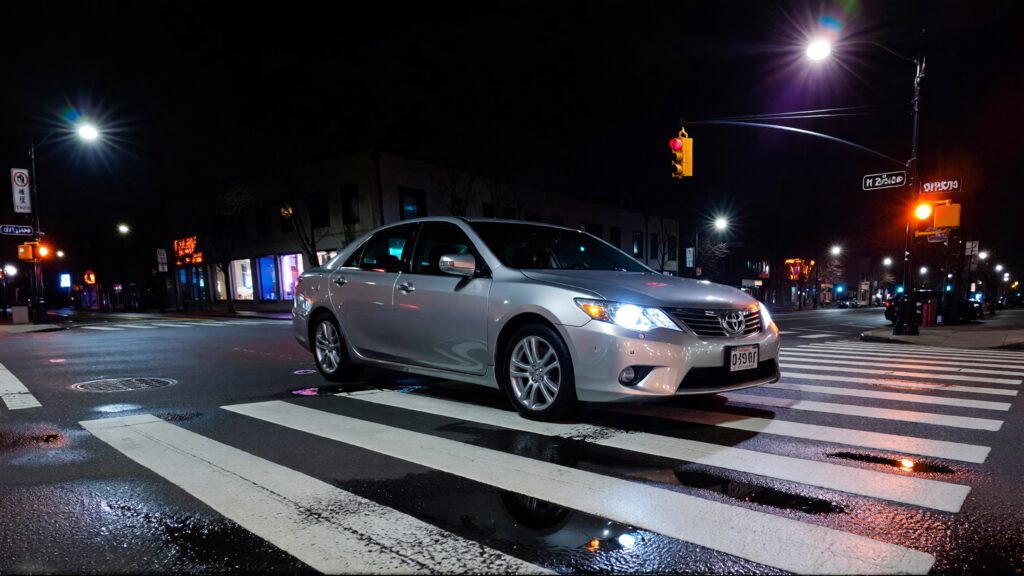
Investigators have not yet released a detailed account of how the collision unfolded, including whether the girl was in a marked crosswalk when she was struck, what the traffic and lighting conditions were like at that hour, or what speed the vehicle was traveling at. These details often prove critical in determining fault and can shape whether citations or further charges are filed against the driver.
Because the intersection has already seen a troubling pattern of pedestrian and vehicle fatalities over the past year, including a nearby train-related death and a nonfatal hit-and-run just months earlier, some residents and safety advocates have begun questioning whether existing crosswalk markings, signal timing, and street lighting along this stretch of road are adequate to protect pedestrians.
As the investigation continues, the Sacramento Police Department is expected to release additional findings, and any updates will likely shed further light on what safety measures, if any, could have prevented this tragedy.
The Danger Pedestrians Face on California Roadways
Tragedies like this one are a painful reminder that pedestrians, especially children and teenagers, face serious risks when sharing roadways with vehicles. Sacramento has repeatedly ranked among the more dangerous California cities for pedestrian safety, with intersections that combine higher speeds, limited lighting, and heavy traffic volume creating conditions where a single moment of inattention can prove fatal.
When a driver fails to yield, misjudges a crosswalk, or is distracted behind the wheel, the consequences for a pedestrian, who has no protection against the force of a vehicle, can be catastrophic or fatal. Families who lose a child in circumstances like these are often left not only with grief but with urgent questions about how and why the collision happened.
Teenagers face a particular set of risks when walking or crossing streets in busy corridors like South Sacramento. Growing evidence suggests that younger pedestrians are sometimes more vulnerable during evening and early nighttime hours, when visibility drops and drivers have less time to react to someone stepping into the roadway.
Wider arterial streets, like Bruceville Road and Calvine Road, are often designed to move vehicle traffic efficiently, which can mean longer crossing distances, fewer marked crosswalks, and traffic signals timed for cars rather than pedestrians. These design realities do not excuse a driver’s failure to exercise reasonable care, but they help explain why certain intersections see repeated pedestrian tragedies rather than isolated incidents.
For families and advocates, each fatality adds to a growing call for infrastructure improvements, including better lighting, more visible crosswalks, and reduced speed limits, that could help prevent the next preventable loss of life.
Legal Options for Families After a Fatal Pedestrian Accident
Under California law, families who lose a loved one in a pedestrian collision may have the right to pursue a wrongful death claim against the responsible party. California Code of Civil Procedure Section 377.60 allows specific surviving family members, including parents and siblings in certain circumstances, to bring a wrongful death action seeking compensation for the loss of their loved one.
A related survival action under CCP Section 377.30 allows the estate to recover damages the deceased could have claimed had they survived, such as pain and suffering experienced between the time of the collision and death. California Civil Code Section 1714 establishes the basic duty that every person owes to exercise reasonable care to avoid injuring others, a duty that extends directly to drivers operating vehicles around pedestrians.
Where a driver’s negligence, whether through speeding, failing to yield, distraction, or another violation of the California Vehicle Code, contributed to the collision, that breach of duty can form the basis of a civil claim separate from any criminal investigation. Families should also be aware of the statute of limitations, which generally gives two years from the date of death to file a wrongful death claim in California, making it important to preserve evidence and consult with an attorney promptly.
How Settlements Are Calculated in Wrongful Death Cases
When pursuing compensation in a wrongful death case, attorneys often rely on two primary methods to help value non-economic damages such as grief, loss of companionship, and emotional suffering. The multiplier method takes the total economic damages, including funeral and burial expenses or any medical costs incurred, and multiplies that figure by a number typically between 1.5 and 5, depending on the severity of the loss and the circumstances of the case.
The per diem method instead assigns a specific dollar value to each day the surviving family members are expected to endure the loss, then multiplies that daily figure across a projected timeframe. Because these methods produce different results depending on the facts of the case, an experienced wrongful death attorney will typically evaluate a case using both approaches.
This is to help ensure that a family is not shortchanged during settlement negotiations or at trial. Comparative fault principles may also come into play if there is any dispute over the pedestrian’s or driver’s conduct, since California follows a pure comparative negligence standard that allows for partial recovery even if the deceased is found partially at fault.
The Importance of Wrongful Death Settlement Calculators in Valuing a Claim
Wrongful death settlement calculators play an important role in helping families and their attorneys understand what a fair and just resolution might look like before entering negotiations with an insurance company or opposing counsel. Without a structured method for estimating damages, families can be at a disadvantage when insurers present a lowball offer, since insurance adjusters often rely on their own internal formulas designed to minimize payouts.
A settlement calculator brings transparency to the process by breaking down the claim into clear components: economic damages, such as funeral costs, medical expenses, and lost future financial support, and non-economic damages, such as the grief and loss of companionship the family will carry for years to come.
By applying the multiplier or per diem method to these figures, attorneys can present a well-reasoned, defensible number rather than an arbitrary estimate, strengthening their negotiating position and helping ensure the family is not shortchanged. Just as importantly, these calculators give grieving families a realistic benchmark early in the process.
This is so they can make informed decisions about whether to accept a settlement offer or continue pursuing their claim through litigation. In wrongful death cases, where the stakes are irreversible and the emotional toll is immense, having a clear, evidence-based starting point for valuing the claim is not just a legal convenience. It is an important safeguard that helps ensure a family receives the full measure of compensation permitted by law. Call us now at 1-855-508-9565 to speak with the experts.
Take Action Today: You Won’t Pay Unless We Win
“Losing someone unexpectedly, especially in a moment as senseless as a pedestrian collision, is one of the hardest things a family will ever face. If you or someone you love has been injured in an accident like this, please know that you don’t have to figure out the legal side of it alone. My team and I have spent decades helping Sacramento families get real answers and the compensation they need to move forward, and we treat every case with the same care we’d want for our own family. Reach out to us for a free consultation. There’s no cost and no obligation, just a chance for us to listen and help you understand your options.”— Andy Gillin, Managing Partner, GJEL Accident Attorneys
Losing a child in a pedestrian accident is one of the most devastating experiences a family can face, and navigating the legal process while grieving should not fall entirely on their shoulders. GJEL Accident Attorneys has recovered more than $950 million for injured victims and grieving families across California over more than 40 years of practice.
The firm handles wrongful death cases on a contingency fee basis, meaning families pay nothing unless a recovery is obtained. Anyone seeking guidance after this or a similar tragedy is encouraged to call 1-855-508-9565 or visit the San Francisco office for a free, confidential case evaluation.
Local Resources for Sacramento Families
Families affected by this collision, or anyone seeking more information on traffic safety and victim support in the Sacramento area, can turn to the following agencies and resources.
Sacramento Police Department
Website: cityofsacramento.gov/police
Non-Emergency Line: (916) 264-5471
The department’s website provides updates on ongoing investigations, access to the Community Crime Map, collision reports, and a dedicated Community and Victim Resources section for families affected by traffic incidents in the city.
California Highway Patrol, Valley Division
Website: chp.ca.gov/ValleyDivisionSite
Main Office Phone: (916) 731-6300
The CHP’s Valley Division oversees traffic safety across Sacramento and the surrounding region, including major highway corridors. Their site includes information on traffic collision reports, safety programs, and how to request an official report if CHP was involved in the investigation.
Sacramento County District Attorney’s Office, Victim/Witness Assistance Program
Website: sacda.org/victim-services/victim-witness-assistance-program
This program offers crisis intervention, short-term counseling, court accompaniment, and help applying for reimbursement through the California Victim Compensation Program (CalVCP), which can cover funeral, burial, and mental health counseling expenses for families of a deceased victim.
211 Sacramento
Website: 211sacramento.org
Phone: 2-1-1 or 1-916-498-1000
211 Sacramento connects residents with a wide range of community services, including grief counseling referrals, emergency assistance, and language support, available 24 hours a day, seven days a week.
988 Suicide and Crisis Lifeline
Website: 988lifeline.org
Phone or Text: 988
Available around the clock for anyone experiencing emotional distress or trauma following a sudden loss, this free and confidential service connects callers with trained crisis counselors.
California Victim Compensation Board (CalVCB)
Website: victims.ca.gov
This state agency helps eligible victims and their families recover certain out-of-pocket costs related to a violent crime or fatal collision, including funeral and burial expenses, when those costs are not covered elsewhere.