Just before midnight on Saturday, September 12, 2026, a two-vehicle crash on a rural stretch of Deer Valley Road in Antioch left two people dead and sent two others to the hospital. The crash, which occurred around 11:50 p.m. just west of Balfour Road, has drawn additional scrutiny after investigators discovered that one of the vehicles involved had been reported stolen in an unrelated case. As the investigation continues, the families of those killed and the surviving occupants of both vehicles are left grappling with the aftermath of a sudden, devastating loss.
What Happened on Deer Valley Road
According to the California Highway Patrol, the collision occurred on a rural stretch of Deer Valley Road on the outskirts of Antioch, an area known for its winding, poorly lit roads.
A witness told investigators that the Infiniti had been reversing in the roadway in the moments before the BMW struck it. The force of the impact sent both vehicles off the road and onto an embankment along the left shoulder. Two occupants of the Infiniti were pronounced dead at the scene, while a third was transported to a hospital for treatment.
The driver of the BMW also suffered injuries in the crash. Contra Costa County Sheriff’s deputies responded to assist CHP at the scene, and both lanes of Deer Valley Road were closed for an extended period while officers investigated and the coroner was notified. Two vehicles were towed as evidence, underscoring the seriousness with which authorities are treating the case.
The Stolen Vehicle Complicates the Investigation
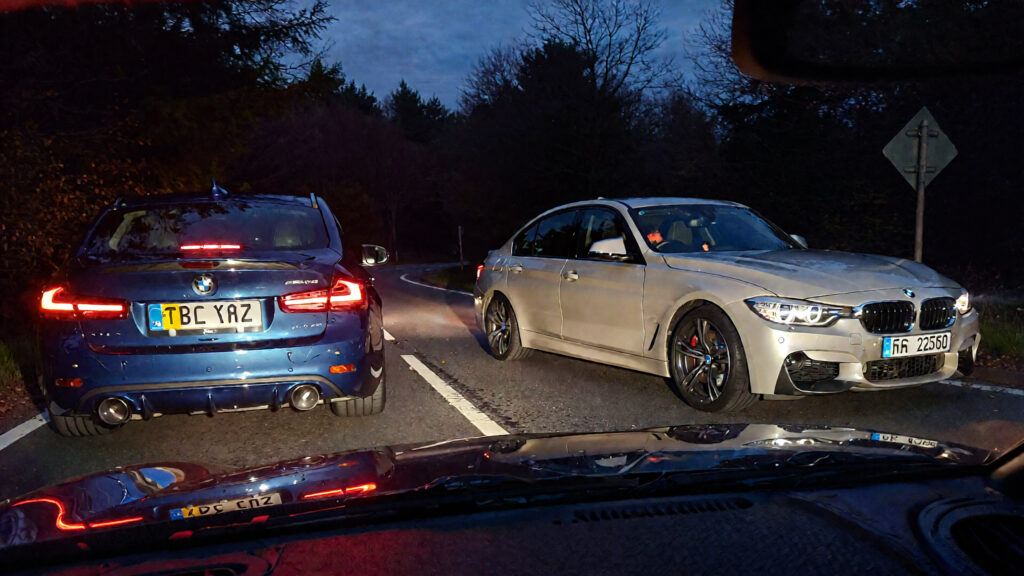
Investigators later determined that the BMW involved in the crash had been reported stolen and was wanted in connection with a separate felony case involving evading and reckless driving. The Antioch Police Department has confirmed, however, that the vehicle was not involved in any active pursuit at the time of this particular collision.
This distinction matters. While the stolen vehicle report raises questions about the BMW driver’s conduct leading up to that night, it does not, by itself, establish what happened in the moments before the impact on Deer Valley Road. The California Highway Patrol continues to investigate the crash independently and is asking anyone who witnessed the collision or who has dashcam or surveillance footage from the area to come forward.
Stolen vehicle cases often carry their own complicated evidentiary trail, including prior police reports, surveillance footage from the original theft, and records from the earlier evasion incident, all of which may need to be reviewed even though they did not directly cause this crash.
Attorneys representing the families or injured parties will likely seek the full record of the earlier felony case to confirm that, as the Antioch Police Department has stated, no pursuit was underway at the time of the collision on Deer Valley Road.
Establishing this clearly and early helps prevent the earlier incident from unfairly shaping the narrative around who was at fault in this particular crash and ensures that the investigation stays focused on the actual sequence of events between the BMW and the Infiniti that night.
Comparative Negligence Under California Law
California follows a pure comparative negligence system, codified under California Civil Code Section 1714. Under this doctrine, a person can still recover compensation for their injuries even if they are found partially at fault for an accident, though their recovery is reduced by their assigned percentage of fault.
This principle is especially relevant here. If the Infiniti was, in fact, reversing on an active roadway before the collision, that fact alone does not resolve the question of liability. Investigators must still examine the BMW’s speed, positioning, and reaction time, along with visibility conditions on that stretch of road, before any conclusions about fault can be drawn.
California Vehicle Code Section 22106 specifically prohibits backing a vehicle on a highway unless it can be done with reasonable safety, which is likely to be one of the central issues CHP examines as the investigation moves forward. Applying comparative negligence to a crash like this one requires a careful look at more than just which vehicle was moving in reverse.
Investigators and, later, attorneys will need to consider factors such as how long the Infiniti had been backing up before impact, whether its brake lights or reverse lights were functioning and visible, how fast the BMW was traveling on a rural roadway with limited lighting, and whether the driver of the BMW had any reasonable opportunity to see the Infiniti and avoid the collision.
Even a driver found to bear a smaller share of fault, whether the person operating the Infiniti or the BMW, can still recover damages under California’s pure comparative negligence rule, with any award reduced in proportion to their percentage of responsibility. This is why a full accident reconstruction, rather than a surface-level read of the witness account, is often necessary before fault can be fairly assigned in a crash with circumstances this unusual.
Untangling This Crash From the Stolen Vehicle Case
Because the BMW’s connection to a separate stolen-vehicle investigation has already added a layer of complexity to this case, it will likely be important for the affected families to establish precisely how this specific collision occurred, independent of that unrelated matter.
A vehicle’s registration status or its connection to another case does not automatically determine fault in a subsequent crash. A thorough, independent reconstruction of the collision, including witness statements, physical evidence at the scene, and any available video footage, will be critical to understanding what actually happened on Deer Valley Road that night.
This kind of untangling often requires attorneys to build a timeline based solely on physical evidence from the crash itself, such as skid marks, the final resting positions of both vehicles on the embankment, damage patterns consistent with the point of impact, and any available witness accounts of the moments immediately before the collision.
Relying on the CHP’s findings alone may not be enough, particularly if the report references the stolen vehicle status in a way that could unintentionally color how the crash is perceived by an insurance company or a court. Families and injured parties are often best served by having an independent investigation conducted early, before evidence such as dashcam footage is lost or overwritten, so that the facts of this specific crash can be evaluated on their own merits.
Wrongful Death and Personal Injury Claims Following This Crash
The families of the two people killed in this crash may have the right to pursue a wrongful death claim under California Code of Civil Procedure Sections 377.60 and 377.30. These claims allow surviving family members and, in some cases, the decedent’s estate to seek compensation for losses, including funeral and burial expenses, loss of financial support, and loss of companionship.
Separately, the surviving occupants of both vehicles, including the third occupant of the Infiniti and the driver of the BMW, may have the right to pursue personal injury claims for their own medical expenses, lost income, and pain and suffering. California Code of Civil Procedure Section 335.1 generally allows 2 years from the date of injury to file a personal injury or wrongful death lawsuit, though the specific facts of a case can affect that timeline, particularly when a criminal investigation or a stolen-vehicle case is involved.
For the families pursuing a wrongful death claim, California law allows recovery for both economic and non-economic losses, including the financial support the deceased would have provided, the value of household services they would have contributed, and the loss of their love, companionship, and guidance.
In a survival action under Code of Civil Procedure Section 377.30, the deceased’s estate may also recover for damages the person could have claimed had they survived, such as pain and suffering experienced between the crash and their death, along with any medical expenses incurred before they passed.
For the surviving occupants pursuing personal injury claims, compensation typically covers current and future medical treatment, lost wages during recovery, and the physical pain and emotional toll of the crash itself. Because multiple parties from both vehicles may have claims arising from the same collision, and because fault may ultimately be shared, these cases often benefit from an attorney who can help sort out how each party’s damages and degree of responsibility fit together.
How Compensation Is Calculated in Fatal and Injury Crashes
When attorneys evaluate the value of a wrongful death or personal injury claim, they often rely on one of two general methods. The multiplier method takes the total of a person’s economic damages, such as medical bills and lost wages, and multiplies that figure by a number reflecting the severity of the injury or loss to account for pain, suffering, and loss of companionship.
The per diem method instead assigns a specific dollar value to each day a person is affected by their injuries or by the loss of a loved one, then multiplies that amount by the expected duration of the impact. Which method applies and how it is calculated depend heavily on the specific facts of the case, including the severity of the injuries, the ages of those involved, and the strength of the evidence connecting the crash to each party’s actions.
In a crash involving multiple deaths and multiple injured survivors, these calculations become more layered, since each affected person, whether a grieving family member or someone who survived the collision, has a distinct set of losses that must be valued on its own terms.
A surviving spouse or child pursuing a wrongful death claim may see their damages calculated differently than a surviving passenger who was injured but not killed, and differently still from the driver of the other vehicle if they are found to bear some share of fault.
Attorneys typically gather medical records, wage statements, and testimony about the relationships and daily lives affected by the crash before settling on an approach, since a number arrived at too quickly, without that groundwork, often undervalues what a family or an injured survivor has actually lost.
Wrongful Death Settlement Calculators and How They Help Estimate Case Value
A wrongful death settlement calculator is a tool that helps families and attorneys arrive at a preliminary estimate of what a claim may be worth by organizing the same factors a court or insurance adjuster would weigh, such as the deceased’s age, income, and life expectancy, the financial support and services they provided to their family, and the emotional impact of losing their companionship and guidance.
These calculators typically apply either the multiplier or per diem method discussed above to translate those factors into a dollar figure, giving families a starting point for understanding the scope of their potential claim rather than a guessing game built entirely on grief and uncertainty.
It’s important to understand that no calculator can account for the specific evidence in a case, such as how fault is ultimately divided between the parties involved or how a stolen vehicle investigation might affect negotiations with an insurer, which is why these tools work best as a starting conversation with an attorney rather than a final answer.
For the families affected by this crash on Deer Valley Road, an experienced attorney can take the rough estimate a calculator provides and refine it based on the real facts of the case, including the degree of fault assigned to each driver and the specific losses each family member has experienced. Call us now at 1-855-508-9565 to speak with the experts.
If You or a Loved One Were Affected by This Crash
“I’ve spent decades sitting across from families who are trying to make sense of a night like this one, where the facts seem to shift the moment you learn something new, like a stolen vehicle report tangled up in an already painful crash. My advice is always the same: don’t wait to get answers, and don’t assume the police report is the final word on what happened. If you or someone you love was hurt in this collision, talk to an attorney early, while evidence is still fresh and witnesses still remember what they saw. You deserve a clear, honest picture of what happened on that road, and you deserve to know your options before any deadlines or assumptions start closing doors for you.” – Andy Gillin, GJEL Accident Attorneys
Losing a family member in a crash like this one is devastating under any circumstances, and the added complexity of an unrelated stolen vehicle investigation can make the process feel even more overwhelming. GJEL Accident Attorneys has spent more than 40 years helping California families and injury victims get answers and pursue the compensation they deserve, recovering over $950 million on behalf of clients.
The firm works on a contingency fee basis, meaning there is no cost to speak with an attorney and no fee unless a recovery is made. Anyone affected by this collision, whether a family member of a victim or a surviving occupant, can call GJEL Accident Attorneys at 1-855-508-9565 or visit the Orinda office to discuss their situation and understand their legal options.
Local Resources for Antioch Crash Victims and Families
California Highway Patrol – Contra Costa Area Office: The CHP is the lead agency investigating this crash and is the best first point of contact for anyone with information, updates, or a copy of the incident report. Their office is located at 5001 Blum Road, Martinez, CA 94553, and can be reached at 925-646-4980. More information, including office hours and additional contact options, is available at https://www.chp.ca.gov/find-an-office/golden-gate-division/320-contra-costa/.
Antioch Police Department: Although CHP has jurisdiction over this specific crash, the Antioch Police Department assisted at the scene and is a useful resource for anyone in the immediate area, including those seeking information about the stolen-vehicle investigation involving the BMW. The department is located at 300 L Street, Antioch, CA 94509, and can be reached at 925-778-2441 for non-emergency matters. Additional details, including how to file an online report or reach specific units such as Investigations, are available at https://www.antiochca.gov/police/.
Contra Costa County Sheriff’s Office: Sheriff’s deputies responded to the scene to assist CHP with traffic control and scene management. The Sheriff’s Office can be reached at 925-655-0000 and is located at 1850 Muir Road, Martinez, CA 94553. General information and additional contact details are available at https://www.cocosheriff.org/.
Contra Costa County Coroner’s Division: For families of the two individuals who died in this crash, the Coroner’s Division handles the medicolegal investigation into the cause and manner of death, next-of-kin notification, and the release of personal property. Their office is located at 1960 Muir Road, 1st Floor, Martinez, CA 94553, and can be reached at 925-313-2850. Detailed information about the process, including guidance on death certificates and funeral arrangements, is available at https://www.cocosheriff.org/bureaus/support-services/coroner-s-division.
California Office of Traffic Safety: For broader information on California traffic safety programs, roadway safety data, and statewide efforts to reduce serious and fatal collisions, the California Office of Traffic Safety maintains detailed resources at https://www.ots.ca.gov/.
Contra Costa County Victim and Witness Assistance: Families and survivors affected by a fatal or serious injury crash may also be eligible for support services and victim compensation through the county’s Victim and Witness Assistance Program, which is available through the Contra Costa County District Attorney’s Office. General information about county services can be found at https://www.contracosta.ca.gov/.