Last updated July 17, 2026
A fatal rear-end crash in Rio Linda claimed the life of an ATV driver on the evening of Saturday, April 25, 2026. The crash, which took place at the intersection of 16th Street and Elverta Road in Sacramento County, has left a family without their loved one and prompted an ongoing investigation by the California Highway Patrol.
The area surrounding 16th Street and Elverta Road has long been a source of concern for residents and safety advocates alike, and this tragedy is a sobering reminder of how quickly a life can be lost when a vulnerable road user encounters a larger vehicle at speed. As investigators work to establish the full circumstances of the collision, the victim’s family is left to cope with an unimaginable loss and face the difficult questions that follow in the aftermath of a fatal traffic crash.
What We Know About the Fatal Rear-End Crash
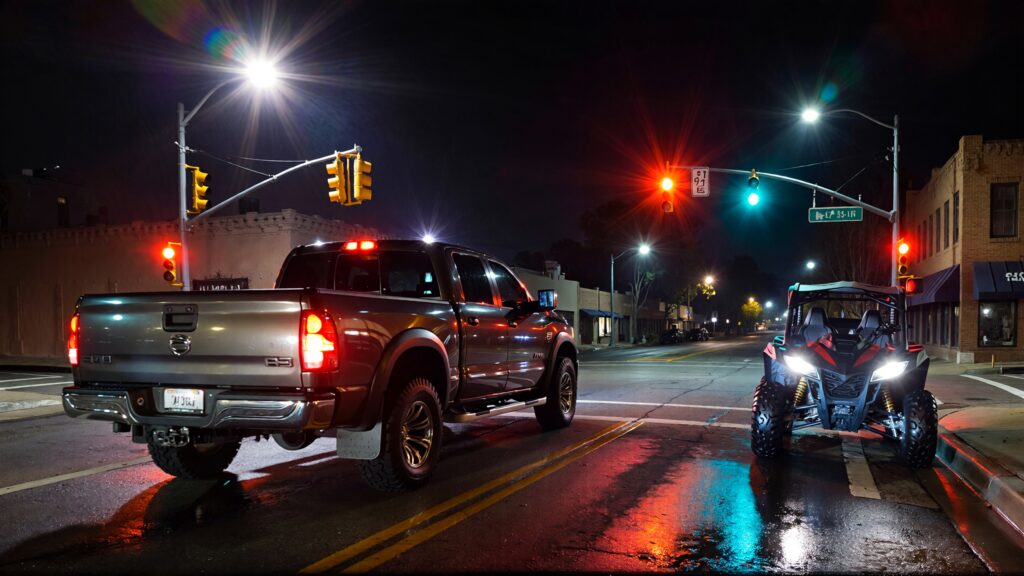
The California Highway Patrol reports that the accident took place around 8:19 PM at 16th Street and Elverta Road. Authorities said the pickup truck struck the rear of the ATV, causing the driver to be thrown from the vehicle. CHP and emergency medical personnel responded to the scene shortly after receiving reports of the accident. The ATV rider was confirmed deceased at the scene.
The driver of the pickup truck remained at the scene and cooperated with investigators. No additional details regarding the identity of the deceased or the circumstances surrounding the collision had been released at the time of reporting. The investigation remains ongoing.
The California Highway Patrol reports that the accident took place around 8:19 PM at 16th Street and Elverta Road. Authorities said the pickup truck struck the rear of the ATV, causing the driver to be thrown from the vehicle. CHP and emergency medical personnel responded to the scene shortly after receiving reports of the accident. The ATV rider was confirmed deceased at the scene.
The driver of the pickup truck remained at the scene and cooperated with investigators. No additional details regarding the identity of the deceased or the circumstances surrounding the collision had been released at the time of reporting. The investigation remains ongoing. at the intersection, and whether reduced lighting may have been a contributing factor.
Investigators will likely examine the speed of the pickup truck, whether the ATV was clearly visible to other drivers, and the exact sequence of events leading to the rear-end impact. Until the CHP concludes its investigation and releases a full report, many details surrounding this tragedy remain unknown.
The Dangers of ATV Use on Public Roads
Under California law, four-wheel ATVs are treated as off-highway vehicles and are generally barred from public streets unless they satisfy specific registration and equipment standards. The state Off-Highway Motor Vehicle Recreation Division further notes that ATVs are usually restricted to designated riding areas and crossings, and that riders must follow helmet and safety requirements that vary by vehicle type and location.
These restrictions exist because ATVs are simply not designed or built to withstand the forces of highway traffic. They lack the structural protections, lighting systems, and braking capacity required for safe road use. When an ATV is struck from behind by a full-size pickup truck traveling at speed, the results are almost always catastrophic for the rider, who has no enclosure and may be ejected upon impact, as happened in this case.
The incident has reignited concerns regarding the legality of off-highway vehicles on local Rio Linda Elverta roads. The intersection of 16th Street and Elverta Road is a known area of concern for local residents and transportation planners.
The physical vulnerability of ATV riders on public roads cannot be overstated. Unlike passenger vehicles, ATVs offer no roll cage, airbags, crumple zones, or seatbelts. Riders sit fully exposed to the surrounding environment, meaning that in a collision with a larger vehicle, the impact forces are absorbed almost entirely by the rider’s body.
Being ejected from an ATV at speed, as occurred in this crash, dramatically increases the risk of fatal head trauma, spinal injuries, and blunt force injuries to vital organs. Even at relatively modest speeds, the combination of an unprotected rider and a multi-thousand-pound pickup truck creates conditions where survival is far from guaranteed.
This is precisely why California law restricts ATV use to off-highway environments and designated riding areas, and why enforcement of those restrictions matters so deeply for public safety. Every time an ATV is operated on a public roadway, the rider faces risks that no amount of skill or caution can fully mitigate.
A Corridor with a History of Serious Collisions
The Sacramento Bee has documented a series of deadly collisions along nearby Rio Linda Boulevard and labels the corridor part of the city’s “high-injury network.” While local leaders have pursued funding for fixes at key intersections, transportation advocates and planners say more changes are needed to reduce serious and fatal crashes.
The persistence of dangerous conditions along this stretch of Sacramento County underscores the importance of both improved infrastructure and consistent enforcement of traffic safety laws. Drivers must remain alert, maintain safe following distances, and reduce speeds in areas where vulnerable road users may be present.
The broader Rio Linda and Elverta area has seen repeated calls for infrastructure improvements to reduce the frequency and severity of traffic collisions. Residents and community advocates have pointed to factors including high vehicle speeds, limited pedestrian and cyclist infrastructure, and poor lighting along certain stretches.
The mix of agricultural and residential land use draws a wide variety of road users onto roads that were not always designed to accommodate them safely. When a roadway corridor accumulates a pattern of serious and fatal crashes over time, it often indicates that engineering, enforcement, and education interventions are needed simultaneously.
A single intersection improvement or speed limit change is rarely enough to reverse a deeply entrenched safety problem. Families who live and travel in this part of Sacramento County deserve roads that are designed with their safety as the primary consideration, and the death of this ATV rider adds further urgency to those longstanding demands.
What Families Should Know After a Fatal Traffic Accident
Losing someone you love in a traffic collision is one of the most painful experiences a family can face. Beyond the grief, many families are immediately confronted with urgent financial pressures: funeral and burial costs, outstanding medical bills from emergency response, and the sudden loss of income if the deceased was supporting dependents.
Under California law, surviving family members may have the right to pursue a wrongful death claim against the party or parties whose negligence caused the crash. California Civil Code §1714 establishes the duty of care that all drivers owe to others on the road. When a driver breaches that duty, and someone dies as a result, the surviving spouse, children, or other eligible family members may be able to recover compensation for:
- Funeral and burial expenses
- Loss of financial support that the deceased provided
- Loss of companionship, care, and guidance
- Pain and suffering experienced prior to death
California Code of Civil Procedure §§377.60 and 377.30 govern wrongful death and survivor claims in the state. Families generally have two years from the date of death to file a claim under CCP §335.1, though it is important to consult with an attorney as soon as possible so that evidence can be preserved and witnesses identified while details are still fresh.
Calculating Wrongful Death Compensation in California
One of the most common questions families have is how the value of a wrongful death claim is determined. California courts and attorneys typically use two approaches:
The multiplier method multiplies the deceased’s annual income by a factor that accounts for their expected working years, household contributions, and other economic realities. For example, if the decedent earned $60,000 per year and had an estimated 20 remaining working years, a multiplier of 2 to 5 might be applied to their total projected earnings, resulting in a base economic damages estimate of $2.4 million to $6 million, before accounting for non-economic losses.
The per diem method assigns a daily dollar value to the loss of companionship, guidance, and care, then multiplies that figure by the number of days the surviving family members are expected to live without their loved one. This approach is particularly useful in cases where the deceased had limited income but provided substantial non-economic contributions to the family.
An experienced wrongful death attorney can help evaluate which approach is most favorable to your case, given the specific facts and California law. It is important to understand that wrongful death compensation in California is not limited to economic losses alone.
Non-economic damages, which include the loss of love, companionship, comfort, care, assistance, protection, affection, society, and moral support, can represent a substantial portion of the total recovery in a wrongful death case. California law recognizes that the emotional and relational void left by the death of a family member carries real and significant value, even when that value cannot be expressed in a pay stub or a receipt.
In cases where the deceased was a parent of minor children, courts also consider the loss of guidance, training, and the parental relationship that those children will never have the opportunity to fully experience. Because every family’s circumstances differ, the total value of a wrongful death claim can vary widely from case to case.
Working with an experienced California wrongful death attorney gives families the best chance of building a comprehensive picture of damages that accounts for every category of loss they have suffered, rather than settling for a figure that reflects only the most easily quantified economic harm.
Using a Fatal Rear-End Accident Settlement Calculator
When a family is confronted with the aftermath of a fatal rear-end collision, one of the earliest and most pressing practical questions is what a wrongful death claim might reasonably be worth. A fatal rear-end accident settlement calculator can serve as a helpful starting point for families trying to understand the financial scope of their loss before they have had the opportunity to consult with an attorney.
These tools work by gathering key inputs, such as the deceased’s age, annual income, life expectancy, the number and ages of surviving dependents, and estimated funeral and medical costs, then applying established legal formulas, such as the multiplier and per diem methods, to generate a preliminary compensation range.
While no online calculator can account for every variable that a skilled attorney and a California court would consider, they can help families arrive at an informed baseline and avoid the common mistake of accepting a lowball settlement offer from an insurance company before understanding the true value of their claim.
In a fatal rear-end crash, calculators may also factor in the degree of negligence, since rear-end collisions frequently involve clear liability on the part of the following driver, which can strengthen a family’s negotiating position. Ultimately, a settlement calculator is best used as an educational tool rather than a definitive answer, and any figure it produces should be reviewed alongside the guidance of an experienced California wrongful death attorney who can assess the specific facts of the case. Call us now at +1-866-218-3776 to speak with our experts.
Take Action Today – Get the Help You Deserve
“The loss of a loved one in a crash like this is a pain no family should have to bear alone, and the financial burdens that follow can make an already devastating situation feel completely overwhelming. As someone who has spent more than 40 years representing families across California in their darkest moments, I want you to know that you have legal rights worth protecting. If your family lost someone in this crash, please do not wait to speak with an attorney. Evidence fades, witnesses become harder to locate, and insurance companies move quickly to protect their own interests. At GJEL Accident Attorneys, we will take the time to listen to your story, explain your options clearly, and fight to recover every dollar your family is owed. You should be focused on grieving and healing, not navigating the legal system alone.” — Andy Gillin, Managing Partner, GJEL Accident Attorneys
If you lost a loved one in this crash or have been injured in a traffic accident anywhere in Sacramento County, GJEL Accident Attorneys is ready to fight for the compensation your family deserves. With over $980 million recovered for clients across California and more than 40 years of experience handling wrongful death and serious injury cases, our firm has the knowledge, resources, and dedication to take on even the most complex claims.
We understand that the last thing a grieving family needs is the added stress of upfront legal fees, which is why GJEL operates on a strict contingency fee basis. That means you pay absolutely nothing unless and until we win your case.
There are no hidden costs, no out-of-pocket expenses, and no financial risk to you for pursuing the justice your family is owed. Call us today at +1-866-218-3776 or visit our San Francisco office to schedule your free, no-obligation consultation. Let us handle the legal battle so you can focus on what matters most.
Local Resources for Accident Victims and Families in Sacramento County
If you need information or assistance following this crash or another traffic accident in the Rio Linda area, the following agencies can help:
CHP North Sacramento Area Office, 5109 Tyler Street, Sacramento, CA 95841. Phone: (916) 348-2300. Website: chp.ca.gov. The North Sacramento CHP Area office handles traffic crash investigations for the Rio Linda and Elverta communities. Crash reports may be obtained here after the investigation is complete.
Sacramento County Coroner’s Office 4800 Broadway, Suite 100, Sacramento, CA 95820 Phone: (916) 874-9320 Email: coronerweb@saccounty.gov Website: coroner.saccounty.gov The Sacramento County Coroner’s Office investigates traffic fatalities, establishes cause and manner of death, notifies next of kin, and assists families in obtaining official death certificates and reports.
Sacramento County Sheriff’s Office, North Division Serves Rio Linda, Elverta, and the surrounding communities in northern Sacramento County. Non-emergency dispatch: (916) 874-5115 Website: sacsheriff.com The North Division’s Community Services Building assists residents with non-emergency reports, property concerns, and community safety resources for the Rio Linda area.
211 Sacramento Phone: Dial 2-1-1 or (916) 498-1000 | Toll-free: (844) 546-1464 Email: info@211sacramento.org Website: 211sacramento.org 211 Sacramento offers a 24/7 hotline connecting residents to local support services including disaster relief resources, grief counseling referrals, housing assistance, and community recovery programs.