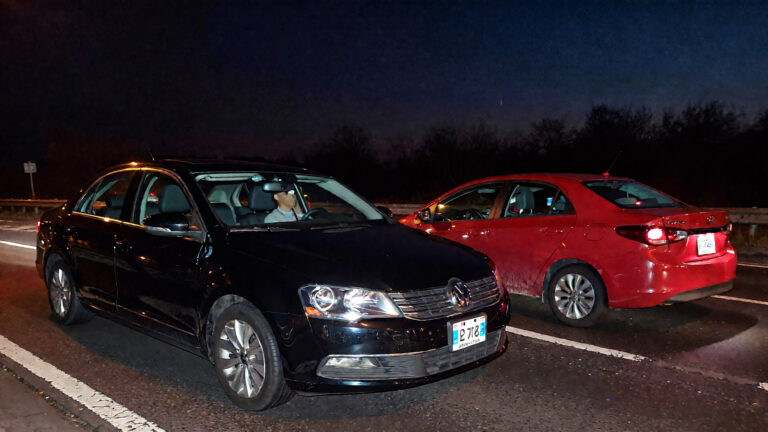
A man sustained major injuries in a traffic collision Tuesday morning at the intersection of Forty Mile Road and Rosser Road in Yuba County, just north of the Hard Rock Casino. The bicycle accident, which involved a blue Lexus sedan and a bicycle, was reported to authorities at approximately 6:11 a.m. on September 22, 2026, near the Livingston Concrete Service Inc. plant. The extent of the injuries and the specific circumstances that led to the collision remain under investigation.
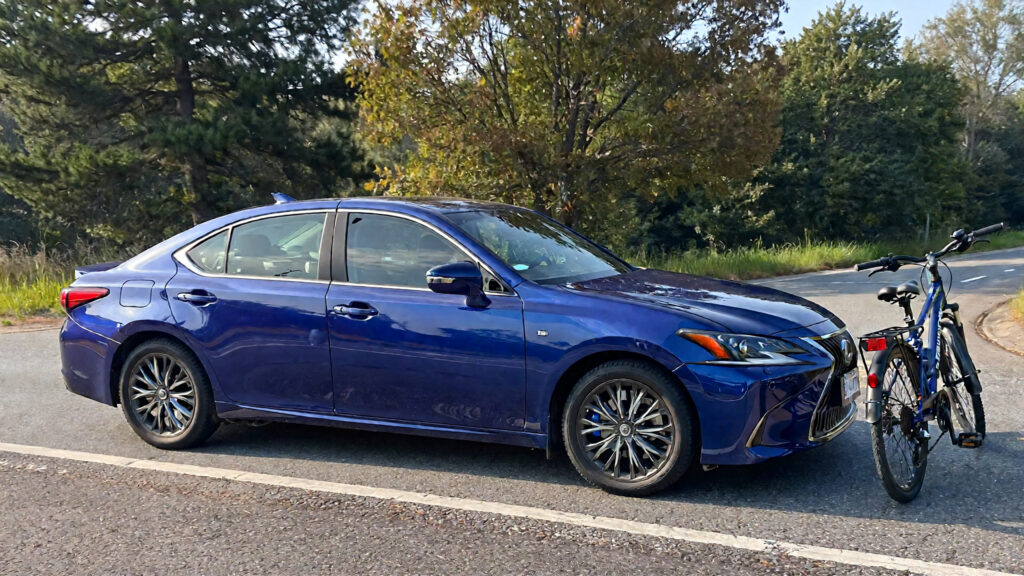
How the Collision Occurred
Early reports indicate that the crash occurred in the pre-dawn hours, a time when visibility on rural roadways like Forty Mile Road is often limited. Investigators have not yet released a full account of how the vehicle and the bicyclist came into contact, and additional details are expected as the investigation progresses.
Rural intersections such as Forty Mile Road and Rosser Road often lack the lighting, signage, and dedicated bicycle infrastructure found in more urban parts of Yuba County, which can increase the risk for cyclists sharing the road with passenger vehicles, particularly in low-light conditions.
The intersection of Forty Mile Road and Rosser Road sits in a stretch of Yuba County that blends light industrial activity with open rural roadway, and the area surrounding the Livingston Concrete Service Inc. plant sees regular truck and vehicle traffic throughout the early morning hours.
At 6:11 a.m. in late September, sunrise had not yet fully broken, meaning both the driver of the blue Lexus and the bicyclist were likely navigating the intersection with reduced natural light. Responding units are expected to examine factors such as the vehicle’s speed and line of sight.
Also, whether the bicyclist had reflective equipment or lighting as required under California law, and whether either party had the right of way at the time of impact. Until the California Highway Patrol or Yuba County Sheriff’s Office releases a finalized report, the precise sequence of events leading up to the collision remains unconfirmed.
California Law on Bicyclists’ Rights and Driver Responsibilities
California law grants bicyclists the same rights and responsibilities as motor vehicle drivers under Vehicle Code Section 21200. Drivers are required to exercise a duty of ordinary care toward cyclists, a standard rooted in California Civil Code Section 1714, which holds individuals responsible for injuries caused by their want of ordinary care.
When a motor vehicle overtakes a bicyclist traveling in the same direction, Vehicle Code Section 21760, known as the “Three Feet for Safety Act,” requires the driver to pass at a safe distance of at least three feet. Violations of these statutes can serve as strong evidence of negligence in a subsequent injury claim.
Because California follows a pure comparative fault doctrine, an injured cyclist can still recover compensation even if they are found partially responsible for the collision, though their recovery is reduced by their assigned percentage of fault. Determining exactly how fault should be apportioned in a case like this one typically requires a careful review of the police report, witness statements, roadway conditions, and any available video or physical evidence from the scene.
Common Injuries Suffered by Bicyclists in Vehicle Collisions
Bicyclists have virtually no protection when struck by a passenger vehicle, and collisions like the one on Forty Mile Road often result in injuries far more severe than those typically seen in vehicle-to-vehicle crashes. Traumatic brain injuries, spinal cord damage, fractured limbs, road rash, and internal injuries are common outcomes when a bicycle is struck by a car traveling at roadway speeds.
Major injury designations, as described in this incident, often indicate long hospital stays, extensive surgical intervention, and a recovery process that can extend for months or years. In the most serious cases, victims face permanent disability or a diminished capacity to work and perform daily activities.
Beyond the immediate physical trauma, major injury bicycle collisions frequently leave victims facing a lengthy and uncertain road to recovery. Fractures involving the pelvis, femur, or spine may require multiple surgeries, extended periods of immobilization, and months of physical therapy before a victim regains basic mobility.
Head injuries, even those not immediately apparent at the scene, can produce lasting cognitive, emotional, and neurological effects that surface days or weeks after the crash, making early medical evaluation critical.
Victims and their families should also be mindful that the full scope of an injury is not always evident in the initial hours following a collision, which is one reason a comprehensive medical assessment, followed by consistent follow-up care, plays such an important role in both physical recovery and any resulting legal claim.
Establishing Liability After a Bicycle Accident
Liability in bicycle collision cases generally centers on whether the driver breached their duty of care toward the cyclist. This can include speeding, distracted driving, failing to yield, or violating the required passing distance under Vehicle Code Section 21760. If a roadway defect, such as inadequate lighting, poor signage, or a hazardous shoulder, contributed to the collision.
A claim may also involve Government Code Section 835, which governs the liability of public entities responsible for maintaining safe road conditions. A thorough investigation, including a request for the full California Highway Patrol or Yuba County Sheriff’s report, is typically the first step in identifying every party who may share responsibility for the crash.
Physical evidence at the scene often proves just as important as witness accounts in reconstructing how a bicycle collision unfolded. Skid marks, the final resting position of the bicycle and vehicle, damage patterns on the Lexus, and any debris field near the intersection of Forty Mile Road and Rosser Road can all help establish speed, point of impact, and which party had the right of way.
In cases where the responsible driver carries insufficient insurance coverage, or where a commercial vehicle tied to a nearby business was involved, additional avenues of recovery, such as underinsured motorist coverage or third-party liability, may need to be explored. Because evidence at an accident scene can deteriorate or disappear quickly, from skid marks fading to surveillance footage being overwritten, an early investigation is often essential to preserving a victim’s ability to prove fault later.
How Compensation Is Calculated in Serious Bicycle Accident Claims
Victims of major injury bicycle accidents are often entitled to compensation for both economic and non-economic damages. Economic damages include medical bills, future treatment costs, lost income, and diminished earning capacity, while non-economic damages include pain and suffering and loss of enjoyment of life.
Attorneys commonly use one of two methods to help quantify non-economic damages. The multiplier method takes the total of a victim’s economic damages and multiplies it, typically by a factor between 1.5 and 5, depending on the severity and permanence of the injury, to arrive at a value for pain and suffering.
The per diem method instead assigns a specific dollar value to each day the victim has experienced pain, from the date of the accident through the projected end of recovery, and multiplies that daily rate by the number of affected days. Because California imposes a two-year statute of limitations on personal injury claims under Code of Civil Procedure Section 335.1, victims and their families should not delay in seeking a full evaluation of their claim.
In addition to the multiplier and per diem methods used to value pain and suffering, a complete damages calculation in a major injury bicycle case must account for costs that are not always obvious in the immediate aftermath of a crash. These can include the price of future surgeries or rehabilitation.
Also the cost of adaptive equipment if the victim is left with a permanent disability, lost earning capacity if the injury prevents a return to prior work, and even the value of household services the victim can no longer perform for their family. Insurance companies often present an early settlement offer that covers only visible medical bills and a portion of lost wages, without accounting for these longer-term or less obvious losses.
A thorough valuation, built on input from medical providers, vocational experts, and life care planners when necessary, helps ensure a settlement or verdict reflects the true, lasting cost of the injury rather than just its most immediate expenses.
Bicycle Accident Settlement Calculators and How They Help Estimate Case Value
A bicycle accident settlement calculator is an educational tool that gives injury victims a starting point for understanding what their claim might be worth, though it should never be mistaken for a final or guaranteed figure.
These calculators typically ask for inputs such as total medical expenses to date, projected future treatment costs, lost wages, and the estimated severity of the injury, and then apply either the multiplier method or the per diem method described earlier to generate a rough estimate of non-economic damages, such as pain and suffering.
The resulting number can help a victim gauge whether an early settlement offer from an insurance company is reasonable or falls short of what similar cases have recovered. That said, a calculator cannot weigh case-specific factors that often move a settlement significantly higher or lower.
Such as the strength of the liability evidence, the credibility of witnesses, the defendant’s insurance policy limits, or the long-term prognosis for a serious injury like the one suffered in the Forty Mile Road collision. For that reason, settlement calculators are best used as a preliminary reference point, with a full valuation left to an experienced personal injury attorney who can review the complete medical and factual record of the case. Call us now at 1-855-508-9565 to speak with the experts.
Take Action Today: You Won’t Pay Unless We Win
“Waking up in a hospital bed after a crash like this is disorienting enough without also having to think about insurance adjusters, medical bills, and legal deadlines. My advice to anyone injured in the Forty Mile Road collision, or any serious accident, is simple: let your doctors handle your recovery, and let an attorney handle everything else. The evidence that proves what really happened on that roadway won’t wait, and neither should you. If you or someone you love is dealing with a major injury from this crash, reach out to us. We’ll walk you through your options at no cost, and we won’t charge a dime unless we win your case.” — Andy Gillin, Managing Partner, GJEL Accident Attorneys
The team at GJEL Accident Attorneys has recovered more than $950 million for injury victims across California over more than 40 years of practice. If you or a loved one suffered major injuries in the Forty Mile Road bicycle collision, or in any traffic accident in Yuba County, our attorneys are available to review the facts of your case at no cost.
GJEL handles every case on a contingency fee basis, meaning there are no upfront costs and no fees unless we secure a recovery on your behalf. Call 1-855-508-9565 or visit our San Francisco office to speak with a member of our legal team today.
Local Resources and Agencies for Yuba County Bicycle Accident Victims
California Highway Patrol – Yuba-Sutter Area Office
Address: 1619 Poole Blvd., Yuba City, CA 95993
Phone: (530) 645-6200
Website: https://www.chp.ca.gov/find-an-office/valley-division/285-yuba-sutter
This office handles traffic collision investigations on state highways and unincorporated roadways throughout Yuba and Sutter Counties, including rural routes like Forty Mile Road. Victims and family members can contact this office to request a copy of the official collision report once it has been completed.
Yuba County Sheriff’s Office
Address: 215 5th Street, Marysville, CA 95901
Phone: (530) 749-7777
Website: https://www.yuba.gov/departments/sheriff_coroner/index.php
The Sheriff’s Office provides law enforcement services throughout unincorporated Yuba County and may have jurisdiction or supplemental involvement in collisions occurring outside city limits, depending on the specific location and circumstances of the crash.
Adventist Health and Rideout (Designated Trauma Center)
Address: 726 4th Street, Marysville, CA 95901
Phone: (530) 749-4300
Website: https://www.adventisthealth.org/rideout/
This nonprofit acute care hospital serves as the primary trauma and emergency care facility for the Yuba-Sutter region and is the most likely destination for victims requiring emergency treatment following a major injury collision in the area.
Yuba County Public Works – Road Conditions and Closures
Website: https://yuba.gov/departments/community_development/public_works/road_delays_closures/index.php
This page provides updates on county-maintained roadway conditions, closures, and safety hazards, and can be a useful resource for confirming whether any known roadway issues existed on Forty Mile Road at the time of the collision.
Caltrans District 3
Website: https://dot.ca.gov/caltrans-near-me/district-3
Caltrans District 3 oversees state highways and transportation infrastructure across the Sacramento Valley and Northern Sierra region, including routes near Yuba County, and publishes real-time updates on road conditions, construction, and traffic-related incidents that may affect the broader area surrounding the crash site.