At least one person suffered severe injuries in a four-vehicle crash on southbound Interstate 880 in Hayward, the California Highway Patrol reported. The crash occurred on the evening of September 20, 2026, and prompted a partial freeway shutdown that disrupted traffic for hours. The collision occurred along one of the East Bay’s busiest commuter corridors, a stretch of freeway that carries tens of thousands of vehicles through Hayward every day.
Crashes involving multiple vehicles on high-speed freeways like I-880 often result in more severe injuries than typical surface-street collisions, since the forces involved at highway speeds can turn even a rear-end impact into a life-altering event. For the driver who suffered major injuries in this crash, the road ahead may include emergency surgery, extended hospitalization, and months of rehabilitation, along with the financial strain that comes with all of it.
How the Four-Vehicle Crash
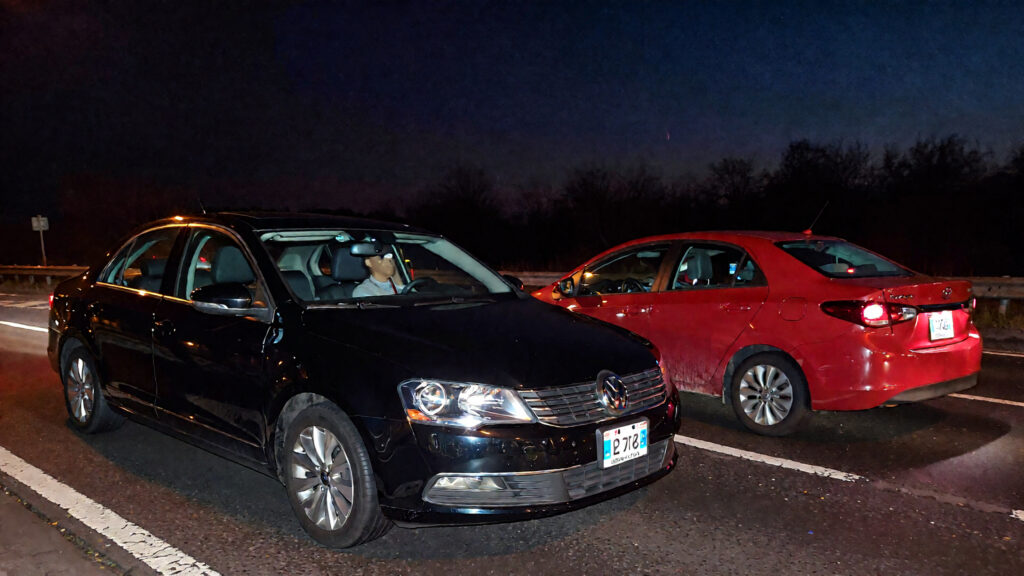
The collision happened around 9:04 p.m. on southbound I-880, just west of the West Winton Avenue off-ramp, according to the CHP. Four vehicles were involved, including a black Volkswagen Passat and a red Toyota Corolla.
A witness told authorities that one of the vehicles was traveling at high speed when it struck another car that was stalled in the traffic lanes with its hazard lights activated, triggering a chain-reaction collision. The exact cause of the crash had not been confirmed at the time of the CHP’s report, and an investigation into the sequence of events remains ongoing.
The involvement of a stalled vehicle sitting in active traffic lanes adds a layer of complexity to this investigation. Under California law, drivers are required to move a disabled vehicle out of traffic lanes when it is safe to do so, but that is not always possible on a busy freeway, especially at night when visibility is reduced.
CHP investigators will likely examine how long the vehicle had been stopped, whether its hazard lights were functioning and visible from a sufficient distance, and whether the driver who allegedly approached at high speed had adequate time and space to react. These details matter, since they could shape not only the CHP’s final determination of fault but also any subsequent civil claims.
Injuries and Freeway Closures
At least one person sustained major injuries in the crash and was transported to a hospital in unknown condition, the CHP confirmed. The collision forced the closure of the Nos. 4 and 5 lanes on southbound I-880, and CHP officers also closed both the eastbound and westbound West Winton Avenue on-ramps to southbound I-880 while emergency crews worked the scene.
The closures created significant backups for commuters traveling through the Hayward corridor during the evening hours. Lane closures on a major artery like I-880 carry consequences that extend well beyond the immediate scene of the crash.
With two lanes shut down and both West Winton Avenue on-ramps closed to southbound traffic, drivers were forced onto surface streets or left waiting in backups that likely stretched for miles.
These extended shutdowns also give CHP officers and collision investigators the time and space they need to document the scene thoroughly, measure skid marks, photograph vehicle positions, and interview witnesses, all of which can become critical evidence if the crash leads to an insurance dispute or a personal injury claim down the line.
Understanding Liability in Multi-Vehicle Freeway Crashes
Multi-vehicle collisions like this one raise complicated questions about fault. California follows a pure comparative negligence standard, meaning more than one driver can share responsibility for a crash, and an injured person can still recover damages even if they were partially at fault, with their compensation reduced in proportion to their own share of responsibility.
If reports of a vehicle traveling at high speed and striking a stalled car are confirmed, investigators will need to examine the vehicle’s speed, following distance, and whether the stalled vehicle’s hazard lights provided other drivers with adequate warning under California Vehicle Code provisions governing basic speed law and unsafe following distances.
Liability may also extend beyond the drivers themselves. Under California Civil Code Section 1714, any person or entity whose negligence contributes to an injury can be held liable for the resulting harm.
If a vehicle defect, a roadway hazard, or inadequate signage contributed to the chain of events, additional parties could be held responsible. Government Code Section 835 also allows injured parties to pursue claims against a public entity when a dangerous condition of public property contributes to a crash, though these claims carry strict notice deadlines that are far shorter than standard filing windows.
Calculating Compensation for Catastrophic Injuries
Severe injuries from freeway collisions often require extensive medical treatment, rehabilitation, and time away from work, and settlement values reflect that reality. Attorneys typically rely on one of two methods to estimate non-economic damages such as pain and suffering.
The multiplier method takes the total of a victim’s economic damages, including medical bills and lost income, and multiplies that figure by a number generally between 1.5 and 5, with more severe or permanent injuries justifying a higher multiplier.
The per diem method instead assigns a specific dollar value to each day a victim experiences pain and suffering, then multiplies that daily rate by the number of days the person is expected to be affected by the injury. Both approaches provide a starting point for negotiations, but the final value of a claim depends heavily on the specific facts of the crash, the strength of the evidence, and the long-term impact of the injuries on the victim’s life.
Beyond the immediate medical bills, a catastrophic injury from a freeway crash can carry costs that unfold over years or even a lifetime. Someone who suffers a traumatic brain injury, spinal cord damage, or severe orthopedic trauma may face ongoing physical therapy, future surgeries, home modifications, or the need for long-term care, none of which show up on an initial emergency room bill.
An experienced attorney will typically work with medical experts and life care planners to project these future costs before finalizing a settlement demand, since accepting an early offer from an insurance company often means signing away the right to seek more money later, even if complications arise well after the case is closed.
Catastrophic Injury Settlement Calculators and Why They Matter
Catastrophic injury settlement calculators offer a useful starting point for understanding the potential value of a catastrophic injury claim, but they work best as a guide rather than a final answer.
These tools generally take a victim’s economic damages, such as medical expenses, lost wages, and anticipated future costs, and apply either the multiplier or the per diem method to estimate non-economic damages such as pain and suffering and loss of enjoyment of life.
For catastrophic injuries in particular, this step is critical, since the non-economic impact of a permanent disability, disfigurement, or chronic pain condition often far exceeds the raw medical bills on paper.
A calculator can help an injured person get a rough sense of what their claim might be worth before they ever speak with an insurance adjuster, which matters because early settlement offers are frequently calculated using far more conservative assumptions about long-term impact.
Still, no calculator can account for the specific facts of a case, such as comparative fault, the strength of available evidence, or how a jury might view the severity of the injury, which is why these tools should inform a conversation with an attorney rather than replace one. Call us now at 1-855-508-9565 to speak with the experts.
Take Action Today – Get the Help You Deserve
“Our hearts go out to everyone affected by this crash, especially the person who was seriously injured. A collision like this can turn your world upside down in an instant, and in the days that follow, you’re often left dealing with medical bills, missed work, and a lot of unanswered questions, all while trying to heal. That’s where we come in. If you or someone you love was hurt in this accident, please don’t wait to get help. Evidence disappears, memories fade, and insurance companies move fast to protect their bottom line, not your recovery. My team and I are here to ensure your rights are protected and that you receive the compensation you deserve to move forward. You don’t have to face this alone, and it costs you nothing to find out where you stand.”— Andy Gillin, Managing Partner, GJEL Accident Attorneys
If you or a loved one was hurt in this collision or another crash on California’s freeways, you do not have to navigate the aftermath alone. GJEL Accident Attorneys has recovered more than $950 million for injured clients over more than 40 years of practice, and the firm works on a contingency fee basis, meaning you pay nothing unless they win your case. Call 1-855-508-9565 for a free, no-obligation consultation, or visit our Antioch office to learn more about your legal options.
Local Resources for Those Affected
Anyone involved in this collision or seeking more information can contact the CHP Hayward Area Office at 2434 Whipple Road, Hayward, CA 94544, by phone at (510) 489-1500. The Hayward Police Department, which may also respond to incidents within city limits, can be reached at (510) 293-7000 for non-emergency matters, or by visiting its station at 300 West Winton Avenue, Hayward, CA 94544. St. Rose Hospital, located at 27200 Calaroga Avenue in Hayward, operates a 24-hour emergency department and can be reached at (510) 264-4000 for those seeking information about a patient’s care or condition.
The California Highway Patrol, which is investigating this collision, provides office locations, incident advisories, and public safety programs through its Golden Gate Division page at chp.ca.gov/find-an-office/golden-gate-division. The CHP Hayward Area Office, which covers I-880, I-580, and the surrounding freeway network, can be reached at (510) 489-1500 or visited at 2434 Whipple Road, Hayward, CA 94544. The CHP’s statewide traffic incident page at chp.ca.gov/traffic also offers real-time updates on freeway closures and collision reports for those tracking conditions on I-880.
Anyone needing updates on a loved one’s condition following this crash can contact St. Rose Hospital, whose official website, strosehospital.org, provides information on emergency services, patient resources, and visiting policies. The hospital’s emergency department operates 24 hours a day and can be reached at (510) 264-4000. The facility is located at 27200 Calaroga Avenue, Hayward, CA 94545.
For real-time traffic conditions, lane closures, and alternate route planning along the I-880 corridor, drivers can consult 511.org, the official Bay Area traffic and transit information service operated by the Metropolitan Transportation Commission, which tracks incidents across the region as they are cleared. Those interested in broader roadway safety and construction updates for the East Bay can also visit Caltrans District 4 at dot.ca.gov/caltrans-near-me/district-4, which oversees state highways, including I-880, throughout the greater Bay Area.