A serious commercial big rigs collision occurred on Interstate 5 near Sacramento during hazardous fog conditions Thursday morning, highlighting the persistent dangers that dense fog presents to travelers in California’s Central Valley. The crash took place on northbound I-5 near Twin Cities Road, just south of Elk Grove, in an area known for seasonal fog that can reduce visibility to near zero in minutes.
Emergency responders from the California Highway Patrol and local fire departments arrived at the scene to manage traffic and assess injuries, while the collision caused significant delays for commuters traveling through one of the region’s busiest transportation corridors. The incident serves as a stark reminder that despite modern safety technology and driver training, the combination of heavy commercial vehicles and suddenly deteriorating weather conditions continues to pose serious risks on California’s highways, particularly during the winter months when dense valley fog is most prevalent.
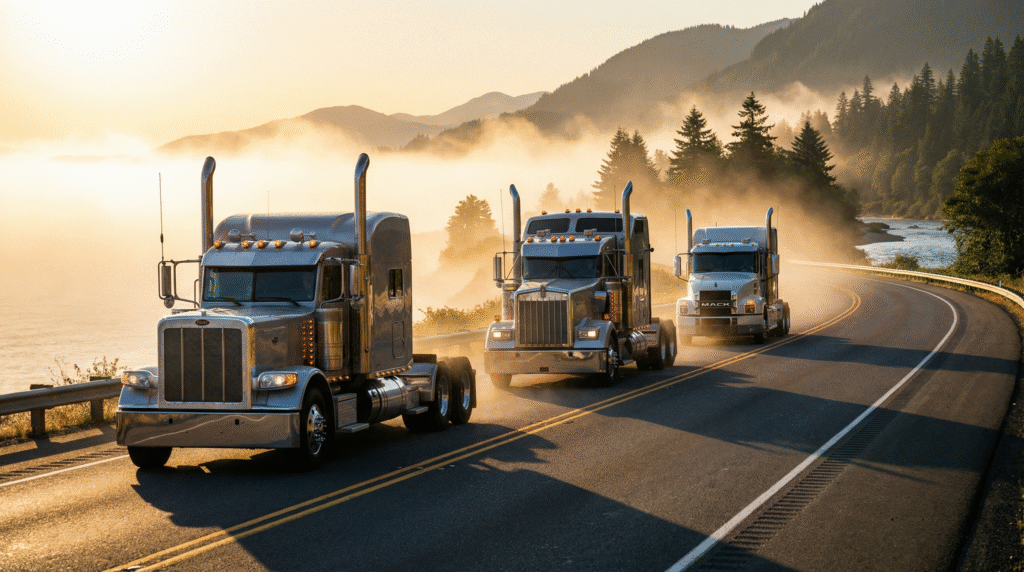
Details of the Thursday Morning Big Rigs Collision
According to the California Highway Patrol, the chain-reaction crash occurred when extremely foggy conditions reduced visibility along the busy interstate corridor. Investigators believe the first big rig began slowing, likely in response to deteriorating visibility or traffic conditions ahead. A second commercial truck traveling behind was unable to stop in time despite the driver’s efforts.
The driver of the second big rig attempted an evasive maneuver by steering to the left, but the dense fog and insufficient stopping distance made a collision unavoidable. The second truck struck the left rear portion of the first big rig, setting off a chain of events that ultimately involved a third commercial vehicle.
The involvement of three large commercial trucks in a single incident underscores how quickly fog-related accidents can escalate on busy highways, particularly when vehicles are traveling at highway speeds with limited visibility.
The Dangers of Tule Fog in the Sacramento Valley
The Sacramento Valley, including the area near Elk Grove where this crash occurred, is particularly susceptible to a weather phenomenon known as “tule fog.” This dense, ground-level fog typically forms during California’s winter months when cold air settles into the valley after sunset, creating moisture-laden conditions that can persist well into the morning hours.
Tule fog is notoriously dangerous because:
- Visibility drops dramatically: Drivers may experience visibility of less than 10 feet in the densest conditions
- It forms suddenly: Conditions can change from clear to near-zero visibility within moments
- It persists for hours: Unlike coastal fog, tule fog can blanket the Central Valley throughout morning commute hours
- It creates uneven conditions: Drivers may encounter “fog banks” where visibility alternates between clear and obscured
Interstate 5 through the Sacramento Valley has been the site of numerous fog-related accidents over the years, including several catastrophic multi-vehicle pileups that have resulted in fatalities and serious injuries.
Truck Accidents and Reduced Visibility Conditions
Commercial truck accidents in fog conditions present unique challenges and dangers. The physics of stopping an 80,000-pound tractor-trailer differs dramatically from passenger vehicles, requiring significantly greater stopping distances under ideal conditions. When fog reduces visibility, truck drivers face several critical disadvantages:
Extended Stopping Distances: A fully loaded commercial truck traveling at highway speeds can require the length of two football fields to come to a complete stop under normal conditions. In fog, when hazards become visible at much shorter distances, collisions become nearly inevitable if speeds aren’t drastically reduced.
Limited Maneuverability: As demonstrated in this incident, the second truck driver attempted to steer left to avoid a collision. However, big rigs have limited maneuverability compared to passenger vehicles, and evasive steering at highway speeds can lead to jackknifing or rollovers.
Following Distance Challenges: Trucking industry standards and federal regulations require commercial drivers to maintain safe following distances, but fog conditions demand even greater spacing that isn’t always practical on busy interstate corridors.
Legal Responsibilities in Fog-Related Truck Accidents
When truck accidents occur in adverse weather conditions, such as dense fog, determining liability requires careful examination of several factors. California law requires all drivers, including commercial truck operators, to adjust their driving to match prevailing conditions.
Trucking companies and their drivers have heightened responsibilities under federal and state regulations, including:
- Reducing speed appropriately for visibility conditions
- Maintaining safe following distances that account for weather hazards
- Ensuring drivers receive proper training for hazardous weather driving
- Monitoring weather conditions and potentially delaying trips during dangerous fog events
- Maintaining vehicles in proper working condition, with functioning lights and braking systems
When fog-related truck accidents result in injuries, the investigation typically focuses on whether the truck driver and trucking company exercised reasonable care given the known hazardous conditions. Even though fog creates dangerous driving conditions, drivers are not absolved of responsibility to operate safely within those conditions.
Interstate 5 Near Elk Grove: A High-Risk Corridor
The section of Interstate 5 near Twin Cities Road and Elk Grove sees heavy traffic from both commuters and commercial vehicles traveling between Sacramento and points south. This corridor serves as a vital artery for California’s commerce, with thousands of trucks transporting goods daily between the Central Valley, Bay Area, and Southern California.
The combination of high traffic volume, significant commercial truck presence, and seasonal fog conditions creates a particularly hazardous environment. Local residents and regular commuters often recognize the danger during winter months and adjust their travel plans accordingly, but travelers unfamiliar with Central Valley fog conditions may not appreciate the risks until visibility suddenly disappears.
This stretch of I-5 has earned a reputation among transportation safety experts as one of the most challenging fog zones in California, with accident data showing a notable increase in collisions during winter months when tule fog is most prevalent. The flat terrain of the Sacramento Valley allows fog to settle uniformly across wide areas, meaning drivers often have no warning before entering dense fog banks.
Additionally, the high-speed nature of interstate travel means vehicles are moving at 65-70 mph when suddenly confronted with near-zero visibility, leaving little time to react safely. The California Highway Patrol has implemented various safety measures over the years, including electronic warning signs and reduced speed limits during fog events, yet accidents continue to occur with alarming frequency.
The proximity to Elk Grove’s residential areas also means morning commuters regularly merge onto this section of freeway during peak fog hours, adding passenger vehicles to an already dangerous mix of commercial trucks navigating limited visibility. Transportation officials continue to study this corridor for additional safety improvements, recognizing that as the Sacramento region grows, the volume of vehicles traveling through this fog-prone area will only increase, making proactive safety measures increasingly critical.
What to Do After a Fog-Related Truck Accident
If you or a loved one has been involved in a truck accident during foggy conditions, taking appropriate steps immediately following the collision can protect both your health and your legal rights:
- Seek immediate medical attention: Even if injuries seem minor, the adrenaline following an accident can mask serious trauma. A comprehensive medical evaluation creates documentation essential for any future claim.
- Report the accident: Ensure law enforcement responds to document the scene. CHP reports become critical evidence in establishing how the accident occurred.
- Document conditions: If safely possible, take photographs of the scene, vehicle damage, weather conditions, and any visible road hazards or traffic control devices.
- Preserve evidence: Keep all medical records, repair estimates, and documentation of lost wages or other expenses resulting from the accident.
- Avoid recorded statements: Insurance adjusters may contact you seeking statements about the accident. Politely decline and consult with an attorney before providing detailed accounts.
- Contact an experienced truck accident attorney: Truck accident cases involve complex federal regulations, multiple potentially liable parties, and insurance companies with substantial resources dedicated to minimizing payouts.
Understanding Your Rights After a Commercial Truck Collision
Victims of truck accidents in California may be entitled to compensation for:
- Medical expenses: Including emergency treatment, hospitalization, surgery, rehabilitation, and ongoing care
- Lost income: Both immediate lost wages and reduced future earning capacity if injuries prevent returning to previous employment
- Property damage: Vehicle repair or replacement costs and damage to personal property
- Pain and suffering: Physical pain, emotional distress, and reduced quality of life
- Loss of consortium: Impact on relationships with spouses and family members
California follows a “pure comparative negligence” system, meaning victims can recover damages even if they bear some responsibility for the accident, with their recovery reduced by their percentage of fault. This makes thorough investigation and skilled legal representation essential to maximizing recovery.
Determining all potentially liable parties in a commercial truck accident requires investigation beyond the truck driver alone. Liability may extend to:
- The trucking company that employs the driver
- The company that owns the truck or trailer
- Cargo loading companies, if improper loading contributed to the accident
- Maintenance provider,s if mechanical failure played a role
- Manufacturer,s if defective truck components caused or worsened the collision
Why Fog-Related Truck Accidents Require Specialized Legal Representation
Truck accidents occurring in fog present unique legal challenges that require attorneys with specific experience in both commercial vehicle regulations and weather-related accident claims. These cases often involve:
Complex Investigation Requirements: Determining whether drivers appropriately adjusted their speed and following distance for conditions requires accident reconstruction experts who can analyze weather data, visibility conditions, vehicle speeds, and stopping distances.
Federal Motor Carrier Regulations: Commercial truck drivers and companies must comply with extensive federal safety regulations. Violations of these regulations, particularly in hazardous weather conditions, can establish negligence.
Multiple Insurance Policies: Commercial trucks typically carry substantial insurance coverage, but claims may involve multiple policies and insurance companies, each working to minimize their liability.
Sophisticated Defense Tactics: Trucking companies and their insurers employ experienced defense teams who will argue that fog conditions, rather than driver error, caused the accident. Effective legal representation must counter these arguments with evidence demonstrating the driver’s failure to adjust for known hazardous conditions.
Catastrophic Injuries: Collisions involving large commercial trucks frequently result in severe injuries or fatalities, creating claims with significant value that insurance companies aggressively defend.
GJEL’s Experience with Sacramento Valley Truck Accidents
At GJEL Accident Attorneys, we have represented numerous victims of truck accidents throughout the Sacramento Valley and California’s Central Valley, including many cases involving fog-related collisions on Interstate 5. Our experience includes successfully holding trucking companies accountable when their drivers fail to adjust their driving for hazardous weather conditions.
Fog in the Central Valley isn’t an unexpected phenomenon—it’s a predictable seasonal hazard that every commercial truck driver operating in this region knows about or should know about. When truck drivers and their companies fail to take appropriate precautions despite knowing that dense fog creates dangerous conditions and that failure results in serious injuries, they must be held accountable. These aren’t unavoidable accidents; they’re the result of decisions to prioritize schedule and profit over safety.
Our firm’s approach to fog-related truck accident cases includes:
- Immediate investigation to preserve evidence of weather conditions, road conditions, and vehicle positions
- Consultation with meteorological experts to establish visibility conditions at the time of the collision
- Analysis of the truck driver’s hours of service, training records, and previous safety violations
- Examination of the trucking company’s safety policies and whether they include protocols for hazardous weather
- Thorough review of all federal and state regulations compliance
- Engagement of accident reconstruction experts to demonstrate how the collision could have been prevented
Our track record includes over $1 billion recovered for our clients, with a 99% success rate in the cases we handle. This success stems from our commitment to thorough investigation, strategic litigation, and our unwillingness to accept inadequate settlement offers from insurance companies hoping to minimize their exposure.
Calculating Fair Compensation After a Serious Truck Accident
Understanding the full value of your truck accident claim requires a comprehensive evaluation of both economic and non-economic damages. Many accident victims, particularly when dealing with serious injuries, underestimate the long-term financial impact of their collision.
Immediate Medical Costs: Emergency treatment, hospitalization, surgery, and initial rehabilitation represent only a portion of total medical expenses. Serious injuries often require ongoing treatment for months or years.
Future Medical Needs: Permanent injuries may require lifetime medical care, adaptive equipment, home modifications, and ongoing therapy—costs that must be calculated and included in any settlement or verdict.
Lost Earning Capacity: Beyond immediate lost wages, serious injuries may prevent returning to previous employment, reduce earning potential, or eliminate the ability to work entirely. Economic experts can calculate the present value of these future losses.
Non-Economic Damages: Physical pain, emotional suffering, loss of enjoyment of life, and impact on relationships represent real losses that California law recognizes as compensable, though calculating appropriate values requires experience and skill.
GJEL Accident Attorneys works with medical experts, economists, life care planners, and vocational rehabilitation specialists to build comprehensive evidence of our clients’ full damages. We utilize advanced settlement calculators and case valuation tools, but recognize that each case requires individualized assessment based on the specific circumstances and impact on the victim’s life.
We encourage potential clients to explore the truck accident settlement calculators as educational tools to understand the factors that influence case value, but emphasize that no online calculator can substitute for a comprehensive legal evaluation by an experienced truck accident attorney.
Our No-Fee Guarantee: Justice Without Financial Risk
We understand that accident victims already face significant financial stress from medical bills, lost income, and other accident-related expenses. Adding legal fees to these burdens would prevent many injured people from accessing the legal representation they need and deserve.
That’s why GJEL Accident Attorneys handles all truck accident cases on a contingency fee basis—meaning you pay no attorney fees unless we successfully recover compensation for you. Our “no win, no fee” commitment means:
- No upfront costs: We cover all case expenses, including expert witnesses, investigation costs, and court fees
- No fees unless we win: You owe us nothing if we don’t recover compensation for you
- Free case evaluation: Initial consultations are always free, with no obligation
- Risk-free representation: You can access experienced legal counsel without financial risk
This contingency fee structure aligns our interests with yours—we succeed only when you receive the compensation you deserve. It also allows us to devote substantial resources to building the strongest possible case, regardless of our clients’ financial circumstances.
Take Action Today – Get the Help You Deserve
“If you or someone you love was involved in this fog-related collision on I-5, please know that you don’t have to face this alone. Truck accidents in dense fog conditions are devastating, and the physical, emotional, and financial toll can be overwhelming. What many people don’t realize is that fog doesn’t excuse negligence—truck drivers and their companies have a legal responsibility to adjust their speed and driving for conditions they know exist in the Central Valley during winter months. If a trucker’s failure to slow down or maintain safe distance caused your injuries, you have every right to hold them accountable. Don’t let insurance companies minimize your claim by blaming the weather. These cases require immediate investigation to preserve critical evidence about visibility conditions, driver logs, and company safety policies. Please reach out to an experienced truck accident attorney right away—there’s no cost to discuss your case, and you deserve to understand your full legal options during this difficult time.”- Andy Gillin, GJEL Accident Attorneys
If you or someone you love has been injured in a truck accident involving dense fog or other hazardous conditions in the Sacramento area, Interstate 5 corridor, or anywhere in Northern California, contact GJEL Accident Attorneys for a free, confidential consultation. Our experienced truck accident attorneys will review your case, explain your legal options, and help you understand the potential value of your claim—all at no cost and with no obligation.
Time is critical following a truck accident. Evidence can disappear, witnesses’ memories fade, and California’s statute of limitations creates deadlines for filing claims. Early involvement of experienced legal counsel protects your rights and maximizes your opportunity for full compensation.
Don’t face the trucking company’s insurance adjusters alone. Contact GJEL Accident Attorneys today to discuss your case with a compassionate, experienced attorney who will fight for the justice and compensation you deserve. Call us at 1-866-218-3776 or visit our San Francisco office to schedule your free consultation. Because when truck companies prioritize profits over safety, someone must stand up for the victims—and we’re here to do exactly that.
Sacramento Valley Local Resources for Accident Victims
If you’ve been involved in a truck accident in the Sacramento area, these local resources can provide assistance:
California Highway Patrol – South Sacramento Area Office 6701 24th Street, Sacramento, CA 95822 (916) 681-7200 For accident reports and traffic incident information Website: https://www.chp.ca.gov/find-an-office/south-sacramento
UC Davis Medical Center 2315 Stockton Boulevard, Sacramento, CA 95817 (916) 734-2011 Level I trauma center providing emergency and specialized care for serious accident injuries Website: https://health.ucdavis.edu/medicalcenter
Mercy General Hospital 4001 J Street, Sacramento, CA 95819 (916) 453-4545 Emergency services and trauma care Website: https://www.dignityhealth.org/sacramento/locations/mercygeneral
Sutter Medical Center, Sacramento 2801 L Street, Sacramento, CA 95816 (916) 454-3333 Comprehensive emergency and trauma services Website: https://www.sutterhealth.org/smcs
Kaiser Permanente South Sacramento Medical Center 6600 Bruceville Road, Sacramento, CA 95823 (916) 688-2000 Emergency and follow-up medical care Website: https://healthy.kaiserpermanente.org
Elk Grove Police Department 8400 Laguna Palms Way, Elk Grove, CA 95758 Emergency: 911 Non-Emergency: (916) 478-8060 For accident reports within Elk Grove city limits, victim assistance services, and traffic collision information Website: https://www.elkgrovepd.org Traffic Services Unit: (916) 478-8141 Records Request: (916) 478-8340 (for obtaining copies of accident reports)
Sacramento Area Council of Governments (SACOG) 1415 L Street, Suite 300, Sacramento, CA 95814 (916) 321-9000 Regional transportation planning agency providing traffic information, road condition updates, and transportation safety resources Website: https://www.sacog.org 511 Traveler Information: Dial 511 or visit https://www.sacog.org/511-traveler-information
Sacramento County Department of Transportation (916) 874-6291 Road condition and traffic incident information Website: https://transportation.saccounty.net
Caltrans District 3 (Sacramento Region) 703 B Street, Marysville, CA 95901 (530) 741-4573 State highway conditions, road closures, and construction information Website: https://dot.ca.gov/caltrans-near-me/district-3 QuickMap (Real-Time Traffic): https://quickmap.dot.ca.gov
California Department of Motor Vehicles – Sacramento Office 4700 Broadway, Sacramento, CA 95820 (800) 777-0133 For driver records and vehicle documentation Website: https://www.dmv.ca.gov
Sacramento Metropolitan Fire District 10545 Armstrong Avenue, Mather, CA 95655 Non-Emergency: (916) 859-4300 Emergency medical services and fire response for unincorporated Sacramento County areas Website: https://www.metrofire.ca.gov
Cosumnes Community Services District Fire Department 10573 E. Stockton Boulevard, Elk Grove, CA 95624 Non-Emergency: (916) 687-3423 Fire and emergency medical services for Elk Grove area Website: https://www.yourcsd.com/fire
Sacramento County Bar Association Lawyer Referral Service (916) 565-1100 Legal referral assistance for accident victims Website: https://www.saclaw.org/lawyer-referral-service
Legal Services of Northern California 515 12th Street, Sacramento, CA 95814 (916) 551-2150 Free legal assistance for qualifying low-income individuals Website: https://lsnc.net
Sacramento Victim Witness Assistance Center (916) 874-5701 Support services for crime and accident victims Website: https://www.saccda.org/victim-services
National Highway Traffic Safety Administration (NHTSA) Vehicle safety information, recall notices, and accident statistics Website: https://www.nhtsa.gov Auto Safety Hotline: 1-888-327-4236
Federal Motor Carrier Safety Administration (FMCSA) Safety and Consumer Assistance Division (800) 832-5660 To report unsafe truck drivers or companies, verify carrier credentials, and access safety records Website: https://www.fmcsa.dot.gov SMS (Safety Measurement System): https://ai.fmcsa.dot.gov/SMS
California Victim Compensation Board P.O. Box 3036, Sacramento, CA 95812-3036 (800) 777-9229 Financial assistance for victims of violent crime, including hit-and-run accidents Website: https://victims.ca.gov
Department of Rehabilitation – Sacramento Office 3580 Power Inn Road, Suite 110, Sacramento, CA 95826 (916) 263-8900 Vocational rehabilitation services for accident victims with disabilities Website: https://www.dor.ca.gov
Crisis Support Services of Alameda County 24-Hour Crisis Line: (800) 309-2131 Mental health support following traumatic accidents
National Suicide Prevention Lifeline 24/7 Crisis Support: 988 Free, confidential support for people in distress and their loved ones Website: https://988lifeline.org
Road Safe America Non-profit organization dedicated to truck safety advocacy Website: https://roadsafeamerica.org To report unsafe truck driving: https://www.roadsafeamerica.org/report-unsafe-driving
Parents Against Tired Truckers (P.A.T.T.) Support and advocacy organization for families affected by truck accidents Website: https://www.patt.org
These resources can help you navigate the immediate aftermath of a truck accident, obtain necessary medical care, access your accident reports, understand traffic conditions, verify trucking company safety records, and connect with support services. Keep documentation of all contacts with these agencies as part of your accident record.