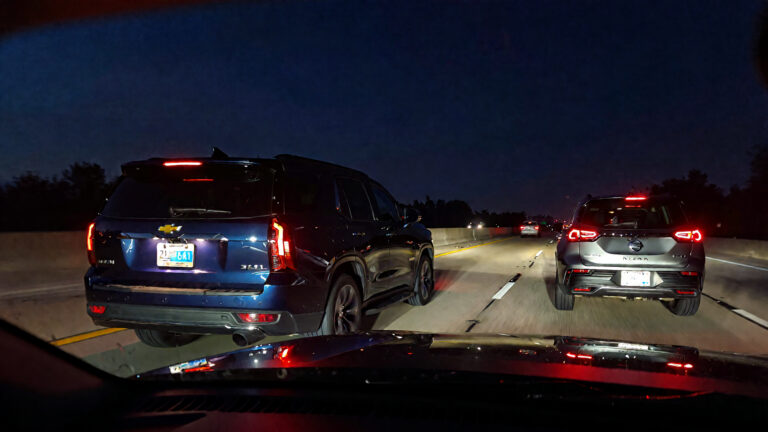
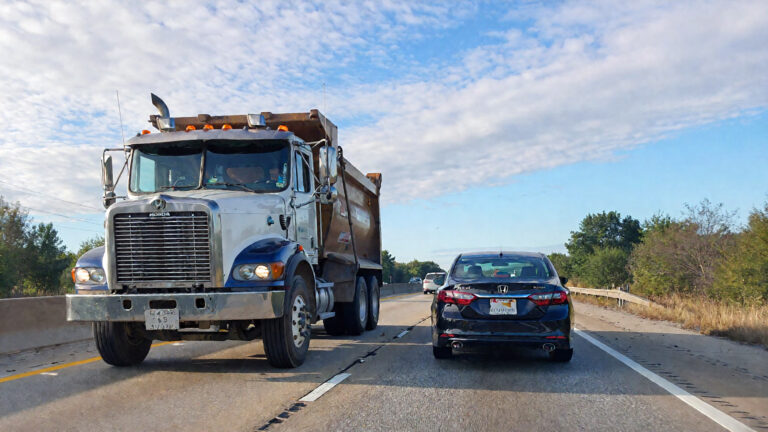
A patient being transported while undergoing CPR died after the ambulance carrying them collided with a Caltrans vehicle on northbound Interstate 5 near Bakersfield on the afternoon of Wednesday, August 12, 2026. The California Highway Patrol reported that the ambulance collision unfolded inside an active traffic closure that had reduced the freeway to a single open lane.
The stretch of I-5 where the crash occurred runs along the Grapevine, a corridor connecting Kern County to the Los Angeles Basin that carries heavy commercial and commuter traffic and is no stranger to closures caused by vehicle fires, overheated brakes, and steep-grade-related incidents. That congestion had already backed up northbound traffic well before the ambulance reached the scene.
This means first responders were operating within a compressed, high-pressure environment that combined an active medical emergency, an ongoing fire response, and a reduced single-lane bottleneck all at once. It is within that convergence of circumstances, rather than a routine traffic slowdown, that the fatal second collision occurred, a detail that will likely factor heavily into how investigators and any resulting legal claims assess what happened and why.
How the Collision Occurred
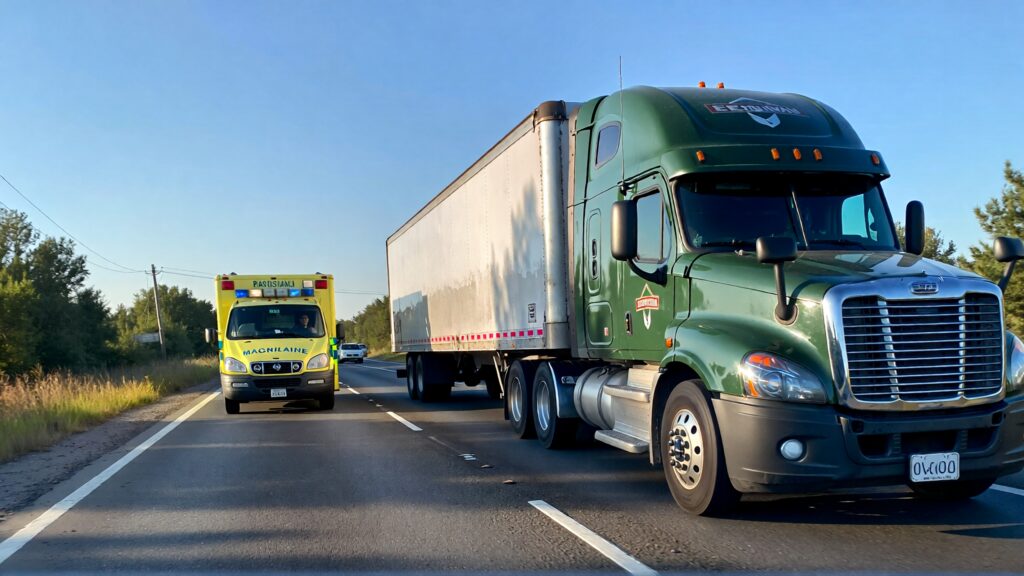
According to CHP, emergency crews were already working the scene of an earlier fire involving an Amazon big rig, which had reduced northbound I-5 to one open lane near an escape ramp along the Grapevine corridor in Kern County. As the ambulance approached the congested closure, personnel inside the vehicle were actively performing CPR on the patient.
For reasons that remain under investigation, the ambulance struck the rear of a Caltrans vehicle stationed within the closure. The Caltrans worker involved reported a complaint of pain following the impact. CHP has not yet released findings on what caused the ambulance to collide with the Caltrans vehicle, though officers indicated they were aware the ambulance was moving through the area at the time.
Beyond the immediate impact, the timing of the crash underscores how quickly conditions on a closed freeway lane can shift from routine to catastrophic. The ambulance was navigating a corridor that had already been narrowed to a single lane for hours, with emergency vehicles, tow trucks, and Caltrans personnel working in close proximity to moving traffic.
In these types of active work zones, following distance, speed adjustment, and driver awareness become critical safety margins, and any lapse, whether caused by the pressure of an in-progress medical emergency, limited visibility, or an unexpected slowdown ahead, can turn a routine approach into a rear-end collision within seconds.
CHP has not indicated whether the ambulance was traveling with lights and sirens active at the time of impact, nor has it released findings on vehicle speed, but those details are likely to be central to determining how and why the crash happened.
Patient Pronounced Dead Before Air Transport
Given the severity of the situation, authorities requested a medical helicopter to transport the patient inside the ambulance. By the time the aircraft arrived, however, the patient had already been pronounced dead.
The helicopter departed within minutes without transporting anyone, and authorities awaited the coroner’s response to the scene. It has not been publicly disclosed what medical emergency originally prompted the patient’s transport, though the ambulance had been traveling from south to north on I-5 at the time of the crash.
The Amazon semi-truck involved in the earlier fire was eventually cleared from the roadway. One lane remained closed in the aftermath of the second collision before all northbound lanes reopened later that afternoon.
Liability Questions When a Government Vehicle Is Involved
This crash raises a legal wrinkle not present in most traffic collision cases: one of the vehicles involved was a Caltrans vehicle, meaning a state government entity may be a party to any resulting claim.
Under Government Code §835, a public entity can be held liable for injuries caused by a dangerous condition of public property, and a public employee’s negligence can also expose an agency to liability under principles of vicarious responsibility. At the same time, government defendants are shielded by procedural rules that do not apply to private defendants.
Anyone considering a claim connected to this crash, whether against the ambulance provider, Caltrans, or another party, needs to be aware that claims against public entities in California generally must be filed within six months of the incident under the Government Claims Act, a dramatically shorter window than the standard filing deadlines for private negligence claims.
Under Civil Code §1714, every person is generally responsible for injuries caused by their lack of ordinary care, and California’s comparative negligence framework allows fault to be divided among multiple parties. Even when a crash occurs in an active emergency scene, and even when investigators are still working to determine what happened, assigning fault does not have to be all-or-nothing.
Investigators will likely examine the ambulance’s speed and following distance as it approached the closure, the visibility and signage at the reduced lane, the positioning of the Caltrans vehicle, and whether standard protocols for approaching an active work zone were followed.
Wrongful Death Claims Under California Law
Regardless of how the investigation into this crash concludes, the family of the deceased patient may have the right to pursue a wrongful death claim under California Code of Civil Procedure §377.60. This statute identifies who may bring such a claim, typically a surviving spouse, domestic partner, children, or other dependents.
A related claim, known as a survival action, may also be available under CCP §377.30, allowing the deceased person’s estate to recover for losses the patient would have been entitled to pursue had they survived, such as pain and suffering between the time of the crash and death.
A wrongful death claim can provide surviving family members with compensation for funeral and burial expenses, loss of the financial support the deceased would have provided, loss of companionship and consortium, and other damages tied directly to the fatal outcome. Because a claim here may need to be pursued against a government agency, timing matters more than usual, and family members should not wait to have their legal options reviewed.
The general statute of limitations for personal injury claims in California is two years from the date of injury under CCP §335.1, but, as noted above, claims involving a state or local government entity have a much shorter presentment deadline that can eliminate a claim entirely if missed.
Understanding What a Wrongful Death Claim May Be Worth
Families facing a sudden, unexpected loss are often left wondering what their claim might be worth, even before they are ready to pursue one. Attorneys typically use one of two starting frameworks to estimate non-economic damages, though a full valuation always requires case-specific investigation.
The multiplier method takes the total of a claim’s economic damages, such as funeral costs and lost financial support, and multiplies that figure by a number reflecting the severity of the loss and its impact on the family.
The per diem method instead assigns a specific dollar value to each day affected by the loss and multiplies that value by the number of days in the relevant time period. Both approaches are educational starting points rather than precise formulas.
They do not account for the specific facts of a case, the degree of fault attributed to each party, applicable policy limits, or how a claim against a government entity may be valued and negotiated differently than one against a private party. An accurate estimate requires a full case evaluation by an attorney familiar with these variables.
Wrongful Death Settlement Calculators and How They Help Estimate Case Value
Wrongful death settlement calculators are informal tools that help families get an early, general sense of what a claim might be worth before they speak with an attorney.
These calculators typically start with the case’s economic damages, including expenses such as funeral and burial costs, outstanding medical bills from any treatment before death, and the income the deceased would have reasonably been expected to earn over their remaining working years.
From there, most calculators apply one of two methods to estimate non-economic damages, the harder-to-quantify losses like loss of companionship, guidance, and emotional support. The multiplier method takes the total economic damages and multiplies it by a factor, often between 1.5 and 5, that reflects the severity of the loss and its impact on the surviving family.
The per diem method instead assigns a specific dollar value to each day the family is expected to feel the effects of the loss and multiplies that figure across an estimated time period. Used together or separately, these methods give families a starting framework rather than a fixed number, since neither approach accounts for the specific facts of a case.
The degree of fault assigned to each party under California’s comparative negligence rules, applicable insurance policy limits, or the added complexity of claims involving a government entity like Caltrans.
Settlement calculators are a useful first step for families trying to understand the general shape of a potential claim, but an accurate valuation ultimately depends on a full case review by an experienced wrongful death attorney who can weigh every factor a calculator cannot. Call us now at +1-866-218-3776 to speak with the experts.
Taking the First Step Toward Justice
“If you or someone you love was hurt in this crash, whether you were in that ambulance, a first responder on scene, or the Caltrans worker who was struck, please know that what happened to you matters, and you don’t have to figure out what comes next on your own. I’ve spent decades watching families get told that a crash inside a closure, or one involving a government vehicle, is somehow too complicated to pursue. That’s not true. It’s more complex, yes, but complexity is exactly what we’re here for. If you’re dealing with injuries, medical bills, or the loss of someone you love because of this collision, reach out to us. There’s no cost to talk to us, no obligation, and no pressure. Just an honest conversation about what happened and what you’re entitled to. You’ve already been through enough. Let us carry the legal weight so you can focus on healing.” — Andy Gillin, Managing Partner, GJEL Accident Attorneys
If you or someone you love was injured, or worse, in this collision or another traffic accident on a California freeway, you deserve answers, and you deserve compensation for what you’ve lost. GJEL Accident Attorneys has spent more than 40 years standing up for injured Californians and grieving families, recovering over $950 million on their behalf.
We take every case on contingency, which means you pay absolutely nothing upfront and owe us nothing at all unless we win your case. There are no hidden fees, no retainers, and no financial risk to you for simply asking about your rights.
Call GJEL Accident Attorneys today at +1-866-218-3776 or visit our Fresno office for a free, no-obligation consultation, because the sooner we understand what happened, the sooner we can start fighting for the compensation you and your family deserve.
Local Resources for Families Affected by This Crash
Bakersfield Police Department
While this crash occurred on state highway property outside city jurisdiction, BPD’s traffic division handles collision reporting and traffic safety matters within Bakersfield city limits and can direct residents to the correct reporting agency for incidents on state routes.
Website: https://www.bakersfieldcity.us/police
Traffic Section: https://www.bakersfieldcity.us/traffic
Traffic Conditions Portal: https://www.bakersfieldcity.us/traffic-conditions
California Highway Patrol Traffic Incident Information
CHP’s live incident page shows real-time details on active collisions, lane closures, and CHP-logged traffic events statewide, including the Kern County area where this crash occurred.
Website: https://cad.chp.ca.gov/Traffic.aspx
Caltrans District 6 (Central California, including Kern County)
Caltrans District 6 oversees maintenance, construction, and incident response for state highways in Kern, Fresno, Kings, Madera, and Tulare counties, including the I-5 Grapevine corridor.
Website: https://dot.ca.gov/caltrans-near-me/district-6
Caltrans QuickMap
QuickMap provides real-time statewide highway conditions, including lane closures, CHP incidents, camera snapshots, and chain control requirements, and is the tool Caltrans itself points to for live closure updates.
Website: https://quickmap.dot.ca.gov
Kern Council of Governments (Kern COG)
Kern COG is the federally designated Metropolitan Planning Organization and the state-designated Regional Transportation Planning Agency for Kern County, responsible for regional transportation planning and coordination between local, state, and federal agencies on highway safety and infrastructure issues.
Website: https://www.kerncog.org
California Department of Motor Vehicles (DMV)
The DMV handles crash reporting requirements (an SR-1 report is required for California crashes involving injury, death, or property damage exceeding $1,000), driving record requests, and related administrative matters that often arise after a fatal collision.
Website: https://www.dmv.ca.gov
Kern County Sheriff’s Office / Coroner’s Section
Handles death investigations, autopsy scheduling, and release of a deceased person to a funeral home following a fatal collision.
Website: https://www.kernsheriff.org/Coroner