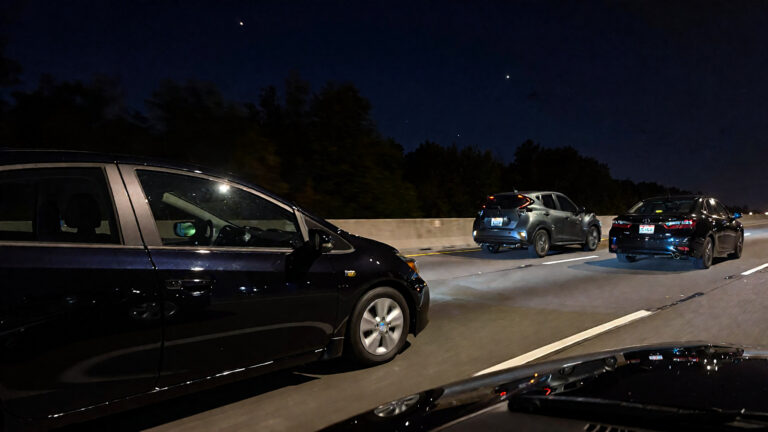
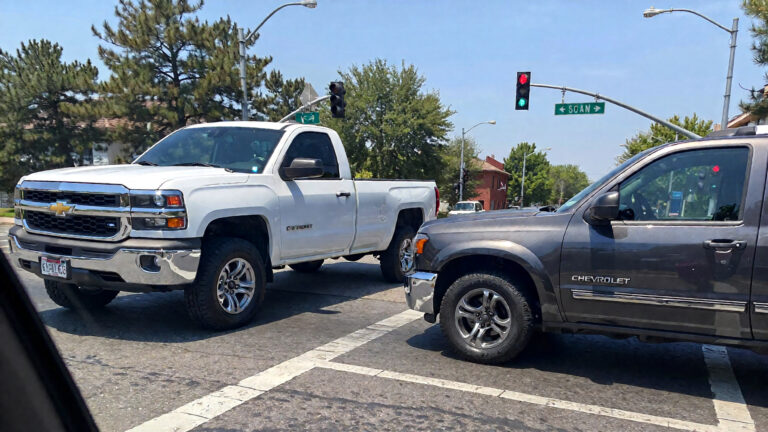
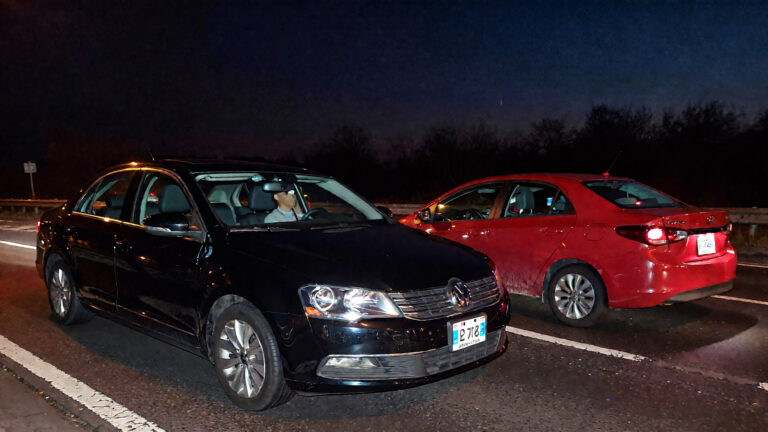
A large dump truck and a Honda sedan collided Wednesday morning on northbound U.S. Highway 101 in Santa Rosa, sending both vehicles off the roadway and into a ravine below. The highway crash was reported at approximately 7:10 a.m. on September 23 near the Mendocino Avenue off-ramp, just north of Hopper Avenue, an area that carries heavy commuter traffic during the morning rush.
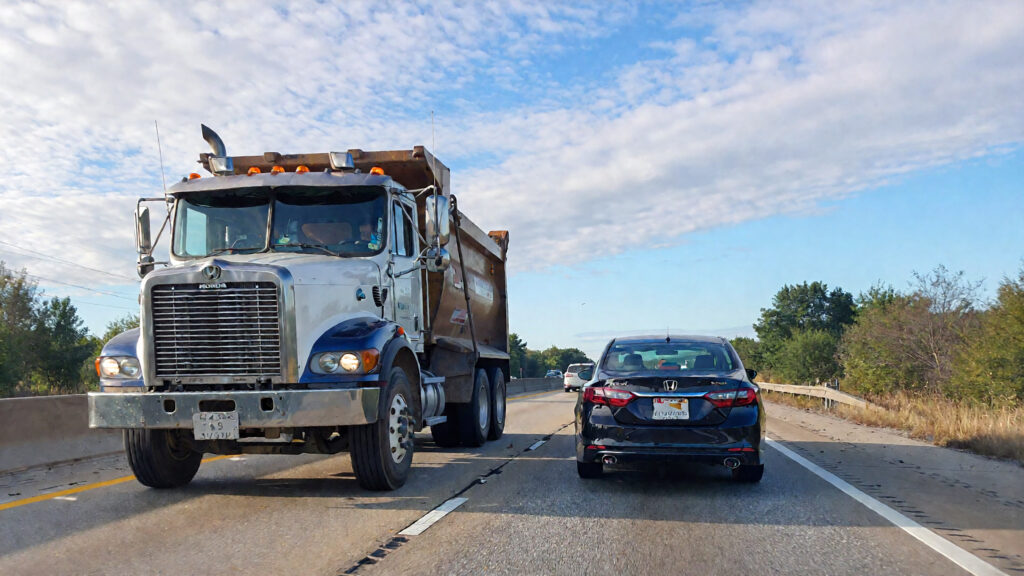
What We Know About the Highway Crash
Details remain limited as authorities continue to investigate. What is clear is that the collision was severe enough to force both vehicles off the highway and down into a ravine, a scenario that raises immediate concerns about the forces involved and the potential for serious injury.
Collisions between commercial vehicles, such as dump trucks, and passenger cars are especially dangerous due to the significant disparity in size and weight, which often results in disproportionate harm to the occupants of the smaller vehicle. As more information becomes available regarding the cause of the crash, the parties involved, and the extent of any injuries, this article will be updated accordingly.
The exact cause of the crash remains under investigation, and it is not yet known which vehicle initiated the chain of events that sent both off the highway. The Mendocino Avenue off-ramp area has long been a point of concern for local drivers due to the merging traffic patterns common during the morning commute, when vehicles must navigate lane changes while highway speeds remain high.
Emergency responders faced the added challenge of reaching the vehicles in the ravine, a task that can complicate rescue efforts and delay medical attention for injured occupants. Whether the dump truck was traveling to or from a job site, and whether mechanical issues, driver error, or another factor played a role, are questions that will likely be addressed once the California Highway Patrol completes its official collision report.
Common Causes of Commercial Truck Accidents on Highway 101
Crashes involving dump trucks and other commercial vehicles on busy corridors like Highway 101 often stem from factors unique to large trucks. Driver fatigue, inadequate training, improperly secured loads, mechanical failure, and unsafe speeds for road conditions are frequent contributors.
Because dump trucks are substantially heavier than passenger vehicles, they require longer stopping distances and are more prone to rollovers or loss of control, particularly near off-ramps and merge points such as the Mendocino Avenue exit. When a commercial driver or trucking company fails to follow safety regulations, the consequences for other motorists can be severe and life-altering.
Highway 101 through Santa Rosa sees a steady mix of commuter traffic and commercial vehicles serving the broader North Bay region, a combination that increases the likelihood of serious collisions during peak travel hours.
Distracted driving remains a persistent factor in truck accidents, as commercial drivers who spend long hours behind the wheel may be more susceptible to lapses in attention caused by phone use, fatigue, or simple monotony on familiar routes.
Poor visibility conditions, whether from early morning glare, fog common to the region, or debris kicked up by highway traffic, can also reduce a truck driver’s ability to react in time to changing road conditions.
Additionally, dump trucks operating with full or partially loaded beds carry a higher center of gravity, which makes them more susceptible to instability during sudden braking or evasive maneuvers, a factor that may become relevant as investigators piece together how this crash unfolded.
California Law Governing Truck and Auto Collisions
Under California Civil Code Section 1714, individuals and companies have a legal duty to exercise reasonable care to avoid injuring others, and a failure to do so that causes harm can result in liability for damages. Commercial trucking companies may also be held responsible under theories of negligent hiring, training, or maintenance if their oversight contributed to the crash.
California follows a pure comparative fault system, meaning that even if multiple parties share responsibility for an accident, an injured person can still recover compensation reduced by their own percentage of fault. Claims arising from this type of crash are generally subject to California’s statute of limitations under Code of Civil Procedure Section 335.1, which allows two years from the date of injury to file a personal injury lawsuit.
If the crash tragically results in a death, California’s wrongful death and survival action statutes under Code of Civil Procedure Sections 377.60 and 377.30 provide a legal path for surviving family members to pursue compensation.
In cases involving commercial trucks, California law also allows injured parties to pursue claims not just against the individual driver but against the trucking or hauling company that owns the vehicle, particularly when the company’s own negligence contributed to the crash.
This can include failing to properly maintain the vehicle, neglecting to verify a driver’s qualifications or safety record, or pushing drivers to meet unrealistic schedules that encourage unsafe driving. Federal Motor Carrier Safety Administration regulations also apply to many commercial trucking operations, and a violation of these federal standards can serve as strong evidence of negligence in a California civil claim.
If a government entity’s action or inaction, such as poor road design or inadequate signage near the off-ramp, is found to have contributed to the crash, California Government Code Section 835 provides a separate legal pathway for pursuing a claim against that public entity, though such claims carry unique procedural requirements and shorter deadlines than typical personal injury cases.
Understanding Potential Settlement Value
Injuries sustained in a truck versus passenger vehicle crash, especially one involving a vehicle leaving the roadway, can range from soft tissue injuries to catastrophic harm requiring long-term medical care. Attorneys and insurance adjusters often use one of two methods to estimate the value of pain and suffering in these cases.
The multiplier method takes the total of a victim’s economic damages, such as medical bills and lost wages, and multiplies that figure by a number typically between one and five, depending on the severity and permanence of the injuries. The per diem method instead assigns a specific dollar value to each day the victim experiences pain and suffering, from the date of the incident through the anticipated recovery period, and totals that daily rate over time.
Both approaches are starting points rather than guarantees, and the right method depends heavily on the specific facts of the case, the quality of medical documentation, and the strength of the evidence connecting the injuries to the crash.
Beyond pain and suffering, a full settlement calculation in a crash of this severity typically accounts for a range of economic damages, including emergency transport and hospitalization costs, surgery and follow-up care, physical therapy, and any long-term rehabilitation needs.
Lost wages and diminished earning capacity are also significant components, particularly for victims whose injuries prevent them from returning to their previous line of work or require a lengthy recovery period away from the job. In crashes involving a vehicle leaving the roadway and traveling into a ravine, injuries such as fractures, spinal trauma, or traumatic brain injury are not uncommon.
These more serious diagnoses tend to carry higher multipliers when calculating non-economic damages. An experienced attorney will typically work with medical experts and, when necessary, economic and vocational experts to ensure that both the immediate and long-term financial impact of the crash is fully accounted for before any settlement is accepted.
Truck Accident Settlement Calculators and Their Role in Determining Case Value
Truck accident settlement calculators serve as a starting point for both injured victims and their attorneys when trying to estimate what a truck accident claim might be worth, though they are best understood as an organizing tool rather than a precise predictor of outcome.
These calculators typically work by inputting known economic damages, such as medical bills, lost income, and property damage, and then applying either the multiplier method or the per diem method to estimate an additional figure for pain and suffering. While useful for framing early conversations about a case and helping victims understand the general range of compensation.
They may be entitled to, calculators cannot account for the nuanced factors that often determine the true value of a claim, including the strength of liability evidence, the credibility of witnesses, the reputation of the trucking company involved, and how a case might be perceived by a jury if it were to proceed to trial.
This is why settlement calculators are most valuable when used in conjunction with the guidance of an experienced attorney who understands how California courts and insurance companies actually value truck accident claims. A knowledgeable lawyer can adjust the assumptions built into a basic calculator to reflect case-specific realities, such as a victim’s age, the permanence of their injuries, their occupation, and any comparative fault issues that might reduce the final recovery.
Relying on a calculator alone risks either underestimating a claim’s true value, leaving compensation on the table, or overestimating it in a way that creates unrealistic expectations during negotiations. For victims of a serious truck accident, the smartest approach is to treat these tools as a helpful starting conversation and then turn to legal counsel to build a fully supported claim backed by medical records, expert testimony, and a clear accounting of both current and future losses. Call us now at 1-855-508-9565 to speak with the experts.
How GJEL Accident Attorneys Can Help
“Being involved in a crash like this one, especially when a vehicle is forced off the highway and into a ravine, can leave you feeling shaken, uncertain, and unsure of what to do next. That uncertainty is completely normal, but it shouldn’t stop you from getting the medical care and legal guidance you need. Insurance companies move quickly after a crash involving a commercial truck, often before an injured person has even had a chance to fully understand their injuries, and it’s important that someone is looking out for your interests just as closely. If you or a family member were hurt in this collision, please don’t wait to reach out. A conversation with our team costs you nothing, and it can make all the difference in ensuring you get the medical care, support, and compensation you deserve while you focus on healing.”— Andy Gillin, Managing Partner, GJEL Accident Attorneys
For more than 40 years, GJEL Accident Attorneys has represented victims of serious vehicle collisions throughout California, recovering more than $950 million for injured clients and their families. If you or someone you love was affected by this crash on Highway 101, our team can help you understand your rights, deal with insurance companies, and pursue the compensation you may be owed.
We handle every case on a contingency fee basis, which means you pay nothing unless we win your case. Call us today at 1-855-508-9565 or visit Sacramento office for a free, no-obligation consultation.
Resources and Support
For those seeking more information or assistance following this crash, several official resources are available. The California Highway Patrol’s Santa Rosa Area office oversees traffic enforcement and collision investigation for most of Sonoma County, including this stretch of Highway 101, and its office details can be found at chp.ca.gov/find-an-office/golden-gate-division/360-santa-rosa. Anyone who needs to formally request a copy of the official collision report once it becomes available can do so directly through the CHP’s online request page at chp.ca.gov/traffic/request-a-collision-report, which explains eligibility requirements and the steps for obtaining records as an involved party, insurance representative, or legal representative.
The Santa Rosa Police Department, which may assist with local traffic control and any related city services near the crash site, maintains an online tip line for anyone with information about incidents in the city at srcity.org/CrimeTips. This resource is often used for community reporting and can be a helpful channel for witnesses who want to share what they saw without visiting the station in person.
Providence Santa Rosa Memorial Hospital, the region’s only Level II Trauma Center and the most likely destination for anyone transported with serious injuries from this collision, offers detailed information about its emergency and trauma services at providence.org/locations/norcal/santa-rosa-memorial-hospital, including department contacts and patient resources for families seeking updates or support during a hospital stay.