A motorcyclist died Wednesday afternoon following a collision with a passenger vehicle at the intersection of Hastings and Keats Streets in Fremont. The crash, which occurred shortly before 1:40 p.m. on September 23, 2026, shut down traffic in the area as officers and emergency crews responded to the scene.
The collision prompted a significant emergency response, with Fremont police officers and paramedics arriving at the intersection within minutes of the initial call. Traffic in both directions on Hastings Street was disrupted for an extended period as investigators worked to document the scene, measure skid marks and debris fields, and gather statements before the roadway could be reopened to the public.
For residents and commuters who rely on Hastings and Keats streets during the afternoon commute, the closure served as a stark reminder of how quickly a routine drive can turn tragic, and how vulnerable motorcyclists remain even at intersections they may pass through every day.
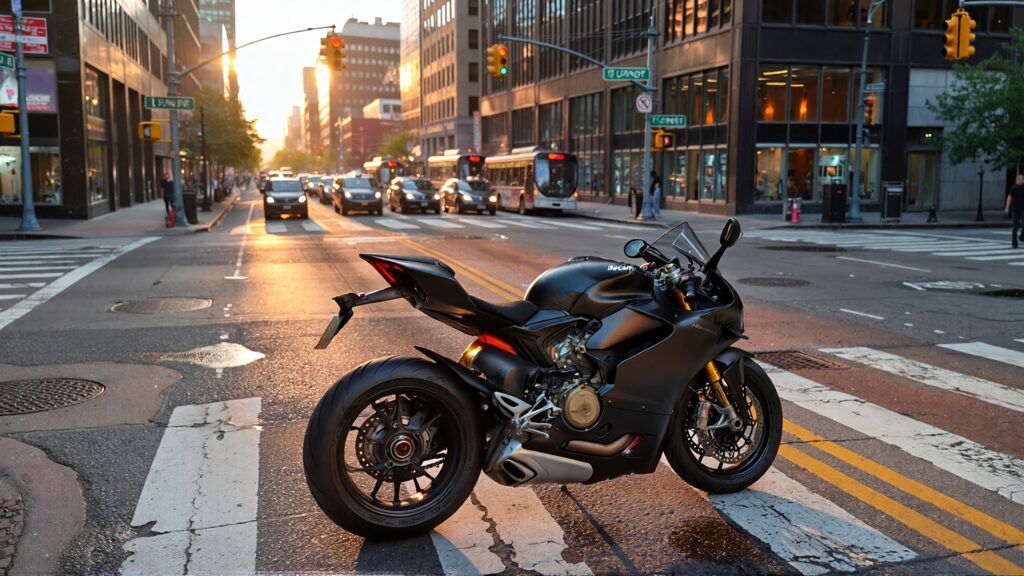
What Happened at Hastings and Keats Streets
According to the Fremont Police Department, officers arrived at the intersection to find the motorcyclist unresponsive. He was transported to a nearby trauma center, where he later succumbed to his injuries. The driver of the passenger vehicle remained at the scene, was not injured, and cooperated fully with investigators.
A preliminary investigation indicates the motorcycle was traveling northbound on Hastings Street when it collided with a passenger vehicle that was making a left turn from Keats Street onto southbound Hastings Street.
Left-turn collisions of this kind are among the most common and most dangerous scenarios motorcyclists face, since a turning driver may misjudge a motorcycle’s speed or distance, or may simply fail to see it in time to yield the right of way. The Fremont Police Traffic Unit continues to investigate the collision, and additional details may emerge as the investigation proceeds.
Understanding Liability in Left-Turn Motorcycle Accidents
California law generally requires a driver turning left to yield to oncoming traffic, including motorcycles, unless it is safe to complete the turn. Under California Civil Code Section 1714, every person is responsible for injuries caused by their failure to exercise ordinary care, and this duty applies fully to drivers making turns at intersections.
When a left-turning driver misjudges an oncoming motorcyclist’s speed or fails to see the motorcycle at all, that failure can form the basis of a negligence claim. Because California follows a pure comparative fault system, a driver can still be held financially responsible even if the motorcyclist bears some degree of fault for the collision.
Any compensation awarded is simply reduced by the injured party’s own percentage of responsibility. In practice, this means families should not assume that early or informal statements about fault will determine the final outcome.
A thorough investigation, including a review of the police report, the intersection’s sightlines, traffic signal timing, and any available surveillance or dashcam footage, is often necessary to establish exactly what happened in the moments before impact.
Legal Options for the Motorcyclist’s Family
When a fatal motorcycle accident occurs, surviving family members may have the right to pursue a wrongful death claim under California Code of Civil Procedure Section 377.60. This statute allows a decedent’s spouse, domestic partner, children, or other qualifying heirs to seek compensation for the losses that follow a loved one’s death, including loss of financial support, loss of companionship, and funeral and burial expenses.
In addition, a decedent’s estate may be able to bring a survival action under Code of Civil Procedure Section 377.30, which allows recovery for damages the decedent could have claimed had he survived, such as pain and suffering experienced between the collision and his death.
These two types of claims are distinct, and pursuing both often requires careful attention to who has standing to file and what damages are recoverable under each. Families navigating this process while grieving are not expected to sort out these legal distinctions on their own, and an experienced motorcycle accident attorney can help identify every avenue of compensation that may be available.
How Wrongful Death Settlements Are Calculated
Families exploring a wrongful death claim often want to understand how compensation is actually calculated. Attorneys and insurance adjusters typically rely on one of two methods to help value a claim involving significant, permanent, or fatal injuries.
The multiplier method starts with the total of measurable economic damages, such as medical bills, funeral costs, and lost financial support, and multiplies that figure by a number reflecting the severity of the loss and its impact on the family, often ranging from 1.5 to 5 depending on the circumstances.
The per diem method instead assigns a dollar value to each day the loss is expected to affect the family, then extends that figure over a relevant time period, such as the projected lifetime of lost companionship or support. Neither method produces an automatic number, and insurance companies frequently start with a low initial offer.
An attorney familiar with wrongful death valuations in California can help ensure that non-economic losses, including the emotional toll on a family, are not undervalued or overlooked entirely. It is also worth noting that these calculation methods are starting points for negotiation, not fixed formulas that guarantee a particular outcome.
Insurance companies often apply their own internal valuation models, which may be designed to minimize payouts rather than fairly account for a family’s actual losses. Factors such as the decedent’s age, earning capacity, and role within the family, as well as the strength of the evidence establishing fault, can all influence where a settlement ultimately lands.
Because every wrongful death claim carries its own unique set of circumstances, families are often better served by having an attorney independently calculate a range of fair value rather than relying solely on a number proposed by the at-fault driver’s insurer.
Motorcyclist Safety Precautions on Highways
Highway riding presents unique risks for motorcyclists that require heightened awareness and preparation, since higher speeds leave far less time to react to sudden lane changes, merging traffic, or debris in the roadway.
Wearing a properly fitted, DOT-approved helmet remains one of the most effective ways to reduce the severity of head injuries in a crash, and riders should also wear abrasion-resistant jackets, pants, and gloves designed to protect skin and joints in the event of a fall.
Staying visible is equally important on the highway, where a motorcycle’s smaller profile can make it difficult for drivers in cars and trucks to notice, so riders benefit from positioning themselves outside of blind spots, using reflective gear, and keeping their headlight on even during daylight hours.
Maintaining a safe following distance and constantly scanning for vehicles that may drift into a lane or attempt an unsafe merge can provide crucial extra seconds to react. Riders should also pay close attention to weather and road conditions, since wet pavement, strong crosswinds, and uneven surfaces affect motorcycles far more dramatically than passenger vehicles.
Even with every precaution in place, motorcyclists remain vulnerable to other drivers’ mistakes, which is why understanding one’s legal rights after a highway collision is just as important as practicing safe riding habits in the first place.
Motorcycle Accident Settlement Calculators and Their Role in Valuing a Claim
Motorcycle accident settlement calculators are tools attorneys and insurance adjusters use to arrive at a starting estimate of what a motorcycle accident claim may be worth, and understanding how they work can help injured riders and grieving families set realistic expectations early in the process.
These calculators typically take documented economic losses, such as medical expenses, lost wages, and property damage, and apply a multiplier or a per diem rate to account for pain and suffering and the broader impact of the injury or loss on daily life.
While a calculator can provide a useful baseline, it cannot capture every nuance of a particular case, such as the long-term effects of a traumatic injury, the emotional toll on a family after a fatal collision, or the specific facts that make one driver more clearly at fault than another.
This is why settlement calculators are best understood as a starting point for discussion rather than a final answer. An experienced motorcycle accident attorney uses these tools, alongside medical records, expert opinions, and a thorough review of the evidence, to help build a more complete and accurate picture of a claim’s true value, helping ensure that injured riders and surviving families are not shortchanged by a number that fails to reflect the full weight of what they have lost. Call us now at 1-855-508-9565 to speak with the experts.
Take Action Today: You Won’t Pay Unless We Win
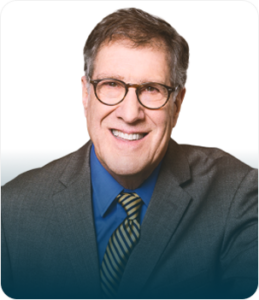
“Losing a family member in a crash like this is a pain no one should have to carry alone, and it’s made harder when you’re also trying to figure out insurance forms, police reports, and legal deadlines in the middle of grieving. You don’t have to sort through any of that by yourself. If you or someone you love has been hurt or lost in a motorcycle accident, please reach out to us. We’ll take the time to understand what happened, explain your options in plain language, and fight to make sure your family isn’t left carrying the financial burden of someone else’s mistake.”-Andy Gillin, GJEL Accident Attorneys
Losing a loved one in a sudden, preventable motorcycle collision is devastating, and the days that follow are often filled with confusion about what to do next. GJEL Accident Attorneys has recovered more than $950 million for injured clients and grieving families over more than 40 years, and our team is available to answer questions and explain your legal options at no upfront cost.
We handle every case on a contingency fee basis, meaning our clients pay nothing unless we recover compensation on their behalf. Call us today at 1-855-508-9565 or visit our Fairfield office to schedule a free, confidential consultation.
Local Resources for Families After This Collision
Anyone who witnessed the collision at Hastings and Keats streets or who has information about it is encouraged to contact the Fremont Police Traffic Unit at 510-790-6760 or by email at trafficunit@fremont.gov. The Fremont Police Department is located at 2000 Stevenson Boulevard, Fremont, CA 94538
Fremont Police Department: The department’s main office is located at 2000 Stevenson Boulevard, Fremont, CA 94538, and its records lobby is open Monday through Friday from 6:30 a.m. to 5:30 p.m. General Services and Records can be reached at 510-790-6800, and the Traffic Unit, which is handling this investigation, can be reached directly at 510-790-6760 or by email at trafficunit@fremont.gov. The department’s full website, including instructions for requesting a copy of a traffic collision report, is available at https://www.fremontpolice.gov.
California Highway Patrol, Hayward Area Office: The CHP’s Hayward Area covers the southwest portion of Alameda County, including Fremont, and is responsible for major freeways such as I-880, I-580, and SR-84. The office is located at 2434 Whipple Road, Hayward, CA 94544, and can be reached at 510-489-1500. More information, including additional traffic safety programs, is available at https://www.chp.ca.gov/find-an-office/golden-gate-division/345-hayward.
Alameda County Superior Court, Fremont Hall of Justice: For families who need to file or follow a wrongful death or survival action, the Fremont branch of the Alameda County Superior Court is located at 39439 Paseo Padre Parkway, Fremont, CA 94538, and can be reached at 510-795-2590. General court information and case lookup tools are available at https://www.alameda.courts.ca.gov.
Alameda County Sheriff’s Office Coroner’s Bureau: When a fatal collision requires an official determination of cause of death, the Coroner’s Bureau is located at 2901 Peralta Oaks Court, 2nd Floor, Oakland, CA 94605, and can be reached at 510-382-3000. Families can find additional information, including guidance on obtaining a death certificate, at https://www.alamedasheriff.gov.