Last updated July 17, 2026
A devastating head-on crash on Highway 33 in San Joaquin County claimed the life of one man and left a woman and a child fighting for their lives on the evening of December 18, 2025. The violent collision, which occurred southeast of Tracy near Vernalis Road, shut down the highway for hours as emergency responders worked the scene and investigators began piecing together what caused the deadly crash.
The tragedy unfolded when a pickup truck crossed into oncoming traffic and struck a van carrying the three victims, creating a horrific scene that required a massive emergency response, including fire crews, paramedics, and the coroner’s office. For the family members of those involved, what began as an ordinary Thursday evening ended in unimaginable heartbreak, with one life lost and two loved ones clinging to survival in a trauma center.
The crash serves as a stark reminder of how quickly lives can be shattered on California’s rural highways, where a single moment of distraction, drowsiness, or mechanical failure can result in catastrophic consequences for innocent travelers.
Details of the December 18 Head-On Crash
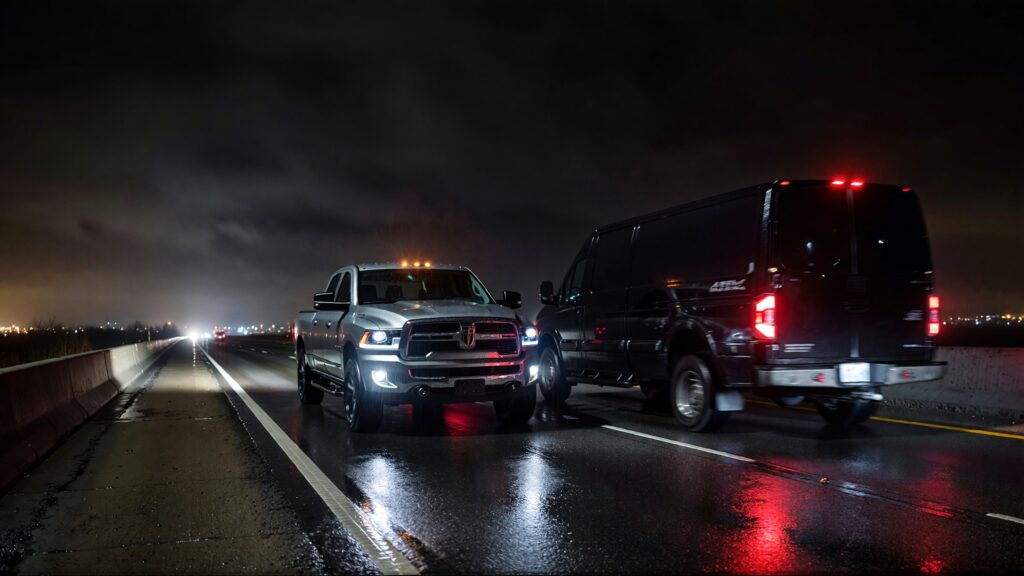
According to the California Highway Patrol, the collision occurred around 6:35 PM on Highway 33 just north of Vernalis Road. A silver pickup truck traveling eastbound suddenly crossed the centerline into oncoming traffic for reasons that remain under investigation. The pickup collided head-on with a black van traveling westbound, creating a catastrophic impact that proved fatal for the van’s driver.
Emergency personnel arrived quickly to find the male driver of the van with injuries so severe that fire personnel pronounced him dead at the scene. Two passengers in the truck—a woman and a child—sustained major injuries described by first responders as life-threatening. Both were rushed to San Joaquin General Hospital, where they received emergency treatment.
The driver of the pickup truck, whose vehicle initiated the wrong-way travel, sustained what authorities described as minor injuries to his extremities. He was transported to Doctors Medical Center in Modesto for evaluation and treatment.
Emergency Response and Highway Closure
The severity of the collision prompted a massive emergency response that included multiple fire units, paramedics, the San Joaquin County Coroner’s Office, and CHP investigators. The crash scene stretched across both lanes of Highway 33, requiring a complete closure of the roadway in both directions.
Caltrans personnel assisted with traffic control as vehicles were diverted around the crash site. The highway remained closed for approximately two hours while investigators photographed the scene, measured skid marks, documented vehicle positions, and gathered evidence that might explain why the pickup crossed into oncoming traffic. The extended closure created significant traffic delays for evening commuters traveling through this rural stretch of highway southeast of Tracy.
First responders faced challenging conditions as darkness fell over the crash scene, requiring them to use portable lighting equipment to document the extensive debris field and conduct their investigation properly. The mangled wreckage of both vehicles had to be carefully examined before tow trucks could remove them from the roadway, as investigators needed to preserve critical evidence, including impact points, crush patterns, and mechanical components that might reveal whether equipment failure played any role in the collision.
Caltrans crews also worked to clear shattered glass, vehicle fluids, and other debris from the roadway surface to ensure safe conditions before reopening Highway 33 to traffic. The complexity of the scene and the need for thorough documentation in a fatal crash meant that investigators could not rush their work, despite the inconvenience to motorists who found themselves stuck in long lines of traffic or forced to take lengthy detour routes through rural San Joaquin County roads.
For travelers unfamiliar with the area, the unexpected highway closure on a Thursday evening created confusion and frustration, though most understood the necessity once they learned a fatal collision was responsible for the backup.
Investigation Into the Cause of Wrong-Way Travel
CHP investigators are working to determine what caused the pickup truck driver to cross the centerline into the path of oncoming traffic. While authorities have stated that drugs and alcohol are not believed to have been factors in the crash, several other potential causes remain under examination.
Possible Contributing Factors Under Investigation
Driver distraction remains a leading cause of wrong-way collisions on California highways. Investigators will examine whether the pickup driver was using a cell phone, adjusting vehicle controls, or otherwise diverted their attention from the roadway at the critical moment before crossing the centerline.
Medical emergency represents another possibility that investigators must consider. A sudden health crisis—such as a heart attack, stroke, diabetic episode, or seizure—could cause a driver to lose control and drift into opposing lanes without the ability to correct.
Fatigue and drowsiness contribute to thousands of crashes annually in California. The 6:35 PM timeframe coincides with a period when many drivers experience decreased alertness after a full workday, and drowsy driving can lead to lane departure crashes similar to this incident.
Roadway and visibility conditions will also be examined. Investigators will consider whether lighting conditions at dusk, road surface issues, or inadequate lane markings may have contributed to the pickup’s departure from its proper lane.
Mechanical failure in the pickup truck’s steering, suspension, or tire systems could potentially cause a sudden loss of control. CHP investigators typically conduct thorough vehicle inspections following fatal collisions to determine if equipment failure was a contributing cause.
The investigation remains active, and CHP has not yet released the identity of the deceased driver pending notification of family members. Authorities continue to gather witness statements from anyone who may have observed the pickup’s driving behavior in the moments leading up to the collision.
Legal Rights After a Fatal Head-On Crash
When a loved one dies in a traffic collision caused by another driver’s negligence, California law provides surviving family members with the right to pursue a wrongful death claim. These cases recognize that the loss of a family member creates both profound emotional suffering and significant financial hardship that the at-fault party should be held accountable for.
Who Can File a Wrongful Death Claim in California
California Code of Civil Procedure Section 377.60 establishes a specific order of priority for who may bring a wrongful death action:
Surviving spouse or domestic partner has the primary right to file a claim on behalf of the deceased and other family members. If the deceased man in this Highway 33 crash were married, his wife would have the legal standing to pursue compensation.
Children of the deceased also have the right to file, whether they are minors or adults. If the deceased driver had children, they may seek damages for the loss of their father’s companionship, guidance, and financial support.
If no spouse or children survive, other relatives who were financially dependent on the deceased—such as parents, siblings, or grandparents—may have standing to bring a claim.
California law sets a strict two-year statute of limitations for wrongful death claims, meaning the family generally has two years from the date of death to file a lawsuit. While this may seem like ample time, these cases require extensive investigation and preparation, making it crucial for families to consult with an experienced attorney as soon as possible after losing a loved one.
Damages Available in Wrongful Death Cases
California wrongful death law allows surviving family members to recover several categories of damages:
Economic damages compensate for measurable financial losses, including funeral and burial expenses, medical bills incurred before death, loss of the deceased’s expected future earnings and benefits, loss of gifts and inheritance the deceased would have provided, and the value of household services the deceased would have performed.
Non-economic damages address the profound personal losses that cannot be precisely calculated but are nonetheless real and devastating. These include loss of companionship, affection, comfort, care, assistance, protection, and moral support that the deceased provided to family members.
The woman and child who suffered significant injuries in this collision also have the right to pursue personal injury claims for their own damages, including all medical expenses, lost wages, pain and suffering, emotional distress, and any permanent disabilities resulting from the crash.
Injured Passengers and Their Legal Rights
The two passengers transported to San Joaquin General Hospital with significant injuries face a long and challenging road to recovery. Head-on collisions generate tremendous forces that frequently result in severe, life-altering injuries.
Common Serious Injuries in Head-On Crashes
Traumatic brain injuries occur when the violent impact causes the brain to strike the inside of the skull, potentially leading to cognitive impairment, personality changes, memory problems, and permanent disability.
Spinal cord injuries can result in partial or complete paralysis, fundamentally altering every aspect of a victim’s life and requiring extensive long-term care and adaptive equipment.
Internal organ damage from blunt force trauma may affect the liver, spleen, kidneys, or other vital organs, sometimes requiring emergency surgery and creating ongoing health complications.
Severe fractures to the legs, pelvis, ribs, and other bones are common in head-on crashes, often necessitating multiple surgeries, extended rehabilitation, and potentially permanent mobility limitations.
Chest trauma can cause collapsed lungs, rib fractures, and damage to the heart or major blood vessels, creating life-threatening emergencies requiring immediate intervention.
Building a Strong Personal Injury Case
For injured passengers like the woman and child in this crash, establishing liability is typically straightforward when another driver crosses the centerline and causes a head-on collision. However, maximizing compensation requires thorough documentation and the expertise of experienced legal representation.
Complete medical documentation forms the foundation of any injury claim. This includes all emergency room records, hospital admissions, surgical reports, diagnostic imaging, physician notes, physical therapy records, and documentation of prescribed medications and medical equipment.
Expert testimony from medical professionals helps establish the full extent of injuries, the necessary future medical care, and how the injuries will affect the victim’s quality of life and earning capacity over time.
Economic analysis by vocational and financial experts can demonstrate the present value of future lost earnings, particularly important when injuries prevent a parent from returning to work or require expensive long-term care.
Life care planning, conducted by medical experts, helps calculate the costs of future medical treatment, home modifications, assistive devices, and ongoing care needs for individuals with permanent disabilities.
California law allows injured victims to recover compensation for all economic losses—past and future medical expenses, lost wages and diminished earning capacity, costs of household services they can no longer perform—as well as non-economic damages for pain, suffering, emotional distress, loss of enjoyment of life, and permanent disfigurement or disability.
Understanding Comparative Negligence in California
California follows a “pure comparative negligence” system, as outlined in Civil Code Section 1714, which allows injured parties to recover damages even if they bear some responsibility for an accident, with their compensation reduced by their percentage of fault.
In this Highway 33 collision, preliminary reports suggest the pickup driver who crossed the centerline bears full responsibility for the crash. However, defense attorneys and insurance companies often attempt to shift blame to victims by arguing they contributed to the accident in some way.
Defense Tactics That May Be Raised
Speed claims are frequently asserted, with defense attorneys arguing that if the van had been traveling at a slower speed, the driver might have had time to avoid the collision or the impact would have been less severe.
Visibility arguments might suggest the van’s headlights were not on or were inadequate, making the vehicle harder for the pickup driver to see in the early evening darkness.
Evasive action questions could be raised, with defendants claiming the van driver should have been able to steer onto the shoulder to avoid the collision.
These defensive theories typically fail in head-on collision cases where one vehicle clearly crossed the centerline, but they demonstrate why having experienced legal representation is essential. An attorney can counter these arguments with accident reconstruction evidence, eyewitness testimony, and expert analysis, showing that the victim had no reasonable opportunity to avoid a crash caused by the other driver’s sudden, wrong-way travel.
Even if some comparative fault were assigned—which seems unlikely in this case—the California pure comparative negligence rule means that the injured parties and the deceased victim’s family could still recover damages. If a jury found a victim 10% at fault, they would receive 90% of their total damages. If 25% at fault, they would receive 75% of the damages, and so on.
Highway 33 Safety Concerns and Rural Road Dangers
Highway 33 through San Joaquin County serves as a vital connector between Interstate 5 and the Central Valley communities, but like many rural highways, it presents unique safety challenges. This stretch of roadway, southeast of Tracy, sees a mix of agricultural traffic, commercial vehicles, and commuters traveling at highway speeds, with limited shoulders and few barriers separating opposing lanes.
Risk Factors on Rural California Highways
Higher speed limits on rural roads mean that when collisions occur, they tend to be more severe. The forces involved in a head-on crash at 55-65 mph are exponentially greater than those at lower urban speeds.
Lack of median barriers on many rural highways means that nothing prevents a vehicle that crosses the centerline from striking oncoming traffic. Wide median barriers and cable systems, commonly used on major freeways, would prevent many fatal head-on crashes; however, they are often absent on rural routes due to cost constraints.
Limited lighting creates visibility challenges during evening and nighttime hours, when drivers may have difficulty seeing lane markings or detecting vehicles drifting into their lane until it’s too late to react.
Longer emergency response times in rural areas mean that crash victims may wait longer for paramedics and trauma care compared to those in urban areas. That delay can be the difference between life and death for seriously injured victims.
Fatigue and inattention are particularly dangerous on rural highways, where drivers may become drowsy on long, monotonous stretches of roadway with few visual landmarks or traffic to maintain alertness.
According to the National Highway Traffic Safety Administration, rural roads account for more than half of all traffic fatalities nationwide despite carrying only a fraction of total vehicle miles traveled. The combination of higher speeds, fewer safety features, and longer emergency response times creates a deadly equation that claims thousands of lives annually.
What to Do If You’ve Been Injured in a Head-On Crash
If you or a loved one has been injured in a head-on crash caused by another driver crossing the centerline, taking the proper steps in the aftermath can protect both your health and your legal rights.
Immediate Priorities After a Serious Crash
Seek a comprehensive medical evaluation even if you initially feel your injuries are minor. Some severe conditions—including internal bleeding, brain injuries, and spinal damage—may not produce immediate symptoms but can be life-threatening if left untreated.
Follow all treatment recommendations from your physicians, attend all scheduled appointments, and complete prescribed rehabilitation programs. Insurance companies scrutinize medical records looking for gaps in treatment they can use to argue injuries weren’t serious.
Document everything related to the crash and your injuries. Please keep copies of all medical records and bills, photograph your injuries as they heal, maintain a journal describing your pain levels and limitations, and save all receipts for crash-related expenses.
Preserve evidence from the crash scene if possible. If you have photos from the scene, witness contact information, or any other documentation of the collision circumstances, provide these to your attorney.
Do not give recorded statements to insurance companies without first consulting an attorney. Insurance adjusters are trained to ask questions designed to minimize your claim or get you to accept fault. Politely decline to give recorded statements and refer them to your legal representation.
Avoid discussing the crash on social media, as insurance companies routinely monitor the social media accounts of injured parties, looking for posts or photos they can use to dispute injury claims.
Why Legal Representation Matters
Insurance companies employ teams of adjusters, investigators, and attorneys whose job is to minimize the compensation paid to crash victims. They may offer a quick settlement that sounds substantial but actually represents a fraction of what your case is truly worth, especially when considering future medical needs and long-term impacts.
An experienced personal injury attorney levels the playing field by:
Conducting an independent investigation into the crash causes often uncovers evidence that the initial police investigation missed, which strengthens your case.
Engaging expert witnesses—including accident reconstructionists, medical specialists, vocational experts, and economists—who can demonstrate the full extent of your losses to a jury.
Calculating the actual value of your claim, including all future medical expenses, long-term care needs, lost earning capacity, and non-economic damages that may not be immediately apparent.
Handling all communication with insurance companies so you can focus on healing while your attorney protects your interests.
Negotiating aggressively for maximum compensation and taking your case to trial if insurers refuse to offer fair settlement value.
Working on contingency, meaning you pay no attorney fees unless your case results in compensation, makes quality legal representation accessible regardless of your financial situation.
GJEL’s Commitment to San Joaquin County Crash Victims
At GJEL Accident Attorneys, we understand the devastating impact a serious traffic collision has on victims and their families. We’ve represented Northern California accident victims for over 40 years, recovering more than $980 million in compensation for our clients while maintaining one of the highest success rates in the state.
Our approach combines thorough investigation, aggressive advocacy, and genuine compassion for what our clients are experiencing. We know that no amount of money can undo the loss of a loved one or restore you to the health you enjoyed before a serious injury. Still, we also know that fair compensation provides the resources necessary to move forward—covering medical bills, replacing lost income, and holding negligent parties accountable for the harm they’ve caused.
How We Handle Head-On Collision Cases
Immediate investigation begins as soon as you contact our firm. We dispatch investigators to the crash scene while evidence is still available, and interview witnesses. At the same time, memories are fresh, and work with accident reconstructionists to establish precisely how and why the crash occurred.
A comprehensive damage assessment ensures that we pursue compensation for all your losses, both present and future. We collaborate with medical experts to fully understand the extent of your injuries and their long-term implications, and with financial experts to accurately calculate the economic impact on your life.
Aggressive negotiation with insurance companies backs up our settlement demands with thorough documentation and expert testimony that demonstrates the strength of your case. Insurers are aware of our reputation for taking cases to trial when necessary, which motivates them to make reasonable settlement offers.
Trial readiness remains our standard approach. While most cases settle before trial, we prepare every case as if it will go before a jury, ensuring we’re ready to fight for maximum compensation if negotiations fail to produce a fair result.
A contingency fee structure means you pay nothing unless we recover compensation on your behalf. This “no win, no fee” approach ensures that financial concerns don’t prevent crash victims from accessing the legal representation they need and deserve.
Calculating Compensation in Fatal and Injury Crashes
Understanding the potential value of a wrongful death or personal injury claim can help families make informed decisions about their legal options. While every case is unique, certain factors consistently influence case values.
Medical expenses form the foundation of most injury claims. In serious head-on collisions, emergency treatment, surgery, hospitalization, rehabilitation, and ongoing care easily reach hundreds of thousands or even millions of dollars over a victim’s lifetime.
Lost wages and earning capacity compensate for income lost during recovery and any reduction in future earning potential due to permanent disabilities. For a working-age adult rendered unable to return to their previous employment, this category alone can represent millions in lifetime losses.
Pain and suffering address the physical pain, emotional distress, and reduced quality of life caused by serious injuries. While more challenging to quantify than economic losses, non-economic damages often represent the most significant component of settlements in cases involving catastrophic injuries.
Loss of companionship in wrongful death cases attempts to compensate surviving family members for the immeasurable loss of the deceased person’s presence, guidance, love, and support. While no amount of money can truly compensate for losing a loved one, California law recognizes this loss as compensable.
Punitive damages may be available in rare cases involving particularly reckless or intentional conduct; however, they are not typically applicable in most negligence-based traffic cases.
The settlement calculator provides estimates based on similar cases. Still, actual results depend on the specific facts of your situation, the strength of evidence, the skill of your attorney, and the jurisdiction where your case is filed. An experienced personal injury attorney can provide a more precise case evaluation after reviewing all the details of your situation.
Understanding Fatal Car Accident Settlement Calculators
Fatal car accident settlement calculators serve as valuable tools that help surviving family members understand the potential compensation they may be entitled to pursue in a wrongful death claim. These calculators evaluate multiple factors that contribute to the overall case value, including the deceased’s age, income level, work-life expectancy, number of dependents, funeral and burial expenses, medical costs incurred before death, and the non-economic losses suffered by surviving family members.
The calculator applies established legal principles and draws from databases of similar case outcomes to generate an estimated settlement range, providing families with a realistic baseline for the potential value of their claim. However, it’s essential to understand that these tools provide estimates rather than guarantees, as actual settlement values depend heavily on case-specific factors, including the strength of liability evidence, the skill of legal representation, the jurisdiction in which the case is filed, and the willingness of insurance companies to negotiate fairly.
Economic damages in fatal accident cases can be calculated with relative precision—adding up funeral costs, lost wages, lost benefits, and the present value of future earnings the deceased would have provided—but non-economic damages for loss of companionship, guidance, and emotional support are inherently more subjective and require experienced legal analysis to value properly.
A settlement calculator serves as a helpful starting point for families trying to understand what fair compensation looks like, but consulting with an experienced wrongful death attorney remains essential for obtaining an accurate case valuation that accounts for all the unique circumstances of your loss. Attorneys can identify damages that families might overlook, such as loss of household services, loss of inheritance, and the specific emotional bonds between the deceased and each surviving family member, ensuring that no element of compensable loss goes unrecognized when pursuing justice for your loved one. Call us now at +1-866-218-3776 to speak with our experts.
Take Action Today – Get the Help You Deserve
“The families affected by this devastating Highway 33 collision are facing unimaginable pain—grieving the loss of a loved one while simultaneously supporting two seriously injured family members through what will likely be months or even years of recovery. As someone who has represented accident victims for over four decades, I know that no amount of money can bring back the person you’ve lost or erase the trauma of catastrophic injuries. Still, fair compensation can provide the financial stability needed to focus on healing rather than worrying about mounting medical bills and lost income. The insurance company for the at-fault driver will have investigators and adjusters working immediately to minimize their liability, which is why I urge any family member of the deceased or the injured passengers to contact an experienced wrongful death and personal injury attorney as soon as possible. California law gives you rights—the right to hold negligent parties accountable, the right to compensation for your losses, and the right to justice for what has been taken from you. At GJEL, we handle these cases on a contingency fee basis, meaning you pay nothing unless we recover compensation for you, so there’s no financial barrier to getting the legal guidance you need during this impossibly difficult time. Your focus should be on supporting your loved ones and beginning the healing process—let us handle the legal battle on your behalf.”- Andy Gillin, GJEL Accident Attorneys
If you or a loved one has been affected by this tragic Highway 33 collision or any severe traffic accident in San Joaquin County, don’t face the legal complexities alone while you’re trying to grieve and heal. GJEL Accident Attorneys has spent over 40 years fighting for Northern California accident victims, recovering more than $980 million in compensation for our clients.
We’re ready to put that experience to work for you. We understand that after a devastating crash resulting in wrongful death or catastrophic injuries, the last thing you need is the added stress of worrying about legal fees, which is why we handle every case on a contingency fee basis—meaning you pay absolutely nothing unless we successfully recover compensation for you. There are no upfront costs, no hourly billing, and no out-of-pocket expenses while your case is pending.
We only get paid when you get paid, and our fee comes as a percentage of your settlement or verdict, ensuring our interests are entirely aligned with yours. This “no win, no fee” structure means that families devastated by tragic accidents have immediate access to the exact high-caliber legal representation that insurance companies employ, regardless of their current financial situation.
Time is critical in these cases—evidence disappears, witnesses’ memories fade, and California’s statute of limitations starts running from the date of the accident—so contact GJEL today for a free, no-obligation consultation where we’ll review your case, explain your legal rights, and help you understand the path forward. Call us now at +1-866-218-3776 or visit our Oakland office to schedule your consultation. Let us shoulder the legal burden while you focus on what matters most: supporting your injured loved ones and honoring the memory of the person you’ve lost.
Resources for San Joaquin County Crash Victims
Several local agencies and organizations can assist those affected by this tragic collision:
California Highway Patrol – Stockton Area Office
Phone: (209) 948-7900
Address: 5875 Carpenter Road, Stockton, CA 95215
Website: www.chp.ca.gov
The CHP investigates serious traffic collisions and can provide crash reports once the investigation is complete. Traffic collision reports can be requested online or in person after the investigation concludes.
San Joaquin County Sheriff’s Office
Phone: (209) 468-4400
Address: 7000 Michael Canlis Blvd, French Camp, CA 95231
Website: www.sjgov.org/department/sheriff
Provides law enforcement services throughout unincorporated areas of San Joaquin County and can assist with accident-related inquiries.
Tracy Police Department
Phone: (209) 831-6550
Address: 1000 Civic Center Drive, Tracy, CA 95376
Website: www.ci.tracy.ca.us/police
Serves the Tracy area and can provide information about accidents within city limits.
San Joaquin Council of Governments (SJCOG)
Phone: (209) 235-0600
Address: 555 E Weber Avenue, Stockton, CA 95202
Website: www.sjcog.org
The regional transportation planning agency that coordinates highway safety programs and traffic management throughout San Joaquin County.
San Joaquin General Hospital
Phone: (209) 468-6000
Address: 500 W Hospital Road, French Camp, CA 95231
Website: www.sjgeneral.org
The county’s primary trauma center, where the injured woman and child were transported for emergency treatment. The hospital provides Level II trauma care and comprehensive emergency services.
Doctors Medical Center
Phone: (209) 578-1211
Address: 1441 Florida Avenue, Modesto, CA 95350
Website: www.doctorsmedicalcenter.org
Provides emergency and trauma care for the region where the pickup driver was transported for treatment.
San Joaquin County Coroner’s Office
Phone: (209) 468-3105
Address: 500 W Hospital Road, French Camp, CA 95231
Website: www.sjgov.org/department/sheriff/coroner
Handles death investigations and can provide information to family members. The coroner’s office issues death certificates and conducts investigations into sudden, unexpected, or violent deaths.
California Department of Motor Vehicles (DMV) – Stockton Office
Phone: 1-800-777-0133
Address: 3412 W Hammer Lane, Stockton, CA 95219
Website: www.dmv.ca.gov
Handles driver records, license suspensions related to traffic violations, and can provide driving history reports that may be relevant to accident investigations.
Caltrans District 10
Phone: (209) 948-7414
Address: 1976 E Dr Martin Luther King Jr Blvd, Stockton, CA 95205
Website: dot.ca.gov/caltrans-near-me/district-10
Responsible for state highway maintenance and can provide information about road conditions, construction projects, and highway safety improvements in San Joaquin County.
California Victim Compensation Board
Phone: 1-800-777-9229
Website: victims.ca.gov
Provides financial assistance for crime-related expenses, including funeral costs, medical bills, mental health counseling, income loss, and relocation expenses for surviving family members. While this program primarily serves crime victims, inevitable traffic crashes may qualify for assistance.
San Joaquin County Behavioral Health Services
Phone: (209) 468-8300
24-Hour Crisis Line: 1-888-376-6246
Address: 1212 N California Street, Stockton, CA 95202
Website: www.sjgov.org/department/bhd
Offers crisis intervention and counseling services for those dealing with trauma and grief following serious accidents. Services include individual therapy, family counseling, and support groups for those coping with traumatic loss.
Mothers Against Drunk Driving (MADD) – Central Valley Chapter
Phone: 1-877-MADD-HELP (1-877-623-3435)
Website: www.madd.org
Provides victim support services, court accompaniment, and emotional support for families affected by impaired driving crashes, even when alcohol is not confirmed as a factor.
National Highway Traffic Safety Administration (NHTSA)
Phone: 1-888-327-4236
Website: www.nhtsa.gov
Federal agency that tracks traffic safety data, vehicle defects, and crash statistics. Their website offers resources on vehicle safety recalls and complaint databases.
California Office of Traffic Safety
Phone: (916) 509-3030
Address: 2208 Kausen Drive, Suite 300, Elk Grove, CA 95758
Website: www.ots.ca.gov
Administers grant programs focused on reducing traffic deaths and injuries throughout California and provides educational resources on highway safety.
San Joaquin County Department of Public Works
Phone: (209) 468-3000
Address: 1810 E Hazelton Avenue, Stockton, CA 95205
Website: www.sjgov.org/department/public-works
Manages county road maintenance and can address concerns about dangerous road conditions on county-maintained highways.
Legal Aid of San Joaquin
Phone: (209) 948-0766
Address: 20 E Main Street, Suite 800, Stockton, CA 95202
Website: www.legalaidofsanjoaquin.org
Provides free legal assistance to low-income residents, though personal injury cases are typically handled on a contingency basis by private attorneys.
State Bar of California – Attorney Referral Service
Phone: 1-866-442-2529
Website: www.calbar.ca.gov
Provides referrals to qualified attorneys in various practice areas, including personal injury and wrongful death law, throughout San Joaquin County and California.
These resources can help accident victims and their families navigate the complex aftermath of a severe collision, from obtaining crash reports and medical care to finding emotional support and legal representation. Many of these agencies offer services at no cost to families dealing with the devastating impact of traffic accidents.