A fatal log truck collision on State Route 70 has left one driver dead and prompted a joint investigation by two Plumas County agencies. The crash occurred in a stretch of the Feather River Canyon known for its narrow, winding roadway, underscoring the risks commercial drivers and other motorists face when navigating this corridor.
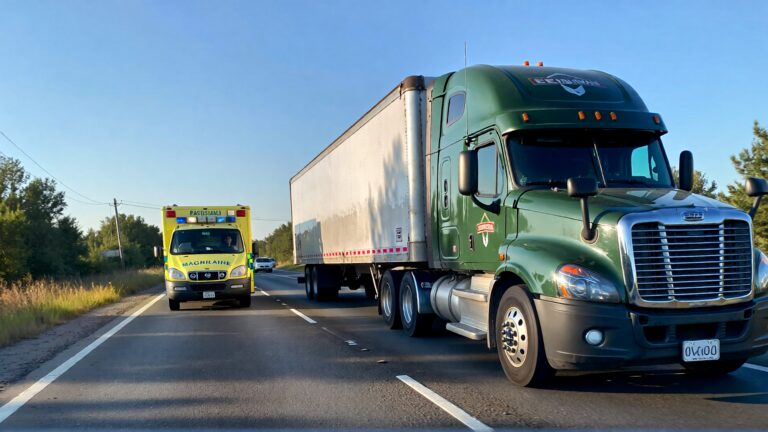
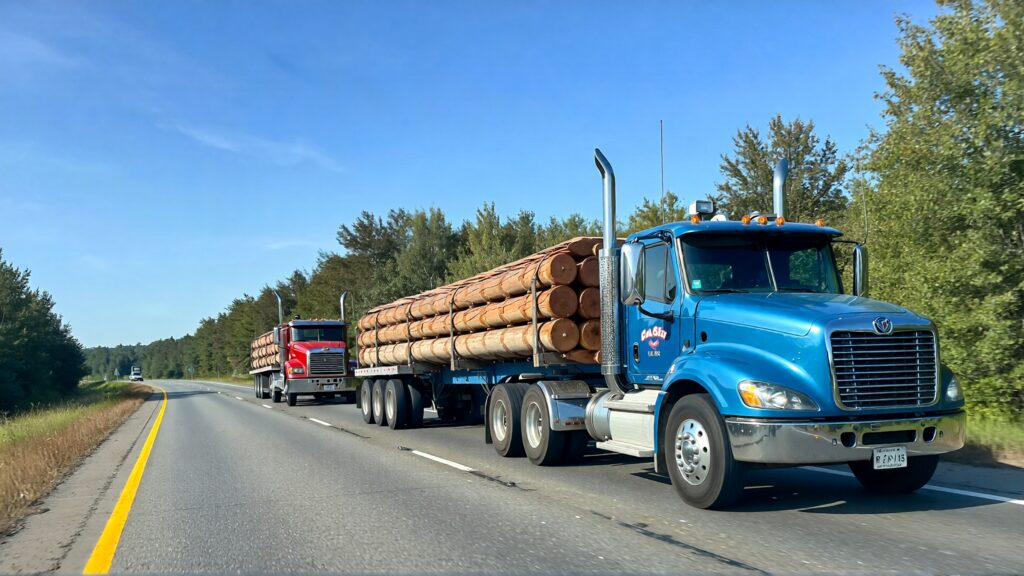
On August 14, 2026, at approximately 8:24 a.m., officers with the California Highway Patrol’s Quincy Area office responded to a two-vehicle collision on State Route 70, three miles west of Rush Creek in Plumas County. The crash involved a loaded log truck and an unloaded log truck traveling in opposite directions on the highway.
What Happened on SR-70 Log Truck Collision
According to the preliminary investigation, the loaded log truck was traveling eastbound on SR-70 at an undetermined speed, while the unloaded log truck was traveling westbound, also at an undetermined speed.
For reasons that have not yet been determined, the driver of the loaded log truck allowed his vehicle to cross the broken yellow center line and into the path of the oncoming unloaded log truck. The two trucks sideswiped one another.
The loaded log truck then collided with a rock wall along the roadway, while the unloaded log truck collided with a guardrail. The driver of the loaded log truck, a male, was pronounced deceased at the scene. The cause of the collision remains under investigation by the California Highway Patrol.
Sheriff’s Office Coordinating Death Investigation
Because the collision resulted in a fatality, the Plumas County Sheriff’s Office is conducting the death investigation in coordination with the CHP’s collision investigation. This dual-agency approach is standard practice in California for traffic collisions involving a death, allowing the Sheriff’s Office to handle matters within its jurisdiction.
These include such as notification of next of kin and coroner’s findings, while CHP investigators reconstruct the mechanics of the crash itself, including speed, road conditions, and driver actions leading up to the impact.
This kind of joint investigation can take weeks or even months to complete, particularly when a commercial vehicle is involved. Investigators will likely examine the loaded log truck’s maintenance records, its load securement, and any available data from the vehicle’s onboard systems.
This is in addition to physical evidence at the scene, such as skid marks, debris patterns, and damage to the rock wall and guardrail. The Sheriff’s Office coroner’s findings will also help determine whether a medical event may have contributed to the driver’s loss of control. Until both agencies conclude their review, the official cause of the collision will remain undetermined.
At this stage, investigators have not determined the cause of why the loaded log truck crossed into the opposing lane. Possible contributing factors in commercial truck collisions on mountain highways like the SR-70 corridor through the Feather River Canyon often include driver fatigue.
Also, mechanical failure such as brake or steering issues, load shift affecting vehicle control, roadway conditions, or a medical event behind the wheel. Until the CHP completes its investigation, no cause should be assumed.
Understanding Liability in California Commercial Truck Collisions
When a commercial vehicle, such as a loaded log truck, crosses a center line and strikes an oncoming vehicle, California law generally treats this as evidence of negligence unless the driver can show the crossing was unavoidable. Under California Civil Code §1714, every person is responsible for injuries caused by their want of ordinary care or skill, and this duty applies equally to commercial drivers operating heavy equipment on public highways.
Log trucks and other commercial vehicles are also subject to additional regulations beyond the California Vehicle Code, including federal motor carrier safety regulations governing hours of service, vehicle maintenance, and load securement. If an investigation reveals that fatigue, improper load securement, or a maintenance failure contributed to the crash, liability may extend beyond the driver to the trucking company, the logging operation, or a maintenance contractor responsible for the vehicle’s condition.
Because the driver who crossed the center line died in the crash, any civil claims arising from injuries to others involved, or from damage caused by the collision, would typically be pursued against the deceased driver’s estate or employer, depending on how the investigation resolves questions of fault and employment status.
California Code of Civil Procedure §377.30 allows a cause of action to survive a defendant’s death and be pursued against their estate, while CCP §377.60 governs wrongful death claims brought by surviving family members when a death results from another party’s negligence.
Government Code §835 may also become relevant if defects in the roadway, such as inadequate barriers, signage, or maintenance of the rock wall or guardrail involved in this crash, contributed to the severity of the outcome. Claims against a public entity for dangerous conditions on public property carry strict, short filing deadlines, so anyone considering this avenue should act quickly.
Statute of Limitations for California Truck Accident Claims
California Code of Civil Procedure §335.1 generally gives injury victims two years from the date of an incident to file a personal injury lawsuit. Wrongful death claims under CCP §377.60 are also generally subject to a two-year deadline. However, claims involving government entities, such as those alleging a dangerous condition of a state highway under Government Code §835.
Require that a claim be filed with the relevant public entity within six months of the incident, a significantly shorter window than for standard injury claims. Anyone affected by this collision should not wait to understand which deadlines may apply to their situation.
These deadlines can become more complicated when a case involves a deceased at-fault driver, a commercial trucking company, and potentially a public entity all at once, as may be the case here. Each potential defendant can carry its own filing requirements and evidentiary demands, and missing even one deadline can permanently bar a claim regardless of its merit.
Surviving family members and any other individuals affected by this collision should consult with an attorney as soon as possible to identify every applicable deadline and preserve their right to pursue compensation while evidence from the ongoing CHP and Sheriff’s Office investigations is still being gathered.
How a Settlement Calculator Estimates Truck Accident Compensation
Families and individuals affected by a serious truck collision often want to understand what their claim might be worth. Personal injury attorneys commonly use two methods to estimate a starting point for settlement negotiations: the multiplier method and the per diem method.
The Multiplier Method
The multiplier method takes the total of a victim’s economic damages, such as medical bills, lost wages, and property damage, and multiplies that figure by a number typically ranging from 1.5 to 5, depending on the severity of the injuries, the strength of the liability evidence, and the impact on the victim’s life.
A collision involving a large commercial vehicle that crossed into oncoming traffic, resulting in a fatality, would generally support a higher multiplier, given the severity of the circumstances and the clear evidence of a lane departure in the CHP’s preliminary findings.
The Per Diem Method
The per diem method assigns a specific dollar value for each day a victim experiences pain, suffering, or disability, from the date of the incident until they reach maximum medical improvement. This method is often used in cases involving a defined recovery period and can be especially useful in calculating damages for surviving family members’ loss of companionship in a wrongful death claim, or for injury victims facing an extended recovery.
Both methods produce estimates only. The actual value of a claim depends on the specific facts developed during the investigation, including the final determination of cause, any commercial or regulatory violations uncovered, and the extent of any injuries or losses sustained by those involved.
Fatal Truck Accident Settlement Calculators and How They Help Compute Settlement Values
A truck accident settlement calculator gives grieving families a starting point for understanding what a fatal truck accident claim may be worth, though it is never a substitute for a full case evaluation.
These tools typically combine the economic losses that can be documented, such as funeral and burial expenses, the deceased’s lost future earnings and benefits, and any medical costs incurred before death, with a multiplier or per diem figure that accounts for non-economic losses like the loss of companionship, guidance, and support the deceased would have provided to surviving family members.
In a case like this one, where a commercial vehicle crossed into oncoming traffic on a state highway, the strength of the liability evidence captured in the CHP’s preliminary findings can push a settlement calculator toward a higher multiplier, since clear evidence of a lane departure by a commercial driver often signals a stronger claim than cases where fault is disputed.
Because every family’s circumstances differ, including the age and earning capacity of the deceased, the number of dependents, and the specific facts uncovered as the investigation concludes, a settlement calculator should be treated as a general guide rather than a final number, with an experienced truck accident attorney refining that estimate as more information becomes available. Call us now at +1-866-218-3776 to speak with the experts.
Take Action Today – Get the Help You Deserve
“Our hearts go out to everyone affected by this collision, especially the family of the driver who lost his life. Commercial trucking crashes on highways like SR-70 are often complicated, involving multiple regulations, multiple potentially responsible parties, and investigations that can take weeks or months to conclude. We’ve spent more than 40 years helping California families get answers and accountability after crashes like this one, and we understand how important it is to have someone in your corner while the facts come to light.” – Andy Gillin, GJEL Accident Attorneys
If you or a loved one has been affected by this collision or another commercial truck accident in California, the attorneys at GJEL Accident Attorneys are here to help.
With over $950 million recovered for our clients and more than 40 years of experience handling serious and fatal truck accident cases throughout California, we understand what it takes to hold negligent trucking companies and drivers accountable.
We work on a contingency fee basis, meaning you pay nothing unless we win your case. Call us today at +1-866-218-3776 or visit our San Francisco office to schedule your free, no-obligation consultation.
Local Resources and Assistance
For those seeking more information related to this collision, ongoing safety conditions on SR-70, or how to obtain official records, the following official websites can help:
California Highway Patrol, Quincy Area Office
https://www.chp.ca.gov/find-an-office/northern-division/offices/(165)-quincy
This is the official CHP page for the Quincy Area office, which responded to and is investigating this collision. The page includes office details, jurisdiction information, and contact resources for the Feather River Canyon area of SR-70.
Plumas County Sheriff’s Office
https://www.plumascounty.us/587/SheriffCoroner
This is the official Plumas County Sheriff-Coroner page, providing information on the office’s role in death investigations, coroner’s findings, and how to reach the department regarding this case.
CHP Statewide Integrated Traffic Records System (SWITRS)
https://www.chp.ca.gov/programs-services/services-information/switrs-internet-statewide-integrated-traffic-records-system
SWITRS is the CHP’s official database of collision data statewide. This resource allows members of the public, researchers, and other interested parties to request statistical reports on collisions, including those occurring on SR-70.
CHP Collision Report Request (Form CHP 190)
https://www.chp.ca.gov/traffic/request-a-collision-report
This official CHP page explains how a proper party of interest, such as a driver, passenger, vehicle owner, or legal representative, can request a copy of the official collision report once it has been completed and filed.
Caltrans District 2
https://dot.ca.gov/caltrans-near-me/district-2
Caltrans District 2 oversees the maintenance and condition of SR-70 through Plumas County, including the Feather River Canyon corridor. This page provides current highway conditions, lane closures, and safety project updates relevant to the stretch of roadway where this collision occurred.
Plumas County Official Website
https://www.plumascounty.us
The county’s official website provides access to additional departments and services that may be relevant to those affected by this collision, including the Sheriff-Coroner’s office, public records requests, and general county resources.