Last updated July 17, 2026
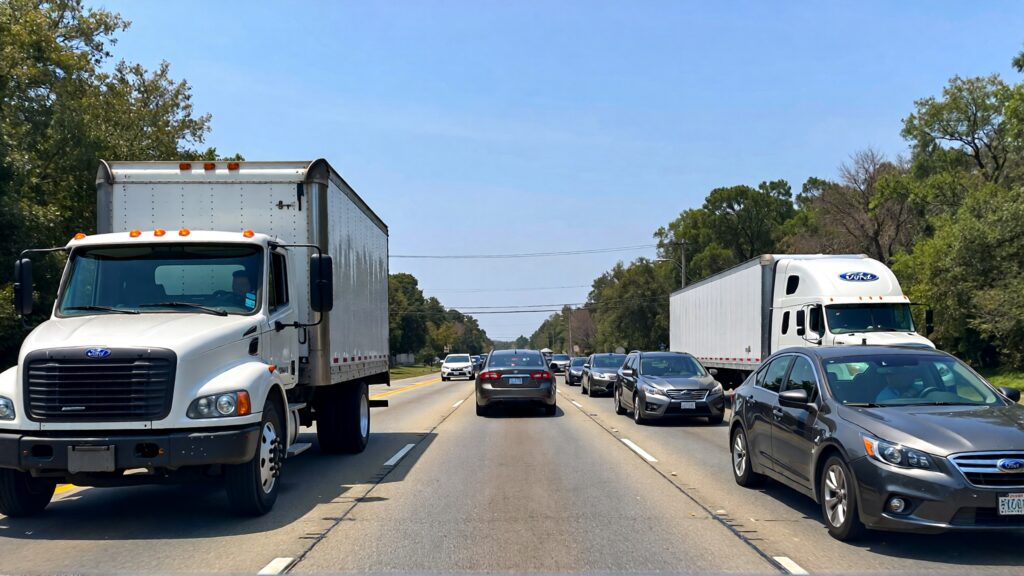
A fatal multi-vehicle crash on northbound U.S. Highway 101 in Santa Rosa claimed at least one life and brought the morning commute to a near standstill on Wednesday, June 3, 2026. The crash occurred just south of the State Route 12 interchange shortly before 8 a.m. and involved multiple vehicles, including a white Chevrolet Silverado 5500 work truck, a white big rig, multiple sedans, a gray Ford SUV, and a gray Subaru that came to rest blocking the middle lanes.
Authorities were forced to divert all northbound traffic from Highway 101 onto Highway 12, and the closure lasted more than 2 hours before lanes reopened. For families of those involved and anyone injured in the wreckage, understanding your legal rights in the aftermath is a critical first step.
What Happened in the Multi-Vehicle Crash
The collision was reported shortly before 8 a.m. on northbound Highway 101 just south of the Highway 12 connector. CHP dispatch logs indicate the crash initially came in as a traffic collision with unknown injuries but was later upgraded to a fatal incident.
Authorities shut down lanes No. 2 and 3 as emergency crews responded to the scene, and a SigAlert was issued around 8:08 a.m., warning motorists of significant delays on northbound Highway 101 south of Highway 12. CHP Officer David deRutte, a Santa Rosa spokesperson, confirmed one fatality and stated that investigators were still interviewing and working with the other involved parties.
All northbound traffic was diverted onto Highway 12 before the highway eventually reopened around 10:30 a.m. The cause of the collision remained under active investigation as of Wednesday morning, and no identities had been publicly released.
The Legal Landscape After a Fatal Multi-Vehicle Highway Crash
When a crash of this magnitude occurs on a major California freeway, the legal questions that follow are often as complex as the collision itself. California Civil Code Section 1714 establishes the foundational duty of care that every driver owes to others on the road.
When a driver breaches that duty through negligence, recklessness, or any failure to operate their vehicle safely, they may be held civilly liable for the resulting damages. Multi-vehicle crashes like this one on Highway 101 present unique liability challenges.
With at least five vehicles involved, including a commercial big rig, investigators and attorneys must carefully reconstruct the sequence of events to determine how and why the collision began. Chain-reaction crashes often involve more than one negligent party, meaning liability may be shared among multiple drivers and, in some cases, their employers or insurers.
Big Rig and Commercial Truck Involvement
The presence of a commercial big rig in this collision raises additional and significant legal considerations under both California and federal law. Commercial trucking companies are subject to regulations enforced by the Federal Motor Carrier Safety Administration, which govern driver hours of service, vehicle maintenance, load securement, and licensing requirements.
When a big rig is involved in a fatal crash, a thorough investigation must examine the truck’s electronic logging device data, the driver’s service hours, pre-trip inspection records, and the trucking company’s safety compliance history. Under California law, a trucking employer can be held vicariously liable for the negligent acts of its driver when those acts occur within the course and scope of employment.
This means injured parties and families of those killed may have claims not only against the individual driver but also against the company that employed them, expanding the pool of potential compensation significantly.
Who Can File a Wrongful Death Claim in California
When a fatal collision takes the life of a loved one, California law provides a pathway for surviving family members to pursue a wrongful death claim under Code of Civil Procedure Section 377.60. Those eligible to bring such a claim typically include a surviving spouse or domestic partner, children of the deceased, and in some cases, other dependents who relied on the decedent for financial support.
A successful wrongful death claim can recover damages including loss of financial support, loss of companionship and guidance, funeral and burial expenses, and the economic value of services the deceased provided to the household. California law also permits a survival action under CCP Section 377.30, which allows the estate of the deceased to pursue damages for the pain, suffering, and losses the victim experienced from the moment of impact to the time of death.
It is also important for families to understand that wrongful death claims in California carry strict procedural deadlines that cannot be overlooked in the fog of grief. Under Code of Civil Procedure Section 335.1, eligible family members generally have two years from the date of their loved one’s death to file a wrongful death lawsuit.
Missing this deadline can permanently bar a family from pursuing any compensation, regardless of how clear the negligence or how devastating the loss. Acting quickly is not just advisable; it is essential. In the immediate aftermath of a fatal crash, an attorney can begin preserving evidence, identifying all liable parties, and communicating with insurance carriers on the family’s behalf, protecting the claim while the family focuses on grieving and healing.
Insurance companies representing trucking firms and other commercial defendants move swiftly after a fatal crash to investigate, document, and build defenses that serve their own financial interests. Having experienced legal representation in place as early as possible levels the playing field and ensures that the family’s rights are not quietly eroded during a period of profound vulnerability.
Injury Claims for Surviving Victims
For those who survived the crash but suffered injuries, California’s two-year statute of limitations under Code of Civil Procedure Section 335.1 establishes the window within which a personal injury lawsuit must be filed. Waiting too long can permanently extinguish your right to compensation, regardless of how serious your injuries are.
Beginning the legal process promptly allows your attorney to preserve critical evidence, including vehicle black box data, surveillance footage, and witness statements, before they are lost or destroyed. Injuries sustained in high-speed freeway collisions frequently include traumatic brain injuries, spinal cord damage, broken bones, internal organ damage, and severe lacerations.
Many of these injuries carry long-term or permanent consequences that affect a victim’s ability to work, care for their family, and enjoy their daily life. California law allows injured victims to seek compensation for medical expenses, lost wages, future earning capacity, and pain and suffering.
Beyond the physical injuries themselves, surviving victims of serious freeway collisions often face a cascading series of financial and emotional hardships that are equally compensable under California law. Medical bills can accumulate rapidly in the days and weeks following a high-speed multi-vehicle crash, often reaching six or seven figures before a victim has even begun rehabilitation or long-term care.
At the same time, many victims find themselves unable to return to work for weeks, months, or permanently, resulting in lost wages and diminished future earning capacity. California law recognizes these compounding losses and allows injured plaintiffs to seek compensation not only for expenses already incurred but also for projected future medical costs and anticipated lost earnings based on the victim’s age, occupation, and pre-injury earning history.
Non-economic damages, including emotional distress, loss of enjoyment of life, and the psychological trauma that frequently follows a violent collision, are also fully recoverable. An experienced personal injury attorney will work with medical experts, economists, and vocational specialists to build a comprehensive picture of damages that reflects the true and lasting impact of the crash across every dimension of a survivor’s life.
How Settlement Value Is Calculated in Multi-Vehicle Crash Cases
Determining the value of a personal injury or wrongful death claim requires a careful analysis of all economic and non-economic damages. Personal injury attorneys typically use two primary methods to calculate potential settlement value. The multiplier method multiplies the total of a victim’s economic damages, including medical bills and lost income, by a number typically ranging from 1.5 to 5, depending on the severity and permanence of the injuries.
A fatal crash or one resulting in catastrophic, lifelong injuries would typically support a multiplier at the higher end of that range. The per diem method assigns a daily dollar value to the victim’s pain and suffering and multiplies it by the number of days the suffering is expected to last.
In cases involving permanent disability or chronic pain, this calculation can extend over years or even decades, reflecting the true long-term impact of the crash on the victim’s life. GJEL Accident Attorneys’ settlement calculator at gjel.com can help families begin to understand the potential value of their case.
When multiple vehicles and a commercial truck are involved in a single collision, settlement negotiations become considerably more complex. Each liable party, whether an individual driver, a trucking company, or a vehicle manufacturer, in cases involving mechanical failure, typically carries separate insurance policies with different coverage limits.
California follows a pure comparative fault system, meaning that even if an injured victim is found to bear some percentage of fault for the collision, they can still recover damages proportionally reduced by their share of responsibility. In a crash of this scale, involving at least five vehicles, experienced accident attorneys will work to identify every potentially liable party and pursue maximum compensation from all available sources simultaneously.
This approach is especially important in fatal crashes and catastrophic injury cases, where the total damages often exceed the policy limits of any single defendant, making the identification of all responsible parties a financial necessity for the families and survivors left to rebuild their lives.
How a Wrongful Death Settlement Calculator Can Help Families Understand Their Case Value
In the immediate aftermath of losing a loved one to a preventable crash, the idea of calculating a dollar figure for that loss can feel overwhelming and even uncomfortable. A wrongful death settlement calculator helps grieving families navigate the process with greater clarity and confidence.
By inputting key details such as the deceased’s age, annual income, life expectancy, the nature of the relationship between survivors and the deceased, and the estimated costs of funeral and burial expenses, the calculator generates a preliminary estimate of the economic and non-economic damages a family may be entitled to pursue.
This figure accounts for the present value of the financial support the deceased would have provided over the course of their working life, the monetary value of household services they contributed, and the profound non-economic losses, such as companionship, guidance, and emotional support that surviving spouses, children, and dependents will carry for the rest of their lives.
While no calculator can capture the full human cost of a wrongful death, these tools serve a critical practical purpose by giving families a data-informed starting point before their first conversation with an attorney.
Understanding even a rough estimate of potential case value helps families make informed decisions about whether to pursue litigation, how to evaluate settlement offers from insurance carriers, and what level of legal representation their case may warrant. At GJEL Accident Attorneys, our team is available to walk families through these figures personally and explain how the specific facts of their case may affect the final outcome.
Take Action Today – Get the Help You Deserve
“When a crash like this happens on a busy corridor like Highway 101, the grief and confusion that follow can be overwhelming. Families who have lost someone, and those who are still fighting to recover from serious injuries, deserve answers, accountability, and fair compensation. In our more than 40 years of handling cases just like this one, we have seen how quickly critical evidence can disappear and how aggressively insurance companies move to protect their own interests. My message to every family touched by this tragedy is this: do not face this process alone. Our team is here to stand with you, protect your rights, and make sure that the people responsible are held fully accountable for the devastation they have caused.”- Andy Gillin, GJEL Accident Attorneys
GJEL Accident Attorneys works exclusively on a contingency fee basis, which means you pay nothing unless we secure compensation for you. With more than $980 million recovered for injured clients and 40-plus years of experience representing victims across California, our firm has the resources and dedication to take on complex multi-vehicle and commercial trucking cases.
If you or a family member was involved in the June 3 crash on Highway 101 in Santa Rosa, call us today at +1-866-218-3776 or visit our Oakland office to schedule a free consultation.
Local Resources and Support Services for Victims of the Highway 101 Fatal Crash in Santa Rosa
Santa Rosa Police Department can assist with accident reports and victim referrals. Located at 965 Sonoma Ave., Santa Rosa, CA 95404. Call (707) 543-3600 or visit srcity.org/2085/Police-Department.
California Highway Patrol, Santa Rosa Area Office, is the primary agency investigating this collision and can provide crash reports to the involved parties. Call (707) 588-1400 or visit chp.ca.gov.
Caltrans District 4 manages Highway 101 and SR-12 and provides real-time traffic and incident information. Visit dot.ca.gov/caltrans-near-me/district-4 or use the statewide traffic tool at quickmap.dot.ca.gov.
511 Sonoma County provides real-time traffic updates and alternate route guidance for the Highway 101 corridor. Dial 511 or visit 511.org.
Santa Rosa Memorial Hospital is the area’s Level II Trauma Center located at 1165 Montgomery Drive, Santa Rosa, CA 95405. Call (707) 525-5300 or visit dignityhealth.org/northbay/locations/memorial.
Sonoma County Victim/Witness Assistance Program offers free counseling referrals and legal support for trauma victims. Call (707) 565-2781 or visit sonomacounty.ca.gov/victim-witness.
Sonoma County Behavioral Health provides crisis intervention and grief counseling through a 24-hour crisis line at (707) 576-8181 or at sonomacounty.ca.gov/behavioral-health.
California Victim Compensation Board offers financial assistance for medical, counseling, and funeral costs. Call 1-800-777-9229 or visit vcb.ca.gov