A driver lost their life in a single-vehicle crash in San Joaquin County on the evening of Thursday, November 12, 2026. The crash is a painful reminder of how quickly an ordinary drive can end in tragedy. The investigation into this crash is still in its early stages, and many questions remain about what led the vehicle to leave the roadway.
Families often wait days or even weeks for official answers, and during that time they are left to manage grief, funeral arrangements, and financial uncertainty all at once. Understanding that a single-vehicle collision can involve factors beyond the driver’s control, such as a mechanical failure, a roadway hazard, or another motorist’s actions, can help families make sense of what comes next and recognize when it may be worth seeking guidance.
What We Know About the Crash
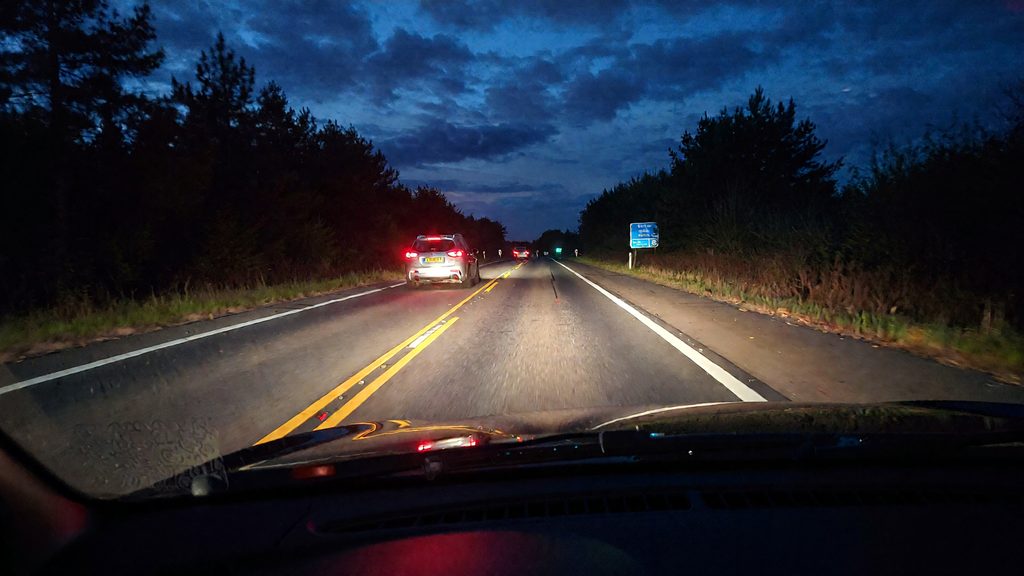
According to the California Highway Patrol, the collision occurred at approximately 7:22 PM near westbound Highway 12 onto southbound I-5, close to the Flying J Travel Center in a rural area east of Lodi. Investigators report that the driver appeared to have lost control of their vehicle, causing it to leave the roadway.
The driver sustained fatal injuries in the crash. The circumstances surrounding this collision remain limited to what the California Highway Patrol has shared so far. The crash occurred after dark on a Thursday evening, when reduced visibility can make it harder for drivers to see hazards along the roadway, particularly on rural stretches east of Lodi, where lighting may be sparse.
The location near the westbound Highway 12 connection to southbound I-5 is a busy transition point used by local commuters, farm and delivery traffic, and long-haul truckers who stop at the nearby Flying J Travel Center. Because investigators have not said what caused the driver to lose control, it is important not to assume anything about speed, impairment, or fault.
Details such as the condition of the road surface, the vehicle’s mechanical state, and any evidence of other traffic involved will likely play a central role in determining what happened.
Details Still Unknown
Authorities have not yet released further information about the collision. The identity of the driver has not been made public, and it is not yet known whether drugs or alcohol are believed to have played a role. Until the investigation is complete, it would be premature to draw conclusions about why the vehicle left the road.
Several important questions about this collision remain unanswered. Authorities have not confirmed the name of the driver, which is typically withheld until the next of kin has been notified, and they have not indicated whether any witnesses saw the vehicle leave the roadway.
It is also unclear what type of vehicle was involved, how fast it was traveling, or whether the driver was alone for the entire trip. Toxicology results, which can take weeks to complete, may eventually clarify whether drugs or alcohol played any part, but until then, speculation does not serve the driver or their family.
Mechanical inspections of the vehicle and a review of the roadway conditions at the point of the crash may also reveal factors beyond the driver’s control. As the California Highway Patrol releases more information, a clearer picture of what happened should emerge.
Why a Single-Vehicle Crash Does Not Always Mean the Driver Was at Fault
It is easy to assume that when only one vehicle is involved, the driver must be fully responsible. In reality, fatal single-vehicle collisions can have causes that have nothing to do with the person behind the wheel.
Another driver may have cut off the vehicle or forced it to swerve, then left the scene. A defective tire, steering component, brake system, or other part may have failed without warning.
A poorly maintained roadway, missing signage, inadequate lighting, or a dangerous interchange design may have created a hazard that a reasonable driver could not avoid.
When the negligence of an outside party contributes to a fatal crash, the family of the person who died may have the right to pursue a wrongful death claim. Those parties can include other motorists, vehicle or parts manufacturers, and, in some cases, government agencies responsible for designing or maintaining public roads.
How a Wrongful Death Claim Can Help Families
A wrongful death claim allows eligible family members to seek compensation for the losses they suffer when a loved one dies because of someone else’s wrongful conduct. Recoverable damages can include funeral and burial expenses, as well as the financial support, companionship, guidance, and care the deceased would have provided.
Under California law, wrongful death claims may be brought by certain surviving family members, including a spouse, domestic partner, and children, and, in some circumstances, other relatives who would inherit from the deceased. Beyond the immediate financial relief, a wrongful death claim can give a grieving family stability during an uncertain period.
When a loved one dies suddenly, households often lose more than a paycheck. They lose the daily contributions that held a family together, whether that was income, childcare, household management, or emotional support. A claim can help account for those losses, including the future earnings and benefits the person would have provided, the value of their guidance and companionship, and the costs tied to final arrangements.
For many families, pursuing a claim is also a way to learn the full truth about what happened, since an independent investigation can uncover evidence about vehicle defects, roadway conditions, or the conduct of other drivers that may not appear in an initial crash report.
While no amount of compensation can replace someone who has been lost, holding responsible parties accountable can help a family move forward with greater financial security and a measure of peace.
When the Driver May Share Some Responsibility
Families sometimes worry that any mistake by the driver will end their chances of recovering compensation. California follows a comparative fault system. If the driver is found to have contributed to the crash, a settlement or award may be reduced by their share of responsibility, but that does not prevent the family from recovering partial compensation for their losses.
Even when a driver may have made a mistake, families should not assume that their loved one’s actions end the conversation about accountability. Fault in a crash is rarely all-or-nothing, and California law recognizes this by allowing responsibility to be divided among everyone who contributed to the collision.
For example, a driver who may have been traveling slightly over the speed limit could still have been affected by a worn roadway, a failing tire, or another motorist’s unsafe maneuver. In that situation, a jury or insurance adjuster would weigh each party’s role and assign a percentage of fault. The family’s recovery would be reduced by the portion attributed to the driver, but the remaining share would still be owed by those found responsible.
Because insurers sometimes try to place the entire blame on a driver who can no longer speak for themselves, having an attorney gather the physical evidence, review the vehicle’s data, and reconstruct what happened can be especially important. A fair assessment of fault protects a family’s right to recover what they are entitled to under the law.
Deadlines That Families Should Know About
Time limits apply to these claims. In California, a wrongful death lawsuit generally must be filed within two years of the date of death. Claims involving a government agency follow a much shorter timeline, and a formal claim typically must be presented to the agency within six months.
Speaking with an attorney early helps ensure that evidence is preserved and that no deadline is missed. Waiting too long to act is one of the most common ways families lose the right to seek compensation after a fatal crash. Evidence that could prove what went wrong does not stay available for long.
Skid marks fade, vehicles are repaired or sent to salvage yards, surveillance footage is overwritten, and witnesses’ memories become less reliable with each passing month.
Families are often in no condition to think about legal deadlines while they are planning a funeral and coming to terms with their loss, which is why insurers and government agencies sometimes benefit from delay. Taking an early, unhurried look at the circumstances with an attorney does not commit a family to filing a lawsuit.
However, it ensures that important evidence is preserved and that any shorter-notice requirements, particularly those that apply when a public roadway or government entity may be involved, are not missed. Acting promptly protects a family’s options, even if they ultimately decide not to move forward.
Support for Families After a Fatal Crash
Losing someone suddenly is devastating, and no legal claim can undo that loss. The law can hold responsible parties accountable and help ease the financial strain that often follows.
If your family has lost a loved one in a crash where the cause is unclear, an experienced California wrongful death attorney can review the circumstances, investigate what happened, and explain your options at a time when you should not have to navigate them alone.
The weeks after a fatal crash can feel overwhelming, and families are often asked to make major decisions before they have had time to grieve. Beyond the legal process, there are practical sources of support that can help.
Many California counties offer victim assistance programs through the district attorney’s office, which can connect families with counseling, help with crime victim compensation applications, and provide guidance on navigating the aftermath of a loss. Local grief support groups and hospice bereavement programs frequently welcome families who have lost someone suddenly, even when the death did not involve hospice care.
Families may also request a copy of the traffic collision report from the California Highway Patrol once it is complete, which can help answer questions about what happened and serve as a starting point for any future legal review. It is also reasonable to ask an attorney to handle communications with insurance companies.
Adjusters may contact grieving relatives early and ask for recorded statements. Reaching out for help, whether emotional, practical, or legal, is not a sign of weakness. It is a way to ensure no family has to carry the weight of a sudden loss alone.
Fatal Accident Settlement Calculators and Why They Matter
Fatal accident settlement calculators are often the first place a grieving family turns when trying to understand what a wrongful death claim might be worth. These tools typically ask for details such as the deceased person’s age and income, the number of dependents, funeral costs, and the strength of the evidence, and then generate an estimated range.
They can be a helpful starting point because they introduce the categories of loss the law recognizes, including lost income and benefits, the value of household services, loss of companionship and guidance, and final expenses.
Used carefully, a calculator can help a family begin to think about the financial scope of their loss and prepare meaningful questions for an attorney. However, these tools have real limits.
They cannot account for how fault will be divided among the parties involved, the amount of available insurance coverage, the quality of evidence in a particular case, or how a jury in a specific county might view the circumstances. Two cases that look nearly identical on paper can produce very different outcomes.
For that reason, a calculator should be treated as a rough educational guide rather than a prediction. An experienced wrongful death attorney can evaluate the full picture, work with economists and other professionals to project long-term losses, and give a family a far more reliable understanding of what their claim may be worth. Call us now at 1-855-508-9565 to speak with the experts.
Take Action Today: You Won’t Pay Unless We Win
“Losing a loved one in a sudden crash is one of the hardest things a family can face, and no one should have to figure out the legal side of it while they are grieving. When a vehicle leaves the road, the cause is not always what it first appears to be. A defective part, a dangerous roadway, or another driver’s actions may have played a role, and the evidence that proves it can disappear quickly. If you or someone you love has been affected by a crash like this one, I encourage you to speak with an attorney early. A conversation costs you nothing, it can protect your family’s rights, and it can give you a clearer understanding of your options at a time when you need answers most.” – Andy Gillin, Managing Partner at GJEL Accident Attorneys
If your family has been affected by a serious or fatal crash, you do not have to face the legal process alone, and you do not have to worry about how you will afford it. GJEL Accident Attorneys represents injured people and grieving families on a contingency fee basis, which means you pay no attorney fees unless we recover compensation for you.
There are no upfront costs and no hourly bills piling up while you are trying to heal or plan a funeral. Evidence disappears, and filing deadlines keep moving, so waiting can put your family’s rights at risk.
Reach out to GJEL today for a free, no-obligation consultation, and let an experienced team review what happened, explain your options, and fight for the compensation your family deserves. Talk to an experienced GJEL accident attorney for a free legal consultation. Contact us at 1-855-508-9565 or visit our Stockton office.
Resources and Agencies That Can Help After a Fatal Crash
The California Highway Patrol is the primary agency investigating this crash because it occurred at a state highway interchange. Its Stockton Area office serves San Joaquin County and can be reached at (209) 948-4800 at 1625 W. March Lane, Stockton, CA 95207. The Stockton Area page is at https://www.chp.ca.gov/find-an-office/valley-division/265-stockton-communities-center.
Eligible family members can request the collision report at https://www.chp.ca.gov/traffic/request-a-collision-report or through the CHP Crash Portal at https://crashes.chp.ca.gov. Reports are generally not available until the investigation is complete, and the CHP 190 request form can be submitted by mail or in person to any CHP Area office.
The Lodi Police Department, located at 215 W. Elm Street, Lodi, CA 95240, handles incidents within city limits and may assist with local questions. Information is available on the City of Lodi website at https://www.lodi.gov. The San Joaquin County Sheriff’s Office covers unincorporated areas and can be found at https://www.sjgov.org/sheriff.
Roadway and Traffic Authorities
Highway 12 and Interstate 5 are state highways maintained by Caltrans. Families who suspect a roadway defect, missing signage, or inadequate lighting may contact Caltrans District 10, which covers San Joaquin County, at https://dot.ca.gov/caltrans-near-me/district-10. The San Joaquin Council of Governments, the regional transportation planning agency, publishes regional traffic and safety planning information at https://www.sjcog.org. The California Office of Traffic Safety provides statewide crash data and safety programs at https://www.ots.ca.gov.
Financial and Victim Support
The California Victim Compensation Board may help eligible families with funeral and burial costs, as well as counseling expenses. Information and applications are at https://victims.ca.gov, and its helpline is 1-800-777-9229. The San Joaquin County District Attorney’s Office also operates a victim and witness assistance program, which can be located at https://www.sjgov.org/da. The California Department of Motor Vehicles provides information on collision reporting requirements and vehicle records at https://www.dmv.ca.gov.