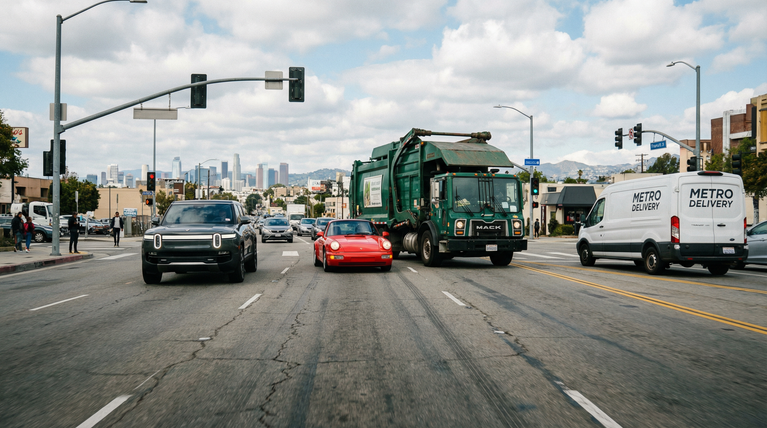
A woman in her 50s was seriously injured on Monday afternoon, November 9, 2026, when a driver struck her while she was crossing Marin Avenue in the Berkeley Hills of Alameda County. Our thoughts are with her and her loved ones as she recovers. Crosswalk accident like this one are a reminder of how quickly a routine walk can change a life and of the rights pedestrians have under California law.

What We Know About the Crosswalk Accident
According to the Berkeley Police Department, the collision happened at around 3:27 p.m. at the intersection of Marin Avenue and The Alameda. Preliminary findings from the initial investigation indicate that the woman was crossing the street when the driver hit her. Early reports said she was unresponsive at the scene but later regained consciousness.
Emergency personnel transported her to Highland Hospital, the regional trauma center, shortly after 3:30 p.m. The Berkeley Scanner reported that police later described her condition as stable.
Marin Avenue was closed in both directions between The Alameda and Fresno Avenue while officers worked the scene. Police have not released information about the driver or the circumstances that led to the crash, and the investigation remains ongoing.
Why Crosswalk Collisions Cause Such Severe Injuries
A pedestrian has no protection against a moving vehicle. Even at moderate speeds, the force of an impact can cause traumatic brain injuries, spinal cord damage, fractured pelvises and legs, internal bleeding, and permanent nerve damage.
Loss of consciousness at the scene, as reported in this case, is often a sign of a head injury that needs careful medical follow-up, even when a person seems to be recovering well.
Marin Avenue is also one of the steepest streets in the Bay Area. Berkeley’s own Vision Zero planning has identified it as a high-injury street, meaning it is among the corridors where the most severe injuries and fatalities occur.
City planning documents have listed unsafe speed and drivers failing to yield at crosswalks among the most common violations behind serious and fatal collisions in Berkeley.
California Law Protects Pedestrians in Crosswalks
California Vehicle Code section 21950 requires drivers to yield the right-of-way to pedestrians crossing within a marked crosswalk or within an unmarked crosswalk at an intersection.
A driver who fails to yield, speeds, looks away, or drives while distracted or impaired may be held legally responsible for the harm that follows. California Civil Code section 1714 establishes the broader principle that every person is responsible for injuries caused by a failure to use ordinary care.
California also follows a pure comparative fault system. If an insurance company claims a pedestrian shared some blame, the injured person can still recover compensation, reduced by their percentage of responsibility. Insurers frequently raise this argument, which is one reason it matters to preserve evidence early.
Could the Road or Intersection Play a Role?
Most pedestrian cases center on driver behavior, but not all of them. When a crosswalk is poorly marked, sight lines are blocked, signage is missing, or a known hazard goes unaddressed, a public entity may share responsibility. Claims of this kind fall under Government Code section 835, which governs dangerous conditions on public property.
These cases are more complex and carry strict deadlines. A written claim against a city or other public agency generally must be presented within six months of the injury, far sooner than the deadline for an ordinary lawsuit.
The Berkeley Scanner reported that a longtime neighbor of the intersection said she has repeatedly urged city leaders to address safety there. Whether road conditions contributed to this particular crash is a question for the investigation, and nothing has been established. Still, a history of concerns about an intersection can be relevant when the facts support it.
Steps to Protect Your Claim After a Pedestrian Collision
The hours and days after a crash matter. Anyone injured as a pedestrian should seek medical care right away and follow every treatment recommendation, because gaps in treatment give insurers an opening to dispute the severity of the injuries.
Photographs of the scene, the crosswalk, traffic signals, and visible injuries can quickly disappear from memory or from the roadway. Names and contact details for witnesses, as well as any nearby surveillance or doorbell camera footage, can be critical to establishing what happened.
It is also wise to avoid giving a recorded statement to the driver’s insurance company before speaking with an attorney. Adjusters are trained to gather information that can limit a claim.
California’s minimum liability coverage is $30,000 per person and $60,000 per accident for injuries, which is often far less than the cost of serious trauma care. That gap is why checking for additional coverage, including the injured person’s own uninsured and underinsured motorist coverage, is an important early step.
How Pedestrian Injury Compensation Is Calculated
California law allows injured pedestrians to seek economic damages, including emergency and ongoing medical bills, rehabilitation costs, lost income, and reduced earning capacity. They may also seek non-economic damages for pain, suffering, emotional distress, and loss of enjoyment of life.
Two methods are commonly used to quantify non-economic harm. Under the multiplier method, total economic damages are multiplied by a factor that reflects the severity and permanence of the injury. More serious, longer-lasting injuries generally support a higher multiplier, though there is no fixed rule.
Under the per diem method, a reasonable daily dollar amount is assigned to the pain and limitation a person experiences and then multiplied by the number of days of recovery.
For catastrophic injuries such as brain trauma or spinal injury, a thorough valuation also accounts for future surgeries, long-term care, and lifelong limitations. Every case turns on its own medical evidence and facts, and these methods are tools for understanding value, not guarantees of any result.
Under California Code of Civil Procedure section 335.1, most personal injury lawsuits must be filed within two years of the date of injury. Shorter deadlines apply when a government entity is involved.
Catastrophic Injury Settlement Calculators: Understanding What a Claim May Be Worth
A catastrophic injury settlement calculator is an educational tool that helps injured people and their families estimate the potential value of a claim involving life-altering harm, such as traumatic brain injury, spinal cord damage, amputation, severe burns, or permanent disability.
These calculators typically combine economic damages, including past and future medical expenses, rehabilitation, home modifications, lost wages, and reduced earning capacity, with non-economic damages for pain, suffering, emotional distress, and loss of enjoyment of life.
Many rely on the multiplier method, which multiplies total economic losses by a factor that reflects the severity and permanence of the injury, or the per diem method, which assigns a reasonable daily dollar amount to a person’s suffering and multiplies it by the number of days they are expected to endure it.
Their importance lies in the fact that catastrophic injuries rarely end when the hospital bills do. A person who accepts an early offer without understanding lifetime care costs, such as ongoing therapy, assistive equipment, or long-term attendant care, can be left with far less than they need.
A calculator gives families a realistic starting point for evaluating an insurer’s offer and for understanding why thorough medical documentation, life care planning, and expert input matter. It is important to remember that these tools produce estimates, not guarantees.
Fault, available insurance coverage, comparative negligence under California law, and the strength of the evidence all influence the final outcome, so a calculator should be used to inform the conversation with an experienced attorney, not to replace it. Call us now at 1-855-508-9565 to speak with the experts.
Take Action Today: You Won’t Pay Unless We Win
“A crash like this one changes everything in a matter of seconds, and my heart goes out to the woman injured and to her family. If you or someone you love has been hit while walking, please don’t wait to understand your rights. Get medical care first, document everything you can, and be cautious about speaking with an insurance adjuster before you have legal guidance. California law has strict deadlines, and the sooner we can protect the evidence, the stronger your claim can be. You focus on healing, and let us handle the rest.”-Andy Gillin, Managing Partner at GJEL Accident Attorneys.
If you or someone you love was hurt as a pedestrian in Berkeley, Oakland, or anywhere in Alameda County, you do not have to figure out the next steps alone. GJEL Accident Attorneys has more than 40 years of experience and has recovered over $950 million for injured Californians.
We handle pedestrian cases on a contingency fee basis, which means you pay no attorney fees unless we win your case. Call us at 1-855-508-9565 or visit the Sacramento office for a free, confidential consultation.
Local Resources for Those Affected by the Crash
Berkeley Police Department
Marin Avenue and The Alameda are within the City of Berkeley, so the Berkeley Police Department is leading this investigation. Anyone with information about the collision can reach the department’s non-emergency line at 510-981-5900 or visit its main page at https://berkeleyca.gov/police/. In an emergency, always call 9-1-1.
Collision reports and other police records are handled by the department’s Records Bureau, located at 2100 Martin Luther King Jr. Way, Berkeley, CA 94704. Instructions, fees, and office hours for requesting a collision report are posted at https://berkeleyca.gov/safety-health/police/police-records. The Traffic Unit, which promotes traffic safety through education and enforcement of the California Vehicle Code, is described on the department page at https://www.berkeleyca.gov/your-government/about-us/departments/police-department. Residents who want to flag a dangerous intersection or driving pattern can learn how to submit a traffic safety concern to the Traffic Bureau at https://berkeleyca.gov/community-recreation/news/bpd-transparency-hub-has-new-traffic-safety-page.
City of Berkeley Vision Zero Program
Berkeley’s Vision Zero Action Plan aims to eliminate fatal and severe traffic crashes by 2028 and identifies high-injury streets where the most serious collisions occur. The plan, along with program updates and annual reports, is available at https://berkeleyca.gov/your-government/our-work/adopted-plans/vision-zero-action-plan.
Alameda County Transportation Commission
The Alameda County Transportation Commission, known as Alameda CTC, plans and funds transportation improvements across the county, including projects that support safe walking and biking. Its main site is https://www.alamedactc.org/, and its contact page, which lists the Oakland office and staff contacts, is at https://www.alamedactc.org/about-us/contact-us.
Alameda County Sheriff’s Office
The Alameda County Sheriff’s Office serves unincorporated areas of the county and provides law enforcement services in other parts of Alameda County. Its website, with news releases, contact information, and public information tools, is https://www.alamedasheriff.gov/.
Alameda County District Attorney’s Victim Witness Assistance Division
If a collision leads to criminal charges, the District Attorney’s Victim Witness Assistance Division offers support to victims and their families, including help with restitution and navigating the court process. Its services are free and available regardless of immigration status, income, or language. Learn more at https://da.alamedacountyca.gov/victim-witness/.
Wilma Chan Highland Hospital and Alameda Health System
The injured woman was taken to Wilma Chan Highland Hospital, at 1411 East 31st Street, Oakland, CA 94602, the regional trauma center operated by Alameda Health System. Patients and families can find locations, services, and contact information at https://www.alamedahealthsystem.org.
Alameda County Superior Court and California Courts Self-Help
Civil lawsuits arising from a crash in Berkeley are generally filed in the Superior Court of California, County of Alameda. The court’s website, with courthouse locations and information about civil cases, is https://www.alameda.courts.ca.gov/. For general, plain-language information about how California courts work, visit the statewide Self-Help Guide at https://selfhelp.courts.ca.gov.