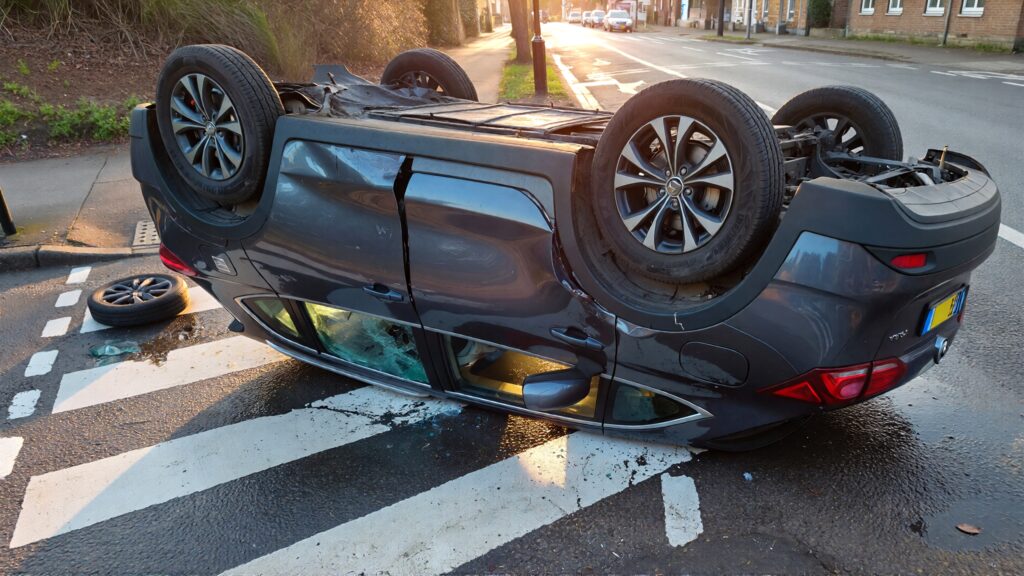
The early morning hours of a rainy Sunday turned tragic in Madera County when a single-vehicle rollover crash claimed the life of a motorist on State Route 41. The fatal accident, which occurred just after 6 a.m. north of Yosemite Springs Parkway, serves as a sobering reminder of how quickly rain-soaked roadways can transform routine travel into a life-threatening situation.
According to reports from the California Highway Patrol (CHP), the driver of a Ford Mustang lost control of their vehicle on the wet pavement, causing the car to roll over. Emergency responders arrived quickly at the scene and transported the critically injured driver to Community Regional Medical Center in Fresno. Despite the efforts of medical personnel, the driver succumbed to their injuries at the hospital.
In the aftermath of this preventable tragedy, CHP officials have issued urgent reminders to all drivers about the importance of adjusting driving behavior during inclement weather. When roadways become slick from rain, the risks of losing vehicle control increase dramatically, making speed reduction and heightened caution essential for survival.
Details of the Highway 41 Rollover Crash
The fatal crash occurred on State Route 41, a major north-south corridor that connects the Central Valley to the Sierra Nevada foothills and serves as a primary route to Yosemite National Park. The accident occurred in the northbound lanes, just beyond Yosemite Springs Parkway, an area that transitions from the valley floor to higher elevations.
Early Sunday morning, rain had created hazardous driving conditions throughout the region. When precipitation first falls after a dry period, roadways become particularly treacherous as water mixes with accumulated oil, dust, and debris on the pavement surface, creating an especially slippery layer. This phenomenon is most dangerous during the first 30 minutes of rainfall, when the oil-water mixture has not yet washed away.
The driver of the Mustang was traveling northbound when they apparently lost control of the vehicle on the rain-slicked highway. The exact sequence of events leading to the rollover remains under investigation, but the vehicle’s loss of traction on the wet roadway was a contributing factor. Mustangs and other high-performance cars with rear-wheel drive configurations can be particularly challenging to control in wet conditions, as power delivered to the rear wheels can more easily break traction on slippery surfaces.
The force of the rollover caused severe trauma to the driver. First responders from multiple agencies, including the CHP, Madera County Fire Department, and emergency medical services, worked to extricate the driver from the damaged vehicle and provide emergency medical care at the scene. The driver was then transported by ambulance approximately 25 miles south to Community Regional Medical Center, a Level I trauma center equipped to handle the most serious injuries.
Despite receiving advanced medical treatment, the driver’s injuries proved fatal. The victim’s identity has not been publicly released pending notification of family members, in accordance with standard protocol for traffic fatalities.
Understanding How Rain Creates Deadly Driving Conditions
Rain transforms roadways in ways that many drivers fail to appreciate until it’s too late. Understanding the physics and hazards of wet-weather driving is essential to preventing crashes like the one that claimed a life on Highway 41.
When rain falls on dry pavement, it creates a hazardous mixture on the road surface. Oil residue from vehicles, accumulated rubber particles from tires, dust, and other debris mix with the water to form a slippery film. This is why the first rain after a dry spell is often the most dangerous—the roadway hasn’t been “washed” clean yet. In California’s Central Valley, where dry conditions can persist for months, the first significant rainfall of the season creates especially treacherous conditions.
Hydroplaning represents one of the most dangerous wet-weather phenomena. When a layer of water builds up between a vehicle’s tires and the road surface, the tires can lose contact with the pavement entirely. During hydroplaning, steering, braking, and acceleration inputs become largely ineffective, leaving the driver with little to no control over the vehicle’s direction or speed. Hydroplaning can occur at speeds as low as 35 mph when conditions are right, including worn tires, insufficient tire pressure, standing water depth, and vehicle weight.
Rain also dramatically increases stopping distances. On dry pavement, a vehicle traveling at 60 mph requires approximately 240 feet to come to a complete stop, assuming a driver with average reaction time and a car with properly functioning brakes. On wet pavement, that exact vehicle may require 350 feet or more to stop—nearly 50% additional distance. Many drivers fail to account for this increased stopping distance and continue following other vehicles too closely, setting the stage for rear-end collisions when sudden braking becomes necessary.
Visibility reduction during rainfall further compounds the danger. Heavy rain obscures lane markings, makes it difficult to see other vehicles, and can hide hazards on the roadway. Early morning hours, like when this Madera County crash occurred, present additional visibility challenges due to limited natural light.
Vehicle dynamics also change significantly on wet roads. The reduced traction affects not just braking, but also cornering and acceleration. Sudden steering inputs, aggressive acceleration, or hard braking can all cause a vehicle to lose grip and begin sliding. Once a slide starts, regaining control requires skill and experience that many drivers lack. In a panic situation, drivers often make incorrect inputs—such as slamming on the brakes while simultaneously steering—that worsen the loss of control rather than correcting it.
California Highway Patrol’s Wet Weather Safety Recommendations
Following the fatal Highway 41 crash, CHP officials emphasized critical safety measures that all drivers should implement when traveling on wet roadways. These recommendations are based on decades of crash data analysis and represent proven strategies for preventing weather-related collisions.
Reduce Speed Significantly: The most crucial adjustment drivers can make in rainy conditions is to reduce their speed. CHP recommends reducing speed by at least one-third on wet roads compared to what you would drive in dry conditions. If you would normally drive 65 mph on a highway section, reduce your speed to 40-45 mph when it’s raining. This speed reduction provides additional time to react to hazards, reduces the likelihood of hydroplaning, and shortens stopping distances.
Increase Following Distance: The two-second following distance, which provides adequate spacing in dry conditions, becomes dangerously inadequate when roads are wet. CHP recommends increasing the following distance to at least four to five seconds during rain, providing the additional space needed to account for extended braking distances.
Ensure Proper Vehicle Maintenance: Tire condition becomes critically essential in wet weather. Tires with insufficient tread depth cannot effectively channel water away from the contact patch, thereby increasing the risk of hydroplaning. California law requires a minimum tread depth of 1/32 of an inch. Still, safety experts recommend replacing tires when tread depth reaches 4/32 of an inch, particularly if you frequently drive in rainy conditions. Windshield wipers should be replaced regularly to maintain clear visibility, and all vehicle lights should function properly to enhance visibility to other drivers.
Avoid Sudden Maneuvers: Smooth, gradual inputs are essential on slippery surfaces. Sudden acceleration, hard braking, or quick steering changes can cause a loss of traction, initiating a skid. When you need to slow down, begin braking earlier and more gently than you would on dry pavement.
Be Especially Cautious During Initial Rainfall: As mentioned earlier, the first rain after a dry period creates the most hazardous conditions. If possible, delay travel during the first 30 minutes to an hour of rainfall, allowing the initial precipitation to wash away the oil and debris accumulation.
Navigate Standing Water Carefully: Puddles and standing water present significant hydroplaning risks. When driving through standing water, slow down beforehand, maintain a straight steering angle while passing through the water, and avoid braking while the vehicle is submerged. After exiting standing water, gently apply your brakes several times to dry the brake components and restore full braking effectiveness.
Use Headlights Properly: California law requires headlights to be illuminated whenever windshield wipers are in use. Headlights improve your visibility to other drivers and help you see the road more clearly. Avoid using high beams in heavy rain, as they can reflect off the precipitation and actually reduce visibility.
State Route 41: A Critical Corridor with Weather-Related Challenges
State Route 41 serves as a vital transportation link in Central California, connecting the agricultural heartland of the San Joaquin Valley with the mountain communities and ultimately Yosemite National Park. The highway stretches approximately 230 miles from its southern terminus near State Route 46 in Kern County to its northern terminus at U.S. Route 50 in El Dorado County.
The section of Highway 41 where this fatal crash occurred, north of Yosemite Springs Parkway in Madera County, represents a transitional zone where the highway begins ascending from the valley floor toward the Sierra Nevada foothills. This area experiences significant weather variability, particularly during winter and spring months when storm systems move through the region.
Highway 41 carries substantial traffic volumes, including commuters, agricultural workers, commercial vehicles, and tourists heading to Yosemite. The roadway’s role as a major recreational route means it sees increased traffic during weekends and holiday periods, when visitors from throughout California and beyond travel to the Sierra Nevada for outdoor recreation.
Weather-related crashes occur with disturbing frequency along Highway 41, particularly during the rainy season from November through March. The California Highway Patrol’s Central Division, which has jurisdiction over this area, responds to numerous weather-related collisions each year, ranging from minor fender benders to fatal crashes, such as the one that occurred early Sunday morning.
Several factors contribute to the increased risk of weather-related crashes on Highway 41. The highway’s posted speed limits, which range from 55 to 65 mph in rural sections, may feel comfortable in dry conditions but become dangerously fast when the pavement is wet. The roadway’s relatively straight alignment in valley sections can encourage higher speeds and give drivers a false sense of security. Additionally, the transition zones where the highway begins climbing can catch drivers off guard as weather conditions change with elevation.
Fog also presents a significant hazard along this corridor, particularly during the winter months when tule fog—a dense ground fog common in the Central Valley—reduces visibility to near zero in some areas. When rain and fog occur simultaneously, as can happen during specific weather patterns, driving conditions become extremely hazardous.
Legal Rights After a Weather-Related Traffic Accident
While rain creates hazardous driving conditions, wet weather does not absolve drivers of their responsibility to operate vehicles safely. When crashes occur during inclement weather, determining liability requires careful analysis of how each driver responded to the conditions and whether all parties exercised appropriate caution.
Establishing Negligence in Rainy Conditions: Under California law, all drivers have a duty to adjust their driving behavior to match current road and weather conditions. A driver who fails to reduce speed, increase following distance, or otherwise adapt to rainy conditions may be found negligent if that failure contributes to a crash. The legal standard asks whether a reasonable person would have driven differently given the circumstances. If the answer is yes, the driver may be held liable for resulting injuries or deaths.
Single-Vehicle Crashes and Liability: In the Highway 41 rollover case, only one vehicle was involved, which typically suggests the driver may have been traveling too fast for conditions or made an error that led to loss of control. However, single-vehicle crashes can sometimes involve additional parties who bear liability. For example, if inadequate road maintenance, poor highway design, missing warning signs, or a mechanical defect contributed to the crash, entities beyond the driver might share responsibility.
Comparative Fault in California: California follows a “pure comparative negligence” system, meaning that even if an injured party bears some responsibility for a crash, they can still recover damages reduced by their percentage of fault. For instance, if inadequate road maintenance contributed 30% to a crash and the driver’s excessive speed contributed 70%, the driver’s family could potentially recover 30% of applicable damages in a wrongful death claim against the responsible government entity.
Wrongful Death Claims: When a traffic collision results in a fatality, surviving family members may pursue a wrongful death claim against parties whose negligence contributed to the death. In California, wrongful death claims can be filed by the deceased person’s surviving spouse, domestic partner, children, or, if none exist, other dependents who would be entitled to the deceased’s property under intestate succession laws. These claims seek compensation for the family’s losses, including funeral and burial expenses, the deceased’s expected financial contributions, loss of companionship and support, and the pain and suffering experienced by the survivors.
Claims Against Government Entities: If road design, maintenance issues, or missing safety features contributed to a crash, claims may be possible against Caltrans, Madera County, or other government entities responsible for highway maintenance. However, claims against government entities in California require compliance with specific procedures, including filing a formal claim with the appropriate agency within six months of the incident—a much shorter timeline than the standard two-year statute of limitations for personal injury cases.
Product Liability Considerations: If a vehicle defect or tire failure contributed to loss of control, the vehicle manufacturer, parts manufacturer, or tire company could potentially be held liable under product liability theories. Modern vehicles contain numerous electronic stability and traction control systems designed to help prevent loss of control. If these systems fail to function correctly or if tires are defectively manufactured, product liability claims may be warranted.
The Importance of Thorough Investigation: Determining all potentially liable parties requires a comprehensive investigation, which includes examining the crash scene, analyzing vehicle damage and mechanical condition, reviewing road maintenance records, assessing weather data, and reconstructing the collision sequence. Evidence can disappear quickly after a crash, making prompt investigation essential. Skid marks fade, debris gets cleared, and physical evidence deteriorates.
Seeking Legal Representation After a Serious Accident
Families grieving the sudden loss of a loved one in a traffic collision face overwhelming emotional and practical challenges. While no legal outcome can restore what has been lost, pursuing appropriate legal claims can provide financial resources to cope with funeral expenses, lost income, and other economic impacts, while also holding responsible parties accountable.
Why Legal Representation Matters: The aftermath of a fatal collision involves complex interactions with insurance companies, law enforcement investigators, and potentially multiple parties who may bear some responsibility. Insurance adjusters, even when seemingly sympathetic, represent companies whose financial interests are served by minimizing claim payouts. Without experienced legal representation, grieving families often accept settlements that fail to compensate for their losses or overlook additional sources of compensation adequately.
The Investigation Process: Experienced personal injury attorneys work with accident reconstruction specialists, mechanical engineers, road design experts, and other professionals to thoroughly investigate crashes and identify all contributing factors. This investigation often uncovers information that wouldn’t emerge from the basic CHP traffic collision report, potentially identifying liability sources that would otherwise be missed.
No Upfront Costs: GJEL Accident Attorneys works on a contingency fee basis, meaning clients pay no attorney fees unless we recover compensation on their behalf. This “no win, no fee” structure ensures that families have access to experienced legal representation regardless of their financial circumstances. All case expenses, including costs for expert witnesses, investigation, and litigation, are advanced by the firm and only recovered if the case is successful.
Comprehensive Damage Assessment: Calculating appropriate compensation in a wrongful death case requires careful assessment of both economic and non-economic losses. Economic damages include quantifiable financial losses, such as funeral and burial expenses, medical bills from final treatment, the loss of the deceased’s expected future earnings, and the loss of benefits the deceased would have provided to others. Non-economic damages encompass intangible losses, including loss of companionship, guidance, and emotional support. Experienced attorneys work with economists, actuaries, and other experts to fully document these losses.
Managing Complex Claims: Cases involving government entities, multiple parties, or product liability issues present procedural complexities that can trap unwary claimants. Government claims require special notices and have shortened filing deadlines. Product liability cases may involve manufacturers in other states or countries, requiring an understanding of the relevant jurisdictional and procedural rules. An experienced attorney navigates these complexities, ensuring that procedural requirements are met and claims are not lost due to technical errors.
Moving Forward After Tragedy
The fatal rollover crash on Highway 41 represents more than a statistic—it reflects a life cut short, a family forever changed, and a community reminded of how quickly tragedy can strike on our roadways. While we may never know the specific factors that led this particular driver to lose control on that rain-soaked morning, the incident underscores universal truths about wet-weather driving that every motorist should take to heart.
Rain will continue to fall on California’s highways, and drivers will continue to face the challenge of traveling safely when conditions deteriorate. Each of us bears responsibility for adjusting our driving to match the situations we encounter, recognizing that arriving late is infinitely preferable to not arriving at all.
For those who have lost loved ones in traffic collisions, the path forward is never easy. Legal claims and financial compensation cannot restore what has been taken, but they can provide resources to rebuild and hold accountable those whose negligence contributed to preventable tragedies.
The California Highway Patrol’s reminder to slow down and drive cautiously in wet conditions represents wisdom born from investigating thousands of weather-related crashes. Heeding this advice could prevent the next family from experiencing the devastating phone call that changes everything—the notification that a loved one will not be coming home.
As rain continues to fall throughout Northern California this season, let this Madera County tragedy serve as a sobering reminder of what’s at stake every time we turn the key and venture out onto wet roadways. The life you save through cautious driving might be your own—or someone else’s loved one heading home to their family.
Have You Been Affected by a Weather-Related Traffic Accident?
If you or a family member has been injured or killed in a crash involving wet weather conditions, road design issues, or driver negligence, GJEL Accident Attorneys can help. Our experienced legal team has spent decades representing California accident victims and their families, securing compensation for medical expenses, lost income, and the immeasurable losses that follow serious collisions.
We understand that no legal outcome can undo the harm caused by a serious accident. Still, appropriate compensation can provide financial stability during recovery and hold negligent parties accountable for their actions. Our attorneys work on a contingency fee basis—you pay no attorney fees unless we recover compensation on your behalf.
Understanding Fatal Rollover Accident Settlement Calculators
Fatal rollover accident settlement calculators serve as valuable preliminary tools that help grieving families understand the potential financial compensation they may be entitled to pursue in wrongful death claims. These sophisticated online calculators take into account multiple factors that courts and insurance companies consider when evaluating fatal accident cases, including the deceased victim’s age, income level, life expectancy, number of dependents, medical expenses incurred before death, funeral and burial costs, and the circumstances surrounding the collision.
By inputting specific information about the deceased and the accident, families receive an estimated settlement range based on similar cases and established legal precedents in California. While these calculators cannot replace the detailed case evaluation provided by an experienced wrongful death attorney, they offer families a critical starting point for understanding the economic impact of their loss and determining whether pursuing legal action is financially sensible.
The calculator results typically account for both monetary damages—such as lost future earnings, benefits, and household services the deceased would have provided—and non-economic damages, including loss of companionship, guidance, and emotional support, that surviving family members have suffered. At GJEL Accident Attorneys, our free settlement calculator utilizes data from thousands of California wrongful death cases to provide realistic estimates, enabling families to make informed decisions about their legal options without any obligation or upfront costs.
It’s essential to recognize that actual settlement values depend on numerous case-specific factors, including the strength of the evidence, the degree of negligence involved, available insurance coverage, and whether product defects or government entity liability contributed to the fatal crash—all factors that necessitate professional legal analysis to be correctly evaluated. Call us now at +1-866-218-3776 to speak with our experts.
Our Commitment: No Fees Unless We Win Your Case
“The heartbreak of losing someone in a weather-related crash is compounded by knowing it likely could have been prevented. While rain creates challenging conditions, every driver has a legal responsibility to slow down and adjust to wet roadways—and when they fail to do so, they must be held accountable for their actions. For families devastated by these sudden losses, understanding your legal rights is a crucial step toward both financial recovery and ensuring that this tragedy leads to greater awareness and understanding. The investigation process moves quickly after fatal accidents, and critical evidence can disappear within days, so connecting with an experienced attorney early ensures your family’s interests are protected. We’ve represented countless families through these arduous journeys, and while nothing can bring back your loved one, pursuing justice can provide the resources needed to move forward and prevent the same negligence from harming another family. You don’t face this alone, and you shouldn’t have to navigate complex legal procedures while grieving—that’s what we’re here for.” — Andy Gillin, Managing Partner, GJEL Accident Attorneys
If your family has been devastated by a fatal rollover accident or any weather-related crash in Madera County or throughout Northern California, GJEL Accident Attorneys is ready to fight for the justice and compensation you deserve. We understand that the last thing grieving families need is the burden of upfront legal costs while facing mounting funeral expenses and lost income.
That’s why we operate exclusively on a contingency fee basis—you pay absolutely nothing unless we successfully recover compensation on your behalf. There are no hourly attorney fees, no retainers, and no out-of-pocket expenses for investigation, expert witnesses, or litigation costs. We advance all case expenses ourselves and only recover our fees from the final settlement or verdict, meaning our success is directly tied to yours.
This “no win, no fee” structure ensures that every family, regardless of their financial situation, has access to the same caliber of experienced legal representation that has helped us recover over $1 billion for California accident victims over our 50-year history. Time is critical in wrongful death cases—evidence disappears, witnesses’ memories fade, and California law imposes strict deadlines for filing claims, especially against government entities. Don’t let financial concerns prevent you from exploring your legal options.
Contact GJEL Accident Attorneys today for a complimentary, confidential consultation, where we’ll review your case, explain your rights, and outline the path forward. Call us 24/7 at 1-866-218-3776 or visit our Antioch office to use our free settlement calculator and schedule your consultation. Let our experience, resources, and commitment to justice work for your family during this impossibly difficult time—at absolutely no risk to you.
Resources for Madera County Accident Victims and Families
Families affected by traffic collisions in Madera County can access various resources and services to address immediate needs and begin the recovery process:
Emergency and Medical Services:
- Community Regional Medical Center: 2823 Fresno Street, Fresno, CA 93721 | (559) 459-6000 | Level I Trauma Center providing advanced emergency care
- Madera Community Hospital: 1250 E. Almond Avenue, Madera, CA 93637 | (559) 675-5555 | Emergency services and acute care
- Children’s Hospital Central California: 9300 Valley Children’s Place, Madera, CA 93636 | (559) 353-3000 | Pediatric emergency and specialty care
Law Enforcement and Accident Reports:
- California Highway Patrol Central Division: 3151 West McKinley Avenue, Fresno, CA 93722 | (559) 262-0400 | Investigates collisions on state highways
- Madera County Sheriff’s Office: 200 W. 4th Street, Madera, CA 93637 | (559) 675-7770 | Law enforcement for unincorporated areas
- CHP Traffic Collision Report: Parties involved in CHP-investigated crashes can obtain copies of traffic collision reports online at https://secure.chp.ca.gov/collision-reports/ or by contacting the investigating CHP office
Victim Support Services:
- Madera County Victim Services: 200 West 4th Street, Madera, CA 93637 | (559) 675-7702 | Provides crisis intervention, advocacy, and assistance to crime and trauma victims
- Victim Compensation Program: State of California program providing financial assistance for crime-related expenses | Apply online at https://victims.ca.gov/ or call 1-800-777-9229
- Central California Legal Services: (559) 570-1200 | Provides free legal assistance to low-income residents in civil matters
Grief Support and Counseling:
- Madera County Behavioral Health: 209 E. 7th Street, Madera, CA 93638 | (559) 673-3508 | Mental health services including grief counseling
- Hinds Hospice Grief Support Services: 1616 W. Shaw Avenue, Suite C, Fresno, CA 93711 | (559) 248-8732 | Offers grief support groups and counseling
- National Alliance on Mental Illness (NAMI) Fresno-Madera: (559) 224-6264 | Support, education, and advocacy for individuals and families affected by mental health challenges
Transportation and Road Conditions:
- Caltrans District 6: Responsible for state highway maintenance in Central California | Road conditions hotline: 1-800-427-7623 | Website: https://dot.ca.gov/caltrans-near-me/district-6
- Madera County Public Works: 200 West 4th Street, Madera, CA 93637 | (559) 675-7821 | County road maintenance and concerns
- California Road Conditions: Call 511 or visit https://quickmap.dot.ca.gov/ for current highway conditions, weather, and traffic information
Additional Resources:
- California Department of Motor Vehicles: 1925 East Almond Avenue, Madera, CA 93637 | (800) 777-0133 | Driver records, vehicle registration, and licensing services
- Madera County Coroner: 200 West 4th Street, Madera, CA 93637 | (559) 675-7404 | Provides information regarding fatalities and death certificates
- Social Security Administration: (800) 772-1213 | Report deaths and inquire about survivor benefits