Authorities reported a fatal solo-vehicle crash on Highway 101 in San Jose after a vehicle struck a concrete median wall. Only one vehicle was reported to be involved. Investigators have not publicly identified the cause, and the California Highway Patrol (CHP) typically releases more information as its review moves forward.
Fatal collisions on state highways are generally investigated by the CHP, and in serious cases, specialized investigators may be called in to reconstruct what happened. They typically document the vehicle’s final resting position, the point of impact with the median wall, tire marks, and damage to both the car and the barrier.
They may also review data stored in the vehicle’s event data recorder, which can show speed, braking, and steering input in the seconds before impact, along with witness statements and any available traffic or surveillance footage. Toxicology and medical findings from the county coroner can take weeks to come back, so the cause of a crash like this often remains unclear well after the roadway has reopened.
Why Median Wall Collisions Are So Dangerous
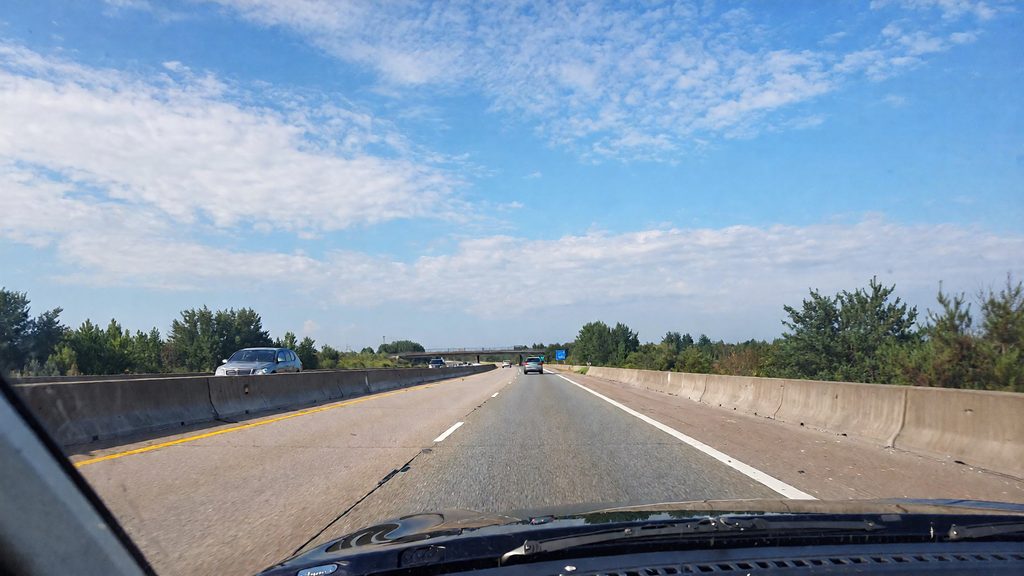
A concrete median barrier is built to keep vehicles from crossing into opposing traffic, and it does that job. The tradeoff is that the barrier is rigid and does not absorb energy the way a crash cushion or a flexible guardrail does.
A car that strikes it at highway speed can stop almost instantly, and the force on the occupants can be severe. Vehicles may also rebound into live lanes, putting other drivers at risk and turning a single-vehicle crash into a multi-vehicle event.
Highway 101 through San Jose carries heavy commuter and commercial traffic throughout the day, and many stretches have narrow shoulders and closely spaced interchanges. Those conditions leave little room to recover when a driver loses control.
What Can Cause a Solo-Vehicle Crash
When no other vehicle makes contact, people often assume the driver alone is responsible. That is not always the case. Solo-vehicle crashes can result from a medical emergency, driver fatigue, distraction, or impairment. They can also stem from a tire blowout, brake failure, steering defect, or other mechanical problem.
Road conditions play a part too, including debris, faulty lane striping, poor lighting, damaged or missing barrier components, and drainage problems that leave standing water on the roadway.
Sometimes another driver is the hidden cause. A vehicle that cuts across lanes or forces a sudden swerve may never touch the car that crashes, and the at-fault driver may leave the scene. Phantom vehicle situations of this kind are common, and they are one reason a thorough investigation matters.
Who May Be Legally Responsible
Fault in a fatal solo-vehicle crash depends on the evidence. California Civil Code §1714 establishes the general duty to use ordinary care, and that duty can apply to more than one party.
If another motorist’s unsafe driving forced the crash, that driver may be liable even without any contact between the vehicles. If a defective part contributed to the issue, a manufacturer or repair shop could face a product liability or negligence claim.
If a dangerous condition of the roadway played a role, a public entity may be responsible. Under Government Code §835, a government agency can be liable when it owned or controlled the property, the property was in a dangerous condition, and the agency had notice of the problem and failed to correct it in a timely manner.
Claims against public entities follow strict procedures. In most personal injury and wrongful death matters, a written claim must be presented within six months under Government Code §911.2, which is much shorter than the standard filing period.
California follows a pure comparative fault system. A driver’s own share of responsibility may reduce the recovery but does not necessarily bar it, so families should not assume they have no options simply because one vehicle was involved.
Wrongful Death and Survival Claims in California
When a person dies because of someone else’s wrongful act or negligence, California law allows certain family members to bring a wrongful death claim under Code of Civil Procedure §377.60. Eligible plaintiffs generally include a surviving spouse or domestic partner, children, and others who would inherit under California’s intestacy rules.
In some cases, putative spouses, stepchildren, or dependents who relied on the decedent for support. A wrongful death claim can recover the loss of financial support, household services, companionship, guidance, and love, along with funeral and burial costs.
A separate survival action under Code of Civil Procedure §377.30 allows the decedent’s estate to pursue claims the person could have brought had they lived, such as medical expenses and lost income before death. Under CCP §377.34, damages for the decedent’s own pain and suffering are not recoverable in a survival action when the death results from the wrongful act.
The statute of limitations for most wrongful death and personal injury claims in California is two years from the date of death or injury under CCP §335.1. Evidence in a highway crash can disappear quickly. Vehicle data, surveillance footage, and physical evidence at the scene can be lost or altered, so early action helps preserve the family’s options.
How Settlement Values Are Estimated
No two cases are the same, and no calculator replaces a legal evaluation, but two methods are commonly used to understand how non-economic damages are approached. The multiplier method starts with the economic losses, such as medical bills, funeral costs, and lost income or support.
It then multiplies that total by a factor that reflects the severity of the loss, the strength of the liability evidence, and the impact on surviving family members. The per diem method assigns a daily dollar value to the suffering or loss and multiplies it across the relevant time period. Insurers and attorneys often compare the two methods to determine whether a number is reasonable.
These are educational tools, not predictions. Policy limits, comparative fault, and the available defendants all affect what can realistically be recovered. Beyond the two calculation methods, several factors shape what a fatal crash case is realistically worth.
Economic damages are the most concrete piece, and in a wrongful death matter, they often include the financial support the person would have provided over a working lifetime, the value of household services, and funeral and burial expenses. These figures are frequently supported by an economist or vocational expert.
These experts project lost earnings, benefits, and future raises based on the person’s age, occupation, and work history. Non-economic damages are harder to measure and reflect the loss of companionship, guidance, and love experienced by surviving family members.
Insurers also look closely at the strength of the liability evidence, the available insurance coverage, and any argument that the driver bore some share of the fault, since California’s pure comparative fault rule reduces a recovery by the percentage of responsibility assigned to the injured or deceased person.
Policy limits can cap what can be collected from a single defendant, which is why identifying every potentially responsible party early, including a vehicle manufacturer or a public entity, can affect the outcome.
For illustration only, a hypothetical case with $400,000 in economic losses and a multiplier of three would produce a starting figure of $1.2 million before adjustments for fault and coverage, but every case turns on its own facts, and a past result does not guarantee a similar outcome.
Wrongful Death Settlement Calculators and Why They Matter
A wrongful death settlement calculator is an online tool that gives families a rough starting estimate of what a claim might be worth by combining the inputs that drive value in a fatal accident case.
Most calculators ask for economic losses, such as funeral and burial costs, medical bills incurred before death, and the income and benefits the person would likely have earned, and then apply a multiplier or per diem figure to approximate non-economic losses, such as the loss of companionship, guidance, and love.
These tools matter because they give grieving families a realistic frame of reference when they are first deciding whether to speak with an attorney, and they help them understand that the value of a case is built from specific, documentable losses rather than a single arbitrary number.
A calculator can also show how factors such as the decedent’s age, earning history, and number of dependents affect the estimate, and it can help families recognize an unreasonably low early offer from an insurer. However, a calculator cannot account for the full picture.
It does not weigh the strength of the liability evidence, the percentage of fault that might be assigned under California’s pure comparative fault rule, the available insurance coverage, or whether additional parties such as a vehicle manufacturer or a public entity may share responsibility.
For that reason, the figure a calculator produces should be treated as an educational starting point, not a prediction or a promise, and a licensed California attorney should evaluate the specific facts before any settlement is accepted. Past results and estimates do not guarantee a similar outcome in any future case. Call us now at 1-855-508-9565 to speak with the experts.
Talk to a California Wrongful Death Attorney
“A crash like this changes lives in an instant, and I know how overwhelming it feels when you are trying to heal and make sense of what happened at the same time. You do not have to figure out the legal side alone. Evidence in highway collisions can disappear quickly, and strict deadlines apply, especially when a government agency may be involved. If you or someone you love was hurt, or if your family lost someone, please reach out so we can answer your questions, protect your rights, and handle the legal burden while you focus on your family.” –Andy Gillin, Managing Partner, GJEL Accident Attorneys
GJEL Accident Attorneys has more than 40 years of experience and has recovered over $950 million for injured Californians and their families. We work on a contingency fee basis, which means you pay no attorney fees unless we recover compensation for you. If you lost a loved one in a Highway 101 crash or another collision in the Bay Area, call 1-855-508-9565 or visit the Oakland office for a free, confidential consultation.
Local Resources for San Jose Families
California Highway Patrol (CHP). The CHP investigates collisions on state highways, including Highway 101, and holds the official crash report. A proper party of interest, which includes drivers, passengers, parents or legal guardians of minors, vehicle or property owners, and their legal representatives, may request a copy through the CHP Crash Portal at https://crashes.chp.ca.gov.
Requests can also be made in person or by mail to the nearest CHP Area office using form CHP 190. Instructions are available at https://chp.ca.gov/traffic/request-a-crash-report/. The fee varies by Area office, so families should call the office before sending payment. To find the correct office, use the Find an Office tool at https://www.chp.ca.gov.
San Jose Police Department (SJPD) Records Unit. SJPD handles collisions on city streets and may assist with related records, and families can use it to confirm which agency took the report. Vehicle accident report requests and eligibility details are available at https://sjpd.org/records/vehicle-accident-reports.
The Records Unit can be reached at (408) 277-4261 and is located at 201 West Mission Street, San Jose, CA 95110. Under California Vehicle Code §20012, reports are released only to persons with a proper interest, and SJPD asks requesters to allow at least 45 days from the date of the collision before inquiring online. Mailed requests require a $16.00 check or money order payable to the City of San Jose along with the Vehicle Accident Report Request Form.
Santa Clara County Office of the Medical Examiner-Coroner. This office investigates the cause and manner of death in accidental deaths and handles next-of-kin notification. Its website is https://mec.santaclaracounty.gov/home, its phone number is (408) 793-1900, and it is located at 850 Thornton Way, San Jose, CA 95128. The office does not issue death certificates to the public.
Certified copies are generally available through the funeral director near the date of death, or later through the Santa Clara County Department of Public Health, Vital Statistics Section, at 976 Lenzen Avenue, San Jose, CA 95126, (408) 885-2010. Details can be found at https://mec.santaclaracounty.gov/death-certificate/death-certificates.
Caltrans District 4 (Bay Area). Caltrans owns and maintains Highway 101, including its median barriers, lighting, signage, and drainage. Families with questions about roadway conditions or barrier maintenance can start at https://dot.ca.gov/caltrans-near-me/district-4, call the District 4 Information Desk at (510) 286-6173, or email caltrans_d4@dot.ca.gov. Caltrans also accepts online customer service requests for maintenance concerns at https://dot.ca.gov/contact-us. This is not for emergencies, which should always go to 911. Because Caltrans is a public entity, any potential claim against it carries a short deadline, so contact an attorney before relying on a maintenance request to preserve your rights. Real-time highway conditions are available through Caltrans QuickMap at https://quickmap.dot.ca.gov.
City of San Jose Department of Transportation. For concerns about city streets, signals, and local intersections that connect to Highway 101, visit https://www.sanjoseca.gov. [VERIFY: confirm the direct Department of Transportation page and any Vision Zero or traffic safety reporting link before publishing]