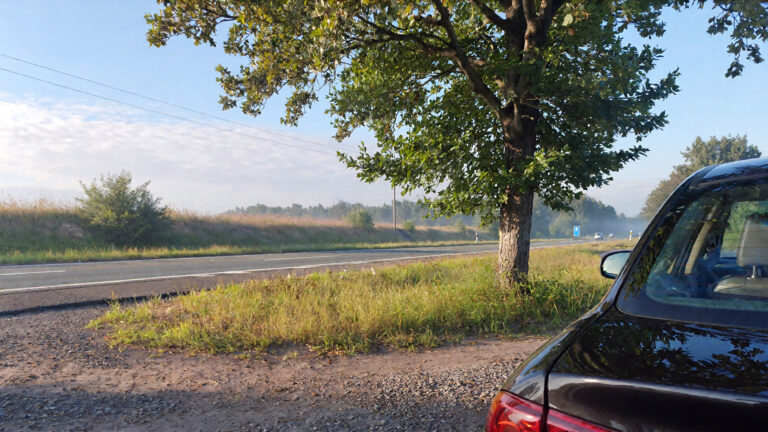
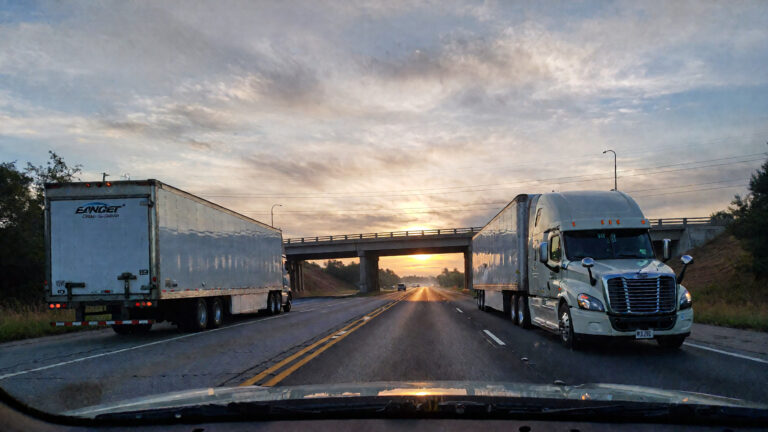
Early Saturday morning, a fatal traffic collision on the outskirts of Brentwood claimed the life of a 56-year-old woman whose vehicle collided with an agricultural tractor. The tragedy, which unfolded before sunrise near the intersection of Sand Creek Road and Shady Willow Lane, is a sobering reminder of the risks that rural roadways present when regular commuter traffic shares the road with slow-moving farm equipment.
What Happened on Sand Creek Road
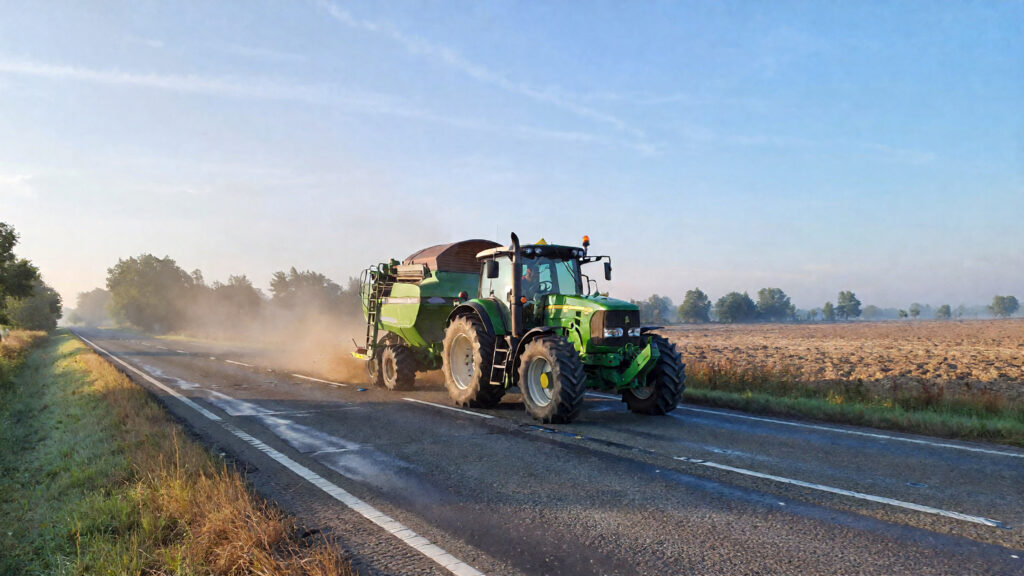
According to Brentwood Police, officers responded to the area of Sand Creek Road and Shady Willow Lane at approximately 6:16 a.m. on September 5, 2026, after receiving reports of a collision between a passenger vehicle and an agricultural tractor. When officers and paramedics arrived, they found a 56-year-old woman, the driver and sole occupant of the vehicle, suffering from severe injuries.
Despite immediate life-saving measures performed at the scene, she was pronounced dead. Her identity has not yet been released pending notification of her family. Investigators have not determined whether alcohol or drugs played any role in the crash, and the full cause remains under active investigation.
This stretch of Sand Creek Road runs through unincorporated farmland on the eastern edge of Brentwood, an area where agricultural equipment routinely enters and crosses public roads during early morning hours to reach fields before the day’s heat sets in. That mix of high-speed commuter traffic and low-speed farm machinery creates a uniquely dangerous environment, particularly in the low-light conditions of early dawn.
Why Tractor and Farm Equipment Collisions Are So Often Fatal
Collisions between passenger vehicles and agricultural equipment tend to be catastrophic because of the dramatic speed and mass differential involved. A tractor traveling at 15 to 20 miles per hour presents a slow-closing hazard to a vehicle approaching at highway speed, and by the time a driver perceives the obstruction, there is often little time or distance left to brake or steer around it.
Farm equipment also tends to sit much lower or, alternatively, be much bulkier than a typical vehicle silhouette, which can make it harder for approaching drivers to judge distance and closing speed, especially in dim early-morning light.
California law recognizes these risks directly. Vehicle Code section 24615 requires vehicles designed to operate at 25 miles per hour or less, including most farm tractors, to display a slow-moving vehicle emblem, a reflective orange-and-red triangle mounted on the rear of the equipment, whenever they are driven on a public roadway.
This requirement exists precisely because visibility and adequate warning time are often the deciding factors between a near miss and a fatal collision. Investigators in this case will likely examine whether the tractor was properly marked and lit, where it was positioned relative to the roadway, and whether the driver of either vehicle had adequate time to react.
How Liability Is Determined in a Vehicle Versus Farm Equipment Collision
Fatal collisions involving agricultural equipment can raise complex liability questions. Under California Civil Code section 1714, every person is responsible for injuries caused by their failure to exercise ordinary care, and that duty extends to both drivers and equipment operators sharing a public road.
If it is determined that the tractor operator failed to display required warning equipment, entered the roadway without adequate clearance, or otherwise violated traffic laws, that operator and potentially their employer could bear liability for the resulting harm.
California also applies a pure comparative fault standard, meaning that if more than one party contributed to the crash, financial responsibility is divided according to each party’s percentage of fault, and a surviving family can still recover damages even if the deceased driver bore some responsibility.
If the tractor was owned by an agricultural business or operated by an employee acting within the scope of employment, the employer may be held vicariously liable for the operator’s negligence.
And if any portion of the roadway design, signage, or visibility conditions contributed to the collision, Government Code section 835 may allow a claim against the public entity responsible for maintaining that stretch of road, provided the entity had notice of a dangerous condition and failed to correct it within a reasonable time.
Legal Options Available to Surviving Family Members
When a collision like this proves fatal, California law gives certain surviving family members the right to pursue a wrongful death claim under Code of Civil Procedure section 377.60.
Eligible family members, typically a spouse, domestic partner, or children, can seek compensation for the financial support, companionship, and guidance they have lost, as well as funeral and burial expenses.
Separately, the deceased’s estate may bring a survival action under Code of Civil Procedure section 377.30 to recover damages the victim herself could have claimed had she survived, such as pain and suffering experienced between the moment of the collision and her passing, along with any medical expenses incurred.
Families pursuing either claim should be mindful of California’s statute of limitations, found in Code of Civil Procedure section 335.1, which generally requires a wrongful death or personal injury lawsuit to be filed within 2 years of the incident.
Claims against a government entity carry a much shorter deadline, often requiring a formal claim to be submitted within six months, so families who suspect a road condition or public agency may share responsibility should not delay in seeking legal guidance.
Understanding How Wrongful Death Settlements Are Calculated
Attorneys and insurance companies typically rely on one of two methods to estimate the value of a wrongful death or catastrophic injury claim. The multiplier method takes the total of a family’s documented economic losses, such as lost income, lost benefits, and funeral costs, and multiplies that figure by a number typically ranging from 1.5 to 5.
Depending on the severity of the loss and the strength of the liability evidence, the court may award damages to account for non-economic harm, such as loss of companionship and emotional suffering. The per diem method instead assigns a specific dollar value to each day a surviving family member is expected to live with the loss of their loved one, then multiplies that daily figure across a projected number of years.
Neither method produces an exact number on its own. Instead, they give families and their attorneys a starting framework for settlement negotiations, one that is then adjusted based on the specific facts of the case, the degree of fault on each side, and the available insurance coverage.
Beyond the multiplier and per diem frameworks, the final settlement value in a wrongful death case also depends heavily on factors specific to the victim and her family. Insurers and courts often consider the deceased’s age, earning capacity, and life expectancy at the time of death, since these figures directly affect the projected value of lost future income and benefits.
The number and ages of surviving dependents matter as well, since a young child who has lost a parent’s day-to-day guidance and support is generally viewed as having suffered a different magnitude of loss than an adult child living independently. Documented evidence of the relationship, such as the degree of financial interdependence and shared household responsibilities.
Also, the deceased’s role in caring for family members can meaningfully increase the non-economic value of a settlement. Because these calculations are inherently fact-specific, families are often best served by having an attorney compile thorough documentation, including tax records, employment history, and testimony about the victim’s role in the family, before any settlement figure is proposed or accepted.
How GJEL Accident Attorneys Can Help
“Losing someone you love in a crash like this is devastating enough without also having to navigate insurance companies, police reports, and legal deadlines on your own. If you or someone you love was hurt in this collision, please don’t wait to get answers. Evidence at a scene like this, tire marks, equipment lighting, witness memories, can disappear within days, and the sooner we can start investigating, the stronger the case we can build for your family. You don’t have to figure out what happened or what you’re owed by yourself. That’s what we’re here for, and it costs you nothing to have that first conversation with us.”-Andy Gillin, GJEL Accident Attorneys
Losing a loved one in a sudden, preventable collision leaves families searching for answers while also facing the practical burden of medical bills, funeral costs, and lost financial support.
For more than 40 years, GJEL Accident Attorneys has represented California families in wrongful death and catastrophic injury cases, recovering over $950 million on behalf of clients across the state. Our firm handles every case on a contingency fee basis, meaning families pay nothing upfront and owe no fee unless we recover compensation on their behalf.
If you have lost a family member in a collision involving farm equipment, a commercial vehicle, or a dangerous roadway condition, our team can investigate the crash, identify every party who may share responsibility, and pursue the full compensation your family is entitled to under California law. Call GJEL Accident Attorneys today at 1-855-508-9565 or visit our San Francisco office for a free, no-obligation consultation to learn more about your legal rights.
Local Resources for Those Affected
Anyone who witnessed the collision or has information relevant to the investigation is encouraged to contact the Brentwood Police Department. The department’s non-emergency dispatch line can be reached at (925) 809-7911, and its business office, open Monday through Friday from 8:00 a.m. to 5:00 p.m., at (925) 634-6911.
The department is located at 9100 Brentwood Blvd, Brentwood, CA 94513, and can also be reached by email at Police@brentwoodca.gov. Full contact information, online reporting options, and updates on this and other active investigations are available through the department’s official website at https://www.brentwoodca.gov/government/police, with a dedicated contact page at https://www.brentwoodca.gov/government/police/contact-us.
For collisions in unincorporated areas of East Contra Costa County surrounding Brentwood, the Contra Costa County Sheriff’s Office Delta Station also patrols the region and can provide assistance or records for incidents outside city limits. The station is located at 9100 Brentwood Blvd, Brentwood, CA 94513, and can be reached at (925) 608-8370. Additional information is available at https://www.cocosheriff.org/bureaus/field-operations/patrol-division/delta-station.
Because this collision involved farm equipment operating under state traffic regulations, the California Highway Patrol also retains authority to enforce Vehicle Code provisions governing slow-moving vehicle equipment and roadway safety statewide. Information on filing a collision report, requesting a copy of an official report, or reviewing California’s vehicle safety regulations is available through the CHP’s official website at https://www.chp.ca.gov.
Families seeking a copy of the official collision report for insurance or legal purposes can also request one directly through the Brentwood Police Department’s Records Division at (925) 634-6911, or through the California Department of Motor Vehicles, which processes SR-1 collision reports and related documentation at https://www.dmv.ca.gov.
For those needing emergency medical follow-up or records related to treatment received after this collision, Sutter Delta Medical Center in Antioch serves as the primary Level II trauma and emergency care facility for East Contra Costa County. The hospital is located at 3901 Lone Tree Way, Antioch, CA 94509, can be reached at (925) 779-7200, and additional information is available at https://www.sutterhealth.org/find-location/facility/sutter-delta-medical-center-1043246751.