A pedestrian was critically injured in a serious traffic collision early Sunday morning on Roseville Road near Watt Avenue. The crash happened at approximately 1:57 a.m. on Sept. 27, when a vehicle reportedly struck the pedestrian at the intersection.
What We Know About the Roseville Road Collision
According to incident logs, the pedestrian was found lying in the roadway, unresponsive to verbal stimuli and reacting only to painful stimuli. Sacramento Metro emergency responders arrived and transported the injured person to Mercy San Juan Medical Center with major head and neck injuries. The California Highway Patrol (CHP) reported that the southbound lanes of Watt Avenue just north of Roseville Road were blocked because of the collision.
Many details remain unclear. Investigators have not publicly confirmed the direction the vehicle was traveling or which lane the impact occurred in. The pedestrian’s identity and current condition have not been released, and the investigation is ongoing. Our thoughts are with the injured person and their loved ones during what is undoubtedly a frightening and uncertain time.
A Critical Start to the Weekend on a Busy North Sacramento Corridor
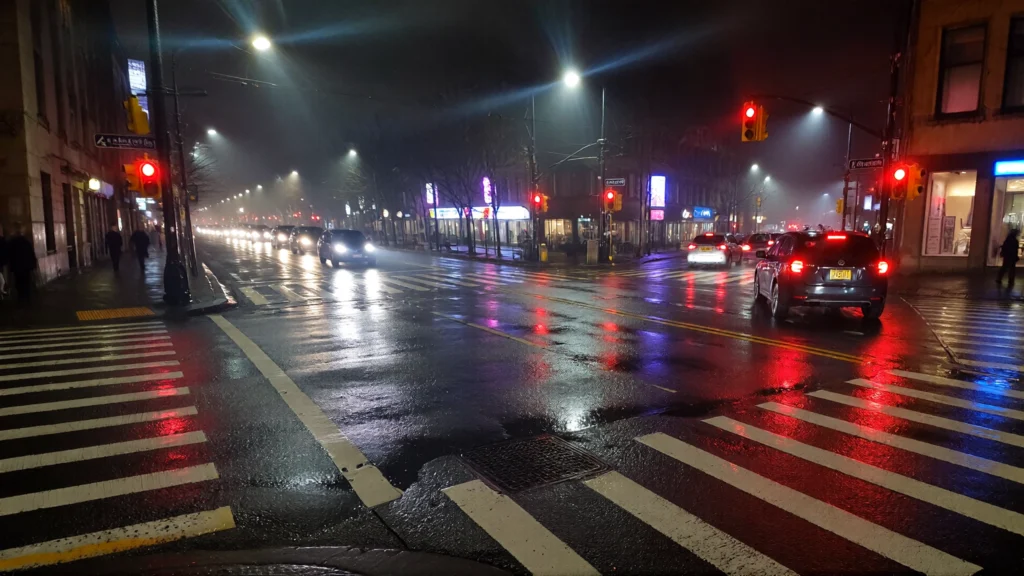
The collision unfolded in the quiet hours just before 2:00 a.m. on Sunday, Sept. 27, at the intersection of Roseville Road and Watt Avenue, two roadways that carry heavy traffic throughout the day and see steady use by late-night and early-morning travelers. Reports indicate that a vehicle struck a person on foot, leaving the pedestrian in critical condition with major head and neck injuries.
Crashes like this one are a reminder of how quickly an ordinary night can change lives, not only for the person hurt but for the family members who receive the call that a loved one is in the hospital. While authorities continue to piece together exactly how the collision occurred, including the direction of travel and the lane involved, the central questions in any pedestrian crash remain the same.
What the driver could see, how fast the vehicle was moving, and whether reasonable care was taken at an intersection where people on foot are foreseeably present. Those answers often depend on time-sensitive evidence, such as surveillance video, vehicle data, and witness accounts, which is why the days immediately following a collision matter so much for anyone seeking clarity and accountability.
Why Overnight Pedestrian Crashes Are So Dangerous
Collisions in the early morning hours carry a particular kind of risk. Visibility is limited, drivers may be fatigued or traveling faster on emptier roads, and pedestrians can be difficult to see even at busy intersections. A person on foot has no protection in a collision with a moving vehicle, which is why head and neck injuries like those reported here are so common in pedestrian crashes and so often life-altering.
Roseville Road and Watt Avenue are both heavily traveled corridors in the North Sacramento area, serving commuters, shift workers, and local residents at all hours. When a driver and a pedestrian meet at a major intersection in the middle of the night, questions about right-of-way, speed, lighting, and driver attentiveness become central to understanding what happened.
How California Law Approaches Pedestrian Accidents
Under California Civil Code §1714, every person is responsible for injuries caused by a failure to use ordinary care. For drivers, that duty is spelled out in the Vehicle Code. Section 21950 requires drivers to yield the right-of-way to pedestrians crossing in a marked or unmarked crosswalk, and Section 22350 prohibits driving at a speed greater than is reasonable for conditions, including darkness and reduced visibility.
Even when a pedestrian is outside a crosswalk, Section 21954 makes clear that the pedestrian’s obligation to yield does not relieve a driver of the duty to exercise due care for their safety. California follows a pure comparative fault system, established in Li v. Yellow Cab Co. (1975) 13 Cal.3d 804.
If a pedestrian is found partially responsible, their compensation is reduced by their percentage of fault rather than eliminated. A pedestrian who is 20 percent at fault can still recover 80 percent of their damages. This is why a thorough, early investigation matters so much, since insurers frequently try to shift blame onto the injured person.
Deadlines That Can Affect a Claim
Under Code of Civil Procedure §335.1, most personal injury lawsuits in California must be filed within two years of the injury. If a family loses a loved one, wrongful death claims under CCP §377.60 and survival actions under CCP §377.30 follow their own rules about who may file and what damages can be recovered.
Claims involving public property have much shorter timelines. If a dangerous roadway condition contributed to a crash, such as poor lighting, a poorly marked crossing, or a design defect, Government Code §835 may allow a claim against a public entity. Those claims generally must be presented within six months of the incident under Government Code §911.2. Waiting to learn your rights can cost you them.
How Serious Injury Claims Are Valued
Head and neck injuries often involve long hospital stays, surgery, rehabilitation, and sometimes permanent impairment. In evaluating a claim, attorneys typically consider economic damages, such as medical bills, future care costs, and lost income, as well as non-economic damages, such as pain and suffering and loss of quality of life.
Two common methods help frame non-economic damages. The multiplier method multiplies documented economic damages by a factor reflecting the severity and permanence of the injury, with more catastrophic injuries generally warranting higher multipliers.
The per diem method assigns a daily dollar value to the pain and limitations a person endures and multiplies it across the expected recovery period, or a lifetime for permanent conditions. Neither method is a formula that guarantees a result, but both help organize what is often a complex picture. Every case turns on its own facts, the available insurance coverage, and the evidence of fault.
Understanding Catastrophic Injury Settlement Calculators and Why They Matter
A catastrophic injury settlement calculator is an educational tool that helps injured people and their families estimate the potential value of a claim involving severe, life-altering harm, such as traumatic brain injuries, spinal cord damage, or permanent disability.
These calculators typically work by combining economic damages, including past and future medical expenses, rehabilitation, home modifications, and lost earning capacity, with non-economic damages such as pain and suffering and loss of enjoyment of life, most often using the multiplier or per diem method. In catastrophic cases, this step is especially important because the true cost of an injury rarely ends when the hospital bills stop.
A person facing a lifetime of care can easily underestimate what they will need, and an early insurance offer may fall far short of covering decades of treatment and lost income. A calculator gives families a realistic starting framework for understanding what is at stake and helps them recognize when an offer does not reflect the full impact of their injuries.
That said, it is a guide rather than a guarantee. The final value of any claim depends on factors a calculator cannot fully capture, including the strength of the evidence, the percentage of fault assigned under California’s pure comparative fault rules, available insurance coverage, and expert input from medical professionals and life care planners.
For that reason, a settlement calculator is best used as a starting point for a conversation with an experienced attorney who can evaluate the specific facts of your case and work to secure the compensation your recovery truly requires. Call us now at 1-855-508-9565 to speak with the experts.
What to Do If You or a Loved One Was Injured
“If you or someone you love was hurt in this crash, please know that you don’t have to face what comes next alone. A serious pedestrian injury brings medical bills, time away from work, and an enormous amount of uncertainty, and the last thing a family should be doing in that moment is arguing with an insurance company. From a legal standpoint, the first days matter. Get the care you need, keep every record and photo you can, and be cautious about giving any recorded statement to an insurer before you understand your rights. California law gives you a limited window to act, generally two years for a personal injury claim and as little as six months if a public entity may be involved, so waiting can quietly cost you options. Our team has spent more than 40 years standing beside injured Californians, and we handle these cases on a contingency fee basis, so you pay nothing unless we win. Call us at 1-855-508-9565, and let us carry the legal burden while you focus on healing.” — Andy Gillin, Managing Partner, GJEL Accident Attorneys
If you or someone you love was injured as a pedestrian, seek medical care immediately and follow all treatment recommendations. Preserve any evidence you can, including photographs, clothing, and the names of witnesses, and avoid giving recorded statements to an insurance adjuster before speaking with an attorney. Nearby businesses may have surveillance footage, which is often overwritten within days, so acting quickly can make a real difference.
At GJEL Accident Attorneys, we have more than 40 years of experience representing injured Californians and have recovered over $950 million for our clients. We handle pedestrian accident cases on a contingency-fee basis, meaning you pay nothing unless we win your case. If you or a family member was hurt in a pedestrian collision in Sacramento County, call us at 1-855-508-9565 for a free consultation or visit our San Francisco office. We are here to listen, answer your questions, and fight for the compensation you deserve.
Local Resources and Helpful Websites for Those Affected
Anyone impacted by this collision, whether an injured person, a family member, or a witness, may need to contact several agencies. The right one often depends on who responded to the scene and who is handling the investigation:
California Highway Patrol, North Sacramento Area. CHP reported on this collision, and its North Sacramento Area office covers the surrounding region, including county roads in northern Sacramento County. The office page is at https://www.chp.ca.gov/find-an-office/valley-division/250-north-sacramento/. A proper party of interest, such as a driver, passenger, property owner, vehicle owner, parent of a minor, or legal guardian, can request a copy of a CHP collision report by following the instructions and downloading the CHP 190 form at https://www.chp.ca.gov/traffic/request-a-collision-report. Attorneys and insurers may also request reports with written authorization.
Sacramento Police Department. If the City of Sacramento Police Department responded to a collision, the department’s collision information, reporting guidance, and statistics are available at https://www.cityofsacramento.gov/police/traffic-enforcement/collisions. Reports and records can also be requested through the department’s public records portal at https://pdcityofsacramentoca.nextrequest.com/.
Sacramento County Sheriff’s Office. The Sheriff’s Office is the primary local law enforcement agency for unincorporated Sacramento County. Its main website is https://www.sacsheriff.com/, and its online crime report log and reporting options are at https://www.sacsheriff.com/pages/crime_report_log.php. Records requests can be submitted at https://sacramentocountysheriff.nextrequest.com/.
Sacramento County Department of Transportation. Watt Avenue and Roseville Road serve heavily traveled areas of the county, and SacDOT is responsible for planning, operating, and maintaining the road system in unincorporated areas. Residents can learn about roadway projects, traffic engineering, and safety programs, or raise concerns about lighting, crossings, and road conditions, at https://sacdot.saccounty.gov/. Its contact page is at https://sacdot.saccounty.net/Pages/ContactUs.aspx.
Caltrans. For concerns involving state highways and freeways in the region, the California Department of Transportation can be reached through https://dot.ca.gov/.
Sacramento Metropolitan Fire District. Metro Fire provides emergency medical and fire services throughout the area, and its website at https://metrofire.ca.gov/ includes a section for requesting reports and records related to an emergency response.
Mercy San Juan Medical Center. Families seeking patient information, visitor guidance, financial assistance, or support services can visit the hospital’s page at https://www.dignityhealth.org/sacramento/locations/mercy-san-juan-medical-center.
California Victim Compensation Board. If the investigation ultimately determines that a crime was involved, such as a DUI or hit-and-run, injured victims and families may be eligible for help with certain expenses through the California Victim Compensation Board. Information is available at https://victims.ca.gov/for-victims/how-compensation-works/, and applications can be started at https://online.victims.ca.gov/.
Sacramento County Superior Court. Anyone who needs information about local court procedures, filing, or self-help resources can visit https://www.saccourt.ca.gov/.